
🎯 Key Takeaways
- Korean firms are not just memory suppliers; they’re foundational providers for everything from advanced logic chips to high-speed optical networking and scalable energy storage.
- The global AI data center build-out hinges on specific Korean hardware and efficiency solutions, suggesting a deeper dependence than many realize.
- Watch for increased consolidation and strategic partnerships among these Korean component providers as hyperscalers seek integrated, sustainable solutions.
📋 Table of Contents
The global race to build AI data centers isn’t just about GPUs and software. It’s an infrastructural war, demanding unprecedented computing power and, critically, solutions to its immense energy footprint. While much of the Western discussion focuses on the sheer scale of investment, the underlying, often invisible, components that make these next-generation hubs functional and sustainable are already being engineered and supplied by an unexpected powerhouse.
#1. Samsung Foundry’s Unseen AI Chip Dominance
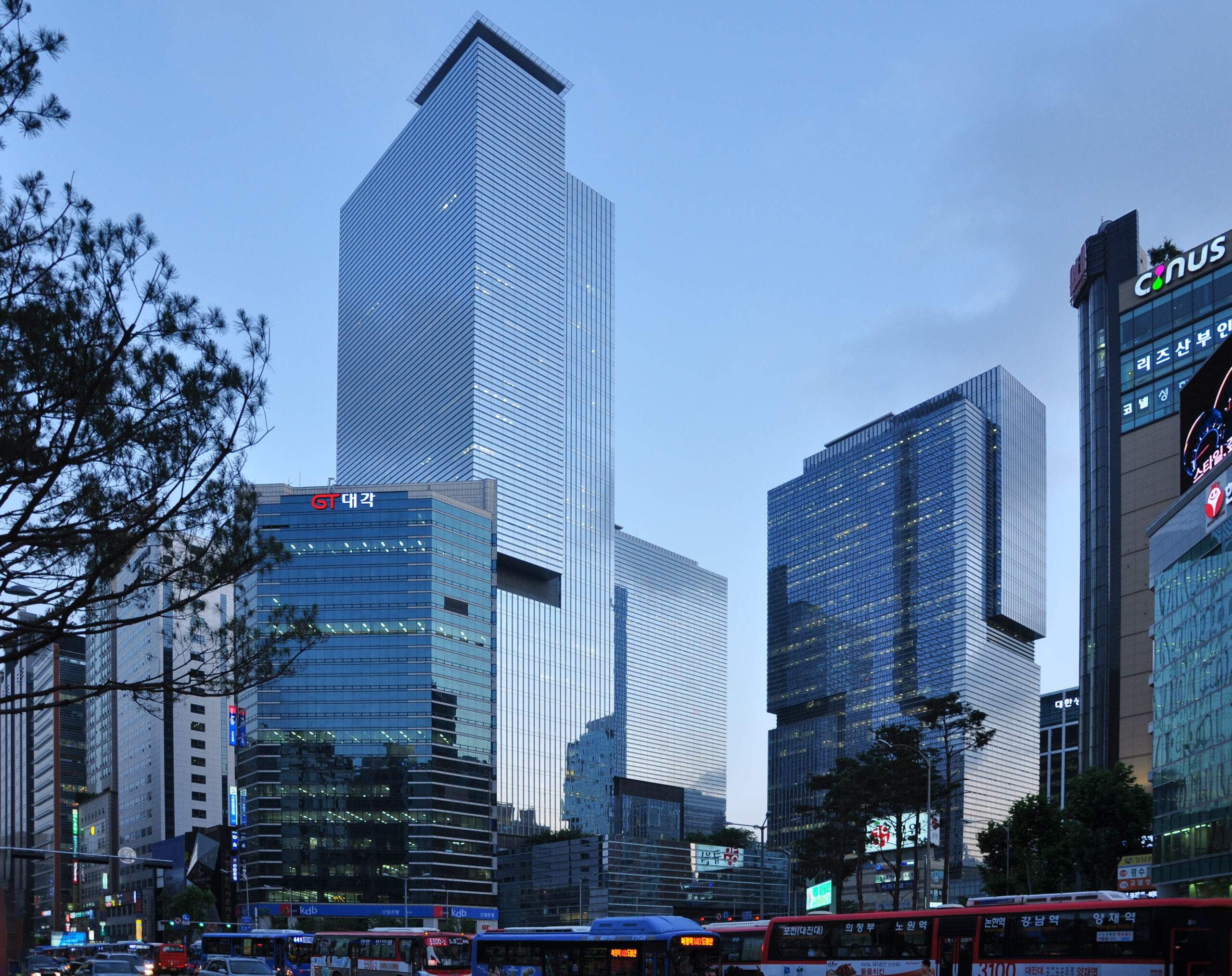
Three things happened last quarter that most analysts glossed over. The most significant? The quietly accelerating shift towards advanced process nodes for AI accelerators, a segment where Samsung Electronics’ Foundry division has secured an increasingly critical position. While the spotlight often shines on GPU designers, it’s the foundries in places like Suwon that are actually fabricating these complex chips, pushing the boundaries of silicon physics.
Samsung Foundry isn’t merely a competitor to TSMC; it’s a vital enabler for companies designing cutting-edge AI silicon. Their 3nm Gate-All-Around (GAA) process, for instance, offers superior power efficiency and performance density compared to traditional FinFET architectures, which is precisely what large language models and other compute-intensive AI workloads demand. Without this foundational capability in Korean chip manufacturing AI, the current scale of AI innovation simply wouldn’t be possible.
📊 KRX Stock Performance (Live)
₩483,000 +0.2%
Source: KRX · Yahoo Finance · data as of latest session
#2. Solid Inc.’s Fiber Optic Backbone for Hyperscale
Beyond raw processing power, the sheer volume of data exchange within an AI data center is staggering. This isn’t just about external bandwidth; it’s about the internal arteries connecting thousands of GPUs, memory banks, and storage units at near light speed. This is where a company like Solid Inc., often overlooked in Western tech discussions, plays an outsized role in AI data center hardware Korea.
Solid Inc. specializes in distributed antenna systems (DAS) and, increasingly, high-density fiber optic solutions engineered for the incredibly demanding low-latency, high-throughput environments of modern data centers. Their robust, scalable optical networking gear ensures that data doesn’t bottleneck before it even reaches the processing units. While not as flashy as a new AI chip, such foundational connectivity is as crucial as the memory provided by partners like SK hynix or the advanced packaging from Hanmi Semiconductor, ensuring the entire system operates efficiently.
#3. LG Energy Solution’s Sustainable Power Grid
The energy demands of AI data centers are immense, bordering on unsustainable. This isn’t merely a cost problem; it’s an existential environmental and grid stability issue. This is where LG Energy Solution, a global leader in battery technology, steps in with sophisticated energy storage systems that are quietly revolutionizing how these power-hungry facilities operate. Their solutions are critical for data center energy storage Korea, and increasingly, worldwide.
LG Energy Solution’s battery energy storage systems (BESS) provide essential grid stabilization, allowing data centers to smooth out power fluctuations, integrate renewable energy sources more effectively, and reduce reliance on expensive, fossil fuel-based peak power. With a market capitalization of $113.022 billion and trading at ₩483,000 today, LG Energy Solution isn’t just selling batteries for EVs; they’re enabling the continuous, efficient operation of AI infrastructure. Their technology, alongside materials from firms like Ecopro BM, helps mitigate the environmental impact of AI’s insatiable energy appetite, ensuring these hubs can operate reliably, as discussed in detail in pieces like our deep dive into LG Energy Solution’s future mobility tech.

#4. The Supply Chain Vulnerability Beneath the Innovation
Despite these undeniable technological advancements, the Korean AI data center hardware ecosystem isn’t without its challenges. A primary concern remains the global supply chain’s inherent fragility, especially for highly specialized materials and manufacturing equipment. While Korean firms excel at fabrication and integration, critical upstream components or intellectual property might still originate from outside the peninsula.
Furthermore, the capital intensity required to remain at the leading edge of Korean chip manufacturing AI is staggering. Maintaining a competitive edge against global rivals like TSMC demands continuous, multi-billion dollar investments in R&D and new fabrication plants. The current USD/KRW exchange rate, standing at roughly 1477.22, also introduces currency volatility, potentially impacting the cost of imported equipment and raw materials. Analysts often point out that while innovation is robust, the ability to fully de-risk global dependencies remains a work in progress, a point Elad Gil emphasized on Tim.blog when discussing the “misty AI frontier” and its supply chain complexities.
#5. The Dawn of Hyper-Efficient, Integrated Solutions
Looking ahead, the next phase of AI data center development will prioritize even greater integration and efficiency, moving beyond incremental improvements. Korean tech companies are already positioning themselves for this shift. We’re seeing increased collaboration between component manufacturers and system integrators, aiming for holistic solutions that span from chip-level cooling to facility-wide energy management.
Expect to see more announcements by early 2027 regarding next-generation AI data center hardware Korea solutions that bundle advanced packaging, liquid cooling technologies, and modular BESS units into single, deployable architectures. As Ibtimes.com.au reported, South Korea’s AI powerhouses are shaping 2026’s innovation landscape, and this trend toward hyper-efficiency is a key part of that. The goal isn’t just to build bigger data centers, but smarter, more sustainable ones that can handle the exponential growth of AI workloads without collapsing under their own energy demands.
Quick Q&A
A1. Korean firms like LG Energy Solution are deploying advanced Battery Energy Storage Systems (BESS) directly into data center operations. These systems enable better integration of renewable energy sources and provide critical grid stabilization, reducing reliance on less sustainable power generation. This proactive approach to data center energy storage Korea is vital for managing the growing power demands of AI. For more insights into such innovations, explore our K-Tech & Gadgets category.
A2. Korean chip manufacturing, spearheaded by Samsung Foundry, provides critical foundational technology for AI accelerators worldwide. Their leadership in advanced process nodes, such as 3nm GAA, is indispensable for producing the high-performance, power-efficient chips that drive AI models. This ensures a diverse and competitive supply chain for these essential components, preventing over-reliance on a single region or foundry.

Hi, I’m Dokyung, a Seoul-based tech and economy enthusiast. South Korea is at the forefront of global innovation—from cutting-edge semiconductors to next-gen defense technology. My mission is to translate these complex industry shifts into clear, actionable insights and everyday magic for global readers and investors.