
🎯 Key Takeaways
- Korean company Solid Inc. is optimizing AI data center costs and performance with specialized HPC infrastructure, a critical but often overlooked component of advanced AI.
- The global shift in AI focus from raw GPU power to efficient, low-latency computing is creating new opportunities for specialized hardware providers.
- Future AI agent deployment hinges on overcoming infrastructure challenges like power consumption and localized opposition, areas where Solid Inc. is innovating with compact, energy-efficient designs.
📋 Table of Contents
- ▸ #1. The Unseen Foundation Powering Next-Gen AI Agents
- ▸ #2. Solid Inc.’s Specialized Hardware for Low-Cost AI Operations
- ▸ #3. Korea’s Integrated Stack: From HBM to Hyperscale HPC
- ▸ #4. Q4. What Power Challenges and Local Opposition Could Hinder Korean Data Center Growth?
- ▸ #5. Q5. Will Korea’s HPC Infrastructure Achieve Global Tier-1 Status by 2028?
- └ Quick Q&A
The global tech community is captivated by the rapid advancements of AI agents, with innovations like DeepSeek reasonix pushing the boundaries of what software can achieve. However, beneath the algorithms and sophisticated models lies a less-discussed, yet equally critical, challenge: the foundational infrastructure required to run these AIs efficiently and cost-effectively.
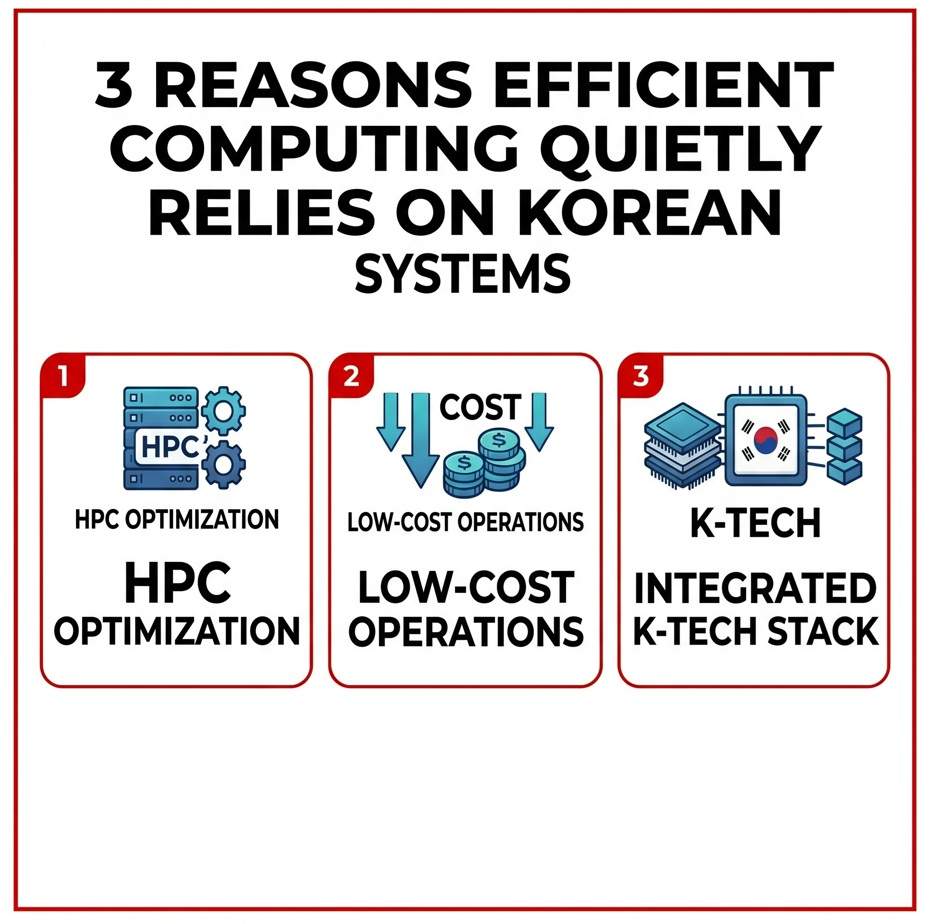
As the demand for high caching, low latency, and efficient AI processing intensifies, a quiet shift is underway in how computing power is delivered. Korea has a history of building the bedrock of global technology, and now, a company called Solid Inc. is emerging as a hidden powerhouse in the high-performance computing (HPC) and data center space, enabling the next generation of artificial intelligence.
#1. The Unseen Foundation Powering Next-Gen AI Agents
While the market has been fixated on graphics processing units (GPUs) and the companies producing them, a nuanced shift is emerging in the AI infrastructure conversation. The focus is moving beyond sheer computational horsepower to the underlying systems that make those GPUs truly effective, particularly for running sophisticated AI agents that demand rapid data access and minimal latency. This is where companies like Solid Inc. have found their niche, providing the specialized data centers and networking solutions essential for optimizing AI agent inference and training workloads.
In short, efficient AI computing infrastructure is about more than just fast chips; it encompasses the entire ecosystem of data storage, networking, cooling, and power management designed for AI-specific workloads. Solid Inc.’s contributions focus on creating environments where AI operations can achieve peak performance without incurring prohibitive costs, directly addressing key AI agent infrastructure requirements explained by developers worldwide.

#2. Solid Inc.’s Specialized Hardware for Low-Cost AI Operations
Solid Inc. isn’t just building generic data centers; they are engineering bespoke solutions optimized for the unique demands of AI, specifically focusing on high caching capabilities and reducing operational expenditure. Their approach involves deploying highly dense computing clusters in specialized modules, often leveraging advanced cooling techniques that far exceed traditional air-cooled setups. This allows for more powerful processors, like those from SK hynix’s HBM lines or Samsung Foundry’s advanced nodes, to run at optimal temperatures without throttling, extending hardware lifespan and boosting performance.
The company’s focus on modular and energy-efficient designs directly tackles the challenge of how to optimize AI data center costs. By streamlining power delivery and cooling, Solid Inc. significantly lowers the total cost of ownership for AI operations, making high-performance AI accessible to a broader range of enterprises. This meticulous engineering is particularly relevant as the global economy sees a US Fed Funds Rate around 3.64, pushing companies to seek every efficiency advantage to maintain competitiveness in a challenging monetary environment.
#3. Korea’s Integrated Stack: From HBM to Hyperscale HPC
Solid Inc.’s quiet success isn’t an isolated phenomenon but rather a reflection of Korea’s deep, integrated technology ecosystem. The nation is home to powerhouses like SK hynix, a leader in High Bandwidth Memory (HBM) crucial for AI acceleration, and Samsung Foundry, manufacturing advanced AI chips. These components need an equally advanced environment to function optimally, and Solid Inc. provides that critical link, ensuring that the raw power of Korean-made silicon translates into efficient AI performance.
Furthermore, local cloud providers such as Naver Cloud are themselves developing sophisticated AI services, requiring robust and scalable infrastructure. Solid Inc.’s expertise in Korean high performance computing for AI positions it to support these domestic champions, creating a synergistic effect that strengthens the entire value chain. This domestic integration means that innovations in hardware, memory, and data center design can be rapidly prototyped and deployed, giving Korea a unique edge in the global AI infrastructure race, as explored further in discussions on how SK hynix powers next-gen AI agent memory solutions.

#4. Q4. What Power Challenges and Local Opposition Could Hinder Korean Data Center Growth?
Despite Korea’s technological prowess, scaling data center infrastructure globally faces significant headwinds, particularly regarding power supply and local community opposition. The sheer energy demands of modern data centers, especially those optimized for AI, are immense. As Business Insider reported, the cancellation of Oracle’s Project Jupiter gas plant due to community concerns highlights a growing global challenge: securing both the land and the power for new facilities without sparking environmental and social pushback. This issue isn’t unique to the U.S.; similar sentiments can delay or halt projects in densely populated regions like Korea.
For companies like Solid Inc., expanding their footprint means navigating complex regulatory landscapes and managing public perception around energy consumption and environmental impact. While their designs emphasize efficiency, the overall increase in demand for AI computing could outpace sustainable energy solutions, posing a risk to ambitious growth plans. The current USD/KRW exchange rate, hovering around 1499.61, also indicates a slightly less favorable environment for international expansion or sourcing foreign components compared to prior periods, subtly affecting expansion costs.
#5. Q5. Will Korea’s HPC Infrastructure Achieve Global Tier-1 Status by 2028?
The trajectory for Korean high performance computing for AI suggests a strong push towards global recognition, with companies like Solid Inc. at the vanguard. Over the next 18 to 24 months, analysts expect increased consolidation in the AI infrastructure space, where specialized providers with proven efficiency gains will become prime targets or strategic partners for hyperscalers and AI developers. Solid Inc.’s innovations in compact, high-density data center solutions, particularly those designed for edge AI applications, could be a key catalyst.
A significant factor will be the rate at which these companies can adapt their solutions for international markets, addressing varying regulatory standards and energy grids. Success hinges on their ability to forge strategic alliances and demonstrate tangible cost savings and performance boosts over incumbent solutions. By 2028, if current innovation trends continue and global partnerships materialize, Korean infrastructure providers could well cement their status as essential, Tier-1 players in the global AI computing landscape.

Quick Q&A
A1. Efficient AI computing infrastructure relies on specialized hardware designed for high caching and low-latency data access, coupled with advanced cooling and power management systems. This optimization reduces operational costs and maximizes the performance of AI processors, enabling complex AI models to run faster and more economically. It’s not just about raw power, but how intelligently that power is delivered and managed.
A2. Solid Inc. contributes to AI development by providing the crucial high-performance computing (HPC) and specialized data center infrastructure that enables advanced AI agents to run efficiently and cost-effectively. They design and optimize physical environments, often with liquid cooling and modular units, to handle the intense computational and thermal demands of AI training and inference, acting as a foundational support for AI innovation. Their work exemplifies critical developments in K-tech gadgets more broadly.

Hi, I’m Dokyung, a Seoul-based tech and economy enthusiast. South Korea is at the forefront of global innovation—from cutting-edge semiconductors to next-gen defense technology. My mission is to translate these complex industry shifts into clear, actionable insights and everyday magic for global readers and investors.