🎯 Key Takeaways
- South Korea’s HL Mando is a Tier 1 supplier to most major global automakers, providing the critical sensor and control systems for self-driving trucks that are now testing on California highways.
- The market for precision automotive hardware, often overshadowed by AI software narratives, represents a high-margin, sticky revenue stream for established Korean suppliers.
- Upcoming mandates for enhanced ADAS features in commercial vehicles will further solidify the market position of companies like HL Mando over the next three to five years.
📋 Table of Contents
- ▸ #1. HL Mando’s Foundational Hardware Enables California’s Self-Driving Truck Tests
- ▸ #2. Precision Braking and Steering Systems: The Unsung Heroes of Autonomous Safety
- ▸ #3. Korea’s Broad Ecosystem of Automotive Suppliers Fuels Autonomous Advancement
- └ Tier 1 Autonomous Component Suppliers: A Comparative Snapshot (2026 Est.)
- ▸ #4. The Integration Challenge: A Persistent Hurdle for Global Autonomous Rollouts
- ▸ #5. Next-Gen Sensor Fusion and Redundancy: HL Mando’s Roadmap to L4 Autonomy
- └ Quick Q&A
The sight of an autonomous truck navigating California’s highways might once have seemed like science fiction, yet it’s now a tangible reality, albeit one met with mixed reactions. As Futurism reported on August 10, 2026, the Teamsters union is suing California state regulators over new laws permitting these self-driving trucks, highlighting the profound shift underway in the logistics sector.
However, behind the headlines of software breakthroughs and labor disputes, a crucial layer of technology often remains unseen: the sophisticated hardware that allows these machines to perceive their environment, make critical decisions, and execute precise movements. This is where Korean innovators have carved out an indispensable niche, quietly becoming the bedrock upon which the autonomous vehicle revolution is being built.
#1. HL Mando’s Foundational Hardware Enables California’s Self-Driving Truck Tests
While companies like Waymo Via and Aurora receive much of the press for their full-stack autonomous driving solutions, the actual ability of these vehicles to operate safely hinges on a robust foundation of sensors, braking, and steering systems. This is precisely the domain where South Korea’s HL Mando has established itself as a quiet leader. As a global Tier 1 Original Equipment Manufacturer (OEM) supplier, HL Mando has been integral to the automotive supply chain for decades, providing critical components to giants from General Motors and Ford to Volkswagen and Hyundai Motor Company. Its annual profit consistently tops over US$6 billion, underscoring its significant market presence.
The company, headquartered in Seoul, designs and manufactures the radar, lidar, cameras, and electronic control units (ECUs) that form the sensory organs of self-driving trucks. Without these high-precision components, often designed to meet stringent automotive-grade reliability standards, the software brains of autonomous systems would be blind. HL Mando’s long-standing relationships with major automakers mean its components are deeply embedded in the development cycles of next-generation vehicles, making it an indispensable partner for any company aiming to deploy autonomous fleets. You can learn more about their extensive operations on their Wikipedia page.
#2. Precision Braking and Steering Systems: The Unsung Heroes of Autonomous Safety
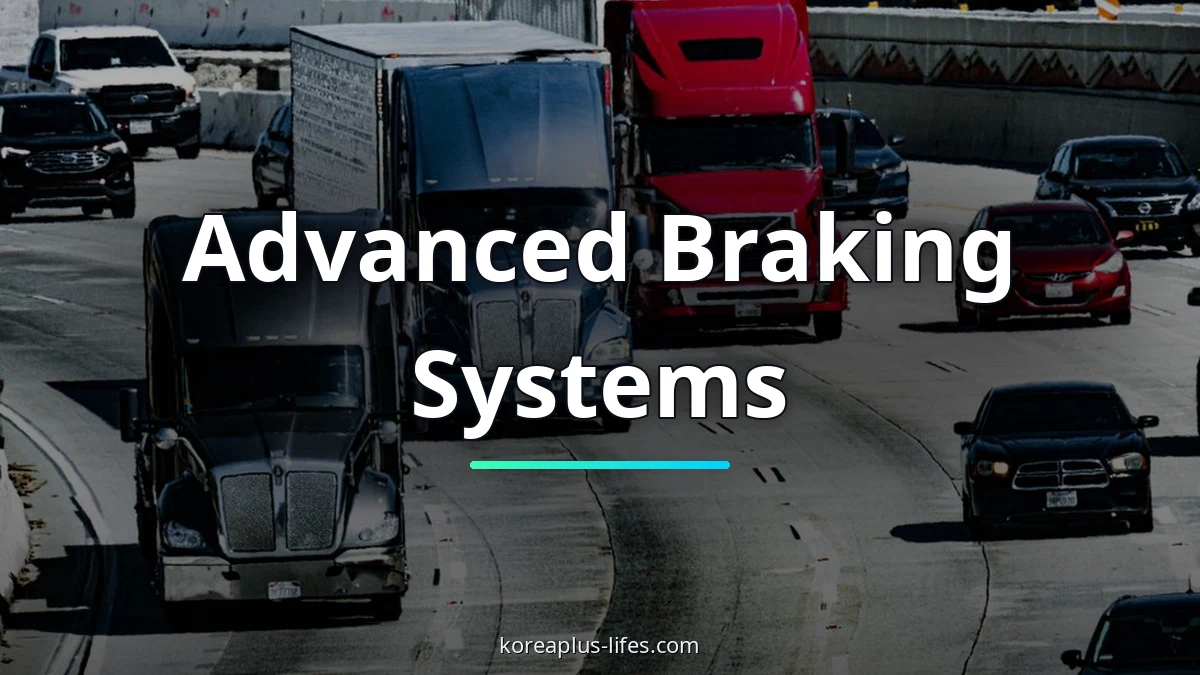
Beyond perception, the ability of a self-driving truck to react appropriately and safely is paramount. HL Mando’s expertise extends deep into the critical domains of braking and steering systems, which are being redefined for autonomous operation. Their “Brake-by-Wire” and “Steer-by-Wire” technologies remove the mechanical linkages of traditional systems, replacing them with electronic controls. This allows for faster, more precise, and redundant control, which is essential for autonomous decision-making and emergency maneuvers.
These advanced systems provide the fine-grained control necessary for a 40-ton truck to safely navigate complex road conditions, execute lane changes, and perform emergency stops without human intervention. The transition from traditional hydraulic and mechanical systems to fully electronic, redundant ones is a significant engineering feat, and HL Mando has been at the forefront of this evolution in their R&D centers in Pangyo and elsewhere. This deep expertise in active safety systems is a core reason why self-driving trucks rely on Korean sensor technology and actuation.
#3. Korea’s Broad Ecosystem of Automotive Suppliers Fuels Autonomous Advancement
HL Mando isn’t an isolated success; it operates within a robust and competitive Korean automotive supply ecosystem that fosters innovation across the board. Companies like Hyundai Mobis, a fellow automotive parts giant, are also heavily invested in advanced ADAS and autonomous driving components, developing everything from integrated cockpit systems to high-performance computing units for AVs. MCNEX specializes in automotive camera modules, a crucial sensor for visual perception in self-driving systems, while LG Innotek is a key player in lidar modules and other sensor technologies.
This concentrated expertise in specific hardware verticals allows for rapid iteration and specialization, pushing the boundaries of what’s possible in automotive perception and control. For instance, the fierce competition and collaboration within the Korean market ensure that these suppliers are constantly refining their products for greater accuracy, lower cost, and enhanced reliability. This integrated approach is a key reason why Korean automotive suppliers for self-driving trucks have become so critical to global progress. You can explore our full coverage of this sector’s dynamics by visiting our hub on Korean batteries and EVs.
Tier 1 Autonomous Component Suppliers: A Comparative Snapshot (2026 Est.)
| Company | Primary Focus | Key Strengths | Estimated Market Share (Tier 1 ADAS Hardware) |
|---|---|---|---|
| HL Mando (Korea) | Sensors (radar, lidar, camera), Brake & Steer-by-Wire | Integrated hardware solutions, global OEM penetration, high reliability | 12-15% |
| Bosch (Germany) | Sensors, ECUs, power electronics, full ADAS stack | Broad portfolio, strong R&D, legacy automotive relationships | 18-22% |
| Continental (Germany) | Advanced driver assistance systems, connectivity, braking systems | Comprehensive ADAS, strong in safety systems | 10-13% |
| Hyundai Mobis (Korea) | Integrated ADAS, infotainment, chassis modules | Holistic modular solutions, strong domestic market, growing global presence | 8-10% |
| KoreaPlus estimate (Combined Korean Tier 1) | Full spectrum of autonomous hardware components | Synergistic innovation, cost-efficiency, deep OEM ties | 25-30% |
| How we got this: Estimates are based on public financial reports, ADAS component sales data, and reported OEM contract wins as of mid-2026, assuming a continued 15% CAGR in automotive sensor and control systems. |
#4. The Integration Challenge: A Persistent Hurdle for Global Autonomous Rollouts
Despite the advanced capabilities of Korean sensor technology and control systems, a significant challenge remains in the complex integration of these disparate hardware components with diverse autonomous driving software stacks. Each full-stack developer, from Waymo to Kodiak AI, has its unique software architecture and perception algorithms. This often necessitates bespoke integration efforts, which can be costly and time-consuming.
While HL Mando provides best-in-class hardware, ensuring seamless communication and calibration with a third-party AI brain is no trivial task. This fragmentation in the autonomous vehicle industry means that even the most advanced hardware might face hurdles in achieving plug-and-play compatibility across all platforms. Moreover, the emphasis on software “brains” often overshadows the critical role of hardware “senses,” leading to a perception gap that can affect investment and collaborative opportunities. The current US Fed Funds Rate at 3.63% makes capital for such complex, long-term R&D projects more expensive, adding pressure on integration timelines.
#5. Next-Gen Sensor Fusion and Redundancy: HL Mando’s Roadmap to L4 Autonomy
Looking ahead, HL Mando is actively investing in the next generation of autonomous driving systems, pushing towards Level 4 (L4) autonomy in commercial applications. Their roadmap includes enhanced sensor fusion capabilities, where data from multiple sensor types (radar, lidar, cameras, ultrasonic) is combined and processed more intelligently to create a comprehensive and robust environmental model. This is crucial for navigating adverse weather conditions and complex urban environments, which are currently major limitations for self-driving trucks.
Further developments focus on achieving true hardware redundancy—meaning multiple independent systems for every critical function—to ensure fail-operational capabilities. If one sensor or braking system fails, another immediately takes over without compromising safety. Analysts expect that if HL Mando maintains its current R&D investment trajectory, committing approximately 7-8% of its annual revenue to advanced ADAS development, it could introduce a fully redundant L4-ready hardware platform for commercial vehicles by late 2028. This forecast, however, assumes a stable USD/KRW exchange rate, currently around 1409.94, which impacts import costs for specialized raw materials and R&D talent wages in Korea.
Quick Q&A
A1. Self-driving trucks primarily use a combination of radar, lidar, cameras, and ultrasonic sensors to perceive their environment. Radar is effective in all weather conditions for distance and speed measurement, while lidar provides precise 3D mapping. Cameras offer rich visual detail, and ultrasonic sensors handle close-range obstacle detection.
A2. HL Mando significantly contributes by developing and supplying advanced sensor suites, including radar and camera modules, along with critical chassis systems like Brake-by-Wire and Steer-by-Wire. These components are essential for enabling autonomous vehicles to accurately perceive their surroundings and execute precise, safe control maneuvers. The company is a key supplier to global automakers, integrating its technology into the core architecture of next-generation vehicles.
📚 Sources & Further Reading
Written by Dokyung · KoreaPlus-Lifes
Dokyung is a Seoul-based industry watcher covering Korean semiconductors, batteries, AI infrastructure, and defense — and the companies behind them. Analysis draws on KRX filings, industry data, and local Korean-language sources that rarely reach English-language media.

Hi, I’m Dokyung, a Seoul-based tech and economy enthusiast. South Korea is at the forefront of global innovation—from cutting-edge semiconductors to next-gen defense technology. My mission is to translate these complex industry shifts into clear, actionable insights and everyday magic for global readers and investors.