
🎯 Key Takeaways
- The global AI memory market, projected to reach over $20 billion by 2027, relies heavily on complex deposition technologies, a niche where Wonik IPS holds a surprising edge.
- Wonik IPS’s advanced deposition systems are critical for fabricating high-bandwidth memory (HBM) stacks, directly impacting the supply and cost of AI accelerators worldwide.
- Increased R&D into atomic layer deposition (ALD) for sub-10nm process nodes will confirm Wonik IPS’s long-term competitive advantage against larger global players.
📋 Table of Contents
- ▸ 1. The AI Memory Crunch: Why Next-Gen Chips Demand Specialized Fabrication
- └ Global Market Size & Growth Drivers
- └ Korea’s Strategic Position
- ▸ 2. Company Deep-Dive: Wonik IPS, The Unsung Enabler of AI Memory
- └ Business Model & Revenue Drivers
- └ Recent Strategic Moves
- └ Competitive Positioning
- ▸ 3. Navigating Supply Chain Volatility and Advanced Node Challenges
- └ Near-Term Pressure Points
- └ Structural Challenges to Watch
- ▸ 4. The Road Ahead: HBM4, Advanced Packaging, and Wonik IPS’s Next Play
- └ Frequently Asked Questions
1. The AI Memory Crunch: Why Next-Gen Chips Demand Specialized Fabrication
Global Market Size & Growth Drivers
The global scramble for AI computation has unleashed an unprecedented demand for specialized hardware, particularly GPU servers, where the memory component has become a critical bottleneck. Analysts estimate the market for high-bandwidth memory (HBM), the preferred RAM for AI accelerators, will skyrocket from roughly $5 billion in 2023 to well over $20 billion by 2027, according to some projections shared by industry reports. This isn’t just a simple capacity problem; it’s a technical challenge that exposes the limits of conventional chip manufacturing.
What’s accelerating this sector isn’t just the sheer volume of AI training models, but the increasing complexity of inferencing at the edge and the need for faster, more efficient data movement within AI systems. High-density HBM stacks, featuring multiple layers of DRAM integrated directly onto logic dies, are essential for feeding hungry AI processors without performance degradation. Each new generation of HBM — HBM3, HBM3E, and upcoming HBM4 — pushes the boundaries of vertical stacking and interconnect density, requiring entirely new fabrication approaches.
Korea’s Strategic Position
South Korea stands as the undisputed titan in this high-stakes memory race. Companies like SK hynix and Samsung Foundry aren’t just participants; they’re the primary architects of the HBM ecosystem. SK hynix, for instance, has aggressively invested in HBM production, consistently being first to market with new generations and securing major contracts with leading AI chip designers. This strategic dominance is underpinned by a deep ecosystem of domestic suppliers, often overlooked by the broader global tech community.
The country’s semiconductor cluster, stretching from Pyeongtaek to Icheon, represents a dense concentration of manufacturing prowess. These facilities, like Samsung’s massive fabs in Pyeongtaek, are continually pushing the envelope on process technology. A major government initiative announced in early 2024 aimed at securing semiconductor supply chains has further solidified Korea’s position, encouraging even greater synergy between chipmakers and their equipment partners, creating a fertile ground for Korean semiconductor manufacturing innovation.
2. Company Deep-Dive: Wonik IPS, The Unsung Enabler of AI Memory
Business Model & Revenue Drivers
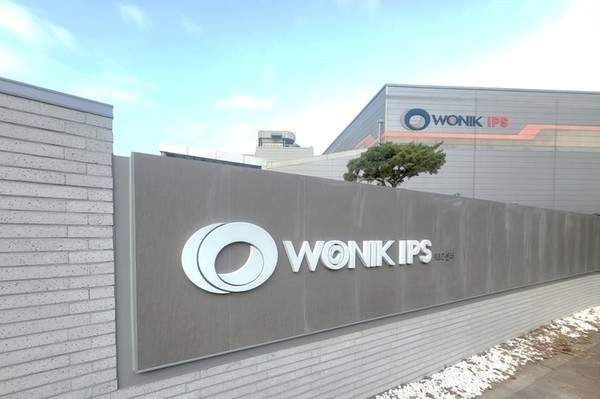
While the world fixates on the dazzling performance of AI chips and the HBM modules that feed them, few recognize the quiet brilliance of companies like Wonik IPS. Based in Suwon, just south of Seoul, Wonik IPS specializes in advanced equipment for semiconductor manufacturing, particularly deposition systems. These aren’t just any tools; they’re atomic layer deposition (ALD) and chemical vapor deposition (CVD) machines, which are absolutely vital for creating the ultra-thin, precise layers and complex 3D structures found in modern memory and logic chips.
Their revenue largely stems from selling these sophisticated tools to major memory and foundry players in Korea. Roughly 70-80% of their revenue typically comes from their domestic clients, with SK hynix and Samsung being primary customers. Wonik IPS’s ALD systems are instrumental in depositing dielectric films and metals with atomic-level precision, a requirement for stacking the individual DRAM layers in HBM modules and forming the through-silicon vias (TSVs) that connect them. This precision is what allows for the incredible bandwidth and density needed by AI accelerators. The synergy between Korean memory giants and specialized equipment providers like Wonik IPS is a key reason for the nation’s consistent lead in this sector, as explored further in discussions about how SK hynix powers next-gen AI agent memory solutions.
Recent Strategic Moves
In the past year, Wonik IPS has ramped up its R&D efforts, channeling significant investment into developing next-generation deposition technologies specifically for HBM4 and future sub-10nm logic nodes. This includes refining plasma-enhanced ALD (PEALD) and spatial ALD techniques to achieve even greater uniformity and step coverage on increasingly complex 3D structures. The company has also been expanding its manufacturing capacity in the Gyeonggi Province, anticipating a continued surge in demand from its primary clients as they scale up HBM production.
These strategic moves are a clear bet on the sustained growth of the AI market and the increasing technical demands of advanced packaging. Wonik IPS understands that as chip architectures become more intricate, the precision and efficiency of manufacturing equipment become even more critical. They’re investing in solutions that ensure their tools remain at the forefront of AI memory fabrication equipment, supporting the shift from HBM3E to HBM4, which promises even higher layer counts and data rates.
Competitive Positioning
Wonik IPS competes in a specialized segment against global giants like ASM International and certain divisions of Applied Materials and Lam Research. While these larger players offer broader portfolios, Wonik IPS has carved out a niche by offering highly optimized and often customized deposition solutions tailored to the specific needs of Korean memory and foundry leaders. Their strength lies in their close collaboration with customers, allowing for rapid iteration and specialization in areas like high-aspect-ratio deposition for HBM TSVs.
However, the competition remains fierce. ASM International, for example, is a formidable force in ALD, constantly innovating and pushing the boundaries of deposition speed and film quality. Wonik IPS maintains its edge through cost-effectiveness, deep localized support, and a faster turnaround on R&D for bespoke solutions that its major Korean customers often require. This tight integration into the domestic supply chain provides a competitive moat, making them an indispensable partner in Korean semiconductor manufacturing innovation.
3. Navigating Supply Chain Volatility and Advanced Node Challenges
Near-Term Pressure Points
The semiconductor equipment sector is inherently cyclical, and Wonik IPS isn’t immune to industry-wide shifts. While AI-driven demand currently provides a strong tailwind, a broader economic slowdown or unexpected cuts in customer capital expenditure could quickly impact their order books. Furthermore, the volatility of the USD/KRW exchange rate, currently around 1499.61, introduces currency risk, potentially affecting profitability for components sourced internationally or revenues from export sales, though their primary market remains domestic.
Moreover, the sheer pace of innovation demanded by AI memory fabrication equipment means constant, heavy investment in R&D. Any misstep in anticipating next-generation process requirements could result in delayed product launches or a loss of competitive edge. Maintaining a robust supply chain for critical, often proprietary, sub-components for their advanced deposition technology is also a continuous challenge.
Structural Challenges to Watch
Looking further out, the biggest structural challenge for Wonik IPS lies in the escalating complexity and cost of developing tools for sub-5nm logic and next-gen HBM. Each new node requires increasingly sophisticated materials science and engineering, pushing R&D budgets to their limits. There’s also the ongoing global talent war for semiconductor engineers, which could make it harder to recruit and retain the specialized expertise needed to stay at the cutting edge of advanced chip deposition technology.
Another long-term concern is the potential for other nations to develop their own domestic equipment suppliers, reducing reliance on established players. While Korea’s ecosystem is strong, the global push for semiconductor self-sufficiency could foster new competitors in niche areas. For now, however, Wonik IPS benefits from the immense technological hurdles involved in building these highly specialized tools, barriers that take decades to overcome.
4. The Road Ahead: HBM4, Advanced Packaging, and Wonik IPS’s Next Play
The immediate future for Wonik IPS will be shaped by several critical catalysts. Firstly, the ongoing rollout and adoption rates of HBM3E throughout 2026, and the subsequent transition to HBM4, will directly drive demand for their advanced deposition systems. Analysts at Daiwa suggest that HBM4, expected to begin sampling by early 2027, will require even more precise ALD steps for its higher layer counts and novel interconnects, giving an advantage to equipment makers with proven expertise.
Secondly, major capital expenditure announcements from SK hynix and Samsung Foundry regarding their next-generation memory fabs will provide clear signals for Wonik IPS’s order pipeline. These decisions, typically made in the latter half of each year for the following year’s production, are heavily influenced by the macro environment, including factors like the US Fed Funds Rate, currently at 3.64, which impacts borrowing costs for massive fab expansions. Thirdly, any technological breakthroughs in advanced packaging, such as hybrid bonding or wafer-on-wafer stacking, could open new avenues for Wonik IPS’s specialized deposition capabilities beyond traditional HBM, potentially diversifying their revenue streams. It’s worth watching how their current R&D translates into commercially viable solutions for these emerging packaging trends.
Frequently Asked Questions
Q1. How does Wonik IPS’s advanced chip deposition technology contribute to AI memory fabrication?
A1. Wonik IPS develops and supplies critical deposition systems, like Atomic Layer Deposition (ALD) and Chemical Vapor Deposition (CVD), that precisely apply ultra-thin films onto semiconductor wafers. This precision is essential for creating the multiple layers and through-silicon vias (TSVs) required for high-bandwidth memory (HBM) stacks, which are the backbone of AI accelerators. Without these tools, achieving the necessary density and speed for next-gen HBM would be impossible.
Q2. What does the AI memory shortage mean for the average consumer or tech user?
A2. The AI memory shortage translates directly into higher costs and slower deployment of advanced AI capabilities, from sophisticated cloud services to more powerful consumer devices. If data centers can’t acquire enough HBM-equipped GPUs, the development of new AI models slows down, impacting innovations across various sectors like healthcare, entertainment, and even cybersecurity. Understanding these foundational issues is vital for anyone interested in the broader landscape of K-Tech & Gadgets.
Q3. What distinguishes Wonik IPS from its global competitors in semiconductor equipment?
A3. Wonik IPS differentiates itself through deep specialization in advanced deposition systems, particularly optimized for the needs of leading Korean memory and foundry manufacturers like SK hynix and Samsung. Their close collaboration allows for rapid, customized R&D and a faster time-to-market for tools crucial to HBM production. While larger global players like ASM International have broader portfolios, Wonik IPS’s focused expertise in specific AI memory fabrication equipment gives it a distinct edge in this critical niche.
🔗 Related: The AI Compute Crunch Has a Hidden Cost — and Korea Holds the Key
🔗 Related: Why the Global AI Chip Capacity Crunch Quietly Leads Back to Korean Testing Innovation
🔗 Related: 5 Reasons Next-Gen Agentic AI Quietly Runs on Korean Inference Hardware

Hi, I’m Dokyung, a Seoul-based tech and economy enthusiast. South Korea is at the forefront of global innovation—from cutting-edge semiconductors to next-gen defense technology. My mission is to translate these complex industry shifts into clear, actionable insights and everyday magic for global readers and investors.