
🎯 Key Takeaways
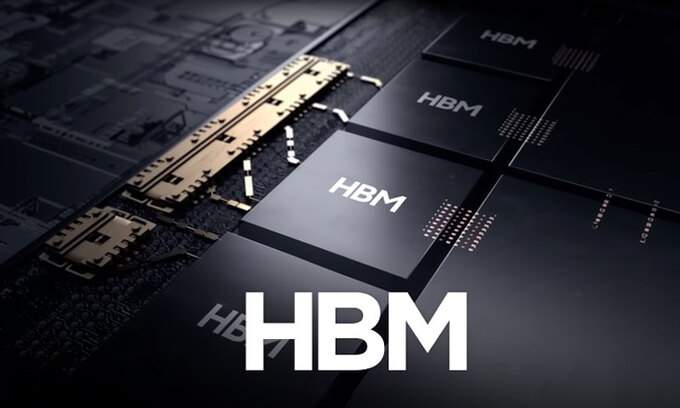
- While the spotlight is on AI processors, SK hynix’s HBM technology is the foundational memory layer enabling the performance of next-generation AI agents.
- The company’s rapid innovation in HBM3E, particularly its early volume production and certification by key AI chipmakers like Nvidia, positions it strategically ahead of competitors.
- Watch for further HBM capacity expansion and new partnerships with emerging AI agent CPU developers as indicators of continued market dominance.
📋 Table of Contents
- ▸ 1. The Big Picture: Market Scale & Context
- └ Global Market Size & Growth Drivers
- └ Korea’s Strategic Position
- ▸ 2. Company Deep-Dive: SK hynix
- └ Business Model & Revenue Drivers
- └ Recent Strategic Moves
- └ Competitive Positioning
- ▸ 3. Risks, Headwinds & What Could Go Wrong
- └ Near-Term Pressure Points
- └ Structural Challenges to Watch
- ▸ 4. Catalysts to Watch in the Next 12 Months
- └ Frequently Asked Questions
1. The Big Picture: Market Scale & Context
Global Market Size & Growth Drivers
Something shifted quietly in the market. The global tech sector now fixates on specialized CPUs designed to power advanced AI agents, a burgeoning market estimated to reach hundreds of billions of dollars over the next decade. These processors promise to unlock new capabilities for autonomous systems, generative AI, and real-time decision-making, moving beyond traditional cloud-based models to more localized, responsive AI computations. This evolution demands not just raw processing power, but an unprecedented level of data throughput between the processor and its memory subsystem.
The accelerating pace of AI development, particularly in large language models and multimodal AI, is the primary force driving this demand. With AI labs like OpenAI and Anthropic reportedly eyeing IPOs, their rapid revenue growth and the increasing complexity of their models — as evidenced by the surge in Claude Code commits on GitHub, which went from 2% to 4% in January alone, according to Greaterwrong.com — necessitate more sophisticated hardware. This isn’t just about faster chips; it’s about the entire computing stack optimizing for AI workflows, where memory bandwidth often becomes the bottleneck before computational speed.
Korea’s Strategic Position
South Korea holds a commanding strategic position in the global semiconductor landscape, particularly in memory chip manufacturing. Along with Samsung Electronics and Micron Technology, SK hynix forms part of the “Big Three” memory producers that collectively dominate the dynamic random-access memory (DRAM) and NAND flash memory markets. This entrenched leadership extends significantly into high bandwidth memory (HBM), a specialized form of DRAM essential for AI applications.
The nation’s strong ecosystem, bolstered by significant government investment in R&D and advanced manufacturing facilities, further solidifies its standing. For instance, SK hynix operates major production facilities in Icheon and Cheongju, serving as global hubs for memory innovation and production. These sites are constantly being upgraded to meet the soaring demand for advanced memory solutions, reflecting a commitment to maintain technological superiority and ensure a robust supply chain for critical AI components worldwide. The concentrated expertise and infrastructure give Korean players a distinct advantage in developing and scaling next-generation memory technologies.

📊 KRX Stock Performance (Live)
₩1,931,000 +10.7%
Source: KRX · Yahoo Finance · data as of latest session
2. Company Deep-Dive: SK hynix
Business Model & Revenue Drivers
SK hynix primarily generates revenue from two core product lines: dynamic random-access memory (DRAM) chips and NAND flash memory chips. While these traditional memory segments remain significant, the company has strategically shifted focus and investment towards high bandwidth memory (HBM) as a pivotal growth engine, particularly for the AI sector. This specialized memory solution, crucial for AI agent memory, offers vastly superior bandwidth compared to conventional DRAM, making it indispensable for AI accelerators.
The customer mix for SK hynix reflects this shift, with a growing proportion of sales directed towards AI and data center clients, including major GPU manufacturers like Nvidia. The company’s market capitalization stands at roughly $1.37 trillion, underscored by its robust performance today, seeing its stock price climb to ₩1,931,000. For a deeper look into the intricate components that ensure the seamless operation of these advanced chips, readers might find this article on 3 Korean Innovations Ensuring Reliable AI Chip Performance insightful.
Recent Strategic Moves
In the past 12 months, SK hynix has made significant strides, cementing its leadership in the HBM market. The company was among the first to successfully mass-produce HBM3E, the fifth generation of HBM, and secure certification from key AI chip developers. This early lead is critical, as it allows SK hynix to establish design wins and build strong relationships with major customers. Hanmi Semiconductor, for example, has played a crucial role in supplying equipment necessary for advanced HBM packaging, highlighting the collaborative ecosystem required for these complex products.
These strategic moves align with a long-term roadmap focused on delivering extreme bandwidth and capacity for next-generation AI agents. SK hynix isn’t just producing memory; it’s actively collaborating with processor designers to co-optimize solutions that push the boundaries of AI performance. The firm is betting on the continued exponential growth of AI and the increasing demand for specialized memory that can keep pace with more powerful AI agent CPUs, ensuring that memory remains a co-equal partner in the AI compute stack rather than a bottleneck.

Competitive Positioning
SK hynix’s competitive edge in the high bandwidth memory (HBM) market is undeniable, largely driven by its first-mover advantage and technological prowess in HBM3E innovation. While Samsung Foundry is a formidable competitor and also heavily invested in HBM development, SK hynix has consistently demonstrated faster time-to-market with successive HBM generations. This has translated into a significant market share lead, especially in supplying to top-tier AI accelerator developers.
Micron Technology also competes in the HBM space, but analysts often point to SK hynix’s established supply chain and deep engineering expertise as key differentiators. The company’s ability to quickly scale production and maintain high yields for advanced HBM products keeps it ahead. However, intense competition means that maintaining this lead requires continuous R&D and significant capital expenditure, putting constant pressure on profit margins.
3. Risks, Headwinds & What Could Go Wrong
Near-Term Pressure Points
SK hynix faces several near-term pressure points that could impact its performance. The broader macroeconomic environment, characterized by a US Fed Funds Rate of 3.64%, can influence global tech spending and, consequently, demand for memory products. Additionally, currency fluctuations, particularly the USD/KRW exchange rate hovering around 1499.61, could affect the company’s profitability and export competitiveness, as a stronger won can make Korean exports more expensive.
Another significant risk is the ongoing cyclicality of the memory market. While HBM demand is robust, traditional DRAM and NAND markets can still experience periods of oversupply and price erosion, which would offset some of the gains from HBM. Major customers’ capital expenditure adjustments in response to economic shifts or changing AI adoption rates could also lead to order volatility.
Structural Challenges to Watch
Looking further out, structural challenges could emerge for SK hynix. The sheer cost and complexity of developing and manufacturing successive generations of HBM require massive R&D investment and highly specialized equipment, making it a capital-intensive race. Moreover, rising competition from Chinese domestic memory producers, while currently lagging in HBM, presents a long-term threat as they receive substantial state support and work to close the technology gap.
Talent acquisition and retention also pose a significant challenge in the highly specialized semiconductor industry. The global shortage of skilled engineers and researchers in advanced packaging and memory design could constrain innovation and expansion plans. Furthermore, a potential slowdown in the rapid acceleration of AI model complexity or a shift in AI agent architectures that require less HBM bandwidth could dampen long-term demand growth, though current trends suggest otherwise.
4. Catalysts to Watch in the Next 12 Months
Several key catalysts could shape SK hynix’s trajectory over the next year. The successful ramp-up of its next-generation HBM products, potentially HBM4, and securing early design wins with leading AI chipmakers will be critical indicators. If Nvidia, or other major AI processor developers, continue to prioritize SK hynix for their highest-performance AI agent memory solutions, it would solidify the company’s market position.
Further expansion of HBM production capacity, particularly at its advanced manufacturing sites, will also be worth watching. Any new strategic partnerships with emerging players in the AI agent CPU market, perhaps smaller, innovative fabless companies, could diversify its customer base beyond the hyperscalers and established GPU giants. The demand trajectory for AI agents themselves, driven by new product launches from firms like OpenAI and Anthropic, will directly influence the order books for high bandwidth memory, providing a crucial external demand signal.
Frequently Asked Questions
A1. HBM is absolutely critical because advanced AI agents, with their complex models and real-time processing demands, require immensely fast data transfer rates between the processor and memory. Traditional DRAM simply cannot provide the necessary bandwidth, which is why HBM, with its stacked architecture, delivers speeds orders of magnitude higher, preventing memory from becoming a performance bottleneck. This allows AI processors to operate at their full potential, processing vast datasets efficiently.
A2. SK hynix’s HBM lead means that the foundational technology for more capable AI agents is being reliably supplied, accelerating the development of advanced AI applications across various sectors. For the tech industry, it ensures a vital component for AI infrastructure remains available and continues to evolve. For consumers, this translates into more powerful AI experiences, from faster generative AI tools to more sophisticated autonomous systems. Discover more about how innovation fuels this sector in the K-Tech & Gadgets category.
A3. SK hynix’s edge in HBM3E innovation stems from several technological advancements, including its thermal compression non-conductive film (TC NCF) technology for stacking multiple DRAM dies, which improves heat dissipation and signal integrity. The company also boasts superior packaging techniques that allow for higher memory capacity and faster data transfer rates per pin. These innovations collectively enable the high bandwidth and lower power consumption crucial for modern AI workloads, differentiating its HBM3E products in a competitive market.
🔗 Related: 5 Reasons Next-Gen Agentic AI Quietly Runs on Korean Inference Hardware
🔗 Related: 5 Reasons Next-Gen AI Chips Quietly Rely on Korean Packaging Innovation
🔗 Related: The AI Memory Race Has a Quiet Leader — And It’s Not Micron

Hi, I’m Dokyung, a Seoul-based tech and economy enthusiast. South Korea is at the forefront of global innovation—from cutting-edge semiconductors to next-gen defense technology. My mission is to translate these complex industry shifts into clear, actionable insights and everyday magic for global readers and investors.