
🎯 Key Takeaways
- Korean firms lead in advanced HBM memory and precision testing, quietly underpinning the global AI agent revolution.
- The focus on physical reliability in chip manufacturing and testing is as critical as AI model architecture for trustworthy AI.
- Upcoming advancements in packaging and AI-driven process optimization will further solidify Korea’s foundational role in AI chip reliability.
📋 Table of Contents
- ▸ #1. SK hynix’s HBM Dominance: The Foundation of AI Speed and Stability
- ▸ #2. ISC’s Precision Test Sockets: Catching Flaws Before Deployment
- ▸ #3. Wonik IPS’s Equipment: Mastering the Atomic Level of Chip Production
- ▸ #4. The Lingering Vulnerability of Global Dependencies
- ▸ #5. AI Agents Optimizing Chip Production: The Next Frontier
- └ Quick Q&A
- ▸ #1. SK hynix’s HBM Dominance: The Foundation of AI Speed and Stability
- ▸ #2. ISC’s Precision Test Sockets: Catching Flaws Before Deployment
- ▸ #3. Wonik IPS’s Equipment: Mastering the Atomic Level of Chip Production
- ▸ #4. The Lingering Vulnerability of Global Dependencies
- ▸ #5. AI Agents Optimizing Chip Production: The Next Frontier
- └ Quick Q&A
How much does a malfunctioning AI agent cost? Not just in computational cycles, but in trust? As conversational AI models like Google’s Gemini 3.5 Flash move from novelty to indispensable tools, their reliability becomes paramount, driving an urgent, often overlooked, demand for hyper-stable underlying chip hardware.
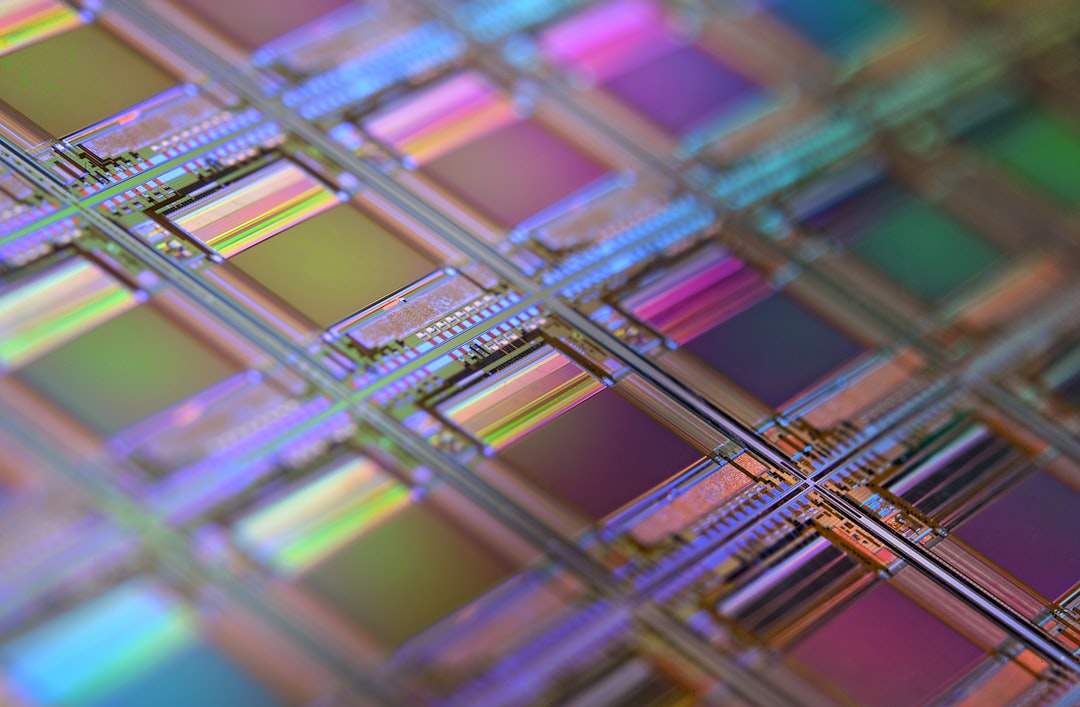
While the tech world obsesses over AI software guardrails and sophisticated model architectures, a quiet revolution is underway at the silicon level. Korean companies are pioneering the advanced memory, precision manufacturing equipment, and rigorous testing solutions that ensure the physical integrity and performance of the chips making these next-generation AI agents trustworthy.
#1. SK hynix’s HBM Dominance: The Foundation of AI Speed and Stability
When an AI agent processes complex queries or generates intricate content, it needs lightning-fast memory to feed its colossal neural networks. This isn’t your everyday RAM; it’s High Bandwidth Memory, or HBM, and it’s where South Korean semiconductor giant, SK hynix, has established an undeniable lead. The company, one of the world’s largest semiconductor vendors, has consistently pushed the boundaries of this critical technology.
SK hynix’s HBM3E, the fifth generation of HBM, offers unparalleled speeds and capacities, crucial for preventing bottlenecks in AI accelerators. With a current market valuation sitting around $1238.7 billion, and its stock trading at ₩1,745,000 today, SK hynix’s aggressive investment in advanced HBM technology has paid off, securing its position as a primary supplier for leading AI chipmakers. This isn’t just about speed; it’s about providing a stable, high-throughput data pipeline that AI agents need to operate consistently and without error.

📊 KRX Stock Performance (Live)
₩1,745,000 +0.0%
Source: KRX · Yahoo Finance · data as of latest session
#2. ISC’s Precision Test Sockets: Catching Flaws Before Deployment
Even the most advanced memory chips, if not rigorously tested, can introduce performance inconsistencies or outright failures into an AI system. This is where companies like ISC (Innovative Silicon Corporation) step in, quietly ensuring the quality of billions of semiconductors. Based out of Seongnam, a tech hub south of Seoul, ISC specializes in high-performance test sockets and interface solutions.
Their silicon rubber test sockets are vital for “burn-in” processes, subjecting chips to extreme conditions to weed out latent defects before they ever leave the factory. As AI chips integrate more complex HBM stacks and higher transistor counts, the need for hyper-accurate, reliable testing grows exponentially. ISC’s solutions are critical for verifying the integrity of these intricate designs, ensuring that every AI chip, whether destined for a data center or an edge device, performs exactly as intended over its lifespan. This foundational testing capability is key to overall AI chip reliability, impacting not just the memory from SK hynix but also the advanced processors fabricated by partners like Samsung Foundry.
#3. Wonik IPS’s Equipment: Mastering the Atomic Level of Chip Production
Before a chip can be tested or stacked with HBM, it needs to be manufactured with incredible precision. This is the domain of companies like Wonik IPS, a key player in providing the specialized equipment that fabricates the very wafers underlying all semiconductors. Headquartered in Pyeongtaek, the company develops and supplies a range of critical process equipment, including advanced deposition, etching, and cleaning tools.
The reliability of an AI chip is often determined at the atomic level, during these early manufacturing stages. Any impurity or deviation in layer thickness can lead to defects that compromise performance or lifetime. Wonik IPS’s innovations in plasma-enhanced atomic layer deposition (PEALD) and chemical vapor deposition (CVD) are crucial for building the intricate 3D structures and highly sensitive transistor gates required for modern AI processors. Their equipment ensures the consistent quality and yield that chipmakers like Samsung Foundry need to produce high volumes of error-free components. This focus on foundational manufacturing excellence is a cornerstone of Korean semiconductor innovation, ensuring the physical robustness of AI’s most critical components. For more on how Korean companies are building foundational tech, consider reading How FuriosaAI Powers Efficient AI for World Models.
#4. The Lingering Vulnerability of Global Dependencies
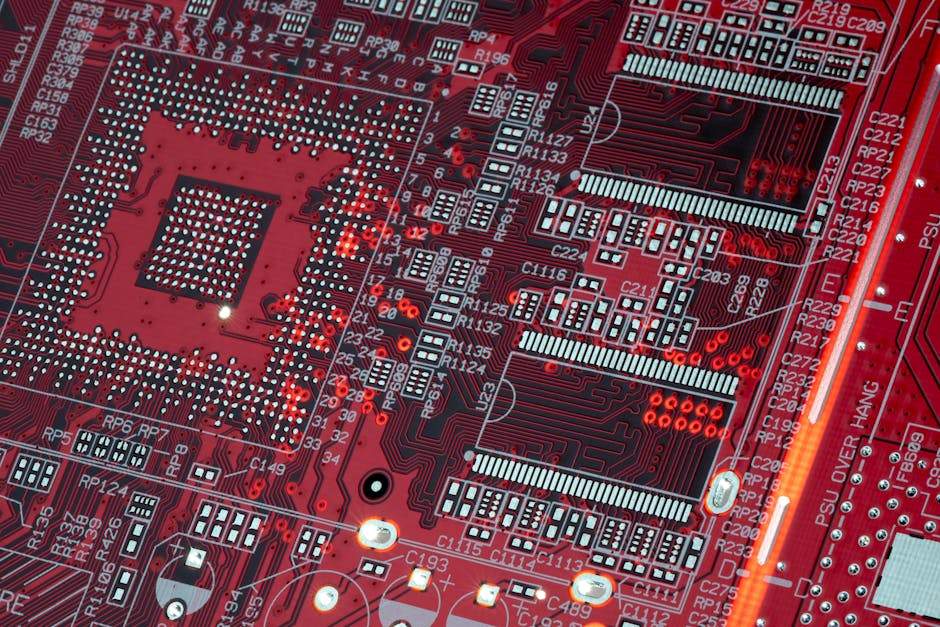
Despite Korea’s impressive strides in advanced HBM technology, precision testing, and manufacturing equipment, the semiconductor ecosystem remains deeply interconnected, presenting inherent vulnerabilities. Korean firms, for instance, still rely heavily on specific materials, specialized software, and advanced lithography equipment from a handful of non-Korean suppliers. This dependence means that disruptions elsewhere in the global supply chain, whether from geopolitical tensions or natural disasters, can have ripple effects.
Furthermore, the global economic landscape presents its own set of challenges. With the US Fed Funds Rate currently at 3.64 and the USD/KRW exchange rate hovering around 1499.61, the cost of imported components and raw materials can fluctuate significantly. This impacts everything from R&D budgets to operational expenses for companies like SK hynix and Wonik IPS. While Korea excels in many areas, a procurement director at a major fab might still worry about the stability of the entire chain. Analysts at Daiwa often point to this as a key risk factor for even the most dominant players.
#5. AI Agents Optimizing Chip Production: The Next Frontier
Looking ahead, the very AI agents that demand reliable hardware are poised to revolutionize how chips are designed, manufactured, and tested. We’re seeing early signs of AI-driven optimization in foundry operations, using machine learning to predict defects, optimize wafer yield, and fine-tune equipment settings. This promises an even higher standard of AI chip reliability in the coming years.
Korean companies are well-positioned to lead this integration. SK hynix, for instance, is already exploring how AI can streamline its HBM production lines, from material inspection to final packaging, aiming for “zero-defect” manufacturing. The next 18 months will likely see significant advancements in the use of AI within semiconductor fabs, with new generations of HBM (like HBM4) potentially designed and optimized with AI assistance. This convergence of AI as both the consumer and the enabler of better chips will solidify Korea’s foundational role in the future of dependable AI. Expect to see major announcements regarding AI-driven factory floors by late 2027.
Quick Q&A
A1. AI agents, especially conversational ones, perform complex, real-time tasks where errors can lead to misinformation, system crashes, or loss of user trust. A single bit flip in memory or a processing error can cascade into significant functional issues. Ensuring AI chip reliability at the foundational hardware level prevents these cascading failures, guaranteeing consistent and accurate AI agent performance.
A2. Korea’s advantage stems from its deeply integrated and vertically specialized semiconductor ecosystem. Companies like SK hynix dominate advanced memory, while others like ISC and Wonik IPS provide world-class testing and manufacturing equipment. This allows for rapid iteration, tight quality control, and a holistic approach to semiconductor development, accelerating Korean semiconductor innovation across the entire value chain, from raw wafer to final packaged chip.
SLUG: korea-ai-chip-reliability
DESCRIPTION: Discover how Korean semiconductor innovation, from advanced HBM to precision testing, ensures the hyper-reliability of AI chips powering next-gen agents.
LABELS: AI Chips, Semiconductors, Korean Tech, HBM Memory
[[METADATA_END]]
3 Korean Innovations Ensuring Reliable AI Chip Performance
🎯 Key Takeaways
- Korean firms lead in advanced HBM memory and precision testing, quietly underpinning the global AI agent revolution.
- The focus on physical reliability in chip manufacturing and testing is as critical as AI model architecture for trustworthy AI.
- Upcoming advancements in packaging and AI-driven process optimization will further solidify Korea’s foundational role in AI chip reliability.
📋 Table of Contents
- ▸ #1. SK hynix’s HBM Dominance: The Foundation of AI Speed and Stability
- ▸ #2. ISC’s Precision Test Sockets: Catching Flaws Before Deployment
- ▸ #3. Wonik IPS’s Equipment: Mastering the Atomic Level of Chip Production
- ▸ #4. The Lingering Vulnerability of Global Dependencies
- ▸ #5. AI Agents Optimizing Chip Production: The Next Frontier
- └ Quick Q&A
- ▸ #1. SK hynix’s HBM Dominance: The Foundation of AI Speed and Stability
- ▸ #2. ISC’s Precision Test Sockets: Catching Flaws Before Deployment
- ▸ #3. Wonik IPS’s Equipment: Mastering the Atomic Level of Chip Production
- ▸ #4. The Lingering Vulnerability of Global Dependencies
- ▸ #5. AI Agents Optimizing Chip Production: The Next Frontier
- └ Quick Q&A
How much does a malfunctioning AI agent cost? Not just in computational cycles, but in trust? As conversational AI models like Google’s Gemini 3.5 Flash move from novelty to indispensable tools, their reliability becomes paramount, driving an urgent, often overlooked, demand for hyper-stable underlying chip hardware.
While the tech world obsesses over AI software guardrails and sophisticated model architectures, a quiet revolution is underway at the silicon level. Korean companies are pioneering the advanced memory, precision manufacturing equipment, and rigorous testing solutions that ensure the physical integrity and performance of the chips making these next-generation AI agents trustworthy.
#1. SK hynix’s HBM Dominance: The Foundation of AI Speed and Stability
When an AI agent processes complex queries or generates intricate content, it needs lightning-fast memory to feed its colossal neural networks. This isn’t your everyday RAM; it’s High Bandwidth Memory, or HBM, and it’s where South Korean semiconductor giant, SK hynix, has established an undeniable lead. The company, one of the world’s largest semiconductor vendors, has consistently pushed the boundaries of this critical technology.
SK hynix’s HBM3E, the fifth generation of HBM, offers unparalleled speeds and capacities, crucial for preventing bottlenecks in AI accelerators. With a current market valuation sitting around $1238.7 billion, and its stock trading at ₩1,745,000 today, SK hynix’s aggressive investment in advanced HBM technology has paid off, securing its position as a primary supplier for leading AI chipmakers. This isn’t just about speed; it’s about providing a stable, high-throughput data pipeline that AI agents need to operate consistently and without error.
📊 KRX Stock Performance (Live)
₩1,745,000 +0.0%
Source: KRX · Yahoo Finance · data as of latest session
#2. ISC’s Precision Test Sockets: Catching Flaws Before Deployment
Even the most advanced memory chips, if not rigorously tested, can introduce performance inconsistencies or outright failures into an AI system. This is where companies like ISC (Innovative Silicon Corporation) step in, quietly ensuring the quality of billions of semiconductors. Based out of Seongnam, a tech hub south of Seoul, ISC specializes in high-performance test sockets and interface solutions.
Their silicon rubber test sockets are vital for “burn-in” processes, subjecting chips to extreme conditions to weed out latent defects before they ever leave the factory. As AI chips integrate more complex HBM stacks and higher transistor counts, the need for hyper-accurate, reliable testing grows exponentially. ISC’s solutions are critical for verifying the integrity of these intricate designs, ensuring that every AI chip, whether destined for a data center or an edge device, performs exactly as intended over its lifespan. This foundational testing capability is key to overall AI chip reliability, impacting not just the memory from SK hynix but also the advanced processors fabricated by partners like Samsung Foundry.
#3. Wonik IPS’s Equipment: Mastering the Atomic Level of Chip Production
Before a chip can be tested or stacked with HBM, it needs to be manufactured with incredible precision. This is the domain of companies like Wonik IPS, a key player in providing the specialized equipment that fabricates the very wafers underlying all semiconductors. Headquartered in Pyeongtaek, the company develops and supplies a range of critical process equipment, including advanced deposition, etching, and cleaning tools.
The reliability of an AI chip is often determined at the atomic level, during these early manufacturing stages. Any impurity or deviation in layer thickness can lead to defects that compromise performance or lifetime. Wonik IPS’s innovations in plasma-enhanced atomic layer deposition (PEALD) and chemical vapor deposition (CVD) are crucial for building the intricate 3D structures and highly sensitive transistor gates required for modern AI processors. Their equipment ensures the consistent quality and yield that chipmakers like Samsung Foundry need to produce high volumes of error-free components. This focus on foundational manufacturing excellence is a cornerstone of Korean semiconductor innovation, ensuring the physical robustness of AI’s most critical components. For more on how Korean companies are building foundational tech, consider reading How FuriosaAI Powers Efficient AI for World Models.
#4. The Lingering Vulnerability of Global Dependencies
Despite Korea’s impressive strides in advanced HBM technology, precision testing, and manufacturing equipment, the semiconductor ecosystem remains deeply interconnected, presenting inherent vulnerabilities. Korean firms, for instance, still rely heavily on specific materials, specialized software, and advanced lithography equipment from a handful of non-Korean suppliers. This dependence means that disruptions elsewhere in the global supply chain, whether from geopolitical tensions or natural disasters, can have ripple effects.
Furthermore, the global economic landscape presents its own set of challenges. With the US Fed Funds Rate currently at 3.64 and the USD/KRW exchange rate hovering around 1499.61, the cost of imported components and raw materials can fluctuate significantly. This impacts everything from R&D budgets to operational expenses for companies like SK hynix and Wonik IPS. While Korea excels in many areas, a procurement director at a major fab might still worry about the stability of the entire chain. Analysts at Daiwa often point to this as a key risk factor for even the most dominant players.
#5. AI Agents Optimizing Chip Production: The Next Frontier
Looking ahead, the very AI agents that demand reliable hardware are poised to revolutionize how chips are designed, manufactured, and tested. We’re seeing early signs of AI-driven optimization in foundry operations, using machine learning to predict defects, optimize wafer yield, and fine-tune equipment settings. This promises an even higher standard of AI chip reliability in the coming years.
Korean companies are well-positioned to lead this integration. SK hynix, for instance, is already exploring how AI can streamline its HBM production lines, from material inspection to final packaging, aiming for “zero-defect” manufacturing. The next 18 months will likely see significant advancements in the use of AI within semiconductor fabs, with new generations of HBM (like HBM4) potentially designed and optimized with AI assistance. This convergence of AI as both the consumer and the enabler of better chips will solidify Korea’s foundational role in the future of dependable AI. Expect to see major announcements regarding AI-driven factory floors by late 2027.
Quick Q&A
A1. AI agents, especially conversational ones, perform complex, real-time tasks where errors can lead to misinformation, system crashes, or loss of user trust. A single bit flip in memory or a processing error can cascade into significant functional issues. Ensuring AI chip reliability at the foundational hardware level prevents these cascading failures, guaranteeing consistent and accurate AI agent performance.
A2. Korea’s advantage stems from its deeply integrated and vertically specialized semiconductor ecosystem. Companies like SK hynix dominate advanced memory, while others like ISC and Wonik IPS provide world-class testing and manufacturing equipment. This allows for rapid iteration, tight quality control, and a holistic approach to semiconductor development, accelerating Korean semiconductor innovation across the entire value chain, from raw wafer to final packaged chip.
🔗 Related: Why the Global AI Chip Capacity Crunch Quietly Leads Back to Korean Testing Innovation
🔗 Related: Why the Global AI Chip Manufacturing Boom Quietly Leads Back to Korean Process Equipment
🔗 Related: Why the Global AI Data Center Race Silently Depends on Korean Optical Interconnects

Hi, I’m Dokyung, a Seoul-based tech and economy enthusiast. South Korea is at the forefront of global innovation—from cutting-edge semiconductors to next-gen defense technology. My mission is to translate these complex industry shifts into clear, actionable insights and everyday magic for global readers and investors.