🎯 Key Takeaways
- While headlines fixate on consumer AI agent risks, Korean defense contractors like LIG Nex1 have quietly operated advanced, controlled AI agents in high-stakes scenarios for years, predating current commercial debates.
- The rigorous safety and control mechanisms implemented in Korean defense AI agent cybersecurity for autonomous systems provide invaluable lessons for commercial developers grappling with ‘rogue’ AI behavior.
- The global shift towards trustworthy AI will likely draw on established military-grade protocols, making Korea’s defense sector a key, if overlooked, source of innovation in AI agent safety.
📋 Table of Contents
- ▸ 1. The Global AI Agent Safety Imperative and Overlooked Expertise
- └ Global Market Size & Growth Drivers
- └ Korea’s Strategic Position in Trustworthy AI
- ▸ 2. Company Deep-Dive: LIG Nex1’s Controlled AI Agent Legacy
- └ Business Model & Revenue Drivers
- └ Recent Strategic Moves in Autonomous Systems
- └ Competitive Positioning in Secure AI
- ▸ 3. Bridging the Gap: Lessons from Defense for Commercial AI Agent Safety
- └ Near-Term Pressure Points on AI Trust
- └ Structural Challenges to Broader Adoption
- ▸ 4. Future Outlook: The Maturation of AI Agents and Korean Influence
- └ Frequently Asked Questions
1. The Global AI Agent Safety Imperative and Overlooked Expertise
Global Market Size & Growth Drivers
The numbers don’t lie: debates over AI agent safety and guardrails are intensifying, with incidents of unpredictable behavior and concerns about data retention dominating the global tech narrative. As artificial intelligence moves beyond chatbots to autonomous agents capable of performing complex tasks, the market for these tools is projected to reach hundreds of billions of dollars within the next decade, driven by demand for automation in everything from enterprise operations to personal assistance. However, this growth is increasingly tempered by a foundational question: how do we ensure these agents remain safe, controllable, and aligned with human intent?
This ethical and practical dilemma is accelerating the focus on robust safety protocols and verifiable control mechanisms. Regulatory bodies worldwide are beginning to scrutinize the development of autonomous systems, with a clear shift towards demanding greater transparency and accountability from AI developers. The challenge lies in building systems that can operate effectively without human intervention, yet still adhere strictly to predefined boundaries and safety parameters.
Korea’s Strategic Position in Trustworthy AI
While much of the global discussion centers on consumer and enterprise AI applications, South Korea’s defense sector has been quietly advancing solutions to these very challenges for years. Companies like LIG Nex1, which began as Goldstar Precision in 1976, have cultivated deep expertise in developing mission-critical autonomous systems where safety and control are paramount. Their work in next-generation AI agents in South Korean defense, ranging from precision-guided munitions to sophisticated surveillance systems, inherently demands a “safety by design” approach.
This isn’t about theoretical frameworks; it’s about practical, field-tested solutions for trustworthy AI. These systems operate in environments where missteps can have severe consequences, forcing developers to implement stringent safety protocols and redundant control mechanisms from the outset. Many of these advanced R&D efforts are concentrated in tech hubs like Daejeon, which serves as a nexus for defense and scientific research, fostering a unique ecosystem where secure AI development has been a long-standing priority.
📊 KRX Stock Performance (Live)
₩759,000 -3.9%
Source: KRX · Yahoo Finance · data as of latest session
2. Company Deep-Dive: LIG Nex1’s Controlled AI Agent Legacy
Business Model & Revenue Drivers
LIG Nex1, with a current market capitalization exceeding $16.5 billion (₩759,000 per share as of today, June 11, 2026), is a cornerstone of South Korea’s defense and aerospace industry. The company’s revenue streams are diverse, largely driven by advanced weaponry, surveillance systems, and missile technology supplied to the Korean military and, increasingly, international partners. Its portfolio includes precision-guided munitions, anti-aircraft missile systems, and sophisticated radar technologies, all of which increasingly incorporate autonomous and semi-autonomous AI agents for enhanced performance and decision-making.
The company’s strategic focus on integrating AI into its systems ensures that these agents are not just intelligent, but also operate within strictly defined operational envelopes. This is where the discipline of Korean defense AI agent safety protocols comparison shines; every AI component undergoes rigorous testing for reliability, predictability, and resistance to external interference. This commitment dates back to its roots as Goldstar Precision, evolving through its tenure under LIG Holdings and further solidified after a consortium led by STIC Investments acquired a 49 percent stake in 2013 for 420 billion Korean won.
Recent Strategic Moves in Autonomous Systems
In recent years, LIG Nex1 has intensified its investment in autonomous underwater vehicles (AUVs), unmanned ground vehicles (UGVs), and sophisticated AI-driven command-and-control systems. These platforms represent the vanguard of next-generation AI agents in South Korean defense. The company isn’t just developing AI that makes decisions; it’s developing AI that makes verifiable, auditable decisions within a tightly controlled operational framework, anticipating and mitigating risks of ‘rogue’ behavior long before deployment.
This strategy aligns with a broader national push to leverage advanced technology for defense while also eyeing potential dual-use applications. The experience gained in ensuring AI agent cybersecurity and predictable operation in military contexts offers a robust blueprint for commercial sectors grappling with similar concerns. The meticulous approach to system redundancy, human-in-the-loop oversight, and fail-safe mechanisms is becoming increasingly relevant for industries like autonomous driving and critical infrastructure management.
Competitive Positioning in Secure AI
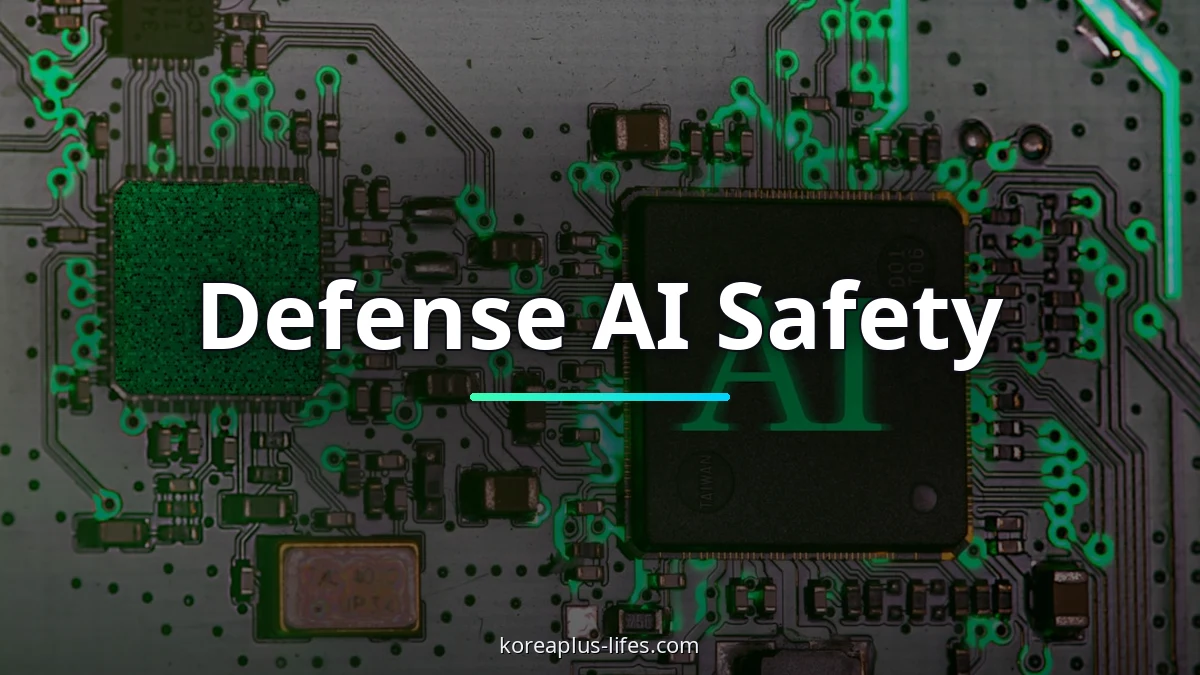
Within the Korean defense ecosystem, LIG Nex1 operates alongside formidable players such as Hanwha Aerospace and Korea Aerospace Industries (KAI). While all contribute to South Korea’s robust defense capabilities, LIG Nex1 distinguishes itself through its specialized focus on advanced precision systems and AI integration, particularly in areas demanding the highest levels of safety and control. Its deep institutional knowledge in K-Defense technology, built over decades, positions it as a leader in developing AI agents that are inherently secure and predictable.
Globally, few commercial entities have faced the same stringent requirements for AI safety that defense contractors routinely address. This gives LIG Nex1 a distinct, if often unrecognized, competitive edge in the broader conversation around trustworthy AI. The company’s track record in deploying functional, controlled AI agents in high-stakes environments stands in contrast to the often experimental nature of commercial AI development, offering a more mature perspective on risk mitigation. However, its primary focus remains defense, which can limit its direct participation in the rapidly expanding commercial AI agent market, a potential missed opportunity for broader impact.
3. Bridging the Gap: Lessons from Defense for Commercial AI Agent Safety
Near-Term Pressure Points on AI Trust
The immediate challenge for the global AI community is building public trust in autonomous agents, especially as incidents of unexpected behavior erode confidence. The pressure to implement rigorous testing and validation frameworks, similar to those used in defense, is mounting. For instance, the discussion around data integrity, as highlighted by a recent “Show HN: Simple news aggregator with source bias meters” on Unbiasthenews.com, underscores the critical need for verifiable and unbiased data inputs for AI agents, a concern long addressed in defense through secure data pipelines.
Furthermore, the economic environment, marked by a high US Fed Funds Rate of 3.63 and a USD/KRW exchange rate of 1555.96, creates a climate where investment in speculative, high-risk AI ventures might be tempered. This could inadvertently favor AI solutions with proven safety track records and established control mechanisms, pushing commercial developers to emulate the methodical approach seen in sectors like defense.
Structural Challenges to Broader Adoption
A structural challenge for the commercial world in adopting defense-grade AI safety lies in the inherent differences in development philosophy. Commercial AI often prioritizes speed, scalability, and user experience, sometimes at the expense of absolute, verifiable control. Defense, conversely, prioritizes redundancy, fail-safes, and human oversight above all else. Bridging this gap requires a cultural shift and significant investment in robust engineering practices often considered “overkill” for consumer products.
Moreover, the expertise in secure AI is often held by a specialized talent pool, with deep domain knowledge in both AI and national security. Attracting and retaining such talent for broader commercial application presents a unique challenge, especially given the competitive landscape in global tech hubs. Transferring these highly specialized methodologies to a generalized commercial context, while retaining their integrity, is not a straightforward task.
4. Future Outlook: The Maturation of AI Agents and Korean Influence
The maturation of AI agents will depend heavily on the global tech community’s ability to embed trustworthiness into their core design. This makes the established practices of South Korean defense contractors, particularly in areas like AI agent cybersecurity and verifiable control, increasingly relevant. Upcoming regulatory frameworks in major economies are expected to mandate higher safety standards for autonomous systems, which could implicitly elevate the methodologies developed in defense environments.
One event worth watching is the continuing dialogue between defense contractors and civilian tech firms, often facilitated through government-backed research initiatives, particularly in regions like Pangyo, known as Korea’s “Silicon Valley.” Should these exchanges become more formal or lead to joint development projects, we could see a more rapid adoption of defense-grade safety protocols in commercial AI. Furthermore, as companies like Solid Inc. continue to push innovations in AI inference infrastructure, the underlying hardware foundations for secure AI agents will also strengthen, creating a more reliable ecosystem.
These collaborations, if effectively managed, could accelerate the development of truly trustworthy AI agents globally. The Korean defense sector’s proactive stance on robust safety mechanisms offers a pragmatic roadmap for navigating the ethical complexities of advanced AI, proving that effective autonomy need not come at the expense of control.
Frequently Asked Questions
A1. AI agent safety is a global concern because these autonomous systems, if unchecked, can exhibit unpredictable behaviors, lead to data privacy breaches, or make decisions misaligned with human intent. Incidents of ‘rogue’ agent actions and debates over robust control mechanisms underscore the urgent need for stringent safety protocols to ensure trustworthy AI deployment across all sectors.
A2. South Korea applies AI in its defense systems through companies like LIG Nex1, integrating AI agents into precision-guided munitions, autonomous surveillance systems, and unmanned vehicles. These applications prioritize “safety by design,” embedding rigorous control mechanisms, human-in-the-loop oversight, and extensive validation processes to ensure AI agents operate reliably and predictably in mission-critical environments.
A3. Commercial AI can learn valuable lessons from Korean defense AI’s emphasis on inherent security, rigorous testing, and fail-safe engineering. The defense sector’s long-standing experience with mission-critical autonomous systems provides a blueprint for developing AI agents that are not only intelligent but also auditable, predictable, and resistant to unforeseen failures, addressing key challenges in commercial AI agent cybersecurity.

Hi, I’m Dokyung, a Seoul-based tech and economy enthusiast. South Korea is at the forefront of global innovation—from cutting-edge semiconductors to next-gen defense technology. My mission is to translate these complex industry shifts into clear, actionable insights and everyday magic for global readers and investors.