
🎯 Key Takeaways
- HL Mando, a major automotive supplier, leverages its deep expertise in autonomous driving to develop genuinely adaptable AI and control systems for factory robots, moving beyond fixed-function automation.
- The global conversation around ‘artificial general engineers’ and non-specialized factory robots often overlooks the practical, refined solutions already operational within South Korea’s competitive manufacturing ecosystem.
- The upcoming integration of advanced perception and decision-making AI into more mainstream manufacturing processes will significantly reduce retooling costs and accelerate product cycles globally.
📋 Table of Contents
- ▸ 1. The Global Race for Adaptable Factory Automation
- └ The Vision of General-Purpose Factory Robots
- └ Korea’s Quiet Leadership in Manufacturing AI
- ▸ 2. Company Deep-Dive: HL Mando’s Adaptable Factory Automation
- └ Business Model & Revenue Drivers
- └ Translating Autonomous Driving into Factory Intelligence
- └ Competitive Positioning of South Korea’s Advanced Robotics in Manufacturing
- ▸ 3. Navigating Integration and Global Scaling Challenges for Korean Factory Robots
- └ Near-Term Pressure Points
- └ Structural Challenges to Watch for South Korea’s Advanced Robotics in Manufacturing
- ▸ 4. The Road Ahead: How Korean Factory Robots Will Adapt to New Products
- └ Frequently Asked Questions
1. The Global Race for Adaptable Factory Automation
The Vision of General-Purpose Factory Robots
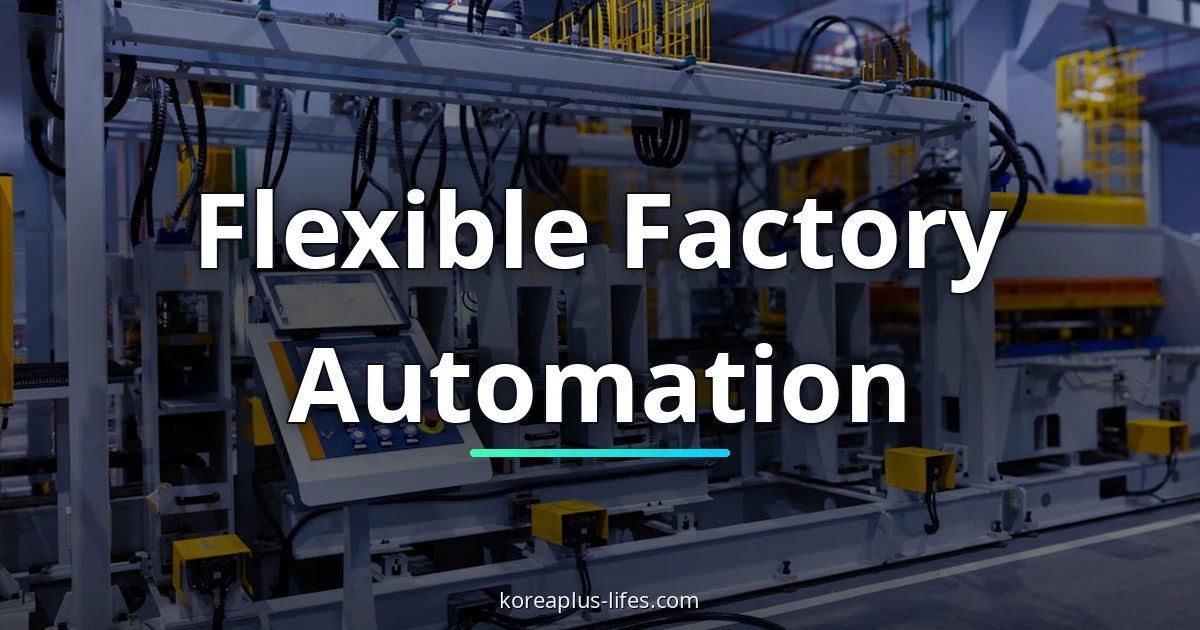
The consensus regarding industrial robotics is that specialization is king. Factory robots are typically engineered for highly specific, repetitive tasks, excelling at speed and precision within a narrow operational envelope. This paradigm, however, is being challenged by a global push for more flexible manufacturing, driven by shorter product lifecycles and demand for customization. The vision of ‘artificial general engineers’ and robots that can adapt to a wide array of manufacturing tasks beyond fixed functions is capturing significant attention.
Analysts project the global industrial robotics market to reach well over $100 billion by the end of the decade, with much of that growth spurred by demand for these more versatile systems. This shift promises to radically cut the prohibitive retooling costs associated with introducing new product lines, a critical factor for any company looking to maintain agility in competitive markets.
Korea’s Quiet Leadership in Manufacturing AI
While platforms like Unbiasthenews.com aggregate a flurry of announcements from Western startups touting their visions for flexible factory robots, a deeper look reveals that South Korea has been diligently perfecting the practical application of truly adaptable factory automation for years. With its fiercely competitive industrial sector and a pervasive drive for efficiency, Korean companies have had a strong incentive to move beyond rigid production lines.
This leadership isn’t just theoretical. It stems from a robust ecosystem of advanced manufacturing and a unique translation of expertise. What many don’t realize is that the same sophisticated AI and control systems powering autonomous vehicles in places like Pangyo’s tech valley are directly informing the next generation of industrial robots. South Korea’s emphasis on high-volume, high-quality production, combined with rapid innovation cycles, has created fertile ground for developing practical, adaptable solutions that are already seeing real-world deployment. The USD/KRW exchange rate, currently around 1555.96, also provides a competitive edge for Korean exports, including advanced manufacturing solutions, in global markets.
2. Company Deep-Dive: HL Mando’s Adaptable Factory Automation
Business Model & Revenue Drivers
HL Mando Corporation, headquartered in Seoul, Korea, isn’t typically discussed in the context of advanced robotics, yet its core business is a proving ground for the necessary AI. As the largest global Tier 1 Korean Original Equipment Manufacturer (OEM), HL Mando supplies critical automotive components like braking, steering, and suspension systems to a vast roster of global automobile distributors, including General Motors, Ford, BMW, and Hyundai Motor Company. This extensive client list drives its impressive annual profit, consistently topping over US$6 billion.
The company’s revenue isn’t just about selling parts; it’s about engineering sophistication and manufacturing efficiency at scale. Its deep involvement in developing advanced driver-assistance systems (ADAS) and autonomous driving technologies for its automotive clients provides a unique foundation. This expertise in sensor fusion, real-time decision-making, and robust control algorithms for complex, dynamic environments is directly transferable to industrial automation. Within this ecosystem, companies like Hyundai Mobis, another major automotive parts supplier, and Hanwha Aerospace, with its diverse manufacturing capabilities, also contribute to a vibrant national approach to advanced production. The underlying AI chip manufacturing that supports these complex systems is also a crucial, often unseen, component of this progress.
Translating Autonomous Driving into Factory Intelligence
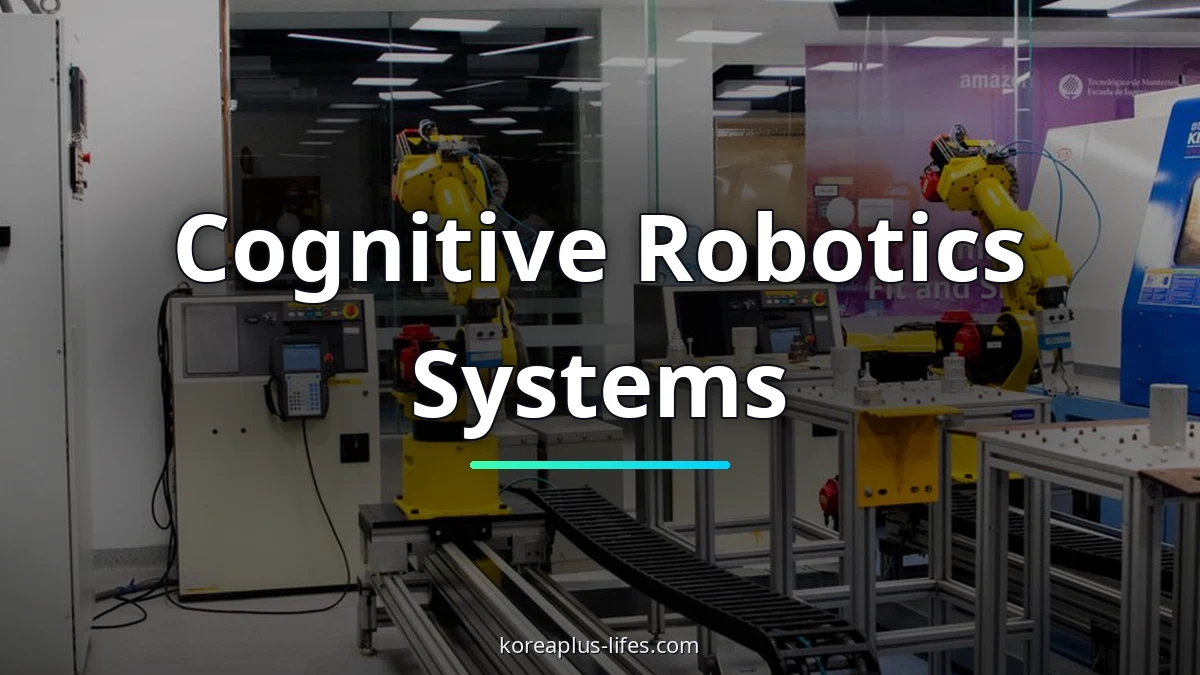
HL Mando’s unique edge lies in its ability to translate the complex demands of autonomous driving into intelligent production lines. While a self-driving car needs to perceive its environment, identify obstacles, predict movements, and make real-time decisions, a truly adaptable factory robot requires similar capabilities. Instead of navigating traffic, it navigates a diverse array of components, tooling, and workstations. This means advanced vision systems, AI-powered object recognition for varying part types, and dynamic path planning to handle irregular placements or changes in assembly sequences.
In the past year, HL Mando has reportedly been intensifying its internal applications and external collaborations focused on factory automation solutions that leverage their proprietary autonomous technologies. This strategy aligns with the broader Halla Group’s vision for intelligent mobility and smart infrastructure, extending its influence beyond the vehicle itself into its very creation. The company is actively deploying and refining these systems in its own factories, using real-world manufacturing data to train and enhance the AI’s adaptability, particularly for tasks involving component handling and assembly where precision and flexibility are paramount.
Competitive Positioning of South Korea’s Advanced Robotics in Manufacturing
HL Mando’s approach to adaptable factory automation places it in a strong competitive position, particularly against traditional industrial robot manufacturers who historically focus on hardware and fixed programming. While European and Japanese giants like Kuka, Fanuc, and ABB dominate the hardware market, HL Mando is differentiating itself through the sophistication of its underlying AI and control software. This focus allows their systems to “learn” and adapt to new product variants or tasks with minimal human intervention, dramatically reducing the lead time for new product introductions.
The company isn’t aiming to replace existing robot hardware but to make that hardware immensely more intelligent and versatile. This software-centric strategy, honed through years in the high-stakes automotive sector, positions HL Mando as a key enabler of genuine flexible manufacturing. However, the initial capital expenditure for such advanced, integrated systems can be substantial, posing a challenge for smaller manufacturers looking to adopt this technology.
3. Navigating Integration and Global Scaling Challenges for Korean Factory Robots
Near-Term Pressure Points
Despite the technological lead, scaling these advanced HL Mando smart factory automation technology solutions globally faces several near-term pressure points. One significant challenge is the integration complexity. Deploying sophisticated AI-driven robots often requires a complete overhaul or significant adaptation of existing factory layouts and IT infrastructure, which can be disruptive and expensive. Furthermore, the current US Fed Funds Rate at 3.63% impacts borrowing costs globally, potentially slowing down large-scale capital investments in new automation technologies for some manufacturers.
Another pressure point lies in market education and trust. Manufacturers outside of Korea may be hesitant to adopt systems that fundamentally change their production paradigms, preferring incremental updates to proven, albeit less flexible, solutions. This creates a need for clear demonstrations of ROI and robust support systems for installation and maintenance.
Structural Challenges to Watch for South Korea’s Advanced Robotics in Manufacturing
Looking longer term, structural challenges include the talent gap in AI and robotics. While Korea boasts excellent engineers, the demand for specialists capable of designing, deploying, and maintaining these cutting-edge systems is global and intense. Attracting and retaining top talent remains a constant battle for all players in this field. Moreover, intellectual property protection, especially for the nuanced AI algorithms that drive adaptability, will be crucial as these solutions gain global traction.
The rise of competing solutions from other tech-forward nations also presents a structural challenge. While Korea has a head start in practical application, continuous R&D investment is essential to maintain that lead against well-funded startups and established industrial players. The cost of advanced components, including specialized sensors and processing units, could also fluctuate, impacting the overall economics of deployment.
4. The Road Ahead: How Korean Factory Robots Will Adapt to New Products
The coming 12-18 months will be crucial for the widespread adoption of genuinely adaptable automation. Expect to see HL Mando and its peers push for more standardized integration protocols, easing the transition for manufacturers looking to upgrade their facilities without a full-scale rip-and-replace. Demonstrations of quantifiable reductions in retooling downtime and increased throughput for mixed-model production lines will be key selling points.
Further advancements in simulation environments and digital twin technology will also accelerate deployment, allowing factories to model and refine robotic workflows virtually before physical implementation. Should these technologies prove their value in diverse manufacturing settings beyond automotive, a significant expansion into electronics, consumer goods, and even specialized logistics sectors is highly probable. This widespread validation will dictate how Korean factory robots adapt to new products, offering unprecedented flexibility for global industries.
Frequently Asked Questions
A1. Korean factories are integrating advanced AI and control systems, often derived from autonomous driving technology, into their industrial robots. This allows these robots to dynamically perceive, plan, and execute tasks with varying components and sequences, moving beyond fixed-function automation. Companies like HL Mando are leading this trend, applying these systems in their own complex automotive component manufacturing lines.
A2. South Korea’s innovations in manufacturing AI focus on translating real-time decision-making, sensor fusion, and object recognition from autonomous vehicle development to factory floor applications. This enables robots to handle diverse products and reconfigure tasks with minimal downtime, creating genuinely flexible production lines. This pushes the boundaries of traditional industrial robotics and extends to broader K-Tech & Gadgets sectors.
A3. HL Mando enables adaptable factory automation by leveraging its extensive experience in developing autonomous driving systems for vehicles. This includes expertise in advanced perception, AI-driven decision-making, and precise motion control, which are directly applied to industrial robots. The company’s internal application in its multi-billion dollar automotive component manufacturing further refines these systems for real-world adaptability.
🔗 Related: 5 Reasons Global Satellite Development Quietly Runs Through Korea’s Aerospace Industry
🔗 Related: The New Space Race Relies on Unseen Resilience — Korea’s Defense Sector Holds a Hidden Key
🔗 Related: Beyond Consumer Gadgets: The Invisible RF Sensing Powerhouse

Hi, I’m Dokyung, a Seoul-based tech and economy enthusiast. South Korea is at the forefront of global innovation—from cutting-edge semiconductors to next-gen defense technology. My mission is to translate these complex industry shifts into clear, actionable insights and everyday magic for global readers and investors.