🎯 Key Takeaways
- LIG Nex1’s current market capitalization of $17.3 billion reflects substantial investor confidence in specialized defense AI, often overlooked in the broader AI agent discussion.
- Korean defense companies prioritize secure, robust, and explainable AI agents, creating an architecture less prone to the vulnerabilities found in general-purpose large language models.
- The integration of unique ethical AI frameworks into defense applications could become a new global standard for highly sensitive AI deployments beyond the military sector.
📋 Table of Contents
- ▸ #1. The Unseen Valuation in Mission-Critical AI: LIG Nex1’s $17.3 Billion Edge
- ▸ #2. Hardened AI Agents: Beyond General-Purpose Vulnerabilities
- ▸ #3. Ethical AI Frameworks Driving Unparalleled Reliability
- ▸ #4. The Security Overhead Challenge: A Counterpoint to Global Scalability
- ▸ #5. Future Trajectories: Expanding Specialized AI Beyond Defense
- └ Quick Q&A
The tech world currently tracks the rapid advancements and immense valuations of general-purpose AI agents and large language models (LLMs) from firms like DeepSeek and Cognition AI. However, the real story isn’t in consumer engagement figures or speculative enterprise revenues—it’s in the quiet, mission-critical reliability of specialized AI. South Korean defense innovators have been pioneering highly robust AI agents, setting a benchmark for secure and ethical deployment that the global tech conversation largely misses.
#1. The Unseen Valuation in Mission-Critical AI: LIG Nex1’s $17.3 Billion Edge
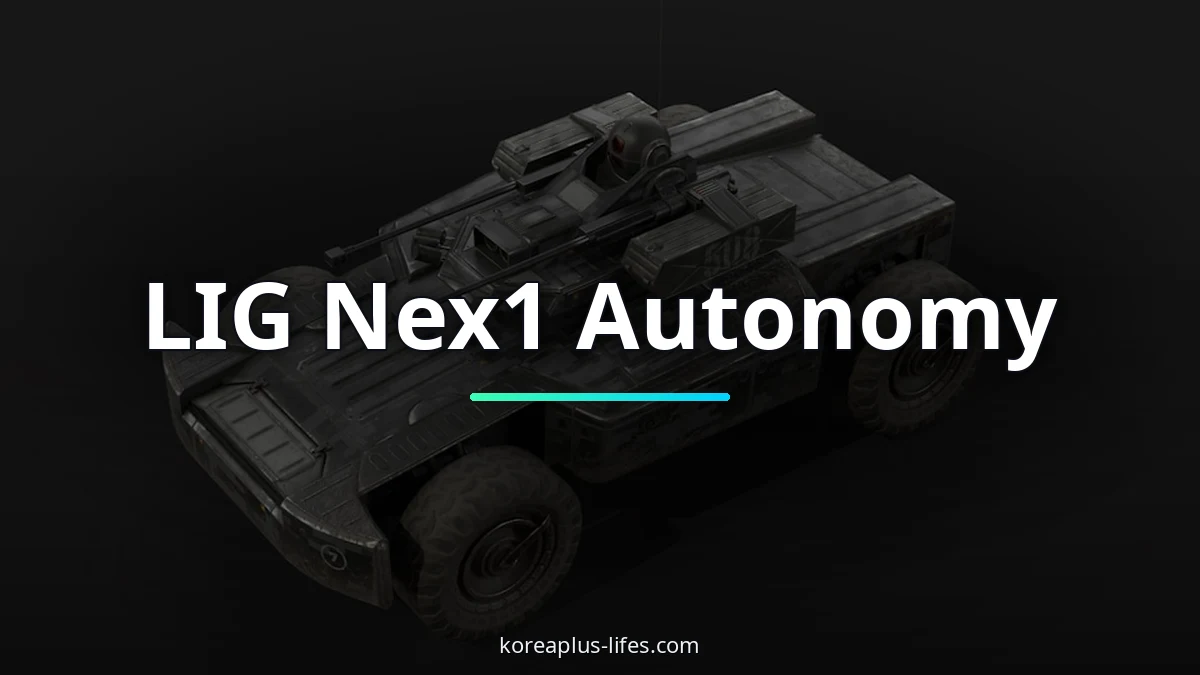
While headline-grabbing valuations for general-purpose AI startups often dominate news cycles, the quiet strength of specialized AI is evident in companies like LIG Nex1. This South Korean aerospace and arms manufacturer, originally established in 1976 as Goldstar Precision, has cultivated significant market trust by focusing on systems where failure is not an option. Its current market capitalization stands at an estimated $17.3 billion, with its stock trading at ₩792,000 as of August 13, 2026, marking a 0.5% gain today alone. This valuation underscores investor confidence in its long-term strategy and unique technological position.
The company’s performance, with a 52-week range between ₩360,000 and ₩1,118,000, reflects a steady appreciation driven by its role in critical defense programs. LIG Nex1’s work includes integrating advanced AI agents into sophisticated missile systems, radar, and command-and-control platforms. Unlike the often speculative valuations of consumer AI, LIG Nex1’s financial strength is rooted in tangible, high-assurance contracts and proven deployments. For more background on the company, readers can refer to its Wikipedia profile.
📊 KRX Stock Performance (Live)
₩792,000 +0.5%
Source: KRX · Yahoo Finance · data as of latest session
#2. Hardened AI Agents: Beyond General-Purpose Vulnerabilities
General-purpose large language models, while powerful, often face challenges related to hallucination, data privacy, and adversarial attacks. In contrast, Korean defense AI, particularly from innovators like LIG Nex1, is engineered to mitigate these vulnerabilities from inception. These specialized AI agents operate within highly constrained environments, utilizing proprietary, verified datasets that minimize error margins and enhance decision-making accuracy.
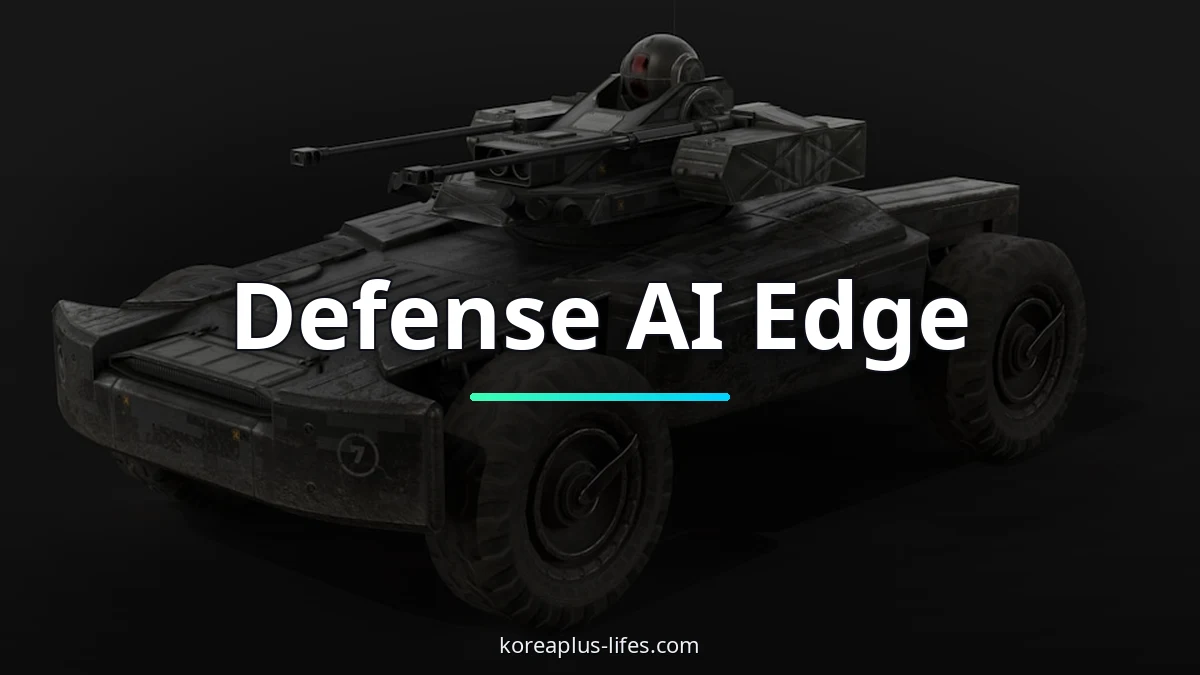
LIG Nex1’s approach to AI agent integration into defense systems emphasizes what’s known as “hardened AI.” This involves rigorous validation processes, secure hardware integrations, and real-time threat detection capabilities. For instance, their autonomous surveillance systems in remote areas leverage AI agents designed for specific sensor fusion tasks, rather than broad conversational abilities. This focused application minimizes attack surface and increases reliability. Other Korean defense players, such as Hanwha Aerospace, also contribute to this ecosystem by developing robust platforms that require such specialized AI integration.
These defense-specific agents are not about generating creative text; they’re about precise target identification, anomaly detection, and autonomous system navigation, tasks where probabilistic correctness is insufficient. This necessitates a fundamental difference in architecture and training.
#3. Ethical AI Frameworks Driving Unparalleled Reliability
A cornerstone of Korean defense AI development is the integration of unique ethical frameworks. These aren’t abstract guidelines but codified principles that inform data collection, model training, and deployment within mission-critical contexts. For example, LIG Nex1’s AI systems are developed with a strong emphasis on explainability and traceability, ensuring human operators can understand the reasoning behind an AI agent’s decision, particularly in sensitive situations. This goes beyond mere transparency; it’s about verifiable decision-making.
This “ethical-by-design” approach for how LIG Nex1 integrates AI agents into defense systems inherently enhances reliability. By ensuring data provenance, mitigating bias in training sets, and building in mechanisms for human oversight and intervention, these systems are less prone to unexpected behaviors or ethically questionable outputs. This contrasts sharply with the ongoing debates around bias and “black box” decisions in many commercial LLMs. Such rigorous development, often overlooked, directly addresses the “AI’s Reliability Crisis” that many in the tech sector are now grappling with.
| Feature | General-Purpose LLMs (e.g., DeepSeek V4 Pro) | Defense-Specialized AI Agents (e.g., LIG Nex1) |
|---|---|---|
| Primary Objective | Broad utility, human-like communication, content generation | Precision, reliability, autonomous decision support in critical scenarios |
| Core Metric | Fluency, creativity, user engagement, task completion rate | Accuracy, security, explainability, system uptime, mission success rate |
| Data Source & Validation | Vast, often uncurated internet data; statistical patterns | Curated, verified, domain-specific datasets; rigorous adversarial testing |
| Ethical Framework | Post-hoc moderation, user feedback, evolving guidelines | Embedded principles, human-in-the-loop design, auditable decision paths |
| Security Profile | Vulnerable to data leaks, adversarial prompts, “jailbreaks” | Designed for isolation, cryptographic security, real-time threat detection |
| KoreaPlus Estimate: Development Cost/Complexity | High for foundational models, lower for fine-tuning | Significantly higher due to verification, hardening, and certification requirements |
This meticulous approach for why secure AI agents rely on Korean defense tech demonstrates a strategic long-term vision for AI that prioritizes trust above all else. However, this level of specialization doesn’t come without its own set of challenges.
#4. The Security Overhead Challenge: A Counterpoint to Global Scalability
While the focus on security and reliability provides Korean defense AI with an undeniable edge in critical applications, it also presents a significant challenge for broader global scalability. The extensive validation, hardening, and certification processes required for defense-grade AI agents inherently increase development time and cost. These specialized models are often bespoke, tailored for specific hardware and mission parameters, making them less adaptable to the “one-size-fits-all” deployment typical of general-purpose LLMs.
This means that while the quality and dependability of, for instance, LIG Nex1’s AI agents are unparalleled, the pace of their adoption outside the defense sector might be slower. The high barrier to entry for development and integration could limit their immediate reach compared to rapidly deployable, albeit less secure, commercial alternatives. Companies like FuriosaAI, while developing high-performance inference chips that could power such agents, still face the hurdle of integrating specialized software stacks built to rigorous defense standards into more general computing environments.
The balance between robust security and rapid innovation remains a key tension for these specialized AI providers. The question remains whether the market will prioritize security over speed in more civilian-facing critical infrastructure.
#5. Future Trajectories: Expanding Specialized AI Beyond Defense
Despite the inherent challenges of scalability, the unique capabilities of Korean defense AI, particularly its unparalleled reliability and security, position it for significant influence beyond military applications within the next five years. As concerns about the trustworthiness of AI grow across industries, the meticulously engineered AI agents from companies like LIG Nex1 offer a template for critical civilian infrastructure. Think autonomous public transport, advanced medical diagnostics, or even secure financial trading platforms.
The ethical frameworks and robust data handling developed for defense applications provide a strong foundation for these sensitive areas. We expect to see increasing cross-pollination of these technologies, perhaps through spin-offs or dedicated commercial divisions, by the end of 2028. This shift would leverage the expertise in hardening AI agents developed in places like Pangyo’s techno valley, known for its R&D concentration. As the global economy grapples with a US Fed Funds Rate of 3.63% and a USD/KRW exchange rate of 1409.94, investment in high-assurance technologies may increasingly be seen as a hedge against broader economic instability.
Quick Q&A
A1. Korean defense technology deploys AI agents for highly specific, mission-critical tasks such as autonomous surveillance, precision guidance in missile systems, real-time threat detection, and advanced command-and-control operations. These agents are trained on curated, verified datasets to ensure unparalleled accuracy and reliability, directly contributing to national security.
A2. LIG Nex1 serves as a primary innovator in developing and integrating advanced AI agents into autonomous defense systems, ranging from sophisticated radar and communications to missile and unmanned vehicle platforms. The company focuses on creating hardened, ethically-guided AI that prioritizes security, explainability, and robust performance in demanding operational environments. Its stock, trading at ₩792,000, reflects its significant market position in this specialized sector.
A3. Specialized AI models are critical for national security because they are purpose-built for high-stakes environments where accuracy, reliability, and resistance to adversarial attacks are paramount. Unlike general-purpose LLMs, these models are developed with rigorous ethical frameworks and operate on secure, verified data, minimizing risks of hallucination or unpredictable behavior that could compromise mission success or data integrity in defense applications. For more on the broader context of Korean defense innovation, you can explore our full coverage of this sector.
📚 References & Data Sources
Written by Dokyung · KoreaPlus-Lifes
Dokyung is a Seoul-based industry watcher covering Korean semiconductors, batteries, AI infrastructure, and defense — and the companies behind them. Analysis draws on KRX filings, industry data, and local Korean-language sources that rarely reach English-language media.

Hi, I’m Dokyung, a Seoul-based tech and economy enthusiast. South Korea is at the forefront of global innovation—from cutting-edge semiconductors to next-gen defense technology. My mission is to translate these complex industry shifts into clear, actionable insights and everyday magic for global readers and investors.