
🎯 Key Takeaways
- ISC controls an estimated 70% of the global market for silicon rubber test sockets, a critical technology for testing advanced AI and HBM chips.
- The increasing complexity of AI semiconductors makes reliable pre-deployment testing more crucial than ever, escalating demand for ISC’s precision solutions.
- The company’s continued innovation in high-frequency, high-pin-count solutions will be key to maintaining its lead as chip architectures evolve.
📋 Table of Contents
- ▸ The Unseen Bottleneck: Why AI Chip Reliability Demands Specialized Testing
- └ What Changed to Make This Comparison Relevant
- └ What’s Actually at Stake
- ▸ ISC’s Quiet Dominance: Leading the Silicon Rubber Test Socket Market
- └ ISC – Strengths & Numbers in Advanced Test Sockets
- └ The Broader Market vs. ISC’s Specialization
- ▸ Innovation and Ecosystem: ISC’s Strategic Moat in Next-Gen Testing
- └ R&D, Patents & Product Roadmap
- └ Partnership & Ecosystem Advantages
- ▸ The Cyclicality and Technological Disruption Risks Facing Specialized Suppliers
- ▸ Verdict: ISC’s Enduring Role in the AI Infrastructure Era
- └ FAQ
How do the foundational components of the burgeoning AI economy, specifically the high-performance chips, ensure their promised reliability and blistering speed before they ever reach a data center? While the global tech discourse fixates on chip designers like Nvidia and foundry giants such as Samsung Foundry, the crucial, painstaking work of validating these complex semiconductors often remains in the shadows.
This piece examines the indispensable role of advanced testing infrastructure, particularly focusing on how a specialized Korean firm, ISC Corporation, has quietly emerged as the global standard-bearer in a segment vital for the AI revolution.
The Unseen Bottleneck: Why AI Chip Reliability Demands Specialized Testing
What Changed to Make This Comparison Relevant
The global appetite for artificial intelligence capabilities has driven an unprecedented surge in demand for specialized processing units. From machine learning training to inference at the edge, these chips—including GPUs and custom ASICs—are pushing the boundaries of computational power and energy efficiency. This shift isn’t just about raw speed; it’s about the consistent and reliable delivery of that speed under immense operational stress, a factor that makes every stage of manufacturing and testing more critical than ever before. The cost of a single unreliable chip, multiplied across vast data centers, can run into millions of dollars in lost computational time and potential data corruption.
Moreover, the rise of High Bandwidth Memory (HBM) as a co-processor alongside AI chips has intensified the testing challenge. HBM involves vertically stacked DRAM layers, creating incredibly dense, high-speed memory modules that are notoriously difficult to test for signal integrity and thermal performance. The precision required to validate these multi-layered structures far exceeds the capabilities of traditional test methods, making new solutions for how to ensure AI chip reliability an urgent industry priority. For a deeper look at the HBM landscape, a recent Reuters report detailed the fierce competition between SK hynix and Samsung in this space.
What’s Actually at Stake
The prize is colossal. Billions are being poured into AI infrastructure, with cloud giants like AWS and Snowflake committing substantial capital to build out their AI compute capabilities. The global semiconductor market, valued at over $600 billion annually, sees a significant portion dedicated to AI-related chips, a segment projected for rapid expansion. Any weakness in the supply chain, particularly in the reliability validation phase, threatens to undermine these massive investments. A single batch of faulty chips could stall a hyperscaler’s rollout, incur massive recall costs, and damage customer trust.
Ensuring the flawless operation of every High Bandwidth Memory module and every AI processing unit directly impacts the efficiency and profitability of data centers running around the clock. With the US Fed Funds Rate at 3.64% as of May 2026, the cost of capital for these enormous infrastructure projects means that every dollar invested in reliable components, including advanced chip testing, directly contributes to faster ROI and reduced operational risk.
ISC’s Quiet Dominance: Leading the Silicon Rubber Test Socket Market
ISC – Strengths & Numbers in Advanced Test Sockets
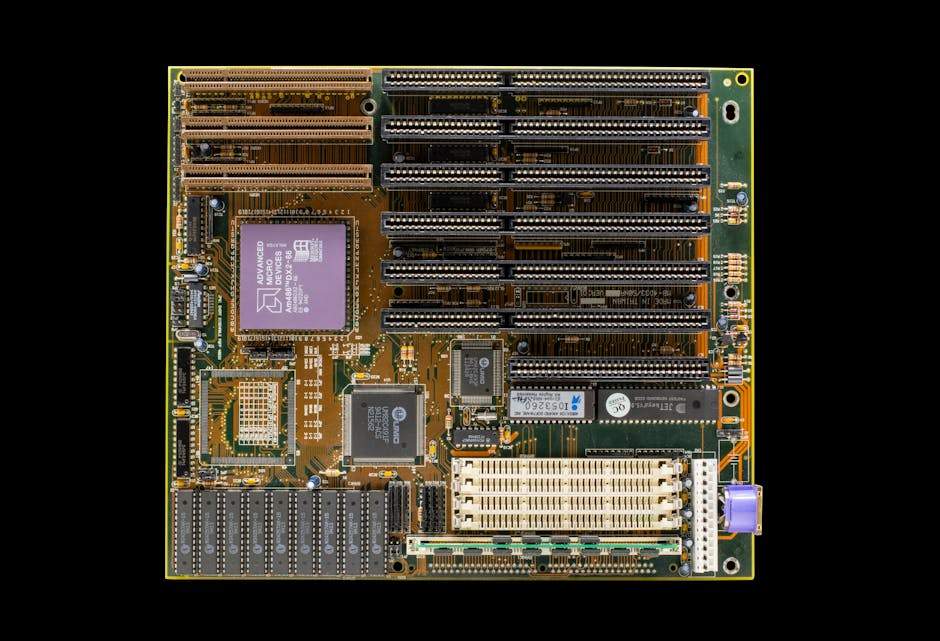
Headquartered in Pangyo, South Korea’s “Silicon Valley,” ISC Corporation has quietly carved out a commanding position in a highly specialized, yet profoundly impactful, corner of the semiconductor industry. The company is the undisputed global leader in silicon rubber test sockets, holding an estimated 70% market share in this critical segment. These sockets are not merely connectors; they are precision-engineered interfaces that allow high-speed, high-pin-count chips to be tested rigorously before final packaging. Their silicon rubber composition provides superior elasticity, allowing for a consistent, reliable connection with the delicate solder balls on advanced chips like those from Nvidia or the HBM modules from SK hynix and Samsung Foundry, minimizing damage during repeated insertions.
ISC’s strength lies in its ability to produce test sockets that can handle the extreme demands of next-generation semiconductors: ultra-high frequencies, hundreds or even thousands of I/O pins, and precise thermal management. Traditional pogo-pin sockets often struggle with signal degradation at high frequencies and can be prone to wear and tear, leading to inaccurate test results. ISC’s patented “iSC-Contact” technology, for instance, offers superior electrical performance and longer lifespan, directly addressing the core challenges of testing complex AI architectures and HBM stacks that demand absolute signal integrity.
The Broader Market vs. ISC’s Specialization
The broader test socket market includes a variety of technologies, from the ubiquitous pogo-pin connectors to more niche spring-pin and cantilever solutions. While these alternatives cater to a wide range of semiconductor testing needs, they often fall short when it comes to the specific requirements of cutting-edge AI chips and HBM. Pogo-pin sockets, for example, are cost-effective and suitable for many standard integrated circuits, but their mechanical nature introduces limitations in terms of contact resistance stability and bandwidth, which become critical issues for validating high-frequency signals.
Many global players operate in this general test interface market, offering diverse solutions. However, few possess the specialized material science and precision manufacturing capabilities that allow ISC to dominate the silicon rubber niche. The market for these advanced sockets demands not just engineering prowess but also deep collaboration with leading chipmakers to understand future design requirements, allowing for proactive development of compatible testing solutions. This specialized focus and close integration with leading semiconductor innovators underscore why ISC has become the preferred choice for Korean companies leading AI chip testing.
Innovation and Ecosystem: ISC’s Strategic Moat in Next-Gen Testing
R&D, Patents & Product Roadmap
ISC’s sustained leadership isn’t just about current market share; it’s deeply rooted in its aggressive R&D strategy and extensive patent portfolio. The company consistently invests in material science and engineering to address the evolving challenges of semiconductor testing, particularly for the next wave of AI and HBM chips. This includes developing solutions for even higher pin densities, miniaturized form factors, and enhanced thermal dissipation capabilities crucial for testing power-hungry AI processors. Its roadmap includes innovations designed to accommodate novel packaging technologies like 2.5D and 3D stacking, which are becoming standard for advanced logic and memory.
The company holds numerous patents related to its silicon rubber contact structures and manufacturing processes, creating a significant barrier to entry for potential competitors. These intellectual property assets protect its core technological advantages, ensuring that as chip designs become more intricate, ISC remains at the forefront of providing reliable, high-performance test interfaces. This commitment to innovation is critical for maintaining its edge in a market where chip cycles are accelerating.
Partnership & Ecosystem Advantages
ISC’s indispensable position is further cemented by its deep integration into the supply chains of major global semiconductor manufacturers. While specific customer contracts remain confidential, analysts widely acknowledge ISC’s role as a key supplier to leading memory producers like SK hynix and Samsung Foundry, both pivotal in the HBM market. These relationships aren’t merely transactional; they involve close collaboration during the chip design phase, allowing ISC to custom-engineer test sockets that perfectly match the unique specifications of upcoming chip generations.
This early engagement provides ISC with invaluable insights into future technological demands, enabling it to develop and patent solutions ahead of the curve. By being an enabler for the very companies that produce chips for Nvidia and other AI giants, ISC positions itself as a critical, if indirect, linchpin in the broader AI ecosystem. Its expertise in how to ensure AI chip reliability through precise testing makes it an attractive partner for any firm pushing the boundaries of semiconductor performance.
The Cyclicality and Technological Disruption Risks Facing Specialized Suppliers
Even for a dominant player like ISC, the semiconductor industry’s inherent cyclicality presents a persistent challenge. Demand for test sockets is directly tied to semiconductor manufacturing volumes and R&D cycles. Economic downturns or shifts in global tech spending can lead to sudden drops in orders, impacting revenue and profitability. Furthermore, while silicon rubber offers significant advantages today, the rapid pace of innovation means that new testing paradigms or materials could emerge to challenge its dominance. For instance, advanced optical inspection or novel in-situ testing methodologies might reduce reliance on physical contact test sockets over the long term.
There’s also the risk of over-reliance on a specific technology or customer base. While ISC’s specialization is its strength, it also means its fortunes are closely tied to the success of AI and HBM chips. Any major disruption in these specific markets, or a shift by leading manufacturers to entirely different packaging or testing strategies, could pose a significant threat. Geopolitical tensions, particularly concerning access to critical raw materials or manufacturing equipment, also present an external risk that no single company can fully control, potentially affecting ISC’s supply chain for its specialized materials.
Verdict: ISC’s Enduring Role in the AI Infrastructure Era
In the relentless pursuit of AI dominance, the spotlight often falls on the designers of ingenious algorithms or the manufacturers of powerful processors. Yet, the reliability of that entire ecosystem hinges on the often-unseen infrastructure that validates every component. ISC Corporation has not just carved out a niche; it has become the indispensable global leader in a critical segment of semiconductor testing. Its silicon rubber test sockets are not merely accessories but foundational components, ensuring that the billions invested in AI chips actually deliver on their promise of performance and reliability.
For the foreseeable future, as AI and HBM chips become more complex, dense, and critical, the demand for highly specialized, precision testing solutions will only grow. ISC’s deep R&D, strong patent protection, and embedded relationships with the world’s leading chipmakers provide a robust moat against competition. While future technological shifts present risks, the company’s proactive innovation positions it well to adapt and maintain its leadership.
FAQ
A1. Test sockets serve as the crucial interface between a semiconductor chip and the testing equipment. They enable rigorous electrical and functional validation of chips, including AI processors and HBM, to ensure they meet performance specifications and reliability standards before final assembly and deployment.
A2. Chip testing is paramount for AI performance because AI chips operate at extremely high frequencies with vast numbers of data inputs and outputs, demanding absolute signal integrity and thermal stability. Inadequate testing can lead to computational errors, system failures, and significant operational costs in large-scale AI infrastructure, directly impacting the efficiency and reliability of AI models.
A3. ISC Corporation, based in South Korea, is widely recognized as the global leader in advanced silicon rubber test sockets. The company’s specialized technology is essential for the reliable testing of next-generation AI and HBM chips, making it a critical, though often unrecognized, component in the global semiconductor supply chain.

Hi, I’m Dokyung, a Seoul-based tech and economy enthusiast. South Korea is at the forefront of global innovation—from cutting-edge semiconductors to next-gen defense technology. My mission is to translate these complex industry shifts into clear, actionable insights and everyday magic for global readers and investors.