

🎯 Key Takeaways
- Solid Inc., a Korean firm, has been a leading global supplier of Distributed Antenna Systems (DAS) for over 25 years, a technology crucial for consistent indoor 5G.
- The global demand for reliable indoor 5G and edge AI connectivity is creating a multi-billion dollar opportunity, with DAS systems projected to exceed a $10 billion market valuation by 2030.
- Watch for increased adoption of private 5G networks in smart factories and logistics hubs, where Solid Inc.’s specialized solutions are becoming indispensable.
📋 Table of Contents
- ▸ Q1. Why Ubiquitous, High-Performance 5G Connectivity Is the Unseen Bottleneck for Global AI Adoption?
- ▸ Q2. How Solid Inc. Quietly Became a Global Enabler of Essential 5G and Edge AI Infrastructure?
- ▸ Q3. Solid Inc.’s Distinctive Approach in a Crowded Global Telecommunications Market?
- ▸ Q4. What Are the Deployment Challenges Facing Global 5G DAS Adoption and Solid Inc.’s Growth Trajectory?
- ▸ Q5. When Will Korea’s Specialized Network Infrastructure Companies Like Solid Inc. Achieve Broader Global Recognition?
The global race for ubiquitous, high-performance connectivity is intensifying, driven by the insatiable demands of artificial intelligence and the promise of 5G. Yet, behind the headline-grabbing AI models and hyperscale cloud providers, a fundamental challenge persists: consistent, high-speed connectivity in the places we actually live, work, and gather. By the end of this article, you’ll understand why a quiet Korean leader, Solid Inc., holds a surprisingly critical position in enabling the next wave of global AI and 5G deployment.
Q1. Why Ubiquitous, High-Performance 5G Connectivity Is the Unseen Bottleneck for Global AI Adoption?
Not everyone noticed — but the order books did. Global demand for seamless 5G connectivity and sophisticated edge AI applications is escalating dramatically, pushing existing network infrastructure to its limits. We’re seeing this play out in the rapid expansion of services like Cloudflare, which promises low-latency connections, juxtaposed with the recent backlash against AI search interfaces that often struggle with real-time, context-aware processing when network access is inconsistent. The core issue isn’t just raw speed, but the ability to maintain that speed and low latency across dense, complex environments where radio signals traditionally struggle.
The imperative for reliable indoor connectivity has become particularly acute. Imagine a smart factory relying on AI-powered robots, or an airport using facial recognition for seamless boarding. These applications aren’t just processing data in a distant cloud; they’re crunching it at the “edge” – right where the action happens. This requires an unbroken, high-bandwidth connection, even deep inside buildings, tunnels, or sprawling campuses. With the US Fed Funds Rate at 3.64%, capital for massive infrastructure projects is more expensive, yet the pressure to invest in these foundational upgrades only grows. For insights into how this global push impacts network architecture, a deeper look at global telecom infrastructure spending reveals the scale of this ongoing investment.
In short, the escalating global demand for ubiquitous, high-performance 5G connectivity and edge AI creates a critical need for robust indoor and complex environment network solutions. Without consistent signal strength and bandwidth in these challenging locations, the promise of many next-generation AI applications simply can’t be realized, regardless of how advanced the algorithms are.
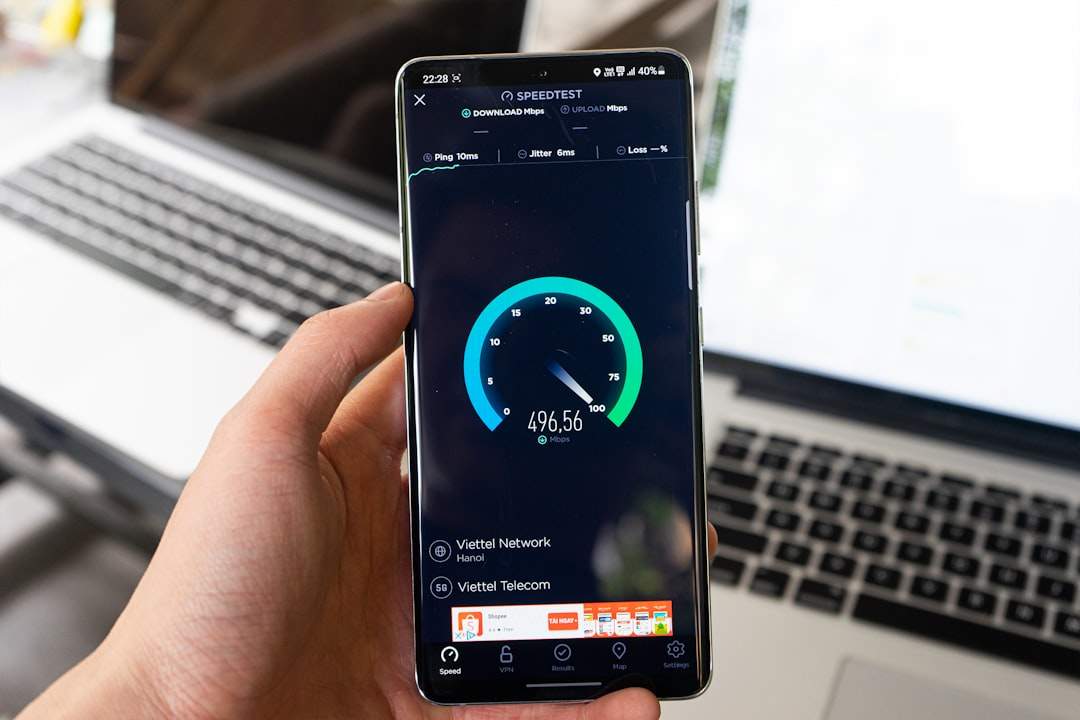
Q2. How Solid Inc. Quietly Became a Global Enabler of Essential 5G and Edge AI Infrastructure?
While the world fixates on the latest AI models and cloud providers, a company based in Suwon, Gyeonggi Province, Korea, has been quietly solving this fundamental connectivity problem for decades: Solid Inc. They’re a global leader in Distributed Antenna Systems (DAS) and small cell solutions, the very technology that ensures your phone works reliably in a packed stadium, a sprawling airport terminal, or a dense urban high-rise. These are the essential, often unseen, components that distribute cellular signals effectively throughout large or complex structures, overcoming the signal degradation that plagues conventional outdoor cell towers.
Solid Inc.’s expertise isn’t new; they’ve been innovating in this space since 1998, long before 5G was even a concept. Their solutions are deployed across North America, Europe, Asia, and the Middle East, in venues ranging from major transit hubs to hospitals and corporate campuses. This isn’t just about making calls; it’s about enabling the underlying infrastructure for crucial applications. For instance, a hospital leveraging edge AI for real-time patient monitoring needs a flawlessly reliable network within its walls—exactly what Solid Inc. provides. The global DAS market is already substantial, with estimates suggesting it could exceed a value of $10 billion by 2030, driven largely by the 5G and IoT boom.
Q3. Solid Inc.’s Distinctive Approach in a Crowded Global Telecommunications Market?
Solid Inc. doesn’t compete directly with telecom giants like Ericsson or Nokia in building national cellular networks. Instead, it carved out a specialized niche in in-building and complex environment wireless solutions, mastering the art of bringing high-quality cellular signals exactly where they’re needed most. Their strength lies in flexible, scalable DAS platforms that can support multiple mobile operators simultaneously (a crucial feature in shared public venues) and adapt to evolving cellular standards, including advanced 5G frequency bands.
What differentiates Solid Inc. is its deep engineering expertise and a proven track record of deployments in some of the world’s most challenging environments. They’re not just selling hardware; they’re providing comprehensive solutions that include design, installation, and ongoing support. This B2B focus means they’re not a household name, but they’re a trusted partner for major global telecom operators. Domestically, companies like KT and SK Telecom rely on Solid Inc. for enhancing their network coverage in specific, high-density areas, ensuring their customers experience premium 5G services even indoors. Even cloud providers like Naver Cloud, pushing for localized edge data centers, indirectly benefit from robust indoor wireless infrastructure to connect their services to end-users and IoT devices.

Beyond traditional DAS, Solid Inc. is also a key player in small cell technology, which involves deploying miniature cellular base stations to fill coverage gaps and boost capacity in specific, localized areas. This approach is particularly vital for private 5G networks in industrial settings, where ultra-low latency and high reliability are non-negotiable for automation and IoT. It’s this deep specialization, rather than broad market coverage, that gives Solid Inc. its global edge.
Q4. What Are the Deployment Challenges Facing Global 5G DAS Adoption and Solid Inc.’s Growth Trajectory?
While the demand for improved indoor 5G connectivity is clear, several obstacles could slow the broader adoption of DAS solutions, impacting Solid Inc.’s growth trajectory. The most significant challenge often comes down to cost and complexity. Deploying a comprehensive DAS in a large venue or building requires substantial upfront capital expenditure, which can be a deterrent for property owners or even cash-strapped mobile network operators. Furthermore, the installation process can be complex, requiring specialized engineering and coordination across multiple stakeholders.
Another risk factor stems from the competitive landscape and evolving technologies. While Solid Inc. is a leader, they face competition from other specialized DAS providers and from alternative solutions like advanced Wi-Fi 6E or even next-generation mesh Wi-Fi systems, which might offer a more cost-effective (though not always performance-equivalent) solution for some use cases. The high USD/KRW exchange rate, currently around 1517.33, could also create pricing pressures for Korean exporters if their operational costs rise while international competitors gain a foreign exchange advantage in certain markets.
Moreover, the pace of 5G Standalone (SA) network rollouts, which truly unlock the full potential of low-latency edge computing, varies significantly across countries. Delays in SA deployment mean that the demand for the most advanced DAS capabilities might not materialize as quickly as anticipated. For Solid Inc., navigating these diverse market speeds and regulatory environments will be key to sustaining its global leadership.
Q5. When Will Korea’s Specialized Network Infrastructure Companies Like Solid Inc. Achieve Broader Global Recognition?
Broader global recognition for specialized network infrastructure companies like Solid Inc. isn’t a matter of “if” but “when,” tied directly to the maturation of 5G and the proliferation of edge AI. We anticipate three key catalysts in the next 24-36 months that will bring these foundational players into sharper focus. First, the increasing deployment of private 5G networks in industrial sectors—smart factories, logistics centers, and ports—will highlight the indispensable role of highly reliable, localized indoor connectivity. Major enterprises are already investing, and as these projects scale, Solid Inc.’s solutions will become more visible.
Second, the global push for smart city initiatives, particularly in dense urban environments, demands comprehensive indoor and outdoor small cell coverage to support everything from autonomous vehicles to public safety applications. These complex deployments are Solid Inc.’s sweet spot. Third, the continuing evolution towards 6G, though still in its early research phases, will likely build upon and amplify the need for ultra-dense, highly flexible indoor network architectures. Korea, with its aggressive 6G R&D led by companies like KT and SK Telecom, provides a fertile ground for Solid Inc. to develop and export next-generation solutions.

Ultimately, Solid Inc.’s path to broader recognition will be paved by the undeniable need for seamless connectivity, which is the foundational layer for almost every advanced technological ambition. As AI applications demand more consistent, low-latency interactions at the edge, the critical nature of what Solid Inc. has been doing for years will become impossible to ignore. This isn’t about consumer brands; it’s about the essential plumbing of the digital economy. For any company powering the AI supply chain, network reliability is paramount, a point further elaborated in how Nvidia’s AI supply chain relies on Korean chip testers, underscoring the interconnectedness of specialized infrastructure.

Hi, I’m Dokyung, a Seoul-based tech and economy enthusiast. South Korea is at the forefront of global innovation—from cutting-edge semiconductors to next-gen defense technology. My mission is to translate these complex industry shifts into clear, actionable insights and everyday magic for global readers and investors.