
Full Body Health Checkup in Korea: The Ultimate Souvenir is Your Health
If you live in the United States, you know the drill. You feel a twinge in your stomach, you call a specialist, wait three months for an appointment, spend 15 minutes with a doctor, and two weeks later, you get a bill for $1,200 USD—even with insurance.
Welcome to the “Medical Tourism” hack that smart travelers and Korean-Americans have been using for decades.
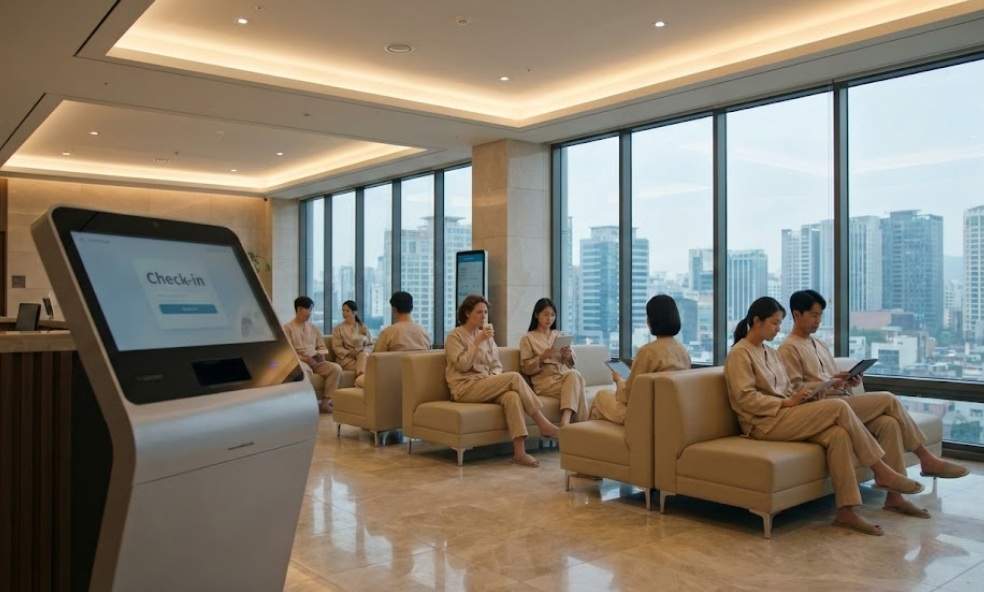
In South Korea, healthcare isn’t just a service; it is a hyper-efficient, consumer-focused product. Imagine walking into a state-of-the-art facility at 8:00 AM, getting a comprehensive analysis of your entire body (Blood, Urine, Ultrasound, Dental, Vision, MRI, and Endoscopy) in a VIP gown, and being out by 12:00 PM to grab a latte in Gangnam.
Here is the financial reality: You can fly to Korea, stay in a nice hotel, eat incredible food, and get a Platinum-tier health checkup for less than the cost of an MRI at a US hospital.
As your “Korea Insider,” I’m going to break down exactly how to spend your money, where to go, and how to navigate the system without speaking a word of Korean.
The “Bottom Line” Snapshot
For those of you skimming for the price tag, here is the immediate value proposition.
🇰🇷 Korea Insider Cost Cheat Sheet
Standard Package (Basic): $350 – $550 USD (500,000 – 750,000 KRW)
Includes: Blood work, Urine, Chest X-Ray, Basic Ultrasound, Dental, Vision/Hearing.
Gold Package (Most Popular): $600 – $900 USD (850,000 – 1,250,000 KRW)
Adds: Gastroscopy (Stomach Camera) with sedation, Colonoscopy, Thyroid Ultrasound.
Platinum/VIP Package: $1,400 – $2,200 USD (2,000,000 – 3,000,000 KRW)
Adds: MRI (Brain/Spine), CT Scans (Lung/Abdomen), detailed Heart screening.
Wait Time: 1-2 weeks for booking. Results in 24-48 hours.
Insurance: Not required. These are cash prices.
The Receipt Battle: MRI Cost Korea vs USA (Out-of-Pocket Savings)
Let’s look at the numbers. If you are uninsured, have a high-deductible plan (like many “Bronze” tier plans), or simply want preventative care that US insurance often denies, this table is your justification for booking a flight.
| Medical Procedure | US Avg. Cost (Uninsured/OON) | Korea Avg. Cost (Cash) | Your Savings |
| Brain MRI | $2,500+ USD | $450 USD (600,000 KRW) | ~82% |
| Colonoscopy (w/ Sedation) | $3,000+ USD | $200 USD (280,000 KRW) | ~93% |
| Gastroscopy (Endoscopy) | $1,500+ USD | $120 USD (160,000 KRW) | ~92% |
| Abdominal Ultrasound | $600+ USD | $100 USD (140,000 KRW) | ~83% |
| Full Dental Scaling | $250 USD | $50 USD (70,000 KRW) | ~80% |
| TOTAL BUNDLE VALUE | $7,850+ USD | ~$920 USD | You save ~$7,000 |
Note: US prices are based on national averages for uninsured cash-pay patients or hospital “Chargemaster” rates. Korean prices are estimates based on “Big 5” university hospitals in Seoul.
The Verdict: The savings on the MRI alone pay for your round-trip Delta or Korean Air ticket.

What is Included in Medical Tourism Seoul Prices? (The “Package” Culture)
In the US, you order tests <i>à la carte</i>. In Korea, you buy a “Set Menu.”
When you book a General Health Checkup (종합검진 – Jonghap Geomjin), you aren’t just seeing a doctor; you are entering a logistical pipeline designed for speed and comfort.
1. The “Basic” Tier (The 20s/30s Check)
Perfect for younger travelers wanting a baseline.
-
Body Composition: BMI, Muscle mass.
-
Blood Work: 70+ markers including Liver function, Kidney function, Hepatitis, HIV, Syphilis, and Diabetes.
-
Ophthalmology: Intraocular pressure (Glaucoma check).
-
Dentistry: Oral exam and often a scaling (cleaning).
2. The “Gold” Tier (The 40s+ Essential)
This is the best value for US residents. It introduces the Endoscopy (Nae-si-gyeong).
-
Gastroscopy: They insert a camera down the throat to check for ulcers, reflux, and stomach cancer.
-
Sedation (Su-myeon): This is key. In Korea, “conscious sedation” is standard and cheap. You fall asleep instantly and wake up 20 minutes later with zero memory of the procedure.
-
Ultrasounds: Thyroid, Abdomen (Liver/Gallbladder), and Prostate/Uterus.
3. The “Platinum” Tier (The Executive)
Includes heavy machinery.
-
MRI/MRA: Brain scans to detect early signs of stroke, aneurysms, or tumors.
-
CT Scans: Low-dose lung CTs (essential for smokers) or Calcium scoring for heart health.
Top Hospitals: Booking at an International Healthcare Center Seoul
Do not just walk into a random neighborhood clinic. You need a Tertiary Hospital with an International Healthcare Center (IHC). These centers have dedicated coordinators who speak fluent English, handle your paperwork, and escort you through the process.
1. Samsung Medical Center (Gangnam)
-
Vibe: Feels like a 5-star airport terminal. Extremely high-tech.
-
Best For: Executives and those wanting the absolute fastest service.
-
Location: Gangnam-gu, Seoul.
-
Search Naver Map:
삼성서울병원(Samsung Seoul Hospital)
2. Severance Hospital (Sinchon/Yonsei)
-
Vibe: Prestigious, academic, and historically significant.
-
Best For: General comprehensive care. It is located near Yonsei University, a vibrant area for food/shopping after you recover.
-
Location: Seodaemun-gu, Seoul.
-
Search Naver Map:
세브란스병원(Severance Hospital)
3. Asan Medical Center
-
Vibe: Massive. Often ranked the #1 hospital in Korea.
-
Best For: If you have a specific, serious concern you want checked by world-leading specialists.
-
Location: Songpa-gu, Seoul (Near Lotte World Tower).
-
Search Naver Map:
서울아산병원(Seoul Asan Hospital)
Step-by-Step Guide: How to Reserve Your Full Body Health Checkup in Korea
Step 1: The Inquiry (1 Month Out)
Do not use the main Korean website. Search for “International Healthcare Center [Hospital Name]” and find the English email address.
-
Email Template: “Hello, I am a US citizen visiting Seoul from [Date] to [Date]. I would like to book a ‘Comprehensive Health Checkup’ (Gold Package equivalent). Do you have availability?”
Step 2: The Questionnaire
They will email you a health questionnaire. Be honest about medications. If you are taking blood thinners (Aspirin/Warfarin), you must stop them days in advance if you plan to get a biopsy during your endoscopy.
Step 3: The Prep (The Night Before)
-
Fasting (Geum-sik): You must stop eating and drinking at 10:00 PM the night before.
-
The Kit: If you are getting a colonoscopy, they may mail you a prep kit (laxatives) to your hotel, or ask you to come in a day early to pick it up. Warning: The prep liquid tastes salty and lemony—drink it chilled.
Step 4: The Day Of
-
Arrive at the IHC desk.
-
Change into the provided pajamas/robe (RFID tagged).
-
Follow the numbers. You will tap your wristband at each station (Station 1: Height, Station 2: Blood, etc.).
-
Payment: You usually pay at the end.
Logistics & Finance: Smart Spending Tips for Medical Tourism in Seoul
💳 Paying for the Procedure
-
US Credit Cards: All major hospitals accept Visa, Mastercard, and Amex.
-
Transaction Fees: Use a card with 0% Foreign Transaction Fees (e.g., Chase Sapphire Preferred, Capital One Venture, Amex Platinum). If you use a standard debit card, you will be hit with a 3% fee + a bad exchange rate.
-
Currency Choice: Always choose to pay in KRW (Korean Won) on the credit card terminal. Let your bank do the conversion. If you select USD, the merchant’s bank applies a terrible “Dynamic Currency Conversion” rate.
📄 Insurance & Reimbursement
-
Does US Insurance cover this? Generally, no. Most US plans (Blue Cross, Aetna, United) do not cover “Medical Tourism” or elective preventive care abroad.
-
The Exception: Some rigorous “PPO” plans might reimburse for emergency care, but a scheduled checkup is rarely covered.
-
The Strategy: Ask the International Center for an “Itemized Receipt in English” (Superbill). You can try submitting this to your FSA/HSA provider in the US. Some flexible HSAs allow funds to be used for medical care abroad, but verify with your provider first.
🛡️ Travel Insurance
-
Even though you are paying cash for the checkup, do not skip Travel Insurance (e.g., World Nomads, Allianz). If complications arise (rare, but possible, like a perforation during a colonoscopy), you want insurance to cover the hospitalization, which is distinct from the checkup cost.
FAQ: Questions US Patients Ask
Q: Do the doctors actually speak English?
A: At the International Healthcare Centers (IHC), yes. The coordinating doctors are often fluent, and many have trained in the US. However, the technicians (drawing blood, taking X-rays) may only speak basic English. This is why the coordinator accompanies you or gives you a routed map.
Q: How long until I get my results?
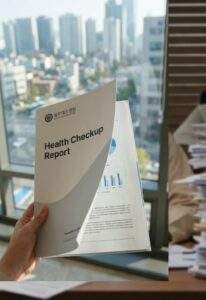
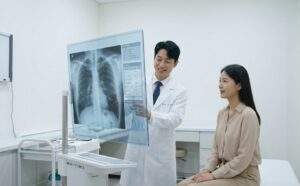
A: You will usually have a short consultation with a doctor immediately after the tests to review the basic images (Ultrasound/X-ray). The full detailed report (PDF) is typically emailed to you in English within 3 to 7 business days.
Q: Is the “Sedation” safe?
A: Korea uses Propofol or Midazolam for sedation. It is heavily monitored. You are hooked up to heart rate monitors the entire time. It is considered very safe and is standard practice for millions of Koreans annually.
Q: Can I do this on a layover?
A: It is tight. The checkup takes 3–4 hours (e.g., 8 AM to 12 PM), but you need to be fasting. Ideally, schedule it for the morning of your second day in Seoul so you are rested.
Q: Is it “weird” for a foreigner to do this?
A: Not at all. Medical tourism is a massive industry in Korea. The staff are used to foreigners, and you will likely see other Americans, Russians, and Middle Eastern patients in the lounge.
Conclusion: The Ultimate Souvenir is Health
You can spend $500 on skincare products in Myeongdong (and you should), or you can spend $500 to ensure your heart, brain, and stomach are in perfect working order.
The “Korea Insider” move is to stop viewing healthcare as a burden and start viewing it as a shopping experience. You are buying peace of mind at an 80% discount compared to US prices.
Book the flight. Fast for 12 hours. Get the scan. Then, go treat yourself to a massive Galbi-tang (Beef Short Rib Soup) to celebrate your clean bill of health.
Stay healthy and spend wisely!

Hi, I’m Dokyung, a Seoul-based tech and economy enthusiast. South Korea is at the forefront of global innovation—from cutting-edge semiconductors to next-gen defense technology. My mission is to translate these complex industry shifts into clear, actionable insights and everyday magic for global readers and investors.