
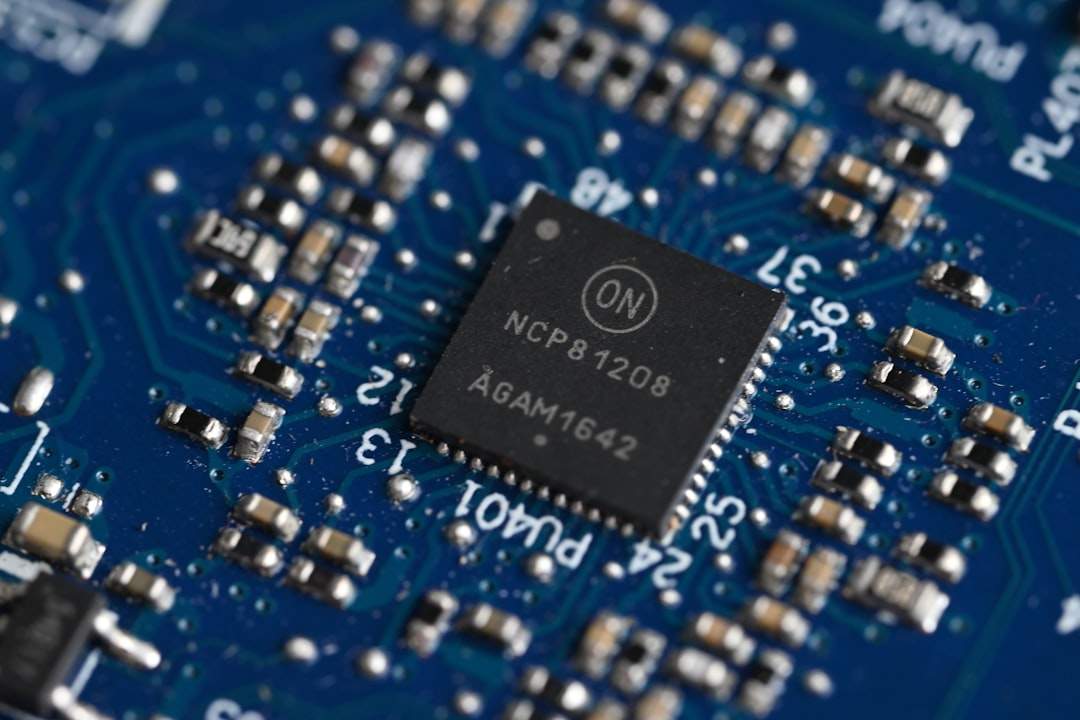
The computational demands of generative AI told one story. The technical specifications of conventional memory chips told another, one of glaring limitations. Between these narratives, a new class of memory emerged as a critical enabler.
By the end of this article, readers will understand what High Bandwidth Memory (HBM) is, why it’s critical for advanced AI, and how SK hynix has positioned itself at the forefront of this technological revolution. We’ll explore the market dynamics driving its adoption and the challenges ahead for this specialized segment of the semiconductor industry, which promises to redefine the boundaries of artificial intelligence.
Q1. What is High Bandwidth Memory, and why has it become the bedrock of the AI revolution?
Traditional DRAM, while essential, struggles to keep pace with the insatiable data processing needs of modern AI accelerators. Graphics Processing Units (GPUs), the workhorses of AI training and inference, demand massive amounts of data to be fed to them at incredible speeds. This is where High Bandwidth Memory (HBM) technology steps in, fundamentally redesigning how memory interacts with processing units.
HBM stacks multiple DRAM dies vertically, connecting them with Through-Silicon Vias (TSVs) to create a wide, short data pathway. This architecture drastically increases memory bandwidth and power efficiency compared to conventional planar DRAM. For AI, where models can have billions of parameters and require constant data movement, HBM doesn’t just offer incremental improvement; it provides a foundational shift. As Apple CEO Tim Cook recently warned of an “intensifying global supply crunch driven by artificial intelligence demand,” the criticality of such specialized memory is evident across the tech sector.
The numbers underscore this transformation: the Data Center Chip Market, the primary consumer of HBM, is projected to surge from USD 283.16 billion in 2026 to USD 687.65 billion by 2032, according to an exclusive report by PR Newswire UK, registering a compound annual growth rate of 15.9%. This isn’t just growth; it’s a structural re-engineering of the entire data infrastructure around AI, with HBM at its core.
Without HBM, the complex neural networks powering applications from natural language processing to advanced robotics would be severely bottlenecked, unable to fully leverage the processing power of the latest AI chips. It’s the difference between a superhighway and a narrow dirt road for data, and for AI, speed is everything.

📊 KRX Stock Performance (Live)
₩1,447,000 +12.5%
Source: KRX · Yahoo Finance · data as of latest session
Q2. How is South Korea’s expertise in HBM reshaping the global AI supply chain?
South Korea, home to global semiconductor giants, has long been a powerhouse in memory chip manufacturing. With the advent of AI, this dominance has pivoted sharply towards High Bandwidth Memory. Companies like SK hynix have leveraged decades of DRAM expertise to take an early lead in HBM technology, securing a significant competitive edge in the burgeoning AI memory chips explained market.
SK hynix, particularly through its early adoption and mass production of HBM3 and HBM3E, has become an indispensable supplier to leading AI chip developers worldwide. Their foresight in investing heavily in HBM fabrication capabilities, notably at their Icheon facilities, cemented their position. This strategic focus is paying off handsomely; the company’s stock, trading at ₩1,447,000 today, reflects a remarkable 12.5% increase, underscoring investor confidence in its HBM prowess and its market capitalization of over $1 trillion.
The ripple effect is clear across the industry. As SiliconANGLE News reported, Samsung Electronics Co. Ltd. also forecast record quarterly profit, largely thanks to surging demand for its memory chips that support artificial intelligence workloads. This collective Korean capability creates a critical choke point in the global AI supply chain, making these firms not just suppliers, but strategic partners for any company building advanced AI infrastructure.
Moreover, the strong performance isn’t isolated. Barchart.com highlighted that Micron has seen an “explosive 557% run higher” over the past year due to AI demand for memory chips, demonstrating the broad market uplift. However, Korean firms remain at the technological vanguard for the most advanced HBM iterations, driving innovation that dictates the performance ceiling for the next generation of AI systems.
Q3. Who are the leading innovators in the High Bandwidth Memory market, and what differentiates their strategies?
In the highly competitive High Bandwidth Memory market, three major players – SK hynix, Samsung Electronics, and Micron Technology – dominate. SK hynix has carved out an early lead, particularly in the most advanced HBM generations like HBM3 and HBM3E. Their strategy focused on early, aggressive investment in research and development, and forging strong partnerships with key AI GPU developers.
SK hynix’s success comes from its ability to consistently deliver performance-leading HBM with superior power efficiency, which is paramount for massive data centers. Analysts at Daiwa noted their integrated approach to manufacturing, from wafer processing to packaging, gives them tighter control over quality and yield for complex multi-stack HBM designs. This vertical integration allows them to iterate faster and bring next-generation products to market ahead of competitors, securing crucial design wins.

Samsung, while a formidable memory giant, initially focused more broadly across its vast semiconductor portfolio but has been rapidly accelerating its HBM efforts, aiming to catch up and even surpass SK hynix. Micron, the third major player, is also investing heavily in HBM, emphasizing its proprietary manufacturing techniques and advanced packaging solutions to gain market share. All three are pushing the boundaries of HBM technology, but SK hynix’s established leadership in specific performance tiers gives it a discernible advantage in the current AI boom.
Beyond the “Big Three” memory makers, a crucial ecosystem of related companies in South Korea supports HBM production. Firms like Hanmi Semiconductor specialize in the thermo-compression bonding equipment essential for stacking HBM dies, while Wonik IPS provides critical process equipment for advanced packaging. These companies, though less visible, are integral to the intricate manufacturing process of advanced Korean tech gadgets and components, highlighting the depth of the nation’s semiconductor value chain.
Q4. What are the significant challenges and potential pitfalls facing the HBM industry’s explosive growth?
Despite the immense demand, the High Bandwidth Memory market faces substantial risks. The most immediate concern is the potential for oversupply if all major players simultaneously ramp up production without corresponding sustained demand for AI accelerators. While current forecasts suggest a supply crunch, history teaches that the memory market is cyclical, and over-investment could lead to price erosion down the line. The US Fed Funds Rate sitting at 3.64 means capital isn’t as cheap as it once was, making these investments more sensitive to market shifts.
Another significant challenge lies in the sheer technical complexity and capital intensity of HBM manufacturing. Producing HBM requires incredibly precise stacking and bonding techniques, yielding lower production efficiencies compared to standard DRAM. The massive upfront investment in specialized equipment and R&D for each new HBM generation means only a few players can truly compete, raising barriers to entry but also concentrating risk. Any misstep in a new HBM iteration could be costly.
Furthermore, the reliance on a few dominant customers in the AI GPU space also presents a risk. While relationships with companies like Nvidia are lucrative, any change in their procurement strategy or a rise of new, less HBM-intensive AI architectures could impact HBM manufacturers disproportionately. However, the current trajectory of AI development suggests that the need for faster, more efficient memory is a fundamental requirement, making a complete architectural pivot away from HBM less likely in the near term.
Q5. What critical indicators should investors and industry observers monitor in the coming year?
Over the next 6-12 months, several key indicators will signal the trajectory of the High Bandwidth Memory market and the competitive positioning of companies like SK hynix. Firstly, watch for announcements regarding the qualification and mass production of the next-generation HBM4 standard. Early leadership here, as SK hynix achieved with HBM3, can secure vital design wins and cement market share for years. This isn’t just about faster chips; it’s about deeper integration with future AI platforms.
Secondly, keep an eye on capital expenditure (CapEx) plans and capacity expansion announcements from the major memory makers. While increased CapEx signals confidence in future demand, an overly aggressive expansion could foreshadow future oversupply. Any significant deviations from projected growth in data center build-outs, especially in regions focusing on advanced AI infrastructure, would also be a critical signal.

Finally, monitor the earnings calls and customer qualification news from the leading AI GPU developers. Confirmation of HBM supply agreements and integration into new product lines will provide direct evidence of sustained demand for SK hynix HBM technology and other AI memory chips explained. The current USD/KRW exchange rate of 1477.22 could also influence profitability for Korean exporters, making currency fluctuations an underlying factor to observe alongside technological advancements.

Hi, I’m Dokyung, a Seoul-based tech and economy enthusiast. South Korea is at the forefront of global innovation—from cutting-edge semiconductors to next-gen defense technology. My mission is to translate these complex industry shifts into clear, actionable insights and everyday magic for global readers and investors.