If you are reading this, you’ve probably looked at a quote from a US plastic surgeon and felt your stomach drop.
Here is the bottom line up front (BLUF): You can fly Business Class to Seoul, stay in a 5-star hotel in Gangnam for two weeks, get a top-tier Facelift or Rhinoplasty, and still spend $10,000 to $20,000 less than you would in Los Angeles or New York. In 2026, Korea remains the “Efficiency King” of aesthetics, performing over 1 million procedures annually for international patients.
However, the industry has shifted—the government just ended the “Medical Tax Refund” for cosmetic procedures as of January 1, 2026. This guide breaks down the new math, the safety laws, and how to avoid the infamous “Shadow Doctor” trap.
1. The “Beverly Hills” Price Gap (2026 Data)
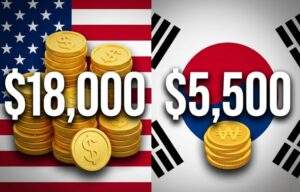
In the US, you pay for the surgeon’s time, the facility fee, the anesthesiologist, and malpractice insurance separately. In Korea, the high volume of patients drives these overheads down. Most top-tier Korean clinics now offer “All-Inclusive” packages that bundle everything into one flat USD price.
Featured Snippet: US vs. Korea Cost Comparison 2026
| Category | US Price (Approx) | Korea Price (USD/KRW) | Naver Map Name | |
| Rhinoplasty | $14,500 – $18,500 | $5,500 / ₩7.4M | 성형외과 (Plastic Surgery) | |
| Full Facelift | $25,000 – $50,000 | $9,000 / ₩12.1M | 안면거상 (Facelift) | |
| V-Line Jaw | $20,000+ | $6,000 / ₩8.1M | 안면윤곽 (Contouring) | |
| Double Eyelid | $5,000 – $8,000 | $1,500 / ₩2.0M | 쌍꺼풀수술 (Eyelid) | |
| Breast Aug | $12,000 – $15,000 | $7,000 / ₩9.4M | 가슴성형 (Breast) |
Insider Tip: Don’t let the lower price fool you. A specialized surgeon in Apgujeong (Seoul) performs 5x to 10x more procedures annually than an average US surgeon. You aren’t paying for “cheap” work; you are paying for high-volume manufacturing efficiency applied to medicine.
2. Technology & Safety: The CCTV Mandate
As of 2026, the CCTV Law is in full effect across all clinics performing surgery under general anesthesia. This was passed to kill the “Shadow Doctor” phenomenon—where a star surgeon does the consultation but a trainee does the actual cutting while you are asleep.
-
Your Right to Film: You have the legal right to request a recording of your surgery.
-
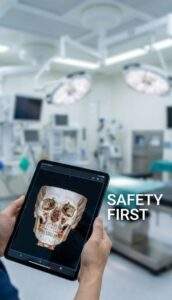
3D CT Standard: While US surgeons often “feel” the bone structure, Korean clinics use 3D CT scans to map nerve lines to the millimeter before every jaw or nose surgery.
-
Safety Rating: Stick to clinics accredited by the Ministry of Health and Welfare (MOHW). If they don’t have the “Medical Korea” seal, walk away.
3. The “Wallet” Perspective: Payments & Refunds
The most significant change in 2026 is the end of the 10% VAT Refund for medical services. Previously, you could get 7-8% back at the airport. Now, that tax is “baked in.”
How to Pay & Save
-
The “Cash” Myth: Many clinics offer a “cash discount.” Be careful; this often means they aren’t reporting the income, which can void your legal protections if you need to sue for malpractice.
-
WOWPASS & Credit Cards: Use a WOWPASS card (prepaid KRW card) for local transactions to avoid the 3% international fee on US credit cards.
-
Travel Insurance: Standard travel insurance does not cover plastic surgery complications. Buy specialized “Medical Tourism Insurance” before landing in Incheon (ICN).
4. Logistics: Recovery & The “Gangnam” Stay
Expect to stay in Seoul for at least 10 to 14 days. Most clinics will not clear you to fly until your “major” stitches are out due to cabin pressure risks.
-
Transport: Use the KakaoTaxi app. Do not take “Black Taxis” unless you want to pay 3x the rate.
-
Food: After jaw or nose surgery, you’ll need liquid meals. Use the Baemin (Baedal Minjok) app for high-quality pumpkin porridge (호박죽), which Koreans swear by for reducing swelling.
5. Frequently Asked Questions (FAQ)
Q: Is English widely spoken in clinics?
A: Yes. Any clinic targeting foreigners will have a dedicated “English Coordinator” who usually speaks fluent English.
Q: Can I get a tax refund on skincare products like Olive Young?
A: Yes. While the medical refund ended, the shopping refund remains. You can still get your VAT back on those 50 face masks you bought.
Q: What is the best time of year to go?
A: Avoid July/August (monsoon heat) and January (extreme cold). April and October are the “Goldilocks” months for recovery.
Q: Are US credit cards accepted?
A: Visa and Mastercard are accepted everywhere, but American Express and Discover are hit-or-miss. Always carry a backup WOWPASS.
Q: Do I need a special visa?
A: For most US citizens, a K-ETA is enough for a 90-day stay. If your surgery requires a longer recovery, you may need a C-3-3 Medical Visa.

Internal Topic Cluster
Conclusion
Seoul in 2026 is safer and more technologically advanced than ever, even with the loss of the VAT refund. If you do your homework, demand CCTV access, and book with a MOHW-certified clinic, you can achieve world-class results for a fraction of the price of Beverly Hills.

Hi, I’m Dokyung, a Seoul-based tech and economy enthusiast. South Korea is at the forefront of global innovation—from cutting-edge semiconductors to next-gen defense technology. My mission is to translate these complex industry shifts into clear, actionable insights and everyday magic for global readers and investors.