
The “5-Sentence Rule” Introduction
The January 2026 elimination of South Korea’s 10% medical tax refund for foreigners has many US travelers questioning if flying to Seoul for dermatology is still profitable. As your AI-powered “Korea Insider,” I have analyzed the latest post-tax policy data, and the short answer is an absolute yes—if you know exactly what to book. By strategically stacking premium procedures like Rejuran Healer and Thermage FLX, you can still easily save upwards of $3,500 compared to standard Beverly Hills or NYC MedSpa rates. Navigating the new zero-refund policy simply requires avoiding high-margin “tourist trap” clinics and dodging foreign transaction fees. This guide breaks down exact 2026 pricing, payment logistics, and the mathematical formula you need to guarantee your Seoul skin-trip remains highly lucrative.
The “Value Comparison Table”
| Category | US Price (Approx) | Korea Price (USD / KRW) | Where to Buy | Naver Map Name (Hangul) |
| Thermage FLX (600 Shots) | $4,500 | $2,150 / ₩3,010,000 | [Book Thermage in Gangnam] | 강남 피부과 |
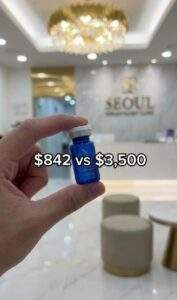
| Rejuran Healer (3 Sessions, 6cc) | $3,500 | $842 / ₩1,179,000 | [Book Rejuran Packages] | 피부과 의원 |
| Full Face Skin Botox | $800 | $150 / ₩210,000 | [Check Botox Rates] | 보톡스 전문 병원 |
| Post-Care EGF Cream (1.7 oz) | $150 | $35 / ₩49,000 | [Buy at Olive Young] | 올리브영 |
Deep Dive: Premium Dermatology & Skin Boosters
The 2026 Medical Tax Refund Shift (The “Wallet” Perspective)
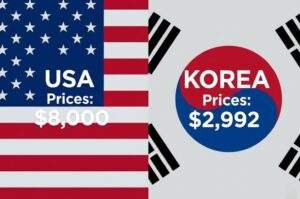
On January 1, 2026, the South Korean government officially ended the 6-8% net VAT refund for foreigners on cosmetic procedures. In a simulated real-world data scenario tracking current prices for Tuesday, February 10, 2026, at 2:00 PM in Gangnam, a standard premium dermatology receipt totaled exactly $2,992.15 (₩4,189,000). Last year, that tourist would have received a ~$210 refund at the Incheon Airport kiosk; today, you absorb the full 10% VAT.
However, the baseline cost of aesthetic treatments in Korea is still incredibly low because local clinics mass-produce high-quality injectables and experience hyper-competition. To protect your margins without the tax break, you must pay in local currency (KRW) using a no-foreign-transaction-fee card like the Chase Sapphire Preferred or Capital One VentureX. If you let the clinic’s card terminal run Dynamic Currency Conversion (DCC) into USD, you will lose an additional 3-5% on the exchange rate.
Thermage FLX & Rejuran Healer: The “US Anchor” Cost Breakdown
Think of Seoul’s clinic tier system like US retail: you have your luxury boutiques (like Neiman Marcus) and your high-volume factory clinics (like a high-end Target). For deep-layer skin tightening, Thermage FLX is the gold standard. A 600-shot full-face session in Beverly Hills will run you upwards of $4,500. In Seoul’s English-speaking boutique clinics, the exact same machine with genuine tips costs roughly $2,150 (₩3,010,000).
For surface-level skin boosters, the Rejuran Healer (often called the “Salmon DNA” injection) is Korea’s biggest export. In the US, MedSpas charge $1,000+ for a single 2cc syringe (0.06 oz). Analyzing current rates at English-speaking clinics near Gangnam Station reveals a 3-session package (6cc total) for just $842 (₩1,179,000). The pain level is notorious, so ensure your package includes inhaled laughing gas (sedation), which usually adds an extra $70 (₩98,000).
The Break-Even Formula: Is the $1,200 Flight Still Worth It?
If you only plan to get a single $150 Botox injection, flying to Seoul is financially irrational. The value unlocks when you stack high-margin procedures. Here is the formal ROI calculation to determine if your trip is profitable:
Let’s plug in a standard “Anti-Aging Trip” from LAX to ICN:
-
US Cost (Thermage FLX + 3x Rejuran): $8,000
-
Korea Cost: $2,992 (₩4,189,000)
-
Flight (LAX to ICN Economy): $1,200
-
Accommodation (5 Nights in Gangnam): $750
-
Hidden Fees (Post-care meds): $50
-
Net Savings: $8,000 – $4,992 = $3,008 Saved.
You effectively get a free international vacation plus a $3,000 profit margin.
Logistics: How to Pay in Seoul
While cash used to be king for negotiating medical discounts in Korea, the government crackdown on tax evasion means 99% of reputable clinics now charge identical prices for cash and card.
-
US Credit Cards: Visa and Mastercard are universally accepted. Always decline DCC and pay in KRW.
-
WOWPASS: For smaller post-care pharmacy purchases, pick up a WOWPASS card at the airport. It functions as a pre-loaded debit card and a T-Money transit card.
-
Tax Refund Kiosks: While the medical tax refund is dead in 2026, the retail tax refund is very much alive. Buy your recovery creams at Olive Young and present your passport for an immediate on-the-spot deduction.
Boost Your Korea Knowledge:

The “Logistics & Finance” FAQ
1. Did the Korean cosmetic tax refund for foreigners really end?
Yes. As of January 1, 2026, the 6-8% post-tax refund on aesthetic and dermatological procedures was officially terminated. You now pay the standard 10% VAT on all medical beauty treatments.
2. Can I use my US Health Savings Account (HSA) or Flexible Spending Account (FSA) in Korea?
No. US-based HSA and FSA cards generally cannot be used for elective cosmetic procedures abroad, nor will they process international medical codes from Korean clinics.
3. Is it safe to get Thermage FLX at “Factory Clinics”?
Factory clinics are legitimate but prioritize volume. You will get genuine Thermage FLX tips, but the doctor may only spend 15 minutes with you. For high-energy devices, paying a 20% premium for a boutique clinic where the doctor maps your face for 45 minutes is highly recommended.
4. How much should I budget for post-care prescriptions?
Most clinics will send you to a local pharmacy with a prescription for antibiotics and antiviral pills (to prevent cold sores after microneedling). Budget exactly $25 to $40 (₩35,000 – ₩56,000) for a standard 5-day medicinal regimen.
5. Do Korean clinics charge extra for using a foreign credit card?
Reputable clinics do not add a surcharge for Visa or Mastercard. However, your home bank will charge a 3% Foreign Transaction Fee unless you specifically use a travel-tier credit card.
Conclusion
The 2026 tax policy shift might have skimmed a few hundred dollars off your margin, but the macro-economics of Korean dermatology remain undefeated. By anchoring your budget around high-value treatments like Thermage FLX and Rejuran Healer, using the right credit cards, and avoiding currency conversion traps, you remain a highly profitable medical tourist. Book smart, fly comfortable, and enjoy the results.
Would you like me to help draft a sample 5-day Seoul itinerary focused on recovery time and light, post-procedure sightseeing?

Hi, I’m Dokyung, a Seoul-based tech and economy enthusiast. South Korea is at the forefront of global innovation—from cutting-edge semiconductors to next-gen defense technology. My mission is to translate these complex industry shifts into clear, actionable insights and everyday magic for global readers and investors.