
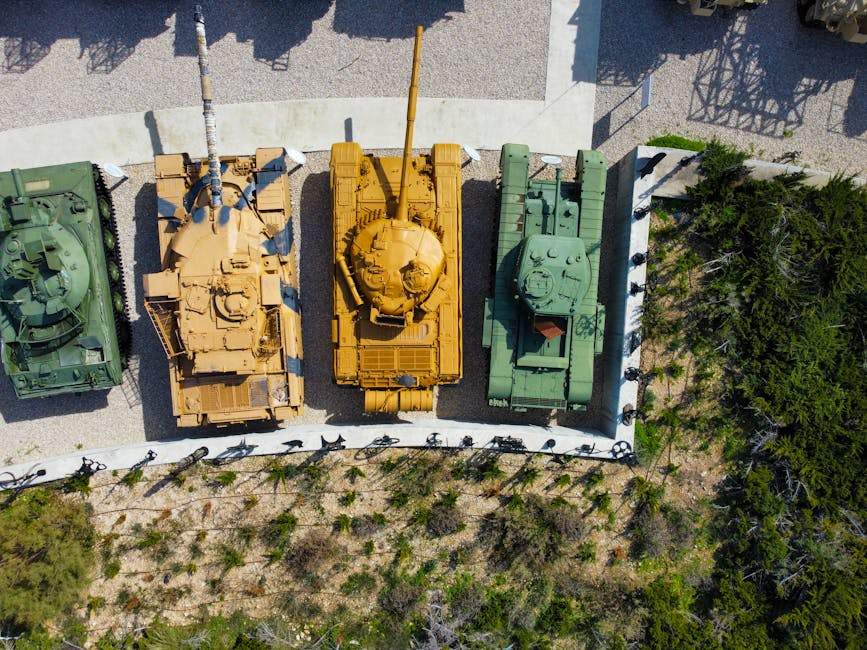
Can Hanwha Aerospace maintain its dominant position in K-Defense exports, or will LIG Nex1’s specialized high-tech offerings carve out a larger slice of the global pie? These two Korean defense giants represent distinct approaches to capturing international market share, making their comparison essential for anyone tracking South Korea’s growing influence in global security.
The Setup: Why This Matchup Matters Now
What Changed to Make This Comparison Relevant
The landscape for defense procurement has shifted dramatically, with many nations seeking to diversify their arms suppliers beyond traditional Western vendors. This global recalibration has presented an unprecedented opportunity for South Korean defense firms. Hanwha Aerospace, a subsidiary of the larger Hanwha Group, has capitalized on this by offering comprehensive solutions from artillery to aerospace components, building on its heritage dating back to its establishment as Samsung Precision in 1977.
Meanwhile, LIG Nex1 has quietly solidified its reputation in precision-guided munitions, radar, and advanced electronic systems, proving that scale isn’t the only metric for influence. Both companies are now in a race to capture long-term contracts, shaping the future of the Korean defense export strategy. For a deeper look into Hanwha Aerospace’s foundational strengths, consider its historical role as Korea’s only gas turbine engine manufacturer.
What’s Actually at Stake
The prize isn’t just individual contract wins; it’s about establishing South Korea as a top-tier defense exporter globally. Analysts estimate the K-Defense sector could capture tens of billions of dollars in new exports over the next five years, driven by demand for proven, cost-effective technology. Each company’s market share in this growing sector directly impacts national economic growth and technological leadership.
Success here means not just revenue, but also the development of a deeper domestic supply chain, fostering innovation across related industries from advanced materials to AI-driven command systems. The competitive edge in K-Defense company market share translates directly into sustained R&D investment and geopolitical influence.
📊 KRX Stock Performance (Live)
₩1,433,000 -2.2%
₩979,000 -0.4%
Source: KRX · Yahoo Finance · data as of latest session
Round 1: Scale, Resources & Market Position
Player A — Strengths & Numbers
Hanwha Aerospace stands as the undisputed giant in terms of sheer scale and diversified portfolio. Its current market cap, hovering around $73.7 billion despite a -2.2% dip today to ₩1,433,000, reflects its vast operational footprint that includes aerospace engines, land systems (through Hanwha Land Systems), and even future urban air mobility (UAM) solutions.
The company’s 52-week range, stretching from ₩760,000 to ₩1,655,000, illustrates significant investor confidence and growth potential, especially following major export deals for its K9 Thunder self-propelled howitzers. Hanwha’s production facilities, particularly in Changwon, are capable of high-volume output, which is crucial for fulfilling large international contracts. This broad capability means Hanwha can offer entire defense packages, making it a compelling partner for nations seeking comprehensive military upgrades.
Player B — Strengths & Numbers
LIG Nex1, while smaller, is a formidable competitor in its specialized segments. Its market cap of $21.3 billion, with shares trading at ₩979,000 (a modest -0.4% decline today), belies its strategic importance in advanced K-Defense capabilities. The company’s 52-week performance, seeing a rise from ₩326,500 to a high of ₩1,118,000, underscores strong growth in its niche.
LIG Nex1 excels in precision-guided munitions, radar systems, anti-tank missiles, and naval combat systems. It doesn’t aim for the broad, platform-level sales that Hanwha pursues but instead focuses on delivering high-tech, high-value components and systems that are often critical to a modern military. Its strength lies in deep technological expertise and integration capabilities, often partnering with other Korean defense firms like Korea Aerospace Industries (KAI) and Hyundai Rotem to provide integrated solutions.
Round 2: Innovation Pipeline & Technology Bets
R&D, Patents & Product Roadmap
Hanwha Aerospace is making significant R&D investments beyond its traditional defense business, pushing into future technologies like hydrogen fuel cells for aerospace and satellite launch systems. Its roadmap includes developing next-generation gas turbine engines for future fighter jets, aligning with government initiatives to boost indigenous capabilities. The company also continues to refine its flagship K9 howitzer and Redback infantry fighting vehicle, incorporating AI and networked battlefield capabilities.
LIG Nex1, conversely, pours its resources into enhancing its precision weaponry and sensor technology. Their portfolio includes advanced anti-ship missiles like the Haeseong, Cheongung M-SAM (medium-range surface-to-air missile) systems, and sophisticated radar solutions for air and missile defense. The company is actively pursuing advancements in drone-based defense systems and electronic warfare, aiming to maintain its edge in smart defense systems.
Partnership & Ecosystem Advantages
Hanwha Aerospace benefits from its vast conglomerate structure, allowing it to leverage internal synergies across various Hanwha Group subsidiaries. Its large-scale contracts often involve complex industrial partnerships, such as those that support the global deployment of K9 howitzers. The company also collaborates closely with Korea Aerospace Industries on aircraft engine development and with Hyundai Rotem on armored vehicle platforms, fostering a deep K-Defense ecosystem.
LIG Nex1’s partnership strategy is more focused on technological collaboration and integration. It works closely with the Agency for Defense Development (ADD) and various domestic research institutes to push the boundaries of missile and radar technology. Their role often involves supplying critical subsystems to larger platforms built by other primes, making them an indispensable partner in many complex defense projects, both domestically and for export. Firms like Poongsan, which specializes in ammunition, often find themselves working alongside both Hanwha and LIG Nex1, demonstrating the interconnectedness of the industry.
Round 3: Risks & Shared Vulnerabilities
Both Hanwha Aerospace and LIG Nex1 operate under several shared macro headwinds. The current US Fed Funds Rate at 3.64 could influence global defense spending by potentially increasing borrowing costs for client nations, impacting the affordability of large-scale defense procurements. Furthermore, the USD/KRW exchange rate, standing at 1477.22 today, while currently favorable for Korean exports by making them cheaper in dollar terms, introduces currency volatility risks that can quickly erode margins on long-term contracts.
Competition from established European and American defense contractors remains fierce, and emerging players, particularly from China, are increasingly offering lower-cost alternatives, albeit with varying degrees of technological sophistication. Both companies also face the constant challenge of maintaining cutting-edge technology amidst rapid global innovation cycles, requiring continuous, substantial R&D investment to avoid obsolescence. Over-reliance on a few large export deals, without a diversified customer base, presents another clear vulnerability.
Verdict: Who Comes Out Ahead?
In the race for overall K-Defense export leadership, Hanwha Aerospace, with its extensive portfolio of major platforms and components, appears to hold a clear advantage in terms of volume and strategic breadth. Its ability to deliver comprehensive defense solutions, from engines to armored vehicles, positions it to secure larger, more integrated contracts. A procurement director looking for a complete system, like an entire artillery brigade, will likely turn to Hanwha first.
However, LIG Nex1’s specialized focus on high-tech, precision weapon systems and sensors gives it an edge in specific, high-value segments. When it comes to critical components or advanced missile defense capabilities, LIG Nex1’s expertise is arguably unmatched within the Korean defense industry. For investors, Hanwha offers exposure to broad defense industrial growth, while LIG Nex1 presents a compelling play on advanced technology and systems integration. The ultimate leader depends on the specific metrics one prioritizes: scale versus specialized technological superiority.
FAQ
A1. Hanwha Aerospace focuses on large-scale, integrated platforms like artillery, armored vehicles, and aerospace components, leveraging its significant manufacturing capacity for comprehensive package deals. Its strategy involves substantial volume and broad market reach, exemplified by its K9 Thunder howitzer sales. LIG Nex1, conversely, specializes in high-precision guided munitions, advanced radar systems, and electronic warfare solutions, targeting specific technological gaps in client arsenals rather than entire platforms.
For investors seeking exposure to broad K-Defense market expansion and large-scale contract wins, Hanwha Aerospace likely offers more direct upside given its diversified portfolio and established global footprint, reflected in its substantial market capitalization. However, LIG Nex1’s focus on high-margin, technologically advanced niche products could provide more stable, albeit potentially slower, growth and resilience in specialized segments. The choice depends on an investor’s risk appetite and preferred exposure to either broad industrial scale or precision technology within the K-Defense sector.

Hi, I’m Dokyung, a Seoul-based tech and economy enthusiast. South Korea is at the forefront of global innovation—from cutting-edge semiconductors to next-gen defense technology. My mission is to translate these complex industry shifts into clear, actionable insights and everyday magic for global readers and investors.