
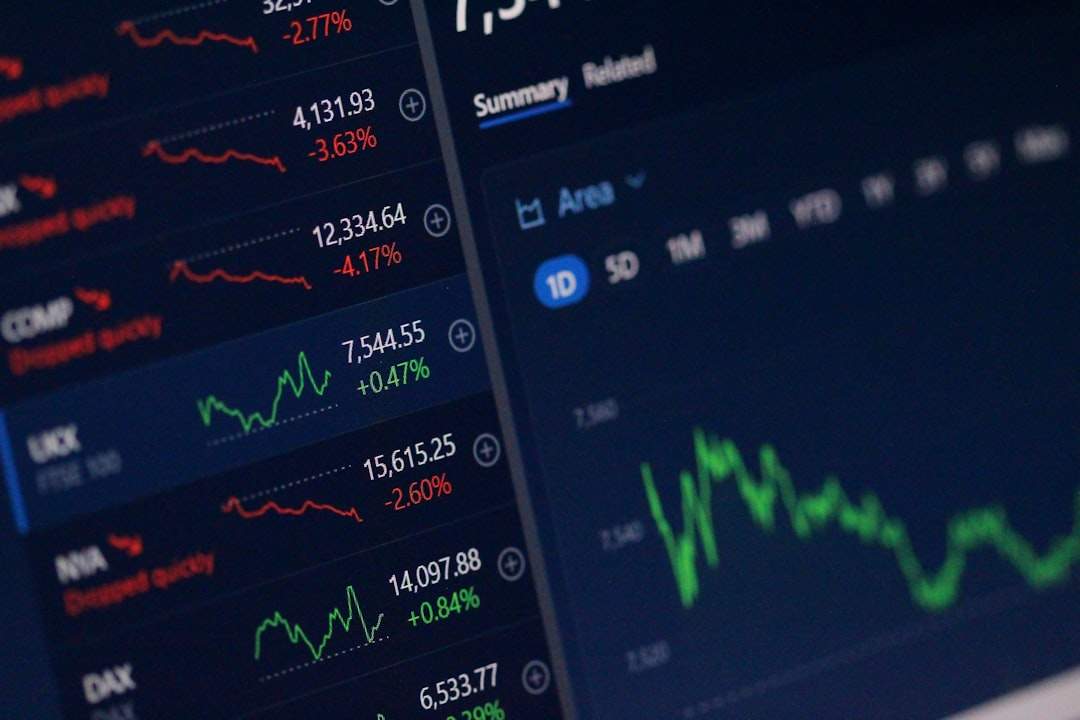
1. Global Trigger: The Macro Shift
The current global narrative is fixated on the Federal Reserve’s pivot trajectory, overlaid with significant domestic US financial strain. Despite evidence of a slowing US economy, indicated by sluggish hiring and lower-than-expected Q4 2025 GDP revisions, inflation data suggests the Fed Funds Effective Rate of 3.64% remains restrictive. This high-rate environment is visibly crushing US consumer balance sheets, evidenced by soaring credit card debt nearing $1.3 trillion, as highlighted in the analysis of retirement struggles referenced in the Global Intelligence Report.
The volatility in US equities, particularly in the AI sector, reflects this uncertainty premium regarding the timing of the first expected Fed cut, currently priced tentatively for June.
Source: Global Intelligence Feed
2. Geopolitical Context: The Hidden Agenda
Geopolitical tensions are markedly escalating, evidenced by reports of direct kinetic conflict involving the US and Iran. This heightens geopolitical risk premiums, driving initial demand for safe-haven assets like the USD, despite underlying US domestic economic weakness. The rise in crude oil prices, driven by these actions, directly pressures Korean import costs and core CPI figures.
The internal political fracturing in the US, alluded to by discussions around the ‘Reagan-Era Republicanism’ shift, suggests a less predictable fiscal policy framework moving forward, increasing the importance of the Fed Chair’s perceived influence versus actual committee votes. This signals a move towards event-driven market unpredictability, favoring high-frequency hedge strategies.
3. Korea’s Position: Dilemma & Opportunity
The key immediate risk for Seoul is the USD/KRW exchange rate, currently hovering at a concerning 1482.98. If the Fed maintains a hawkish stance longer due to persistent domestic inflation (CPI 326.588), the KRW will face further depreciation pressure, creating a dual challenge.
Exporters benefit from a weaker Won, boosting reported earnings, but high global rates threaten demand for Korean intermediate goods (semiconductors, auto components) as US consumers prioritize servicing credit card debt over capital expenditure. Korean conglomerates must aggressively hedge FX exposure, particularly those with significant USD-denominated input costs. The opportunity lies in specialized, high-value tech niches where pricing power overrides local currency weakness, such as advanced battery materials or specific biopharma APIs, which aligns with the long-term trend toward supply chain decoupling.
| Macro Variable | Global Impact | South Korean Exposure |
|---|---|---|
| US Fed Rate (3.64%) | Maintains global liquidity constraint; tightens credit conditions for US SMEs. | Acts as a floor for USD/KRW; increases debt servicing costs for Korean firms borrowing in USD. |
| Geopolitical Conflict | Spikes oil prices and risk aversion, favoring USD strength initially. | Negative for domestic inflation; boosts short-term defense/aerospace visibility, but hurts general manufacturing margins. |
Source: Global Intelligence Feed
4. Portfolio Shift: Tactical Moves for Investors
For investors holding KRW-denominated accounts, the current setup strongly suggests a tactical dollar accumulation strategy is warranted, anticipating further USD strength unless the US CPI drops precipitously below current expectations. If the Fed signals a hard pivot (i.e., unexpected cuts), the USD/KRW rate could rapidly fall toward 1420, punishing USD-long positions.
Domestically, allocate capital towards firms demonstrating pricing power independent of macroeconomic cycles, such as advanced chip equipment makers, rather than bulk memory or low-margin consumer electronics. Exposure to US growth equities should remain highly selective, favoring defensive technology leaders whose cash flows are robust enough to withstand protracted high funding costs. A short-term long position on volatility, perhaps via structured products linked to the Fed’s meeting minutes, aligns with the current regime of high prediction market adoption.
📊 Sector Impact Forecast
For Korean financial institutions, the tightening global environment necessitates robust liquidity stress testing against a sustained 1500 KRW threshold. The divergence between US consumption habits (high credit card reliance) and Korean manufacturing export reliance creates an asymmetric risk profile demanding specialized portfolio management, perhaps leveraging instruments related to securities lending for arbitrage opportunities.

Source: Global Intelligence Feed
Top 5 Strategic FAQs for Investors
A1. Only if they foresee the Fed cutting rates significantly before Q3 2026. If the USD/KRW remains elevated near 1480, servicing debt with a depreciated Won is relatively cheaper, freeing up capital for domestic R&D investment, assuming they can manage interest rate risk via swaps.
A2. Short-term uncertainty dampens immediate large-scale CAPEX decisions by US tech giants, potentially stalling new semiconductor order books. However, defense and cybersecurity-adjacent suppliers in Korea may see speculative inflows.
A3. Directly negative. Elevated US household debt servicing acts as a consumption drag, lowering discretionary spending on Korean finished goods like high-end appliances and non-essential electronics, thus pressuring volume growth projections.
A4. If holding US equities, maintain a partial hedge (e.g., 50%) to lock in currency gains while leaving room to benefit if the USD significantly weakens on an unexpected Fed dovish turn. Volatility trading is currently favored over pure directional bets.
A5. The crucial metric is the sustained drop in US ‘core’ inflation below 2.0% YoY, which would force the Fed’s hand and strengthen risk appetite globally, providing the necessary tailwind for sustained KOSPI performance beyond export accounting boosts. This signals a shift away from US global economic policy uncertainty.
The current environment dictates that South Korean capital preservation relies on anticipating the Fed’s next non-linear policy shift, using the elevated USD/KRW as a temporary earnings buffer while de-risking from rate-sensitive domestic consumption plays.
