
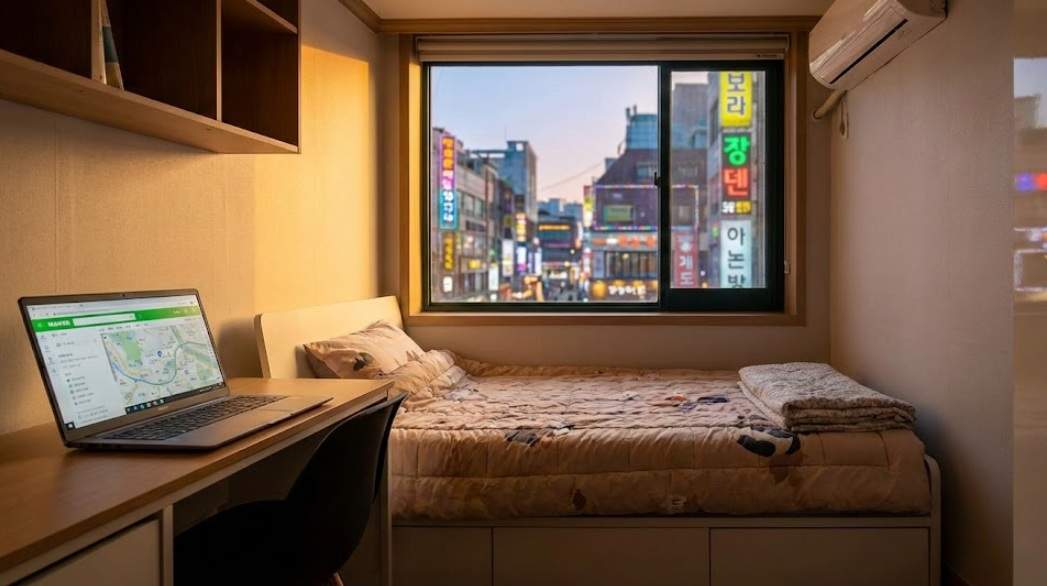
Book a Seoul Goshiwon: The $0 Deposit Insider Guide to Private, No-Contract Housing
Listen, if you’re looking at “One-rooms” (원룸) in Seoul, you’re probably staring at a Bojeunggeum (보증금 — security deposit) that looks like a down payment on a house in your home country. In Korea, it’s normal to drop $5,000 to $20,000 just to get the keys to a tiny studio.
As your Seoul “Hyung,” let me tell you the truth: Most tourists and digital nomads get scammed into paying “foreigner premiums” on Airbnb because they are scared of the local system.
If you want to live in the heart of Gangnam or Hongdae for under $500 a month with zero deposit, you need to enter the world of the Goshiwon (고시원). This isn’t just “cheap housing”; it’s a rite of passage for every Korean student and young professional.
The “Local Truth” Hook: The Deposit Trap
Most blogs tell you to find an agent. Don’t. Real estate agents (부동산) usually won’t even talk to you if you don’t have $5,000 in cash and a 12-month contract.
The “Local Truth” is that the best value isn’t found on English websites. It’s found in the narrow alleys of student districts where Goshiwons operate on a month-to-month basis. You pay your rent, you move in. No credit check, no massive wire transfers, and most importantly, no “Key Money.”
The “Korean Cheat Sheet” (Quick Comparison)
| Room Type | Monthly Rent (Approx.) | Deposit (Bojeunggeum) | Private Bathroom? | Best For |
| Classic Goshiwon | ₩300,000 – ₩450,000 | ₩0 – ₩50,000 | No (Shared) | Hardcore budget travelers |
| Goshitel (고시텔) | ₩450,000 – ₩600,000 | ₩0 – ₩100,000 | Yes (Shower/Toilet) | Solo digital nomads |
| One-roomtel (원룸텔) | ₩600,000 – ₩850,000 | ₩100,000+ | Yes (Full ensuite) | Long-term stays (3+ months) |
Pro Tip: When searching, always use the term “One-roomtel” (원룸텔) on Naver Maps. These are the modern, renovated versions with private showers. The original “Goshiwons” can be a bit… “Parasite” (the movie) vibes.
Platform Arbitrage: Your Digital Survival Kit
If you are using Google Maps to find a place to live in Seoul, you’ve already lost. Google Maps is a ghost town here. To find a no-deposit room, you need the “Holy Trinity” of Korean apps:
-
Naver Map (네이버 지도): Essential. Search for “고시원” or “원룸텔” in your target neighborhood.
-
KakaoTalk (카카오톡): This is how you communicate with the manager (Bang-jang).
-
Papago (파파고): Do not use Google Translate. Papago is owned by Naver and understands Korean honorifics and context much better.
How to use Naver Map to find a room:
-
Open Naver Map.
-
Type “고시원” (Goshiwon) + your neighborhood (e.g., “신촌 고시원” for Sinchon).
-
Look for listings with recent photos.
-
Look for a phone number or a KakaoTalk ID in the description.
The Three Levels of Goshiwon Living
Koreans distinguish between these three based on “human rights” (I’m joking, but only slightly).
1. The Classic Goshiwon (고시원)
Originally for students cramming for the bar exam (Goshi).
-
The Vibe: A bed, a desk, a rack for clothes. The walls are thin enough to hear your neighbor’s K-Drama.
-
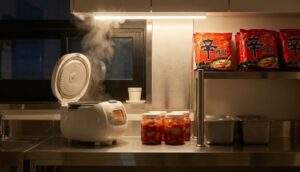
The Kitchen: Shared. Usually free rice, kimchi, and instant ramen are provided 24/7.
-
Price: Expect to pay around ₩350,000 (check Naver Map for latest prices).
2. The Goshitel (고시텔)
The “Hotel” version of a Goshiwon.
-
The Vibe: You get a private “all-in-one” bathroom (the shower is over the toilet).
-
Key Advantage: You don’t have to walk down a hallway in your towel.
-
Price: Expect to pay around ₩500,000.
3. The Premium One-roomtel (프리미엄 원룸텔)
These are the new-age rooms designed for foreigners and “MZ Generation” Koreans.
-
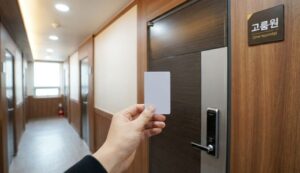
The Vibe: Better soundproofing, digital door locks, and sometimes even a private washing machine in the room.
-
Price: Expect to pay ₩700,000 – ₩900,000. Still $0 deposit.
Top 5 Neighborhoods for No-Deposit Stays
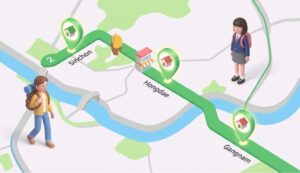
Where you live in Seoul dictates your entire experience. Here is the local breakdown:
1. Sinchon / Ewha (신촌 / 이대) – The Student Hub
This is the holy grail. With three major universities nearby, the competition keeps prices low and quality high.
-
Search for: 신촌역 원룸텔 (Sinchon Station One-roomtel).
-
The Vibe: Vibrant nightlife, cheap eats, and very foreigner-friendly.
2. Hongdae / Yeonnam-dong (홍대 / 연남동) – The Creative Pulse
If you want to be near the clubs and busking, this is it. However, rooms here are often smaller because the real estate is so expensive.
-
Search for: 홍대입구역 고시텔 (Hongdae Station Goshitel).
3. Hoegi (회기) – The Budget King
Home to Kyung Hee University. It’s slightly further east but offers the best “Bang for your Buck.” You can get a premium room here for the price of a closet in Gangnam.
-
Search for: 회기역 고시원 (Hoegi Station Goshiwon).
4. Gangnam (강남) – The Business Aesthetic
Expect to pay a premium. The rooms are sleek but the “free food” is often lower quality because the rent is so high for the landlord.
-
Search for: 강남역 원룸텔 (Gangnam Station One-roomtel).
The “Local Insider” Protocol: How to Book from Overseas
You don’t need to be in Korea to secure a room, but you do need to be smart.
-
The KakaoTalk Inquiry: Find the manager’s Kakao ID on a site like Goshipages or Stayes.
-
The Script: Copy-paste this into Papago and send it to them:
“안녕하세요! [Date]부터 한 달 동안 머물 수 있는 방이 있나요? 보증금 없는 방을 찾고 있습니다.”
(Hello! Do you have a room available for one month starting from [Date]? I am looking for a room with no deposit.)
-
The Video Request: Never pay without seeing a video. Ask: “방 동영상 좀 보내주실 수 있나요?” (Can you send me a video of the room?)
-
The Move-in Fee: Some places ask for a ₩50,000 “Cleaning Fee” or “Key Deposit.” This is normal. Paying $5,000 to an unknown landlord is a scam; paying $40 to a registered business is standard.
[related post: Master Goshiwon life in Korea: Local Secrets to Micro-Living in Korea]
Cultural Context: Why do Koreans live like this?
In Korea, we have a concept called “Jeong” (정)—a feeling of attachment. In older Goshiwons, the “Landlady” (Imo-nim or “Auntie”) often treats the residents like her own kids, making sure the rice cooker is always full and the kimchi is fresh.
Also, the “Window Tax” is real. In Korean housing, a room with a window facing the street (Oechang-bang / 외창방) is always ₩50,000 more expensive than a room with a window facing the hallway (Naechang-bang / 내창방). Local Advice: Spend the extra money. The hallway rooms have zero ventilation and will make you feel like you’re living in a submarine.
Red Flags & Scams to Avoid
-
The “No Rice” Lie: Many places advertise “Free Rice/Ramen/Kimchi.” Check the kitchen during your tour. If the rice cooker is empty and dusty, the manager is lazy, and the place likely has maintenance issues.
-
The Mold Smell: If you smell even a hint of dampness, run. Korean summers are incredibly humid, and a small room with mold will ruin your health in weeks.
-
Fire Safety: Check for a sprinkler in the room and a fire extinguisher in the hallway. Goshiwons are notorious for fire risks; modern “One-roomtels” are strictly regulated, but older ones can be “fire traps.”
Pro Tip: Ask for an apron by saying “Ap-chi-ma” (앞치마) if you’re cooking in the shared kitchen to avoid getting “Kimchi-guk” (Kimchi soup) on your clothes!
[related post: Living in a Seoul Goshiwon: How to Thrive in Korea’s Cheapest Micro-Apartments]
Summary Checklist for Your Move
-
[ ] Download Naver Map and KakaoTalk.
-
[ ] Get a Korean SIM Card or eSIM (You need a local number for many building entries).
-
[ ] Prepare the first month’s rent in KRW (Cash is king for the first day).
-
[ ] Buy your T-Money card at the airport for the subway ride to your new home.
The beauty of the Goshiwon is the freedom. You aren’t tied down by a 2-year contract. You can stay for a month, realize you hate the neighborhood, and move to the other side of Seoul the next day with nothing but your suitcase.
Welcome to the real Seoul. You’re not a tourist anymore; you’re a local.

Hi, I’m Dokyung, a Seoul-based tech and economy enthusiast. South Korea is at the forefront of global innovation—from cutting-edge semiconductors to next-gen defense technology. My mission is to translate these complex industry shifts into clear, actionable insights and everyday magic for global readers and investors.