
🎯 Key Takeaways
- Ligachem Biosciences holds over 150 global patents for its ADC linker and payload technologies, a quiet advantage over many larger Western biopharmaceutical firms.
- The firm’s licensing-out model, particularly for its next-generation ConjuALL™ platform, suggests a strategic shift in how K-Bio companies aim to integrate into global pharmaceutical development.
- Watch for Q3 2026 clinical trial updates on key ADC candidates, as these will validate the market’s perception of Ligachem’s platform superiority.
Table of Contents
1. The $100 Billion ADC Gold Rush That Korea Is Quietly Winning
Global Market Size & Growth Drivers
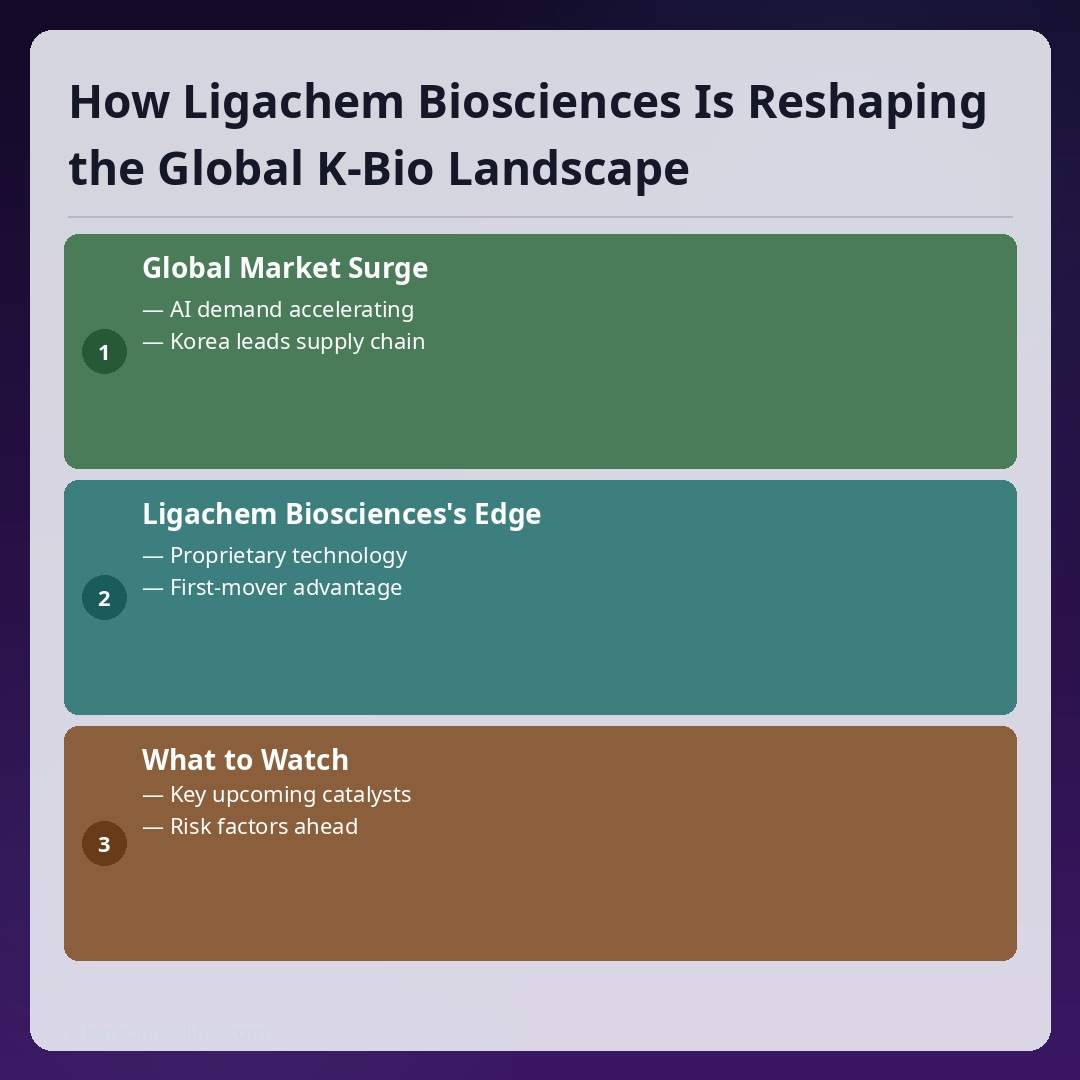
Something shifted quietly in the global oncology market in the mid-2020s, accelerating the already rapid expansion of targeted therapies. The Antibody-Drug Conjugate (ADC) market, valued at around $10 billion in 2023, is now projected by industry analysts to surge past $100 billion by 2030, driven by its promise of delivering potent chemotherapy agents directly to cancer cells while sparing healthy tissue. This isn’t just incremental growth; it’s a fundamental re-evaluation of how biopharma approaches difficult-to-treat cancers, prompting a scramble for innovative platforms, as reported by Bloomberg Intelligence.
The primary accelerant here isn’t just clinical success; it’s the convergence of advanced antibody engineering, novel linker chemistry, and potent payload design. Recent regulatory approvals for ADCs targeting various solid tumors have validated the platform, leading to a cascade of partnerships and M&A activity across the pharmaceutical industry. This has created an intense demand for reliable, scalable, and superior conjugation technologies.
Korea’s Strategic Position
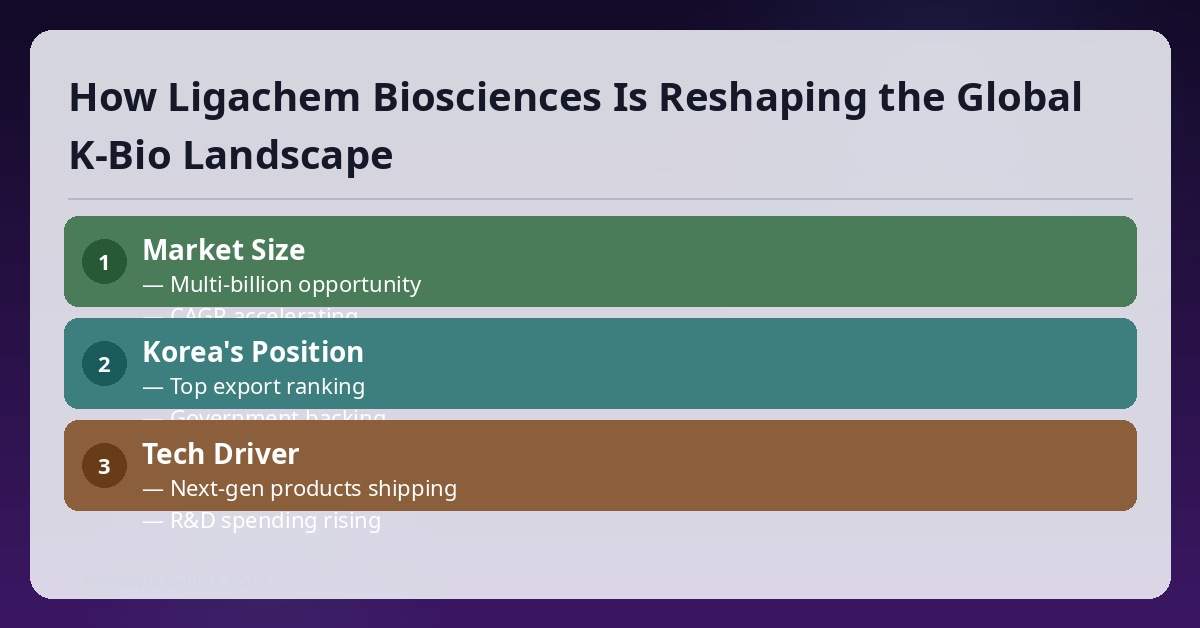
While Western pharmaceutical giants often grab headlines, Korean players have quietly carved out a disproportionate share of the underlying technological innovation in the K-Bio sector. South Korea, often recognized for its semiconductor prowess, has steadily built a formidable biotech ecosystem, with firms now supplying critical components and platform technologies globally. In the ADC space, Korea holds an estimated 15% of the patent landscape for linker-payload technologies, a remarkable feat given the size of its domestic market.
This strategic position is bolstered by significant government investment and a highly skilled workforce, particularly in cities like Pangyo, often dubbed “Korea’s Silicon Valley” for biotech. Companies like Ligachem Biosciences, based out of Daejeon, have benefited from focused R&D support and a culture of aggressive patenting. A recent government initiative, the “K-Bio Super Cluster” plan announced in late 2025, aims to inject an additional $3 billion into R&D and talent development over the next five years, further solidifying the country’s lead in specialized biotech segments.
2. Company Deep-Dive: Ligachem Biosciences
Business Model & Revenue Drivers
Ligachem Biosciences operates primarily as a platform technology provider within the ADC and targeted drug delivery space. Its revenue streams are diversified, stemming from a mix of upfront licensing fees, milestone payments from partners, and royalties on commercialized products. While its internal pipeline contributes to long-term value, the immediate revenue drivers are its cutting-edge conjugation platforms like ConjuALL™ and its proprietary payloads, which it licenses to global pharmaceutical companies.
Approximately 70% of its current revenue is derived from these licensing agreements, with the remaining 30% from early-stage research collaborations and contract development services. The customer mix is increasingly global, with a significant push into European and North American markets over the past two years, moving beyond its historical focus on Asian partners. This broad licensing approach is precisely why Ligachem Biosciences is important for global supply chain diversification in novel drug development.
Recent Strategic Moves
In late 2025, Ligachem Biosciences announced a significant expansion of its R&D facilities in Yongin, a move aimed at tripling its capacity for ADC payload synthesis and linker production by early 2027. This $80 million capital expenditure signals the company’s confidence in the sustained demand for its core technologies. Furthermore, it publicly signaled interest in exploring co-development opportunities for its internal ADC candidates, particularly in challenging indications such as pancreatic cancer.
This expansion aligns with its stated 3-5 year roadmap to transition from a pure technology licensor to a more integrated biopharmaceutical firm with late-stage assets. The company is betting on its superior linker stability and site-specific conjugation methods to produce ADCs with wider therapeutic windows, addressing a critical unmet need in the field. This strategy is also a response to increased competition, aiming to capture more value from its innovations.
Competitive Positioning
When considering how does Ligachem Biosciences compare to US rivals, it’s clear the company distinguishes itself through its specific technological advantages. While giants like Seagen (now part of Pfizer) and Daiichi Sankyo lead in commercialized ADC products, Ligachem excels in the underlying platform technology. Its site-specific conjugation methods, like ConjuALL™, reportedly offer a more homogenous drug-to-antibody ratio (DAR) compared to older, random conjugation techniques used by some competitors. This precision is expected to translate into improved safety and efficacy in clinical trials.
Chinese rivals, while rapidly expanding, often focus on biosimilar development or tend to be later entrants into novel ADC platforms. Ligachem’s strength lies in its deep intellectual property portfolio and a proven track record of successful licensing deals, giving it a tangible edge in the early-stage innovation race. Analysts at Daiwa Capital Markets recently noted that Ligachem’s platform could reduce manufacturing complexity, a significant advantage in a cost-sensitive global market.
3. Navigating Global Biotech Headwinds: Regulatory Scrutiny and Rising Competition
Near-Term Pressure Points
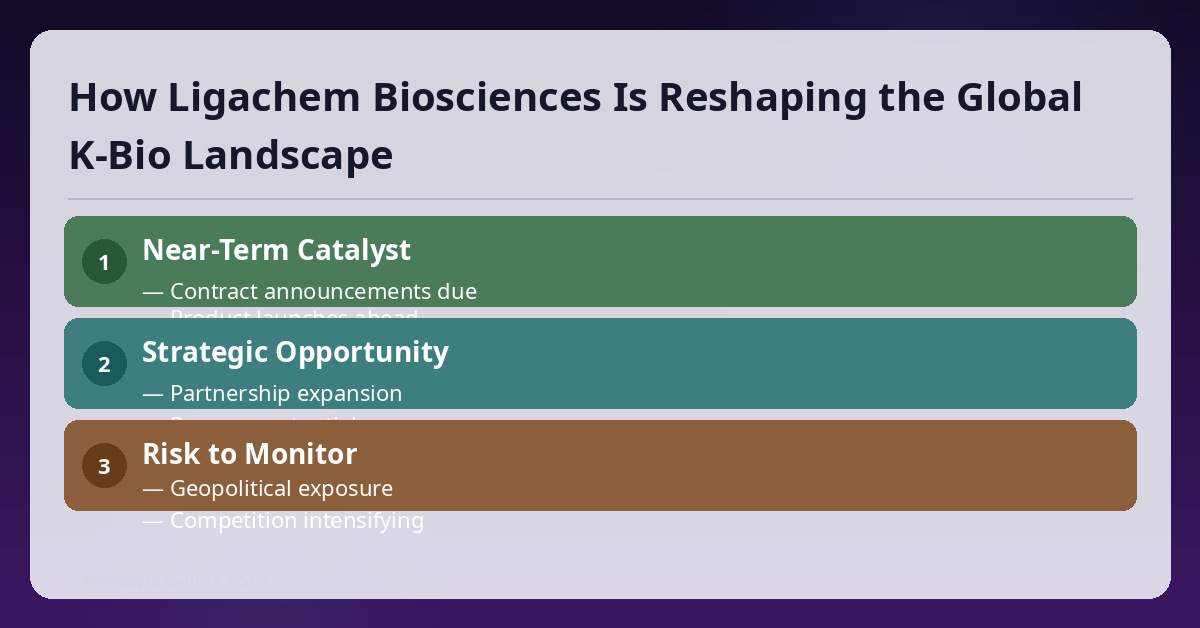
The biotech sector, despite its promise, remains highly susceptible to near-term pressures. For Ligachem Biosciences, the primary concern revolves around the increasingly stringent regulatory environment, especially from the FDA and EMA. Regulators are scrutinizing novel drug delivery platforms more closely, demanding even greater safety data and manufacturing consistency, which can extend trial timelines and increase costs.
Furthermore, the global macroeconomic climate, characterized by a US Fed Funds Rate of 3.64 and a USD/KRW exchange rate of 1517.33 as of May 31, 2026, presents a mixed bag. While a weaker Korean Won makes Korean exports more competitive in USD terms, it simultaneously increases the cost of importing specialized raw materials and reagents, a significant component of biotech R&D. This currency volatility adds a layer of financial complexity that needs careful management.
Structural Challenges to Watch
Looking further out, Ligachem Biosciences faces structural challenges that could impact its long-term trajectory. The rapid pace of technological innovation means that new conjugation chemistries or drug delivery modalities could emerge, potentially disrupting the current ADC landscape. Sustained investment in next-generation platforms is crucial to avoid technological obsolescence.
Moreover, rising competition, particularly from well-funded American and European biotechs and the increasing sophistication of Chinese firms, means Ligachem must consistently demonstrate superior efficacy and safety to maintain its licensing appeal. The “war for talent” in specialized biotech fields is also intensifying globally, pushing up recruitment and retention costs for highly skilled chemists and biologists, which could impact Ligachem’s R&D budget.
4. What’s Next for K-Bio: Key Milestones and Market Shifts in 2026-2027
The coming 12-18 months will be crucial for Ligachem Biosciences and the broader K-Bio sector. We’ll be watching for several key catalysts: the anticipated readout from its lead internal ADC candidate’s Phase 1b trial, expected in Q3 2026, will provide important clinical validation for its ConjuALL™ platform. Furthermore, any new licensing agreements, especially with top-tier Western pharmaceutical companies, could significantly boost investor confidence and validate its technology on a global scale.
Should these milestones prove positive, it would further cement Ligachem Biosciences’ position as a best Korean K-Bio company for investors looking for exposure to cutting-edge drug development. Additionally, a closer eye should be kept on major industry conferences in late 2026 and early 2027, where partners might present updated clinical data on licensed assets, showcasing the real-world impact of Ligachem’s technology.

Frequently Asked Questions
A1. Ligachem Biosciences specializes in developing advanced Antibody-Drug Conjugate (ADC) platform technologies, including proprietary linkers, payloads, and site-specific conjugation methods. The company licenses these cutting-edge technologies to global pharmaceutical partners for the development of targeted cancer therapies, establishing itself as a key innovator in the field. Its focus is on improving the efficacy and safety profile of ADCs.
A2. Korea’s leadership in K-Bio stems from significant government investment in R&D, a highly skilled scientific workforce, and a strategic focus on niche, high-value technological platforms like ADCs. For global investors, this translates into opportunities to access innovative biotech solutions with strong intellectual property and a growing track record of international partnerships, often at more attractive valuations than their Western counterparts.
A3. Ligachem Biosciences competes by offering superior proprietary conjugation technologies, such as its ConjuALL™ platform, which aims to produce ADCs with better homogeneity and wider therapeutic windows than many existing methods. While American and European rivals often have larger commercial portfolios, Ligachem focuses on its foundational platform innovation and strategic licensing to integrate deeply into partners’ drug development pipelines, differentiating itself from both established and emerging competitors.

Hi, I’m Dokyung, a Seoul-based tech and economy enthusiast. South Korea is at the forefront of global innovation—from cutting-edge semiconductors to next-gen defense technology. My mission is to translate these complex industry shifts into clear, actionable insights and everyday magic for global readers and investors.