
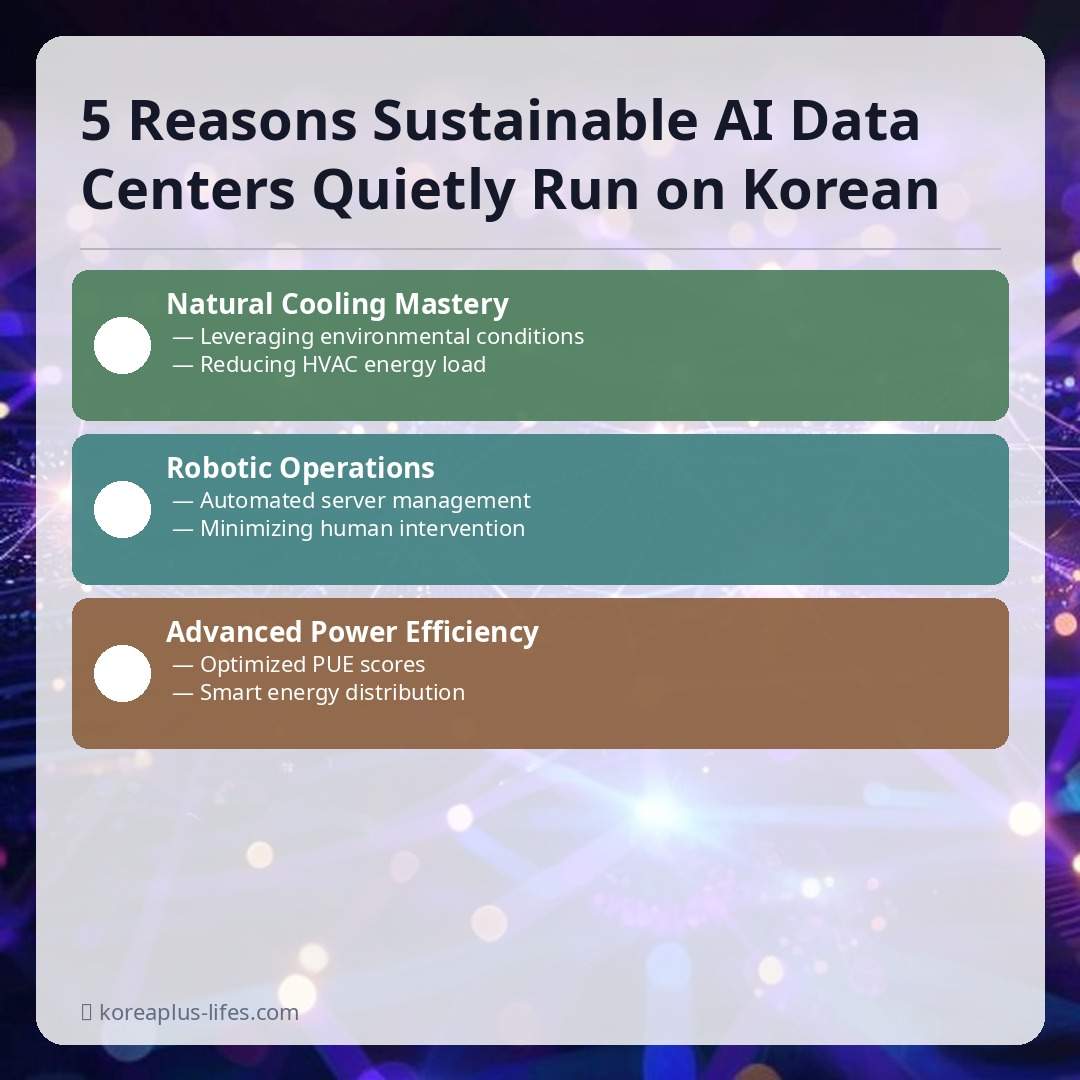
🎯 Key Takeaways
- Naver’s GAK Sejong data center operates with a PUE as low as 1.09, significantly outperforming the global average of around 1.55 for traditional data centers.
- The integration of sophisticated AI-driven cooling systems and robotic infrastructure management reduces both operational costs and environmental impact, setting a new benchmark for sustainable AI infrastructure.
- The successful deployment of these innovations by Naver Cloud positions Korea to potentially become a key exporter of advanced, energy-efficient data center technologies and operational blueprints in the coming years.
📋 Table of Contents
- ▸ #1. Naver’s Hyperscale Data Centers Boast Industry-Leading PUE of 1.09
- ▸ #2. Advanced Cooling Systems Slash Energy Waste and Operational Costs
- ▸ #3. Robotic Management Transforms Data Center Operations and Security
- ▸ #4. Scaling Proprietary Innovation Globally Presents Adoption Hurdles
- ▸ #5. Korea’s Digital Twin Market Growth Will Drive Further Data Center Optimization
- └ Quick Q&A
The global AI revolution is undeniably accelerating, with demand for processing power driving unprecedented data center construction. However, this expansion comes at a staggering environmental cost: current estimates suggest AI’s energy footprint could soon rival that of entire nations. As the world grapples with this challenge, a South Korean tech giant, Naver, has been quietly building a future where AI’s immense computational demands don’t necessarily translate into ecological burden.
Korea often builds quietly. Then the world notices. Naver’s hyperscale data centers, GAK Chuncheon and the newer GAK Sejong, aren’t just architectural marvels; they represent a fundamental rethinking of how large-scale AI infrastructure can operate sustainably. Here are five reasons why sustainable AI data centers are increasingly running on Korean innovation.
#1. Naver’s Hyperscale Data Centers Boast Industry-Leading PUE of 1.09
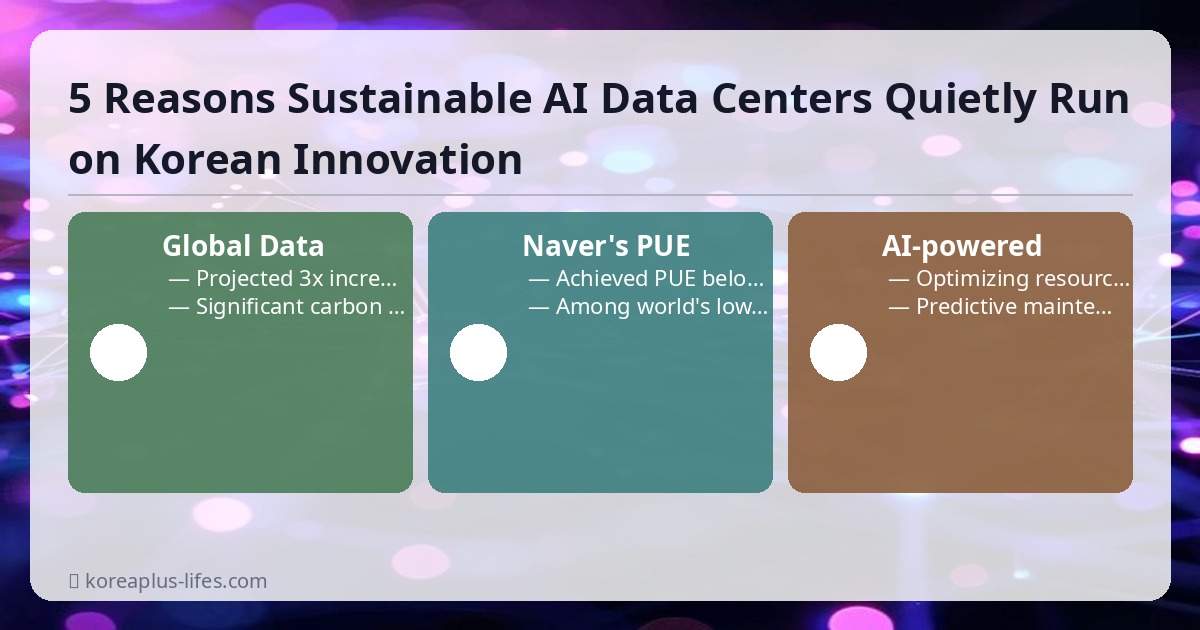
The Power Usage Effectiveness (PUE) metric is the gold standard for data center energy efficiency, with a perfect score of 1.0 indicating all energy goes directly to computing equipment. While the global average PUE hovers around 1.55 for traditional data centers, and even leading cloud providers often sit in the 1.1–1.2 range, Naver’s GAK Sejong facility has achieved an astonishing PUE as low as 1.09. This figure places it among the most energy-efficient hyperscale data centers worldwide, drastically reducing operational carbon footprints.
This efficiency isn’t accidental. It’s the result of meticulous design and integration of advanced green technologies from the ground up. This innovative approach aligns with broader national efforts to promote eco-friendly solutions, as evidenced by the Korea Environmental Industry & Technology Institute (KEITI) showcasing South Korean advanced green solutions at IFAT Munich 2026, according to GlobeNewswire. Naver’s GAK Sejong data center innovation provides a tangible example of how energy efficiency isn’t just a goal, but an achievable reality for massive AI workloads.
#2. Advanced Cooling Systems Slash Energy Waste and Operational Costs
A significant portion of a data center’s energy consumption, often 30-40%, goes towards cooling. Naver has tackled this head-on with a combination of sophisticated, AI-driven cooling systems. Their GAK facilities leverage indirect free cooling, which uses outside air to cool circulating water, significantly reducing reliance on conventional, energy-intensive chillers. This system is further optimized by an AI that predicts weather patterns and internal heat loads, adjusting cooling operations proactively to maintain optimal temperatures with minimal energy expenditure.
Beyond air-based systems, Naver Cloud is reportedly exploring and implementing next-generation liquid cooling technologies, including immersion cooling, for high-density AI servers. Companies like Solid Inc. are known for developing advanced cooling components, and their expertise in thermal management could find increased demand as this trend accelerates. These innovations are crucial for managing the intense heat generated by modern AI accelerators and ensuring that Korean data centers are so energy efficient, even as computational demands surge.
#3. Robotic Management Transforms Data Center Operations and Security
One of the most distinguishing features of Naver’s GAK Sejong data center is its comprehensive robotic management system. Named “Arc Eye,” this network of autonomous robots handles a wide range of tasks from monitoring server racks and environmental conditions to even replacing faulty hard drives. This level of automation significantly reduces the need for human intervention in routine tasks, minimizing errors and improving response times.
This robotic integration extends beyond mere maintenance; it forms a critical layer in the facility’s security and overall energy efficiency. By constantly monitoring for anomalies and optimizing resource allocation, these systems contribute directly to the data center’s low PUE. While Hyundai Mobis is a leader in automotive robotics, the broader Korean ecosystem for robotics and automation, including companies focused on industrial and service robots, provides a rich talent pool and technological foundation that benefits advanced facilities like Naver’s. This is a clear example of how Naver GAK Sejong data center innovation is pushing boundaries in operational efficiency.
The synergy between physical infrastructure and intelligent automation helps to create a highly resilient and secure environment. This proactive approach to defense is also seen in other areas of Naver’s operations, as explored in discussions around Naver’s proactive cybersecurity defense. It’s a holistic strategy that views the data center not just as a collection of servers, but as a living, intelligent organism.
#4. Scaling Proprietary Innovation Globally Presents Adoption Hurdles
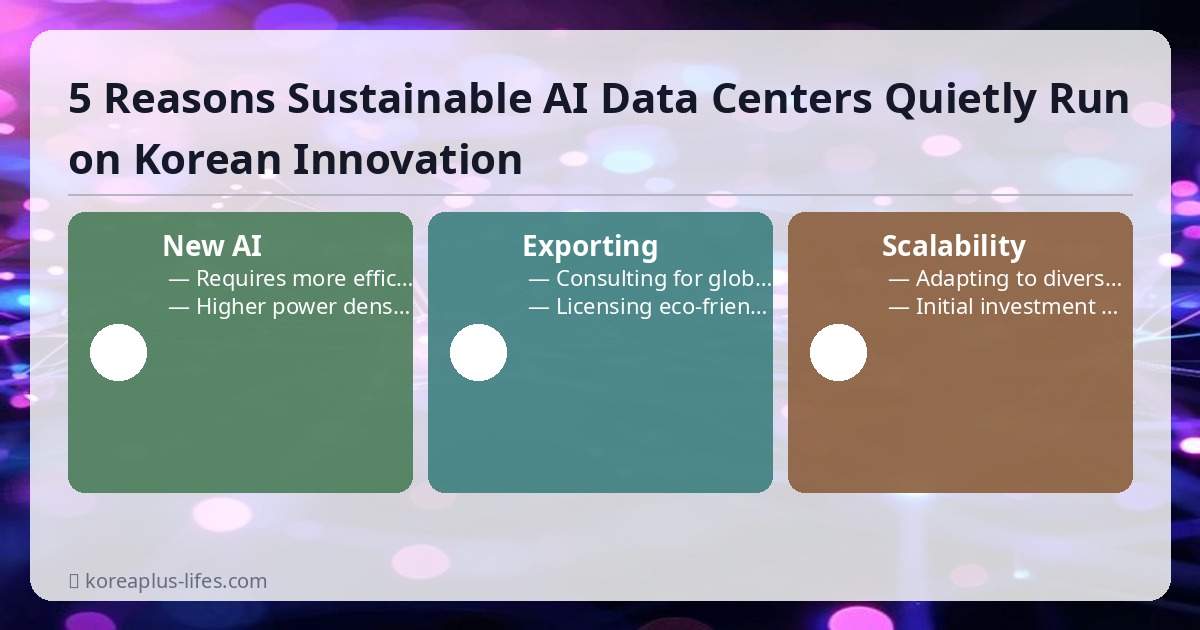
While Naver’s achievements in sustainable AI infrastructure are impressive, translating these proprietary innovations into widespread global adoption isn’t without its challenges. The highly customized nature of Naver’s GAK Sejong data center design, from its unique cooling architecture to its bespoke robotic management systems, could pose significant hurdles for replication. Building such facilities requires not only substantial upfront capital investment but also deep engineering expertise that may not be readily available or transferable across diverse regulatory environments and climates.
Moreover, integrating Naver’s specific operational blueprints with existing global data center standards and supply chains might require extensive customization. Different regions have varying energy grids, local environmental conditions, and labor market dynamics that could complicate a direct “copy-paste” approach. Analysts suggest that while the conceptual framework of Naver’s sustainable AI infrastructure Korean solutions is highly attractive, the practicalities of international deployment would necessitate flexible, modular adaptations rather than rigid adherence to the original design.
#5. Korea’s Digital Twin Market Growth Will Drive Further Data Center Optimization
The future scalability of Naver’s sustainable data center model is intrinsically linked to the broader growth of technologies like digital twins. The global digital twin market, valued at US$13.74 billion in 2024, is projected to reach US$140.94 billion by 2031, growing at a compound annual growth rate (CAGR) of 40%. This explosive growth implies an increasing demand for real-time, highly accurate virtual models of physical assets, including data centers themselves.
Naver’s use of AI for predictive cooling and robotic management already hints at a sophisticated digital twin of its GAK facilities. As this technology matures, it will enable even more granular optimization of energy consumption, predictive maintenance, and fault detection, further enhancing the efficiency and resilience of sustainable AI infrastructure Korean solutions. The integration of digital twins will not only make these data centers greener but also more reliable and adaptable to future AI workload fluctuations. This holistic approach, encompassing both physical and virtual optimization, solidifies Korea’s position in the global AI infrastructure race, attracting attention from global firms as Samsung’s arrival in the trillion-dollar club highlights Korea’s growing influence in the architecture of the modern global economy, according to pymnts.com.
Quick Q&A
A1. Korean data centers, particularly Naver’s GAK facilities, achieve high energy efficiency through a combination of ultra-low Power Usage Effectiveness (PUE) designs, advanced AI-driven cooling systems like indirect free cooling, and comprehensive robotic management. Naver’s GAK Sejong operates with a PUE as low as 1.09, significantly below the global average. This efficiency also extends to optimizing various k-tech gadgets and components within the data center ecosystem.
A2. Naver’s data centers are sustainable for AI primarily due to their exceptional energy efficiency, minimizing the environmental impact of massive AI workloads. They integrate AI to optimize cooling and power distribution, reduce human intervention with robotics, and prioritize renewable energy sources where possible. These strategies collectively ensure that the expanding computational demands of AI do not lead to a proportional increase in energy consumption or carbon emissions.
A3. Yes, Korean data centers, most notably Naver’s GAK Sejong, prominently feature advanced robotic systems. These robots, part of a system called “Arc Eye,” perform tasks ranging from environmental monitoring to server maintenance and hardware replacement. This robotic integration enhances efficiency, improves security, and reduces the need for constant human presence, contributing significantly to the overall operational sustainability.

Hi, I’m Dokyung, a Seoul-based tech and economy enthusiast. South Korea is at the forefront of global innovation—from cutting-edge semiconductors to next-gen defense technology. My mission is to translate these complex industry shifts into clear, actionable insights and everyday magic for global readers and investors.