
🎯 Key Takeaways
- Naver’s ARCVERSE platform manages a vast fleet of intelligent robots, providing real-time whole-body intelligence through its robust cloud AI, a capability largely unmatched in widespread commercial deployment.
- While Western companies showcase dazzling prototypes, Naver’s unique RaaS model offers a practical, scalable blueprint for integrating AI robots into existing urban and architectural infrastructure.
- The ongoing challenge for Naver lies in globalizing its deeply integrated, Korea-optimized ecosystem, which faces competition from larger, later-moving tech giants once they pivot to similar real-world applications.
📋 Table of Contents
- ▸ #1. Naver’s ARCVERSE Already Powers Real-World Whole-Body Intelligence at Scale
- ▸ #2. Unpacking Naver’s Cloud-to-Robot Intelligence: ARC and ARCVERSE
- ▸ #3. Beyond Prototypes: Naver’s RaaS Model for Complex Environments
- ▸ #4. Q4. What Obstacles Could Slow Naver’s Global AI Robotics Expansion?
- ▸ #5. Q5. When Will Naver’s RaaS Model Reshape Global Urban Living?
- └ Quick Q&A
The global conversation around intelligent robots often fixates on the theoretical — on dazzling prototypes demonstrating “whole body intelligence” in controlled lab settings, or the abstract power of advanced AI agents like Gemini Robotics 2. Yet, the real story of how these innovations are actually deployed, integrated, and scaled in complex, dynamic environments is unfolding far from the Silicon Valley spotlight. It’s happening in South Korea, where tech giant Naver has quietly built and deployed a comprehensive “robot-as-a-service” (RaaS) ecosystem, making it a pivotal, yet often unacknowledged, player in real-world AI robotics.
#1. Naver’s ARCVERSE Already Powers Real-World Whole-Body Intelligence at Scale
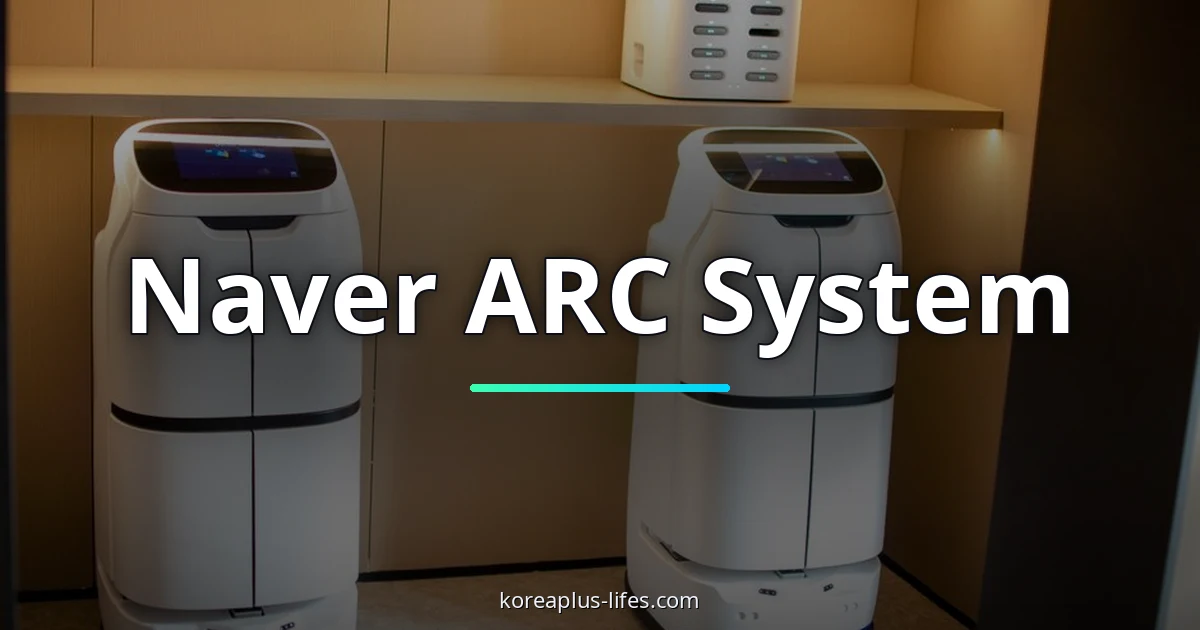
The prevailing narrative often overlooks that true “whole-body intelligence” isn’t just about a robot’s individual capabilities; it’s about its ability to perceive, act, and learn within a dynamic environment, constantly supported by a robust backend. This is where Naver, a South Korean online platform operator known globally for its search engine and other digital services, has made significant strides, particularly through its ARCVERSE platform. This integrated system extends the intelligence of its cloud infrastructure directly into its physical robots, enabling them to navigate and interact with complex spaces like smart buildings and even entire urban districts.
Imagine a building where a diverse fleet of robots – from delivery bots to security patrols and even robotic arms – operate in unison, sharing environmental data, learning from each other’s experiences, and adapting to human activity in real-time. Naver’s ARCVERSE is designed precisely for this, providing the neural network that connects these disparate robotic entities. The platform’s ability to fuse data from multiple robots and building sensors, then process it in the cloud for real-time decision-making, represents a tangible deployment of advanced AI robotics. For more details on Naver’s broader operations, you can visit their Wikipedia page. As of today, Naver’s market valuation sits at ₩205,500 per share, marking a +5.5% increase, reflecting investor confidence in its diverse tech portfolio, which includes this ambitious robotics initiative.
📊 KRX Stock Performance (Live)
₩205,500 +5.5%
Source: KRX · Yahoo Finance · data as of latest session
#2. Unpacking Naver’s Cloud-to-Robot Intelligence: ARC and ARCVERSE
Naver’s unique advantage in the global AI robotics landscape stems from its deep integration of AI, cloud computing, and hardware. Their core platform, ARC (AI-Robot-Cloud), isn’t just about controlling individual robots; it’s about creating an intelligent fabric that spans physical and digital space. This architecture allows robots to offload heavy computational tasks to the cloud, enabling them to be lighter, more agile, and benefit from the collective intelligence and massive datasets processed by Naver’s data centers.
This holistic approach means Naver’s robots, unlike many standalone units, are constantly connected to a powerful AI brain. They leverage Naver’s extensive cloud infrastructure, which includes advanced mapping, localization, and navigation algorithms, to operate with a level of autonomy and adaptability rarely seen in widespread deployment. This integration is crucial for what’s often termed “whole-body intelligence,” allowing robots to fluidly adapt to unexpected changes in their environment, collaborate with other machines, and even communicate effectively with humans. South Korea’s AI leadership: Beyond ChatGPT and Perplexity in global tech innovation is increasingly evident in such practical applications.
#3. Beyond Prototypes: Naver’s RaaS Model for Complex Environments
While Western labs often focus on creating increasingly sophisticated humanoid or industrial robot prototypes designed for specific, controlled tasks, Naver has taken a different path: building a commercially viable “Robot-as-a-Service” (RaaS) model for complex, real-world environments. This isn’t just about selling robots; it’s about providing the entire infrastructure, from the cloud platform and AI models to the maintenance and continuous updates, ensuring the robots function optimally in dynamic settings.
Naver’s approach involves deploying various types of robots – including autonomous delivery robots, security patrols, and even mapping robots – within its own headquarters, “1784” in Pangyo, a smart building specifically designed as a living lab. This real-world proving ground allows them to refine their systems under actual operating conditions, far beyond what typical lab simulations can offer. The insights gained from managing a fleet of robots interacting with hundreds of employees daily are invaluable, creating a feedback loop that rapidly improves their AI and operational efficiency. This practical, deployment-first strategy, often integrating with companies like Hyundai Robotics for hardware components, puts Naver in a unique leadership position for how Korean cloud AI powers robots in daily life. For more on the broader ecosystem of advanced tech in the region, refer to our full coverage of this sector on our Korea AI & Cloud hub.
| Feature | Naver’s RaaS (ARCVERSE) | Typical Western Prototype/Industrial Robot |
|---|---|---|
| Intelligence Source | Cloud-networked AI, shared intelligence across fleet | On-board AI, siloed learning per unit |
| Deployment Scale | Building-wide to urban-scale fleets, dynamic environments | Single-task, factory floors, controlled labs |
| Service Model | Subscription-based RaaS, continuous updates & support | Upfront purchase, limited software updates |
| Adaptability | High, real-time adaptation via cloud processing | Moderate, often requires reprogramming for changes |
| Integration with Infrastructure | Deep, interacts with building systems (doors, elevators) | Limited, typically operates independently |
| KoreaPlus Estimate: Time to Global Scale (Major City) | 3-5 years (given existing R&D and deployment cycles) | 7-10 years (assuming new R&D and ecosystem build-out required) |
How we got this: The KoreaPlus estimate for Naver assumes continued investment in language and regional data models, leveraging existing cloud infrastructure and a proven RaaS deployment model within Korea. Western estimates factor in the longer development cycle from prototype to integrated ecosystem, including establishing new cloud and AI backbones for real-world RaaS.
#4. Q4. What Obstacles Could Slow Naver’s Global AI Robotics Expansion?
Despite its demonstrable lead in real-world intelligent robot deployment, Naver faces significant hurdles in translating its domestic success into a global phenomenon. The primary challenge lies in the sheer depth of integration its ARCVERSE platform requires. Building a seamless “robot-as-a-service” ecosystem demands not just advanced hardware and software, but also a sophisticated understanding of local infrastructure, regulatory frameworks, and cultural nuances.
Expanding a platform optimized for the highly connected and technologically advanced urban environments of South Korea to diverse international markets presents a complex logistical and technical challenge. Naver would need to localize its AI models, adapt to varying communication standards, and build out new cloud infrastructure in each target region, which could be capital-intensive and time-consuming. Moreover, competition from established global tech giants, once they shift focus from theoretical AI agents to practical, integrated robot deployments, could pose a substantial threat, especially given their expansive cloud networks and marketing muscle. The USD/KRW exchange rate, currently at 1460.76, also means international expansion involves navigating currency risks and potentially higher local operational costs for overseas ventures.
#5. Q5. When Will Naver’s RaaS Model Reshape Global Urban Living?
The trajectory for Naver’s advanced AI robotics suggests that its RaaS model could begin reshaping aspects of global urban living within the next three to five years. This will likely start with strategic partnerships in highly urbanized, tech-forward cities that are actively seeking smart city solutions. Naver’s demonstrated capability in deploying diverse robot fleets within complex, multi-story buildings and integrating them with existing infrastructure provides a compelling blueprint.
Expect to see pilot programs emerge in places like Singapore, Dubai, or other smart city initiatives by late 2027 or early 2028. These initial expansions wouldn’t necessarily involve full-scale urban deployment, but rather focused implementations in new smart districts or large corporate campuses, similar to its 1784 headquarters. The success of these early international ventures, coupled with Naver’s continued investment in core AI technologies and collaborations with hardware partners like Hyundai Robotics and AI chip firms such as Rebellions and Solid Inc. for specialized processing, will be critical in determining the pace of broader adoption. The future of how Korean companies integrate AI and robotics hinges on these strategic moves. For more on the innovations shaping our physical world, explore our coverage on K-Tech & Gadgets.
Quick Q&A
A1. Naver’s AI robotics platform, known as ARCVERSE, integrates advanced AI, cloud infrastructure, and various robot hardware into a single ecosystem. It allows robots to offload complex computations to the cloud, enabling collective intelligence, real-time environmental mapping, and adaptive navigation across diverse and dynamic environments like smart buildings or urban areas. This robust system provides a comprehensive “robot-as-a-service” (RaaS) model.
A2. South Korea plays a significant, often understated, role in global AI robotics by focusing on practical deployment and ecosystem integration rather than just prototype development. Companies like Naver are leading the charge in developing comprehensive platforms that enable intelligent robots to operate seamlessly in real-world settings, demonstrating how Korean cloud AI powers robots. This pragmatic approach positions South Korea as a key innovator in bridging the gap between advanced AI theory and commercial robotic application.
A3. Korean companies integrate AI and robotics by leveraging strong cloud computing infrastructure and advanced AI research to create interconnected robotic ecosystems. Naver, for instance, uses its ARC (AI-Robot-Cloud) system to provide robots with real-time access to powerful cloud-based AI, enabling “whole-body intelligence” and efficient operation in complex environments. This integration often involves collaborations with specialized hardware manufacturers and AI chip developers, creating a robust local supply chain for advanced robotics.
📚 Sources & Further Reading
Written by Dokyung · KoreaPlus-Lifes
Dokyung is a Seoul-based industry watcher covering Korean semiconductors, batteries, AI infrastructure, and defense — and the companies behind them. Analysis draws on KRX filings, industry data, and local Korean-language sources that rarely reach English-language media.

Hi, I’m Dokyung, a Seoul-based tech and economy enthusiast. South Korea is at the forefront of global innovation—from cutting-edge semiconductors to next-gen defense technology. My mission is to translate these complex industry shifts into clear, actionable insights and everyday magic for global readers and investors.