
🎯 Key Takeaways
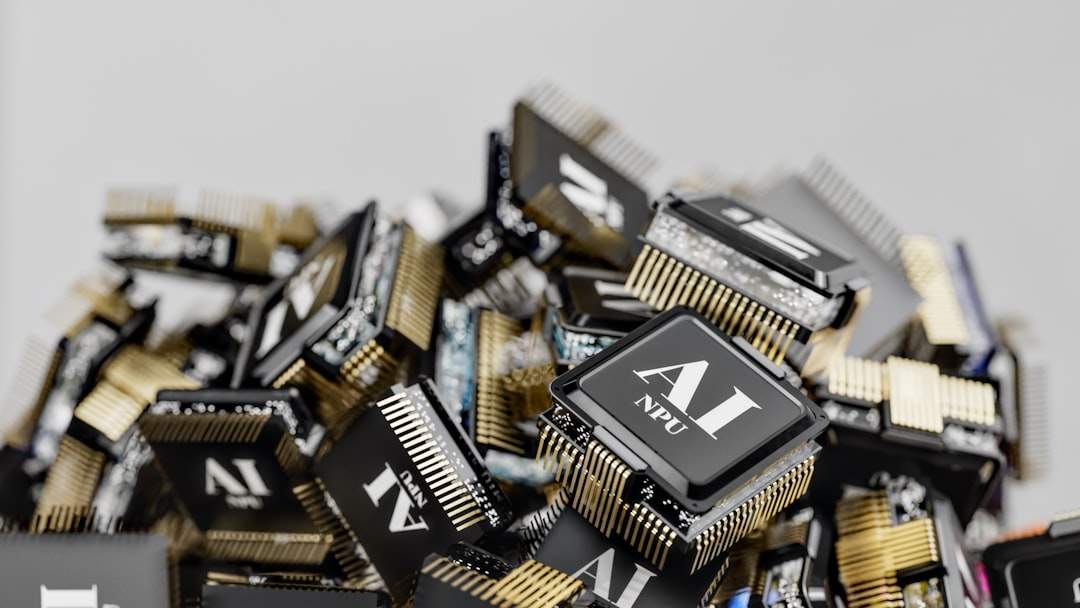
- The global AI chip market is projected to reach USD 564.87 billion by 2032, yet its energy demands pose a significant hurdle.
- Rebellions’ specialized AI accelerators are engineered to dramatically improve efficiency for inference, potentially cutting operational costs by a factor of five compared to general-purpose GPUs.
- Watch for increased adoption of purpose-built inference chips in cloud data centers and edge computing as companies prioritize both performance and sustainability in the next 18-24 months.
📋 Table of Contents
- ▸ 1. The $560 Billion AI Chip Market’s Efficiency Imperative
- └ Global Market Size & Growth Drivers
- └ Korea’s Strategic Position in Advanced Silicon
- ▸ 2. Company Deep-Dive: Rebellions — Powering Sustainable AI Inference
- └ Business Model & Revenue Drivers for Specialized AI Accelerators
- └ Recent Strategic Moves and Market Traction
- └ Competitive Positioning in the AI Accelerator Landscape
- ▸ 3. Overcoming Ecosystem Lock-In and Software Integration Hurdles
- └ Near-Term Pressure Points for Niche AI Hardware
- └ Structural Challenges to Watch in AI Hardware Development
- ▸ 4. The Future of Efficient AI Hardware by 2030: Expanding Horizons for Korean Accelerators
- └ Frequently Asked Questions
1. The $560 Billion AI Chip Market’s Efficiency Imperative
Global Market Size & Growth Drivers
The global AI chip market is undergoing an explosive expansion, driven by the insatiable demand for processing power across cloud infrastructure, AI PCs, and high-end smartphones. According to the ‘AI Chip Market Research and Global Forecast Report 2025-2030’, this sector is anticipated to surge from an estimated USD 203.24 billion in 2025 to a staggering USD 564.87 billion by 2032, exhibiting a compound annual growth rate (CAGR) of 15.7%. This growth isn’t just about raw computational might; it’s increasingly about efficient processing.
This dramatic growth is further accelerated by the proliferation of increasingly complex AI models that require both intensive training and, crucially, highly efficient inference capabilities. The shift towards smaller, faster models and local inference on devices necessitates specialized hardware that can deliver performance without commensurate increases in power consumption. This push for efficiency represents a rebellion against the traditional compute paradigm where power budgets were often secondary to peak performance.
Korea’s Strategic Position in Advanced Silicon
South Korea, a long-standing powerhouse in semiconductor manufacturing and memory, is now strategically positioning itself within the burgeoning AI chip ecosystem. While often recognized for its memory giants like Samsung and SK Hynix, a new wave of fabless design companies is emerging, leveraging the country’s deep expertise in silicon design and advanced manufacturing. These firms aim to carve out niches in areas like purpose-built AI accelerators.
The country’s robust semiconductor infrastructure, including world-leading foundries like Samsung Foundry, provides a critical advantage for these startups. Located primarily in technological hubs such as Pangyo Techno Valley, south of Seoul, these companies benefit from a dense ecosystem of talent, research institutions, and government support aimed at fostering next-generation chip innovation. This localized expertise allows for rapid prototyping and iteration, essential in the fast-paced AI hardware landscape.
2. Company Deep-Dive: Rebellions — Powering Sustainable AI Inference
Business Model & Revenue Drivers for Specialized AI Accelerators
Rebellions, a Korean startup, is emerging as a significant player in the specialized AI chip sector, specifically targeting the inference segment. Its business model centers on designing and developing application-specific integrated circuits (ASICs) optimized for efficient AI inference. These chips are not general-purpose GPUs, which are excellent for training but often overkill and energy-inefficient for repetitive, high-volume inference tasks. Rebellions’ accelerators are engineered to perform these specific tasks with dramatically lower power consumption and higher throughput.
Revenue generation primarily stems from selling these dedicated AI accelerators to data center operators, cloud service providers, and enterprises seeking to deploy AI at scale. Key customers include those managing large-scale AI applications, from recommendation systems and natural language processing to computer vision. The company’s focus on energy efficiency positions it as a crucial provider for partners like Naver Cloud, which operates significant data center infrastructure and prioritizes sustainable operations. Understanding why AI chip manufacturing depends on companies nobody has heard of reveals the intricate ecosystem Rebellions is part of.
Recent Strategic Moves and Market Traction
In the past 12 months, Rebellions has reportedly made significant strides in product development and market penetration. Their latest generation of AI accelerators, designed for both cloud and edge inference, has garnered attention for its benchmark performance against established general-purpose GPUs. Public signals suggest their chips are achieving up to five times greater energy efficiency for certain inference workloads compared to conventional solutions, a critical metric for data center operators grappling with rising electricity costs and environmental mandates.
This move fits a broader strategy to establish Rebellions as a leader in sustainable AI hardware. They are betting on the growing consensus that AI’s carbon footprint must be managed, and that purpose-built silicon is the most effective way to do it. The company’s accelerators offer compelling total cost of ownership (TCO) advantages, not just in raw performance but in reduced cooling requirements and power bills, appealing directly to a market increasingly sensitive to operational expenditures and ESG goals.
Competitive Positioning in the AI Accelerator Landscape
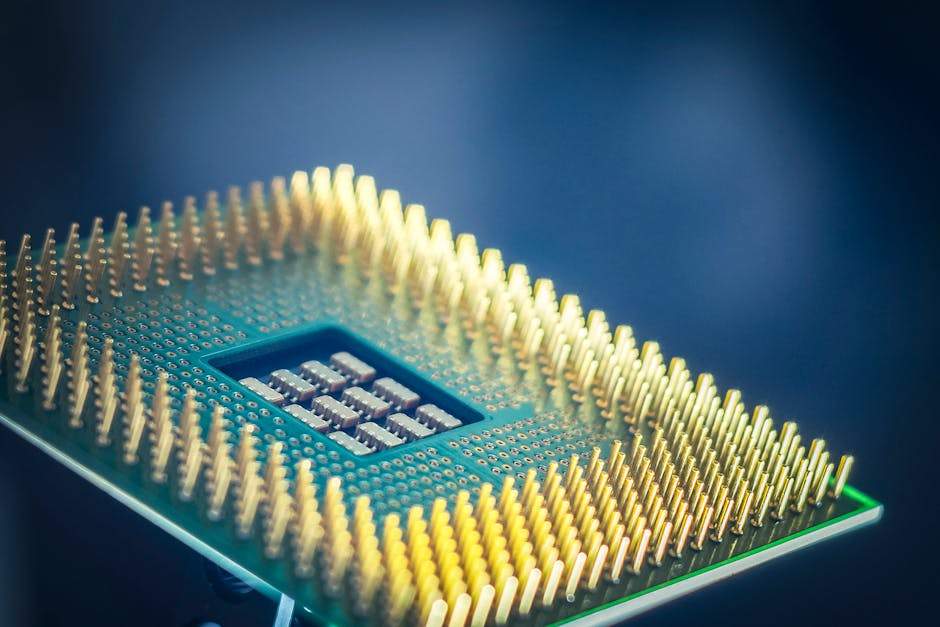
Rebellions is positioned in a highly competitive arena, squaring off against both incumbent GPU giants like Nvidia and a growing roster of fellow AI accelerator startups. Their primary differentiation lies in extreme specialization for inference tasks, allowing them to achieve superior performance-per-watt metrics. While Nvidia’s CUDA ecosystem offers a powerful, generalized platform, it doesn’t always deliver optimal efficiency for every AI workload. Rebellions aims to capture market share by offering compelling alternatives for specific, high-volume inference applications.
However, the challenge for Rebellions and other specialized chipmakers is overcoming the entrenched market position of general-purpose GPUs and the extensive software ecosystem that supports them. Building out a robust software stack and developer tools is as crucial as hardware performance. This is where larger players often have an advantage, making adoption for new entrants a steeper climb.
3. Overcoming Ecosystem Lock-In and Software Integration Hurdles
Near-Term Pressure Points for Niche AI Hardware
Near-term adoption of specialized AI accelerators faces pressure from several angles. Initial integration costs for data centers looking to shift from established GPU infrastructures can be substantial, involving new software development and retraining of engineering teams. Furthermore, a rising US Fed Funds Rate, currently at 3.64, impacts the cost of capital for data center upgrades and new infrastructure investments globally, potentially slowing down transitions to novel hardware. Companies like Rebellions must demonstrate not just performance gains but also a clear, quantifiable return on investment.
The strong ecosystem built around general-purpose GPUs, particularly Nvidia’s CUDA, presents a significant barrier. Developers are accustomed to existing toolchains, and migrating to new platforms, even those offering superior efficiency for specific tasks, requires considerable effort. This resistance to change can slow market penetration, despite the clear energy and cost benefits specialized chips offer in the long run.
Structural Challenges to Watch in AI Hardware Development
Looking further out, structural challenges persist for specialized AI chipmakers. The rapid evolution of AI models and frameworks demands a high degree of adaptability from hardware. A chip optimized for today’s transformer models might be less efficient for tomorrow’s unforeseen architectures, creating a constant race for innovation. This inherent risk means companies like Rebellions must invest heavily in R&D, constantly refining their designs.
Moreover, the intense global competition, with significant investments from major tech companies and state-backed initiatives, means that market leadership can be fleeting. Talent acquisition and retention, especially for highly specialized semiconductor engineers in locations like South Korea, also remain a perennial challenge. Despite these headwinds, the sheer economic and environmental imperative for more efficient AI inference solutions continues to drive development and investment in the sector.
4. The Future of Efficient AI Hardware by 2030: Expanding Horizons for Korean Accelerators
The next several years will be critical for companies like Rebellions as the market for AI inference hardware matures. We should anticipate key product launch windows in late 2026 and early 2027, showcasing even greater performance-per-watt improvements. These releases will likely coincide with major cloud providers announcing new AI infrastructure plans, potentially signaling larger-scale adoption of specialized chips.
Worth watching closely are also the strategic partnerships forged between these Korean AI chip companies and global data center operators or major AI software developers. If these collaborations deepen, it could accelerate the development of standardized software interfaces, easing migration from general-purpose GPUs. With the USD/KRW exchange rate hovering around 1517.33, Korean companies face both export advantages and import cost pressures, impacting their global competitiveness in the supply chain.

Frequently Asked Questions
A1. Efficient AI inference is crucial because it directly addresses the immense power consumption and operational costs associated with scaling AI. As AI models are deployed across countless applications, the energy required for their daily operation, rather than just training, becomes a major sustainability and economic concern. Dedicated inference chips can drastically reduce electricity bills and cooling needs for data centers.
A2. Purpose-built AI accelerators offer significant benefits over general-purpose GPUs for inference tasks, primarily through superior energy efficiency and optimized performance for specific AI workloads. This leads to lower operational costs, reduced heat generation, and a smaller physical footprint in data centers. For consumers, this translates to faster, more accessible AI experiences on devices and cloud services, a key aspect for K-Tech gadgets and future AI PCs.
A3. Korean AI chip companies enhance sustainability by developing highly efficient, purpose-built hardware for AI inference. By designing chips like those from Rebellions that consume significantly less power for the same computational output compared to general-purpose solutions, they directly reduce the energy footprint of AI deployments. This approach supports the growing global demand for sustainable data center operations and makes AI more environmentally responsible.

Hi, I’m Dokyung, a Seoul-based tech and economy enthusiast. South Korea is at the forefront of global innovation—from cutting-edge semiconductors to next-gen defense technology. My mission is to translate these complex industry shifts into clear, actionable insights and everyday magic for global readers and investors.