
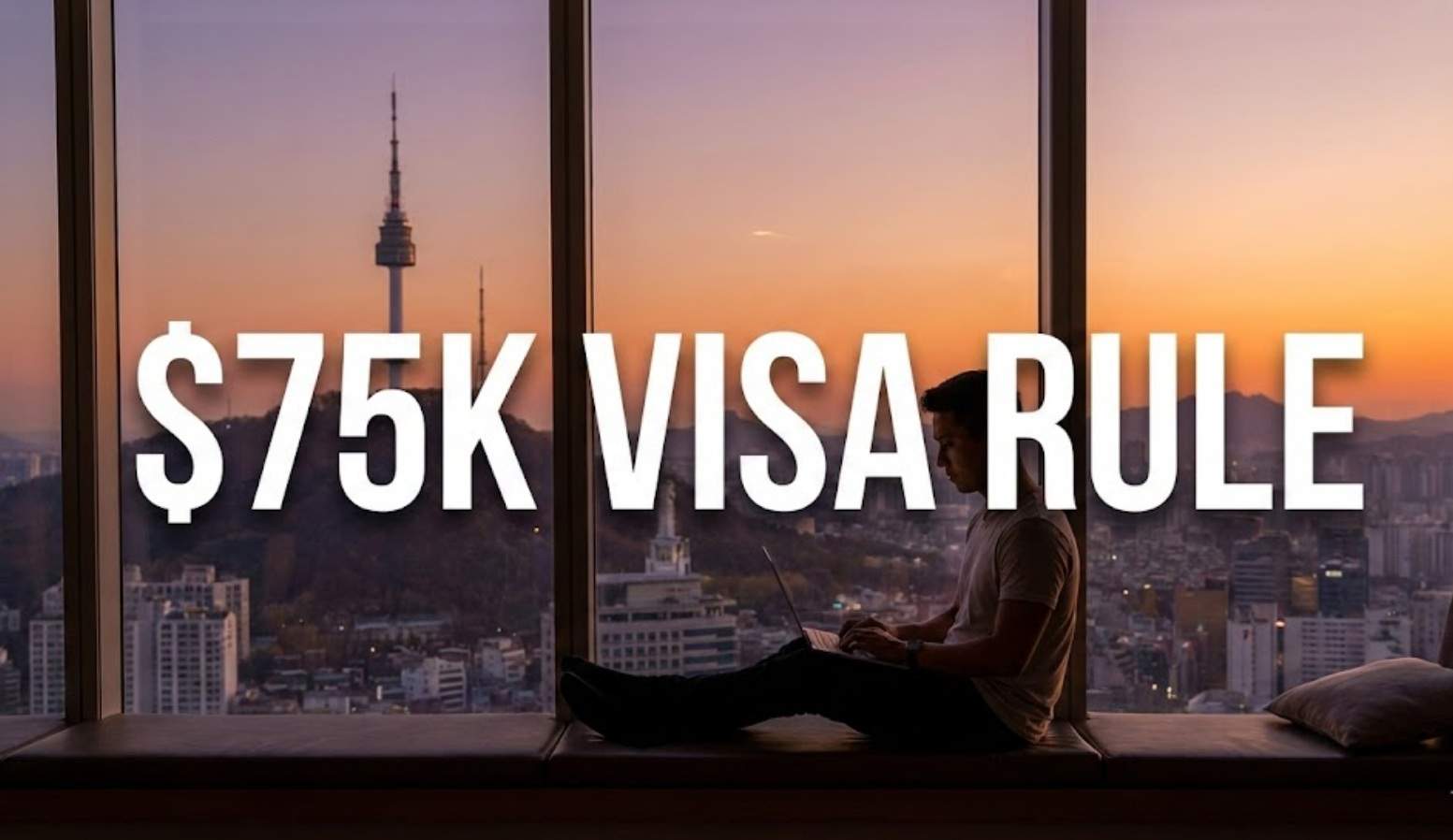
The “Health Arbitrage” You Didn’t See Coming
If you are reading this, you’ve likely already cleared the massive financial hurdle: earning over $66,000 USD (approx. 90,000,000 KRW) annually. You’re ready to trade your cramped apartment in San Francisco or NYC for a high-rise in Seoul (서울).
But here is the irony: The thing you are most worried about—health insurance—is actually the biggest financial win of this entire move.
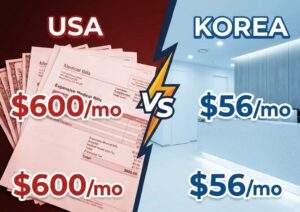
In the US, you might be paying $400–$600 per month for a “Silver” plan with a $5,000 deductible. In Korea, you can secure “Visa-Grade” insurance that satisfies the strict Ministry of Justice (법무부) requirements for less than the cost of a nice dinner in Gangnam.
However, the Korean Consulate is pedantic. If your policy certificate doesn’t say the exact right words (specifically “Repatriation”), your F-1-D application will be rejected instantly.
This guide is your wallet’s best friend. I’m going to show you exactly how to meet the $75,000 (100 Million Won) rule without overpaying, and which US providers actually work at the immigration desk.
The “Korea vs. US” Cheat Sheet (Insurance Edition)
Before we dive into the brands, look at the math. This is why smart US expats call living in Korea a “Health Arbitrage.”
| Feature | Typical US Private Plan (Silver) | Korea F-1-D Visa Insurance (Expat) |
| Monthly Cost | $450–$650 USD | $45–$150 USD (60,000–200,000 KRW) |
| Deductible | $4,000+ USD | $0–$250 USD |
| Global Coverage | No (US Only) | Yes (Worldwide excl. US) |
| Repatriation | Rarely Included | Mandatory (100% Covered) |
| Visa Letter? | No | Instant PDF (Required for F-1-D) |
| Local Search | N/A | Search ‘여행자 보험’ (Travel Insurance) on Naver |
Insider Note: The “Repatriation” clause is the dealbreaker. This covers the cost of flying your remains back to the US if you pass away. It is morbid, but the Korean government mandates it to ensure they don’t get stuck with the bill. Your Blue Cross Blue Shield plan back home likely does not cover this explicitly enough for the visa officer.
The F-1-D Insurance Checklist: What the Consulate Actually Wants
You cannot just buy “Travel Insurance” on Expedia and call it a day. The Immigration Office (출입국관리사무소) looks for three specific data points on your Certificate of Coverage (CoC).
1. The Magic Number: 100,000,000 KRW ($75,000 USD)
Your policy declaration page must explicitly state a Medical Maximum of at least $75,000 USD.
-
Risk: Some cheap “Backpacker” plans cap out at $50,000. These will get you rejected.
-
The Fix: Most reputable Nomad insurers (SafetyWing, Genki) start at $250,000, which puts you safely in the clear.
2. The “Repatriation” Clause
I cannot stress this enough. If the word “Repatriation” (or “Return of Mortal Remains”) does not appear on your visa letter, do not submit it.
-
Why? The Korean government wants proof that if the worst happens, a private company—not the Korean taxpayer—will pay the ~$20,000 to fly you home.
3. The 1-Year Validity
You are applying for a 1-year visa. Your insurance must cover you for 365 days from your intended date of entry.
-
Pro Tip: If you buy a monthly subscription (like SafetyWing), you need to download a “Visa Letter” that states the policy auto-renews or shows an end date 1 year in the future.
Top 3 Visa-Compliant Providers for US Citizens
Here are the three heavyweights that US expats use to get their F-1-D approved.
1. SafetyWing (Nomad Insurance) – The “Budget” Choice
This is the “Honda Civic” of nomad insurance. Reliable, affordable, and gets the job done.
-
Price: ~$56 USD/month (approx. 75,000 KRW).
-
Pros:
-
Instantly generates the specific “Visa Letter” you need for the Korean consulate.
-
Meets the $250,000 limit (well above the 100M KRW requirement).
-
One child per adult included for free.
-
-
Cons: $250 deductible. If you need a simple doctor’s visit for a cold, you’ll pay out of pocket.
-
Best For: Healthy digital nomads who just need the “piece of paper” to get the visa approved.
2. Genki (World Explorer) – The “Comprehensive” Choice
A German-backed insurer that is rapidly gaining market share because they actually cover sports (Surfing in Yangyang? Hiking Bukhansan?).
-
Price: ~$65–$90 USD/month (Age dependent).
-
Pros:
-
Covers Sports: Essential if you plan on skiing in Pyeongchang or surfing in Busan.
-
Clear, German-efficiency style paperwork that consulates love.
-
-
Cons: Price jumps significantly if you are over 40.
-
Best For: Active nomads who might actually use the insurance for injuries, not just emergencies.
3. GeoBlue (Xplorer) – The “Premium” US Brand
If you are terrified of leaving the US healthcare system, this is for you. It is run by Blue Cross Blue Shield Global.
-
Price: $150–$300+ USD/month.
-
Pros:
-
Direct Billing: They have a network of hospitals in Seoul (like Asan Medical Center or Severance) where you might not even have to swipe your card.
-
Brand Trust: It feels like your insurance back home.
-
Pre-Existing Conditions: Some plans cover them (check fine print).
-
-
Cons: Expensive. You are paying for the brand name.
-
Best For: Families or those with chronic conditions who need absolute peace of mind.
The “Six-Month Switch”: How the NHIS Changes Everything
Here is the secret “Part 2” that most blogs forget to tell you.
When you arrive in Korea on an F-1-D visa, you are a “private payer.” You use your SafetyWing or Genki policy. But, under Korean law, most foreign residents staying longer than 6 months (180 days) are mandatorily enrolled in the National Health Insurance Service (NHIS / 국민건강보험).
The “Double Dip” Scenario:
After 6 months, you might receive a bill from the NHIS for approx. 150,000 KRW ($110 USD) per month.
-
The Problem: You are technically already paying for your private insurance (to keep your visa valid).
-
The Insider Strategy:
-
Do NOT Cancel Private Insurance Yet: The NHIS does not cover “Repatriation.” To stay legally compliant with your visa terms, you technically need to maintain a policy that covers repatriation.
-
Apply for Exemption (Maybe): F-1-D holders can apply for an exemption from NHIS if they prove their foreign coverage is superior. However, most “Nomad” plans are deemed “inferior” to NHIS because they have deductibles/limits.
-
The Reality: Most long-term nomads end up paying the NHIS premium after Month 6. It’s worth it. NHIS covers dental scaling (cleaning) for $10, Traditional Korean Medicine (acupuncture), and makes doctor visits cost like $3.
-
Wallet Tip: Treat the first 6 months as your “Private Insurance Era” ($56/mo). Treat the second 6 months as your “NHIS Era” ($110/mo), but keep a basic travel policy active just for the repatriation requirement.
Logistics & Finance FAQ
Q: Can I just use my US employer’s health insurance?
A: Probably not. Unless you have a specific “Global Expat” rider (like Cigna Global or Aetna International), your domestic US policy (Aetna, United, Kaiser) has zero coverage in Korea. Even if it offers “Emergency Coverage,” it will likely lack the “Repatriation” clause required for the visa application.
Q: Do I need to pay upfront at Korean hospitals?
A: Yes. Unlike the US, you usually pay the bill at the counter immediately after your visit.
-
Cost: A general doctor visit (without insurance) is surprisingly cheap—often $15–$25 USD (20,000–35,000 KRW).
-
Process: You pay with your US Credit Card (make sure it has 0% foreign transaction fees) or WOWPASS, then snap a photo of the receipt to file a claim with SafetyWing/Genki for reimbursement.
Q: Where do I go if I get sick in Seoul?
A: Search for “International Clinic” (국제진료센터) on Naver Map.
-
Severance Hospital (Sinchon): World-class, English-speaking staff.
-
Asan Medical Center (Songpa): Korea’s top-rated hospital.
-
For minor issues (flu/cold), just walk into any “Internal Medicine” (내과 – Naekwa) clinic.
Q: How do I get the “Visa Letter” for my application?
A: Once you purchase a policy from SafetyWing or Genki, log into your dashboard. Look for a button that says “Download Visa Letter” or “Certificate of Insurance.”
-
Crucial: Ensure the dates cover your full intended year (e.g., “Jan 1, 2026 to Jan 1, 2027”).
Q: Is dental covered?
A: By private nomad insurance? usually No (only emergency pain relief). By NHIS (after 6 months)? Yes, standard checkups and cleaning are covered.
-
Fun Fact: A root canal in Korea (without insurance) costs about $50–$100. In the US, it’s $1,500.
Conclusion: Spend Smart, Live Well
Getting the Korea Digital Nomad Visa is not just about the freedom to work from a cafe in Hongdae (홍대); it’s a financial upgrade for your life. You are moving from a system where healthcare bankrupts you to one of the most efficient systems in the world.
Don’t let the paperwork scare you. Grab a compliant policy like SafetyWing or Genki to satisfy the consulate today, and worry about the NHIS “Switch” six months down the road.
Next Step for You: Are you ready to prepare your specific visa documents? I can help you draft a checklist for the other F-1-D requirements (Proof of Income & Employment Verification) if you’re ready to tackle the next step.

Hi, I’m Dokyung, a Seoul-based tech and economy enthusiast. South Korea is at the forefront of global innovation—from cutting-edge semiconductors to next-gen defense technology. My mission is to translate these complex industry shifts into clear, actionable insights and everyday magic for global readers and investors.