
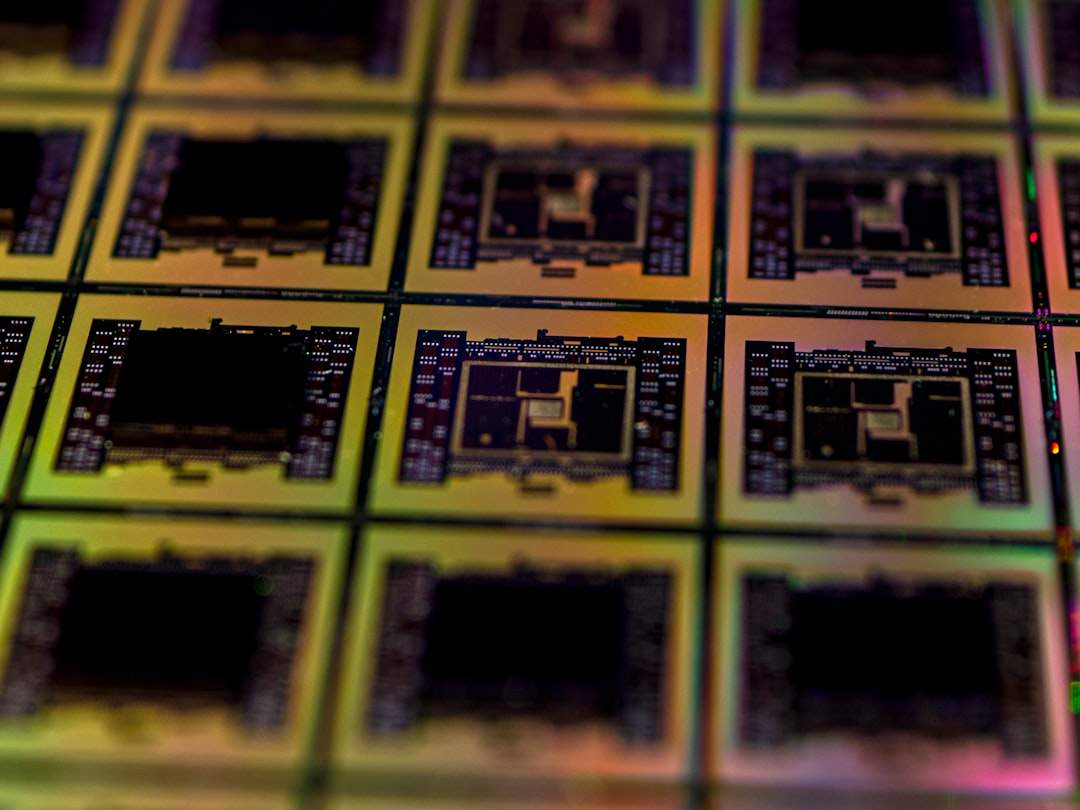
1. Breaking Down the Latest Specific News: Taiwan Overtakes China in US Exports Fueling AI Gold Rush
The recent revelation that Taiwan’s exports to the U.S. now exceed China’s for the first time in decades is a tectonic shift, largely driven by the 93.5% jump in advanced system exports. This data point isn’t just about trade balances; it’s a direct reflection of the global AI supply chain re-alignment away from the PRC, placing immediate and intense pressure on South Korea’s semiconductor ecosystem. We must view this through the lens of the simultaneous Chinese announcement regarding its new five-year plan doubling down on technological self-reliance, especially concerning rare earths and critical chips.
1.1. The Technical or Financial Details
The story of Taiwan leading in US-bound exports highlights the success of the ‘de-risking’ strategy centered around advanced AI hardware migration, likely involving high-end logic chips and specialized systems manufactured by TSMC. Simultaneously, China’s commitment to use ‘extraordinary measures’ for semiconductor breakthroughs signals an internal mobilization that will skew global material pricing and R&D efforts. Furthermore, reports mentioning the U.S. government warning tech leaders about a potential 2027 Taiwan invasion underscore the geopolitical risk premium attached to everything manufactured in the broader East Asian silicon sphere. This entire environment is accelerating the need for diversification efforts like the Pax Silica supply chain effort, now including India.

1.2. Why This Matters to the Global Market Right Now
The backdrop of the US Federal Funds Effective Rate sitting at 3.64% suggests capital markets are still relatively tight, yet the AI boom continues to override traditional interest rate sensitivity in the tech sector. The massive trade divergence involving Taiwan is a direct indicator of decoupling severity. For global investors, this means that future supply chain resilience will be priced at a premium, favoring partners like South Korea who maintain access to both US technology standards and high-volume manufacturing expertise. Moreover, the discussion around the Trump administration using AI tools to set mineral reference prices for gallium and germanium shows resource control is becoming a digitized, strategic defense mechanism.
2. The Direct Ripple Effect on Specific South Korean Competitors
The primary South Korean entity feeling the immediate strategic pressure from both the Chinese self-sufficiency drive and the US-led ‘Pax Silica’ diversification is Samsung Electronics, particularly its Foundry division, though SK Hynix’s dominance in HBM is also critical. As a company deeply embedded in both advanced logic manufacturing (competing with TSMC) and high-volume consumer electronics reliant on stable global trade, Samsung faces a dual threat: losing mainland Chinese high-end foundry contracts to domestic advancement, while simultaneously needing to prove its resilience against geopolitical disruption to its Western AI clients.
2.1. Immediate Supply Chain and Stock Impact
The key vulnerability for Samsung Foundry is the need to demonstrate capacity outside of the immediate Taiwan Strait risk zone, which is why their investments in the US (like Taylor, Texas) and domestic capacity expansion are crucial. If China successfully doubles down on domestic chipmaking—even if it lags initially—it erodes the high-volume, stable revenue streams Samsung Foundry relies on. Meanwhile, the USD/KRW exchange rate at 1498.88 presents a mixed picture; a weaker Won generally helps exporters like Samsung on margin translations but signals higher input costs for imported materials necessary for leading-edge node production.

2.2. Analyzing the Competitor’s Countermove
Samsung’s necessary countermove is deep specialization in areas where geographic diversification is actively rewarded by Western partners. This involves pushing their advanced packaging technologies (like I-Cube) and securing significant design wins for their logic nodes below 3nm, ensuring they are indispensable to US-based AI developers who are explicitly avoiding single-source reliance on TSMC. Furthermore, their consumer electronics division must leverage the increasing US CPI (327.460) by launching premium, feature-rich products that absorb inflation rather than competing purely on low-cost volume. This mirrors the strategic pivot seen in the Eclipse interview regarding the fusion of ‘atoms’ and ‘bits’ in physical industries.
3. Tactical Moves for Global Investors
For those observing the South Korean market from overseas, the current environment demands a focus on supply chain redundancy rather than pure cost efficiency. Geopolitical risk is now a primary driver of semiconductor investment flows. Foreign capital needs to prioritize Korean firms that are demonstrably succeeding in building manufacturing footprints in non-China aligned regions, a strategy exemplified by Taiwan’s recent trade success. Korean Market Insights suggest favoring the enabling technologies over direct competition where the barriers to entry are highest.

| Specific Metric / Event | Direct Global Impact | Impact on Korean Firm |
|---|---|---|
| Taiwan US Exports Jump (93.5%) | Accelerated decoupling and supply chain consolidation around US allies. | Increased demand for Korean memory (HBM) to complement TSMC logic. |
| China 5-Year Plan Focus | Potential future dumping/subsidization in mature nodes; resource hoarding. | Forces Korean fabless firms to reduce dependence on the Chinese domestic market. |
3.1. Short-Term Volatility & Currency Signals
The current USD/KRW rate near 1500 acts as a buffer for export-heavy tech stocks in the immediate term, potentially inflating local currency earnings for Samsung and SK Hynix despite margin pressures. However, persistent geopolitical tension, underscored by the NYT report on intelligence briefings regarding Taiwan, suggests that any sudden escalation could lead to rapid capital flight, causing the Won to spike temporarily. Investors should monitor US Treasury movements, as rising rates coupled with high geopolitical risk often lead to sharp corrections in high-beta Korean tech names. We should also note the NYT investigative report as a proxy for future US policy actions.
3.2. Long-Term Positioning in the K-Market
Long-term positioning should favor smaller, highly specialized Korean fabless firms focused exclusively on the AI acceleration stack outside of the leading-edge logic race. Specifically, companies developing specialized memory controllers, advanced packaging IP, or dedicated networking ASICs for hyperscalers outside of China present a lower-risk profile. While Samsung and SK Hynix are systemically important, their success is tied to the highest-risk geopolitical flashpoint. Look instead for companies benefiting from the 6G network buildout, as these projects require long lead times and are less susceptible to immediate, volatile shifts in US-China bilateral trade tactics. The push toward ‘atoms and bits’ integration suggests strong growth for firms serving industrial transformation projects, as discussed by Eclipse’s Joe Fath.
Top 5 Specific FAQs for Global Observers
A1. China’s enhanced focus on rare earth dominance threatens the upstream material supply chain for advanced chip manufacturing tools (like lithography and deposition). Korean firms relying on Western equipment suppliers must monitor potential bottlenecks in precursor chemicals that utilize these materials, which could inflate CAPEX budgets for Samsung and SK Hynix expansion plans.
A2. Not immediately negative, but it confirms TSMC’s strengthened position in the US-aligned supply chain. It pressures Samsung Foundry to secure major, non-Taiwanese foundry clients quickly, validating their massive capital expenditure on non-US/non-Korea sites or securing future HBM/packaging contracts that are geographically agnostic.
A3. A high exchange rate (near 1500) means that when Samsung’s USD-denominated sales revenue is converted back to Korean Won, the KRW equivalent is higher, boosting reported local currency earnings. However, this benefit is largely offset by higher import costs for machinery and raw materials, meaning the net effect on profitability is complex and stock-specific.
A4. India represents a long-term, politically stable manufacturing hub where US partners are investing heavily in talent. Korean firms, especially in equipment and materials supply, gain a vital location to expand capacity without triggering US export control limitations on China, offering a new path for growth beyond just domestic and US expansion.
A5. Pay close attention to the DARPA OPEN tool for setting mineral prices. This signals a future where the US seeks to use AI and data analytics to create transparent, non-Chinese-controlled benchmarks for strategic materials, directly challenging China’s historical dominance in rare earth processing.

Hi, I’m Dokyung, a Seoul-based tech and economy enthusiast. South Korea is at the forefront of global innovation—from cutting-edge semiconductors to next-gen defense technology. My mission is to translate these complex industry shifts into clear, actionable insights and everyday magic for global readers and investors.