
1. Global Trigger: The Macro Shift
The current global landscape, as of March 2026, is defined by a potent combination of persistent high interest rates in the West and escalating regional military build-ups in Asia. For Seoul, this translates into a critical inflection point where geopolitical necessity meets domestic economic opportunity, specifically within the defense sector. The US Federal Funds Effective Rate holding steady at 3.64% suggests the Federal Reserve is maintaining a restrictive stance, aiming to tame lingering inflation reflected in the high US CPI reading of 327.460. This environment puts continuous pressure on global liquidity and investment planning. Simultaneously, the regional security situation is rapidly hardening.
The confluence of these factors—sustained Western monetary tightness and Asian kinetic risk—is creating a structural demand floor beneath the South Korean defense industry. The stability of the USD/KRW exchange rate hovering near 1499 acts as a double-edged sword: it boosts the nominal value of export contracts denominated in U.S. dollars, but it simultaneously increases the cost of imported raw materials essential for domestic production.
1.1. Core Catalyst Breakdown
The immediate catalysts driving this rearmament cycle are multi-faceted, rooted in Beijing’s economic signaling and the clear strategic realignment of key neighbors. China’s upcoming five-year plan, with an expected growth target between 4.5% and 5.0% for 2026, anchors the Northeast Asian economic outlook, but the context is decidedly militaristic. Historically, periods of slower but steady growth in China often coincide with an increased focus on external projection capabilities, which directly heightens anxiety among its neighbors.
This anxiety is amplified by the definitive geopolitical shift in Tokyo. The recent decisive election victory for Prime Minister Takaichi signals a historic pivot toward a stronger security posture. This is not merely about increasing budgets; it implies a structural willingness to procure advanced, Western-compatible (and increasingly, Korean-compatible) defense systems to counter perceived threats. For South Korean defense contractors, this means Japan is transitioning from a cautious market participant to a potentially significant, proximate buyer, creating a highly concentrated, high-value demand pool.
Furthermore, the global instability caused by the ongoing conflict involving the U.S. and Iran is driving commodity inflation, particularly in fuel and food, necessitating government intervention via subsidies. This underlines a broader global theme: national security concerns are now prioritized over immediate consumer cost management, paving the way for large, state-backed defense expenditures globally. The urgency is palpable, shifting defense procurement from a cyclical budgetary item to an essential, non-discretionary operational necessity.

1.2. Ripple Effects on Global Supply Chains
The defense sector, long insulated by government guarantees, is now confronting the same supply chain constraints hitting civilian industries, albeit with different priorities. When a nation commits to rearmament—whether it is Poland signing a framework agreement or a NATO partner seeking immediate platform replenishment—the demand for specialized components, advanced electronics, and rare earth materials spikes.
For South Korea, a nation deeply integrated into global high-tech supply chains (semiconductors, batteries, advanced materials), this creates an immediate bottleneck. Defense production lines require precision engineering and guaranteed component sourcing. Companies like Hanwha Aerospace or KAI, securing massive export orders, must compete fiercely for high-grade steel alloys or specialized sensors against the automotive or electronics sectors. This scarcity pushes up input costs, which must be rapidly passed on to the buyer nations, often through inflation-indexed clauses in contracts. If these costs cannot be passed on swiftly, margins suffer, despite high revenue volumes.
Furthermore, the geopolitical environment necessitates deep integration with allied nations’ defense ecosystems. The concept of “lock-in” extends beyond the physical sale of the platform (e.g., a K9 self-propelled howitzer). It necessitates long-term maintenance contracts, spare parts logistics, joint technology development, and potentially, establishing local assembly facilities in the buyer nation, as seen in European defense deals. This requires significant forward-looking Capital Expenditure (CAPEX) planning from Seoul-based firms, a challenging prospect when domestic interest rates are elevated due to the US Fed’s actions. This high CAPEX demand contrasts sharply with the consumer-facing sectors, which are grappling with subsidy demands and inflationary pressure.
2. Geopolitical Context: The Hidden Agenda
The current global arms race is not merely a series of isolated transactions; it is a strategic effort by major powers to establish long-term technological and political alignment. South Korea’s defense exports are crucial because they provide an alternative sourcing pathway that avoids direct reliance on the US or established European military-industrial complexes, offering flexibility and competitive pricing.
2.1. Unpacking the Strategic Motives
For the United States, the Korean defense export boom is strategically beneficial, albeit complex. By encouraging allies like Poland or Romania to purchase K-Defense systems, Washington achieves immediate military readiness in critical theaters (like Eastern Europe) without depleting its own immediate inventories or diverting its own industrial capacity, which is focused heavily on Pacific contingencies. This acts as a force multiplier managed through a trusted, technologically advanced partner—South Korea. The strategic motive here is burden-sharing and strategic hedging.
For China, the rising defense spending in Japan and the growing military capability of South Korea (driven by export success) presents a direct strategic challenge. Beijing’s five-year plan, while focusing domestically on economic stability (the 4.5-5% target), must account for a hardening periphery. This reinforces the need for China to accelerate its own defense modernization across naval and aerospace domains, potentially leading to further friction over resource allocation and technological espionage.
For the recipients of K-Defense—often Eastern European or ASEAN nations—the motive is simple diversification and cost efficiency. They seek systems that integrate well with NATO standards (often sharing legacy compatibility with US systems) but are available faster and priced more competitively than legacy Western European bids. This ability to offer modern, battle-proven technology at scale is the core value proposition.
2.2. The Regulatory & Policy Landscape
South Korea’s government is keenly aware that the current boom is vulnerable to geopolitical shifts. Therefore, policy is increasingly geared toward solidifying the “lock-in” effect. This involves aggressive government-to-government (G2G) negotiations that embed technology transfer and localized manufacturing requirements into contracts. These agreements transform a simple sale into a deep industrial partnership. For example, securing future servicing rights in a country like Poland means that even if political winds shift five years from now, Warsaw has a vested economic and logistical interest in maintaining compatibility with Korean defense platforms.
This regulatory focus is crucial for long-term valuation. Unlike semiconductor cycles, which can pivot rapidly based on global chip demand, defense procurement cycles are measured in decades. The policy focus must be on establishing indispensable logistical footprints abroad. Any attempt by competitor nations to impose sanctions or restrict spare parts flow against recipient nations would immediately highlight the strategic value of the Korean integration. This creates a defensive moat around the contracted revenue streams. For further reading on industrial planning in unstable regions, see industrial resilience planning.

3. Korea’s Position: Dilemma & Opportunity
South Korea finds itself in a historically advantageous, yet operationally complex, position. The demand signal is unambiguous, but the execution risks associated with high-stakes, long-lead-time manufacturing under inflationary pressure are substantial.
3.1. Immediate Risk Factors for Korean Firms
The primary immediate risk stems from the macroeconomic friction outlined earlier: the strong dollar coupled with inflation. The USD/KRW rate of 1498.88 is excellent for headline revenue recognition, but the sustained high US rates increase the cost of capital for domestic expansion. Defense contractors must invest heavily *now*—in new production lines, hiring specialized engineers, and securing raw material buffers—to meet future delivery schedules. Borrowing costs for this expansion are dictated by the higher domestic policy rate, which often tracks the US rate environment. This creates a mismatch between dollar-denominated, back-loaded revenue and KRW-denominated, immediate CAPEX costs.
Another critical risk is talent retention and specialized labor availability. The K-Defense boom requires highly specific engineering skills that are also in demand by leading global semiconductor and battery manufacturers. If the government does not implement targeted subsidies or educational pipelines specifically for defense industry personnel, wage inflation in the sector could erode competitive advantages, particularly as defense production becomes more reliant on software and advanced electronics integration.
3.2. Niche Opportunities and Windfall Profits
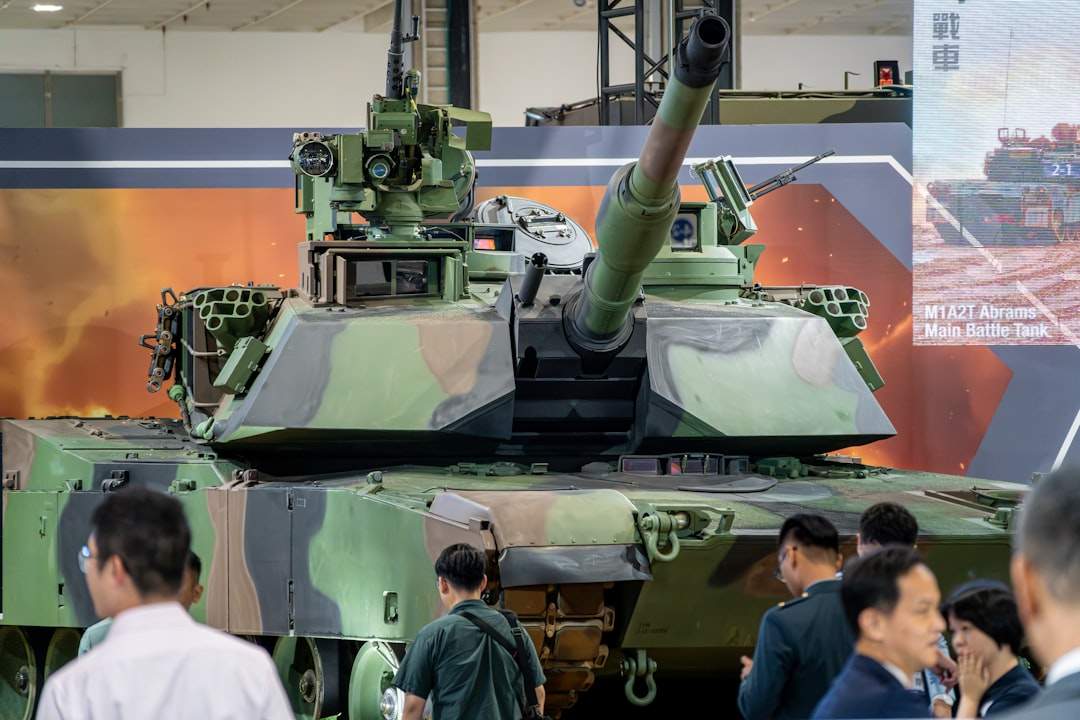
The opportunity lies in platform versatility and technological maturity. South Korean systems, particularly artillery (like the K9 family) and armored vehicles, offer a blend of performance that often sits perfectly between high-end, complex US/EU platforms and lower-tier, less capable alternatives. This “sweet spot” maximizes addressable market size.
For instance, the heightened tensions in Northeast Asia mean that secondary maritime capabilities are receiving renewed attention. Companies specializing in naval surveillance, electronic warfare (EW) systems, or advanced mine countermeasures could see significant domestic and regional demand acceleration, driven by the need for layered defense against peer competitors. Furthermore, the global push for increased defense readiness, exacerbated by the Middle East conflict, means that ammunition and munitions stockpiling is a priority. Korean companies with scalable artillery shell production capacity are positioned for sustained, high-volume revenue streams independent of major platform sales. This sector benefits directly from the global perception of enduring instability. We should monitor the performance of firms involved in precision-guided munitions closely.

4. Portfolio Shift: Tactical Moves for Investors
Investors must now treat K-Defense not as a niche cyclical sector but as a structural growth area underpinned by geopolitical realignment. The strategy should focus on maximizing foreign currency gains while mitigating domestic input cost risks.
4.1. Currency and Commodity Hedging
The USD/KRW exchange rate near 1500 presents a clear opportunity for exporters, but this rate is volatile and subject to sudden repatriation flows or Bank of Korea intervention. Investors should favor defense primes that have already secured a significant portion of their forward sales in USD or EUR, effectively locking in a favorable translation rate for the next 18-24 months.
For commodity risk, which affects nearly all manufacturing, investors should consider thematic exposure to Korean industrial metals suppliers that benefit from government stockpiling initiatives, acting as a hedge against inflation in raw material costs for the defense primes. However, the persistent threat of imported inflation via energy costs (due to the Middle East conflict) suggests that companies with high energy intensity in their production processes should be approached with caution unless their contract pricing mechanisms explicitly account for energy price escalation above a certain threshold. Hedging foreign currency debt exposure is also paramount for smaller, less diversified suppliers.
| Macro Variable | Global Impact | South Korean Exposure |
|---|---|---|
| FFR 3.64% | Sustained high cost of capital globally, supporting USD strength. | Increases domestic CAPEX borrowing costs for expansion. |
| USD/KRW 1498.88 | Exporters recognize higher nominal revenue from foreign contracts. | Boosts margin potential but requires robust FX risk management. |
| Japan Security Shift | Immediate, high-value procurement opportunities in advanced hardware. | Creates direct competition for specialized defense talent and resources. |
4.2. Actionable Long-Short Strategies
Long Exposure: The core focus must be on Tier 1 defense primes (KAI, Hanwha Aerospace, LIG Nex1) that have secured multi-year delivery schedules (the lock-in effect is strongest here). Additionally, look for mid-cap suppliers specializing in specific, globally demanded components like advanced fire control systems or robust armored chassis manufacturing, as they benefit from volume scaling without the massive overhead of final assembly. A specific focus on companies with established R&D links to the US or EU industrial base offers geopolitical insurance.
Short Exposure: Investors should be cautious regarding traditional, non-defense manufacturing sectors heavily reliant on energy imports or consumer discretionary spending, as these face margin compression from high input costs and the general climate of global economic uncertainty influenced by the ongoing conflicts. Specifically, look at cyclical industrial firms whose order books are weak or who have not secured long-term, fixed-price input contracts. Furthermore, avoid smaller, local defense sub-suppliers that lack the financial strength to absorb rising short-term borrowing costs due to the 3.64% FFR environment without significant leverage. This creates an opportunity to short less resilient players against the stability of the large primes. For deeper analysis on geopolitical risk scoring in investment, see this Authority External Link.
Top 5 Essential FAQs for Investors
A1. The momentum appears highly sustainable due to the geopolitical drivers. The rearmament cycles in Eastern Europe are multi-decade commitments, and the heightened military posture in Northeast Asia (driven by Japan’s election and China’s growth plan) ensures domestic R&D funding remains robust. The “lock-in” through long-term service agreements suggests revenue visibility extending well beyond the immediate horizon, assuming no dramatic de-escalation in regional flashpoints.
A2. While the high rate is beneficial for current revenue recognition, the risk lies in the timing of contract payments and the eventual reversal. Companies must actively use forward contracts to lock in rates for future expected earnings rather than relying on spot rates for years-out contracts. Volatility in the exchange rate is a greater threat than the absolute level, especially for firms managing USD-denominated raw material purchases.
A3. High rates increase the discount rate applied to future cash flows, which can temper valuations for growth stocks. However, defense stocks are partially sheltered because their cash flows are often guaranteed by sovereign entities, reducing perceived riskiness. The greater impact is on domestic CAPEX financing for scaling production. Investors should favor firms with strong pre-existing cash reserves or low debt loads to minimize interest expense drag.
A4. The immediate strategic imperative favors exports. Exports bring in hard currency (bolstering the domestic economy against the high FFR influence) and establish the “proof of concept” that validates technology for the domestic market. The global rearmament wave provides a higher revenue ceiling than domestic budgets alone, although domestic modernization remains essential for maintaining technological parity with North Korea.
A5. The primary risk is not direct conflict but strategic competition. If China significantly increases military R&D spending and successfully fields next-generation, cost-competitive defense alternatives, it could erode the perceived technological advantage that K-Defense currently enjoys in certain segments, particularly in the ASEAN and non-aligned markets. This demands continuous, high-level domestic R&D reinvestment.

Hi, I’m Dokyung, a Seoul-based tech and economy enthusiast. South Korea is at the forefront of global innovation—from cutting-edge semiconductors to next-gen defense technology. My mission is to translate these complex industry shifts into clear, actionable insights and everyday magic for global readers and investors.