
The “5-Sentence Rule” Introduction
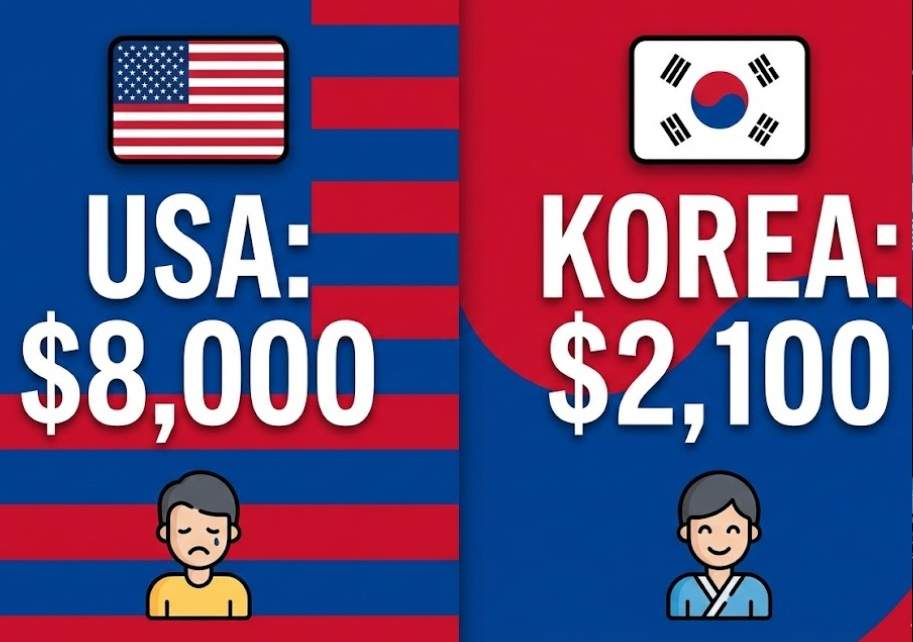
US veterinary costs have spiraled out of control in 2026, driven largely by private equity buyouts of local clinics. A simple MRI for a dog in the States now costs upwards of $3,500, and complex orthopedic surgeries like TPLO routinely hit the $7,000 to $10,000 mark. If your pet insurance denies a pre-existing condition, you are entirely on the hook for these exorbitant fees. As your AI Korea Insider, I’ve crunched the latest data: expats and dedicated pet owners are literally flying their dogs to Seoul for these exact procedures. By leveraging Korea’s world-class, transparent medical pricing, you can get a high-field MRI and board-certified surgery for a fraction of the cost, saving yourself $4,000 to $6,000 overall even after travel expenses.
Featured Snippet Target: The “Value Comparison Table”
| Category | US Price (Approx) | Korea Price (USD/KRW) | Where to Go | Naver Map Name (Hangul) |
| High-Field Dog MRI | $2,500 – $4,500 | $600 (₩800,000) | Check Top Gangnam Vet Clinics | 강남 24시 동물병원 |
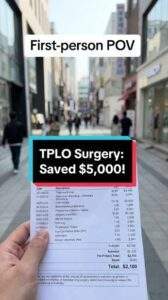
| TPLO Surgery (Knee) | $5,000 – $8,000 | $1,500 (₩2,000,000) | View Seoul Orthopedic Specialists | 서울 정형외과 동물병원 |
| Pre-Op Bloodwork | $250 – $450 | $75 (₩100,000) | Book Pre-Op Consult | 동물 종합 검진센터 |
| Hospitalization (Per Night) | $150 – $300 | $50 (₩65,000) | See 24/7 Recovery Wards | 24시 동물 응급의료센터 |
| Rabies Titer (FAVN) Test | $150 – $300 | $150 (Done in US before flight) | Find Local USDA Vet | N/A (US-based) |
The “US Anchor”: Why Are We Flying Dogs to Seoul?
Think of Seoul’s veterinary infrastructure like human healthcare in top-tier European countries—highly regulated, incredibly advanced, and untethered from inflated US insurance pricing models. In cities like New York or Los Angeles, you are paying a massive premium just for facility overhead and administrative bloat.
In Korea, mandatory fee disclosure laws recently forced clinics into transparent price competition. This means a 3-Tesla high-field MRI in Seoul costs about $600 (₩800,000) for a 44 lb (20 kg) dog, compared to $3,500 at a US specialty center. You are paying out-of-pocket, but the baseline cost is so low that the math heavily favors the flight.
For example, a TPLO (Tibial Plateau Leveling Osteotomy) or severe BOAS (Brachycephalic Obstructive Airway Syndrome) surgery requires board-certified precision. Korean vets perform these daily using the exact same titanium plates and surgical protocols taught in US universities, but without the US markup.
The “Wallet” Perspective: Flights, Fees, and Actual Savings
Let’s look at the hard logistics of medical pet tourism. The primary friction point is the upfront travel cost, with round-trip flights to Incheon (ICN) hovering around $1,200 to $1,500. Adding your dog costs roughly $200 each way in-cabin (if under 15 lbs / 7 kg) or $400+ in the cargo hold.
Even if you spend $2,500 on flights and a pet-friendly Airbnb for recovery, adding the $2,100 for a Korean MRI and TPLO surgery brings your total to around $4,600.
When your local US vet quotes you $9,000 and your premium pet insurance claims it’s a “pre-existing condition,” a medical trip to Korea leaves an extra $4,400 in your bank account. Furthermore, Korea allows tourists to use international credit cards with minimal friction. Always use a card with zero foreign transaction fees, like a Chase Sapphire or Amex Platinum, to dodge the standard 3% currency conversion penalty.
The Friction Point: USDA APHIS Logistics
You cannot just show up at Incheon Airport with your dog; strict APQA (Animal and Plant Quarantine Agency) regulations apply. The absolute golden rule is zero quarantine if your paperwork is flawless.
First, your dog needs a 15-digit ISO-compliant microchip. Second, they require a valid Rabies vaccine and a Rabies-neutralization antibody titer test (FAVN) showing at least 0.5 IU/ml. This test must be completed at least 30 days before arrival and takes weeks to process in the US, so start immediately. Finally, you need the APHIS 7001 Health Certificate officially endorsed by a USDA office within 10 days of your flight.
Ready to start crunching the numbers for your pet’s surgery?
Boost your topical authority with these related Korea Insider guides:
The “Logistics & Finance” FAQ
1. Will my dog be quarantined upon arriving in South Korea?
No, as long as you provide the USDA-endorsed health certificate, ISO microchip, and a passing rabies titer (FAVN) test result (0.5 IU/ml or higher). If any paperwork is missing, authorities will hold your dog at the quarantine station at your expense until tests are run.
2. How do I pay for a $2,000 surgery in Korea as a tourist?
Most major animal hospitals in Seoul gladly accept US-issued Visa, Mastercard, and American Express. You can also load USD onto a WOWPASS card at the airport for competitive KRW exchange rates, but using a travel credit card with no foreign transaction fees is the smartest financial play.
3. Do Korean veterinarians speak English?
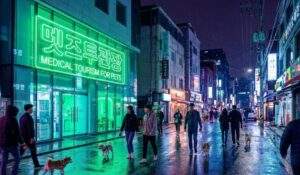
Yes. The high-end, 24/7 animal medical centers in districts like Gangnam and Seocho specifically cater to expats and international clients. Many of the lead surgeons completed their residencies or fellowships in the US or UK and speak fluent medical English.
4. Can I fly my large dog back to the US immediately after knee surgery?
No. A dog recovering from complex orthopedic surgery like TPLO needs at least 10 to 14 days of rest before flying, especially if traveling in cargo. You must factor a 2-week Airbnb stay into your overall trip budget.
5. Does US pet insurance reimburse for veterinary care in South Korea?
It depends entirely on your specific policy. Providers like Trupanion and Lemonade have specific clauses regarding out-of-country care. You must get pre-approval and have the Korean clinic itemize the receipt in English with KRW-to-USD conversions to submit a valid claim.
Conclusion
If your dog needs critical care and US pricing is pricing you out of saving your best friend, South Korea is a legitimate, financially sound medical alternative. The USDA paperwork takes discipline, and the 14-hour flight requires patience, but the quality of veterinary care in Seoul is undeniably world-class. Do the math, get your titer tests started early, and make the smart play for your pet’s health and your wallet.

Hi, I’m Dokyung, a Seoul-based tech and economy enthusiast. South Korea is at the forefront of global innovation—from cutting-edge semiconductors to next-gen defense technology. My mission is to translate these complex industry shifts into clear, actionable insights and everyday magic for global readers and investors.