
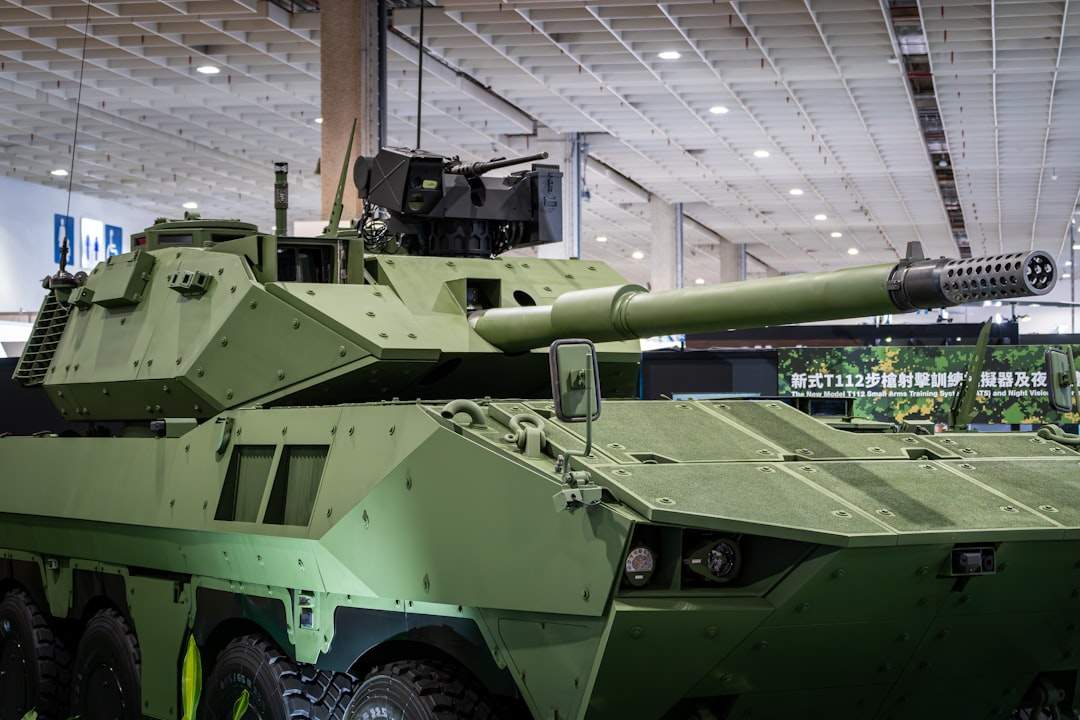
Seoul, March 28, 2026 – Hyundai Rotem, South Korea’s premier armored vehicle manufacturer, is poised for unprecedented export growth, driven by an aggressive localization strategy in Europe and a significant win in Oceania. The company’s K2 Black Panther main battle tank and Redback IFV are rapidly becoming the preferred choices for nations seeking advanced, deployable ground platforms. This success is not merely a testament to superior engineering but also a direct beneficiary of macroeconomic tailwinds, notably the persistently weak Korean Won.
The USD/KRW exchange rate, currently hovering at 1504.15, offers a distinct competitive edge to Korean defense exporters. This valuation effectively discounts Korean-made systems by approximately 15-20% compared to a pre-2022 average, making sophisticated platforms like the K2 Black Panther more attractive than Western alternatives. Combined with faster delivery timelines and a willingness to transfer technology, Hyundai Rotem is carving out significant market share.
1. Hyundai Rotem’s Dual-Front Export Offensive: Europe and Oceania
The strategic pivot by Hyundai Rotem into the European and Oceanic ground-weapons markets marks a significant shift in global defense procurement. This dual-front approach, leveraging both main battle tanks and infantry fighting vehicles, demonstrates a sophisticated understanding of evolving geopolitical demands and regional security needs. The company’s recent successes are not isolated incidents but rather the culmination of years of investment in R&D and a flexible export model.
The ongoing conflict in Eastern Europe has fundamentally reshaped defense priorities, creating an urgent demand for modern armored platforms. European nations are rapidly recapitalizing their forces, often prioritizing speed of delivery and cost-effectiveness alongside advanced capabilities. Hyundai Rotem has capitalized on this by offering readily available, combat-proven systems like the K2 Black Panther, which features an advanced autoloader and active protection systems.
Concurrently, the Indo-Pacific region’s heightened strategic competition has driven countries like Australia to upgrade their ground forces. The Redback IFV, tailored for robust protection and enhanced situational awareness, emerged victorious in the demanding Land 400 Phase 3 program. This win, against formidable Western competitors, underlines Korea’s growing technological maturity and its ability to meet stringent operational requirements.
1.1. Corporate Financial Assessment
Hyundai Rotem’s (064350.KS) financial outlook is robust, largely fueled by its expanding defense backlog. The Polish K2PL deal alone, involving an initial 180 tanks and a subsequent localization program for 820 K2PL units, is estimated to be worth over $15 billion over its lifetime. This long-term contract provides significant revenue stability and visibility for the company. The unit cost for an advanced K2 Black Panther, including advanced systems, hovers around $8.5 million, making the Polish order a cornerstone.
In contrast, competitors like Rheinmetall AG (RHM.DE), while a global defense powerhouse with diverse offerings including the Lynx IFV and Leopard 2 tanks, often faces longer lead times and higher price points for its most advanced systems. General Dynamics (GD.N), manufacturer of the M1 Abrams, also offers a premium product with established global presence, but its export model is often tied to US foreign policy and domestic production capacity. Hyundai Rotem’s ability to leverage a weak Won (at 1504.15) provides a significant pricing advantage, enhancing its bid competitiveness globally.

The Australian Redback IFV deal, valued at approximately $3.8 billion for 129 vehicles, further bolsters Hyundai Rotem’s defense division. Additionally, a recent report by KED Global highlights that Hyundai Rotem is nearing a separate $2 billion armored vehicle supply deal with Peru. These combined contracts are expected to propel Hyundai Rotem’s defense segment revenue to over 2.5 trillion KRW (approx. $1.66 billion) for fiscal year 2025, a substantial increase from previous years.
1.2. Supply Chain & Technology Dependencies
The success of the K2 Black Panther and Redback IFV relies on a complex, international supply chain. While Hyundai Rotem boasts high domestic content for core components, key advanced systems are sourced from global leaders. For instance, the Redback IFV incorporates the Iron Fist Active Protection System (APS) from Israel’s Elbit Systems and the Protector RS4 Remote Weapon Station from Norway’s Kongsberg Defence & Aerospace.
The localization aspect of the K2PL deal with Poland highlights a strategic advantage. By partnering with local firms like WZM S.A. for in-country production, Hyundai Rotem mitigates supply chain risks and fosters deeper economic ties. This model, which includes technology transfer and local job creation, makes the Korean offering politically palatable and economically attractive. However, it also introduces dependencies on the partner nation’s industrial capabilities and quality control, which Hyundai Rotem must actively manage.
2. Strategic Impact on Korea’s Industrial Ecosystem
The burgeoning success of K-Defense exports, particularly in armored vehicles, is having a profound impact across Korea’s industrial landscape. It is not just about the direct revenue for prime contractors like Hyundai Rotem, but also about the trickle-down effect on a vast network of small and medium-sized enterprises (SMEs) that supply components, sub-systems, and advanced materials. This creates a virtuous cycle of innovation, production scale, and further export competitiveness.
The focus on rapid development and adaptability, honed by decades of facing a persistent threat on the Korean Peninsula, has positioned Korean defense firms uniquely. They can integrate cutting-edge technologies and deliver platforms faster than many legacy Western manufacturers, a critical factor in today’s volatile security environment. This agility, combined with competitive pricing amplified by the Won’s depreciation, is allowing Korea to capture a larger share of a global defense market that is estimated to grow by 5-7% annually through 2030.
2.1. Winners & Losers: Korean Corporate Evaluation
Winners:
* Hyundai Rotem (064350.KS): The clear frontrunner. Its defense division is experiencing exponential growth from the K2PL, Redback, and Peru deals. Its market capitalization is reflecting this increased backlog and revenue visibility, with analysts upgrading earnings forecasts consistently through 2027.
* Hanwha Aerospace (012450.KS): While Hanwha’s Redback bid for Land 400 Phase 3 was unsuccessful, its broader defense portfolio, including the K9 Thunder self-propelled howitzer and Chunmoo MLRS, continues to see robust demand in Europe and other regions. The company remains a formidable player, benefiting from the overall surge in K-Defense exports.
* Korean SME Suppliers: Numerous smaller firms specializing in armor plating, optronics, fire control systems, and engine components are experiencing increased orders and investment. Companies like S&T Dynamics, which produces transmissions, are seeing sustained demand.
Losers (relative to potential market share):
* Rheinmetall AG (RHM.DE): While still

Hi, I’m Dokyung, a Seoul-based tech and economy enthusiast. South Korea is at the forefront of global innovation—from cutting-edge semiconductors to next-gen defense technology. My mission is to translate these complex industry shifts into clear, actionable insights and everyday magic for global readers and investors.