
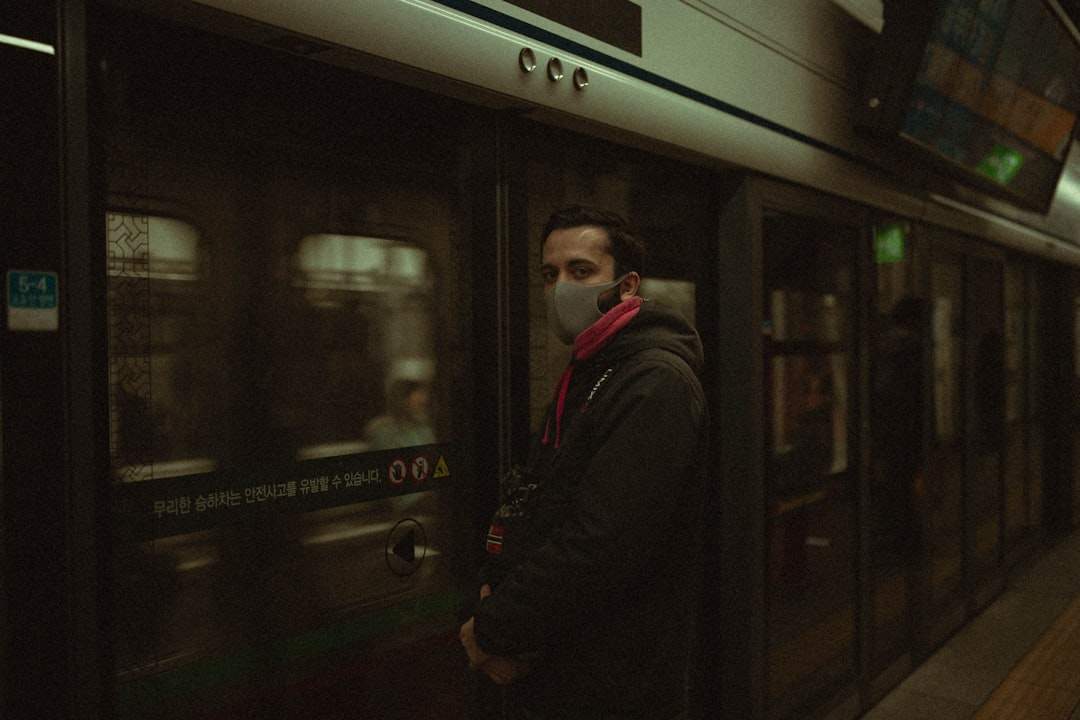

Today’s Date: March 06, 2026. Navigating Seoul’s world-class transit system is key to unlocking the city.
Problem: You’ve landed in Incheon or Gimpo, buzzing with excitement to explore Seoul’s neon-lit streets, historic palaces, and cutting-edge districts. You know the subway system is famously efficient—clean, fast, and covering almost every corner of the metropolis. But the moment you arrive at the ticket gate, confusion strikes. Do you buy a single-ride ticket? What is this strange plastic card everyone is tapping? And wait, can I just use my foreign credit card like I do back home?
Agitation: The sheer volume of lines, the rapid announcements in Korean, and the crucial realization that foreign tourists can’t use standard credit cards for tap-and-go entry (as recently highlighted by reports from 조선일보) can quickly turn that excitement into transit anxiety. Wasting time fumbling for cash or trying to decipher complex ticketing machines eats into your precious exploration schedule. You need reliable, up-to-the-minute information to ensure smooth daily commuting, especially given recent updates like the integration of Tmoney with Apple Pay for select users.
Solution: Welcome to your definitive, native-level guide. We cut through the noise to give you the clarity you need on the Seoul Metropolitan Subway system and the indispensable T-money card. By the end of this piece, you will understand the fare structure, know exactly where to purchase and top up your card, and confidently navigate one of the world’s best public transportation networks. Understanding the cost breakdown of your daily travel starts here.
The Cornerstone of Korean Commuting: Understanding the T-money Card
If you plan to use public transit—subway, city buses, or even taxis—the T-money card is not optional; it is essential. Think of it as Korea’s universal transit pass, similar to London’s Oyster or New York’s MetroCard, but with broader utility. This rechargeable smart card eliminates the need to queue for individual paper tickets, saving you significant time and often providing a slight fare discount compared to cash fares.
Where to Get Your Hands on the Magic Card: Purchasing and Initial Setup
Acquiring your T-money card is remarkably straightforward, though finding the right vendor on arrival can sometimes be the first hurdle. You have two primary options:
- Convenience Stores (The Easiest Route): Nearly every convenience store in Korea—CU, GS25, 7-Eleven, E-mart24—stocks T-money cards. Simply walk up to the counter and state, “T-money card juseyo” (T-money card, please). They usually stock several designs, so feel free to pick one that suits your style.
- Subway Stations: Vending machines located near the ticket gates often sell them, but the convenience store route is usually faster if you need assistance.
Initial Cost Consideration: The card itself usually costs between 3,000 KRW and 5,000 KRW. This is a one-time purchase for the physical card, which is non-refundable. This initial price comparison covers the cost of the plastic itself, not the stored value. After purchase, you must immediately load it with credit. We recommend starting with at least 20,000 KRW to be safe for your first few days of travel. For those needing detailed itinerary planning, checking the latest booking tips for prepaid transit passes versus standard loading can optimize your budget.
The New Digital Frontier: Apple Pay and T-money Integration
A significant recent development, reported by the Korea JoongAng Daily, is the integration of T-money functionality directly into Apple Pay for users who meet specific criteria (often related to domestically issued cards or specific bank partnerships). This is a game-changer for expats and tourists who prefer a fully digital wallet experience. However, it is crucial to note that not all foreign-issued credit or debit cards can currently function this way. For the majority of short-term visitors, purchasing the physical card remains the most reliable method. Always check the latest official announcements before relying solely on mobile payment for transit entry.

Topping Up Your Card: Keeping the Journey Smooth
The value on your T-money card depletes with every ride. Knowing how to apply the right amount of funds is key to avoiding low-balance scrambles at the turnstile.
Recharging Stations: Where and How to Add Value
Recharging is done exactly where you buy the card:
- Convenience Stores: Tell the cashier, “Man-won chungjeon hae-juseyo” (Please charge 10,000 Won) while handing them your card. You can top up in increments of 1,000 KRW up to 90,000 KRW per transaction, though most people stick to standard 10,000 KRW or 20,000 KRW increments.
- Subway Stations: Dedicated T-money machines are located near the entrance gates. These machines feature multi-language support, including English. Select ‘Top-Up,’ insert your card, choose the amount, and insert cash (bills only).
Expert Tip: Always charge a little extra before heading out for a long day. While most main stations have machines, smaller stations might not have English interfaces, and convenience stores might close late at night.
Understanding the Seoul Subway Fare Structure and Cost Breakdown
Seoul’s subway fares are distance-based but offer a unique flat-fare structure for short trips, which is excellent news for tourists exploring central Seoul. The system rewards you for using the subway for local travel.
The base fare (for travel under 10 km) is significantly subsidized, especially when using a T-money card. Using the card provides an automatic discount of 100 KRW off the standard cash fare. Transfers between subway lines, or between the subway and a connected city bus (within a designated transfer window, usually 30 minutes), are free or incur only a small differential charge if the subsequent ride is longer. This seamless transfer mechanism is a major reason why reading best reviews always praises the efficiency of the system.
| Category | Details (As of March 2026) |
|---|---|
| Base Subway Fare (T-money) | Approximately 1,450 KRW (for trips under 10 km) |
| Additional Distance Charge | Increases incrementally every 5 km after the first 10 km. |
| Bus Fare (T-money) | Slightly lower base fare than the subway, but similar distance mechanics. |
| Card Purchase Fee | 3,000 – 5,000 KRW (Non-refundable card cost) |
| Transfer Discount | Free or minimal charge within 30 minutes of first exit/entry. |
📊 Key Data Insights
Navigating the Seoul Subway Lines Like a Local Pro
Seoul’s subway system is a sprawling network of 23 lines (including the commuter rail lines that integrate seamlessly). While this sounds intimidating, most tourist activities cluster around the core lines: Line 1 through 9, the Airport Railroad Express (AREX), and the Shinbundang Line (DX Line).
The Core Lines: Your Essential Map
For any visitor staying in central Seoul (Gangnam, Myeongdong, Hongdae, Insadong), mastering the following lines will get you 90% of the way:
- Line 2 (The Green Circle): The most crucial line. It circles the central business districts, connecting major hubs like Gangnam, Hongdae, Euljiro 1-ga, and Jamsil. If you’re ever unsure, circling back to Line 2 often gets you where you need to go.
- Line 4 (Light Blue): Essential for accessing areas south of the Han River and north toward Dongdaemun and Seoul Station.
- Line 3 (Orange): Connects areas like Jongno 3-ga (for Insadong) with Express Bus Terminal (for Gangnam access).
- Line 1 (Dark Blue): The oldest line, connecting Seoul Station with areas far north and south. Useful for accessing historical sites near City Hall.
To truly plan your journey, always rely on official transit apps. For up-to-date routing and service status, checking the resources provided by the Seoul Metro official website is invaluable. For comprehensive route planning that integrates all modes, the KakaoMetro or Naver Map apps are superior to Google Maps within the country.
Decoding the Gates: Entry and Exit Procedures
This is where the T-money card shines. When you approach the turnstile:
- Entry: Hold your T-money card flat against the reader pad until you hear a distinct ‘beep’ sound and the gate opens. Wait for the gate to fully reset before proceeding.
- Exit: Repeat the process at the exit gate. The system automatically deducts the correct fare based on the distance traveled from your entry point.
The Transfer Rule: If you are transferring subway lines, you do not tap out. You simply walk through the transfer gates between lines. If you are transferring to a bus (or vice versa), you must tap your card when getting off the first mode of transport, and then tap again when getting on the second mode of transport within the transfer window to receive the discount.
Beyond the Subway: T-money’s Wider Utility and Farewell Balance
One of the best features of the T-money system, often overlooked by first-time visitors, is its versatility. It’s more than just a subway pass; it’s a digital wallet for local transactions.
T-money in Taxis and Retail
T-money cards are universally accepted in Seoul taxis. Simply tap the card on the reader located near the driver when you pay your fare. This is often faster than dealing with cash or card machines in the taxi itself. Furthermore, you can use your loaded card at almost any major convenience store chain (CU, GS25, 7-Eleven) to pay for snacks, drinks, or simple meals. This is why we strongly advise loading enough value to cover both transport and small purchases—it simplifies your daily spending immensely. If you’re looking for a guide on airport transfer guide options, remember that T-money covers the AREX commuter train!
Getting Your Remaining Balance Back (Refunds)
What happens to the 50,000 KRW you loaded but didn’t spend? Unlike some transit passes, T-money cards are not designed for easy cash refunds for foreigners, especially if purchased from a third-party vendor. However, there are options:
- Small Refunds (Under 20,000 KRW): You can get a refund for the balance remaining (not including the initial card purchase fee) at designated T-money service centers or sometimes at large subway station offices. You typically need to initiate this process at a machine before speaking to an attendant.
- Convenience Stores: Most convenience stores cannot process refunds for the stored value, only top-ups. Do not rely on them for cashing out.
Best Practice: Try to use up the balance before you leave, or leave a reasonable amount on the card (say, 5,000 KRW) if you plan to return to Korea soon, as the card itself remains valid for years. For those requiring a precise cost breakdown, remember the card fee is lost, but the stored balance is refundable (with procedures).
Essential Etiquette and Safety on the Seoul Subway
Korean transit is exceptionally safe, clean, and punctual, but observing local etiquette enhances everyone’s experience.
Mind the Rush Hour Manners
Rush hour in Seoul (roughly 7:30 AM – 9:30 AM and 5:30 PM – 7:30 PM) can be intense, especially on Lines 2 and 9. While the cars are never dangerously crowded like some other global cities, showing courtesy goes a long way.
- Priority Seating: These seats (usually indicated by blue or purple coloring) are strictly reserved for the elderly, pregnant women, people with disabilities, and those with small children. Unless the train is virtually empty, do not sit there.
- Noise Levels: Keep phone calls brief and quiet. Loud conversations are generally frowned upon.
- Eating and Drinking: While technically allowed, eating full meals is uncommon. Quick sips of water or coffee are generally tolerated, but try to wait until you reach your destination, adhering to the standards promoted by Visit Korea guidelines.
Navigating Escalators and Stairs
This varies slightly by station, but the standard convention in Seoul is consistent:
Stand on the Right, Walk on the Left. This is the universal rule for escalators across the city. Do not block the left lane, as commuters rushing to make tight transfers will be moving quickly past you.
Troubleshooting Common Transit Hurdles
Even with the best planning, issues arise. Here is how to handle them based on recent traveler feedback and official guidance.
What if My T-money Card Isn’t Working?
If the gate refuses to beep or flashes an error:
- Check Balance: The most common issue is insufficient funds. Check the balance at a machine or convenience store.
- Card Damage: If the card is visibly damaged (cracked, bent), the chip may have failed. You will need to purchase a new card, load it, and attempt to refund the balance from the old card (if possible).
- Apple Pay Glitch: If using a digital wallet, ensure your phone’s NFC is functioning correctly and that the specific bank/card linked has been verified for transit use, as integration can sometimes be spotty compared to the physical card.
If you are stuck at a gate due to a balance issue, look for the staff assistance button or follow the instruction to use the adjacent Oyster/Credit Card Lane (if available and you have a compatible foreign card, though as noted, this is rare for entry/exit). Otherwise, approach the station attendant for help with a temporary paper ticket.
For travelers planning extended stays or looking to understand the nuances of commuter rail integration, researching options for Korea Rail Pass vs T-money can provide deeper insight into maximizing regional travel savings.
Final Thoughts on Seamless Transit
The Seoul subway system is a marvel of urban engineering, and mastering the T-money card is your key to unlocking its full potential. By purchasing the card immediately, loading sufficient funds, and understanding the simple tap-in/tap-out procedure, you transform from a confused tourist into a confident urban explorer. Enjoy the ride—Seoul awaits!
Top 5 Frequently Asked Questions
- Can I use my regular US or European contactless credit card directly on the subway gates instead of buying a T-money card?
As of March 2026, direct tap-and-go entry using most foreign-issued contactless credit/debit cards is generally not supported for the standard subway gates, although Apple Pay integration is slowly expanding for some users. For guaranteed access, the physical T-money card is still the safest bet for tourists.
- How do I know how much money is left on my T-money card without asking a cashier?
You can check the balance at any T-money charging machine located near the subway turnstiles. Simply select the ‘Check Balance’ option, insert your card, and the current amount will be displayed. Alternatively, many convenience stores will display the balance immediately after you attempt to top it up.
- Is the T-money card refundable, and if so, how do I get my initial card purchase fee back?
The stored value on the card is refundable (up to 50,000 KRW balance) at T-money service centers or certain large subway offices. However, the initial purchase fee (the 3,000–5,000 KRW cost of the physical card itself) is non-refundable.
- Do I need to tap out when I transfer from the subway to the bus, or vice versa?
Yes, you must tap out when exiting the subway and tap in when boarding the bus (or vice versa) within the designated transfer window (usually 30 minutes) to qualify for the free or discounted transfer fare. If you don’t tap out of the subway, you will be charged the full cost of the bus ride.
- Are there any special student or youth discount cards I can get as a short-term visitor?
Obtaining the official Korean student transit card (which requires proof of enrollment at a registered Korean institution) is difficult for short-term visitors. Therefore, the standard adult T-money card is the default option. There are no widely available, easily accessible tourist youth discount cards for the subway system.

Hi, I’m Dokyung, a Seoul-based tech and economy enthusiast. South Korea is at the forefront of global innovation—from cutting-edge semiconductors to next-gen defense technology. My mission is to translate these complex industry shifts into clear, actionable insights and everyday magic for global readers and investors.