
1. The Big Picture: Market Scale & Context
Global Market Size & Growth Drivers
Not everyone noticed—but the procurement data did. The global aerospace and defense market, estimated to be well over $800 billion, continues its steady climb, projected to grow at a compound annual rate exceeding 4% through the end of the decade. This expansion isn’t merely a function of traditional military spending; it’s fueled by a complex interplay of geopolitical shifts, the rapid emergence of advanced technologies like AI-driven autonomous systems, and a renewed focus on national security across continents, pushing countries to update legacy hardware and invest in next-generation capabilities. For a deeper dive into these market dynamics, readers can explore the foundational role of key industry players like Hanwha Aerospace.
This acceleration is particularly pronounced in segments like unmanned aerial vehicles (UAVs) and advanced missile systems, where software innovation and precision manufacturing are reshaping operational doctrines. Nations are increasingly seeking robust, interoperable solutions that integrate seamlessly into existing defense architectures, driving demand for companies that can deliver comprehensive, vertically integrated offerings. Furthermore, the persistent high USD/KRW exchange rate, currently sitting at 1476.47, makes Korean exports comparatively more attractive on the global stage, indirectly bolstering the competitiveness of its defense manufacturers.
Korea’s Strategic Position
South Korea has quietly but emphatically established itself as a significant force in the global defense export landscape, positioning itself as a reliable alternative to traditional suppliers from the US, Europe, and Russia. While not yet rivaling the sheer volume of output from aerospace giants in the United States, its market share in specific categories, especially artillery and armored vehicles, has surged. This ascent is supported by a robust domestic industrial base and a government committed to fostering advanced manufacturing and export growth.
A prime example of this strategic positioning is the sprawling Hanwha Aerospace manufacturing complex in Changwon, a hub where critical components for aircraft engines and advanced weaponry are produced. This facility, alongside others in Daejeon and Gumi, exemplifies the nation’s commitment to industrial self-sufficiency and cutting-edge R&D, often supported by government initiatives that promote dual-use technologies and international collaboration. Such concentrated industrial might allows for rapid iteration and scale, key ingredients in maintaining a competitive edge in the fast-evolving global aerospace defense tech sector.
📊 KRX Stock Performance (Live)
₩1,417,000 -0.2%
Source: KRX · Yahoo Finance · data as of latest session
2. Company Deep-Dive: Hanwha Aerospace
Business Model & Revenue Drivers
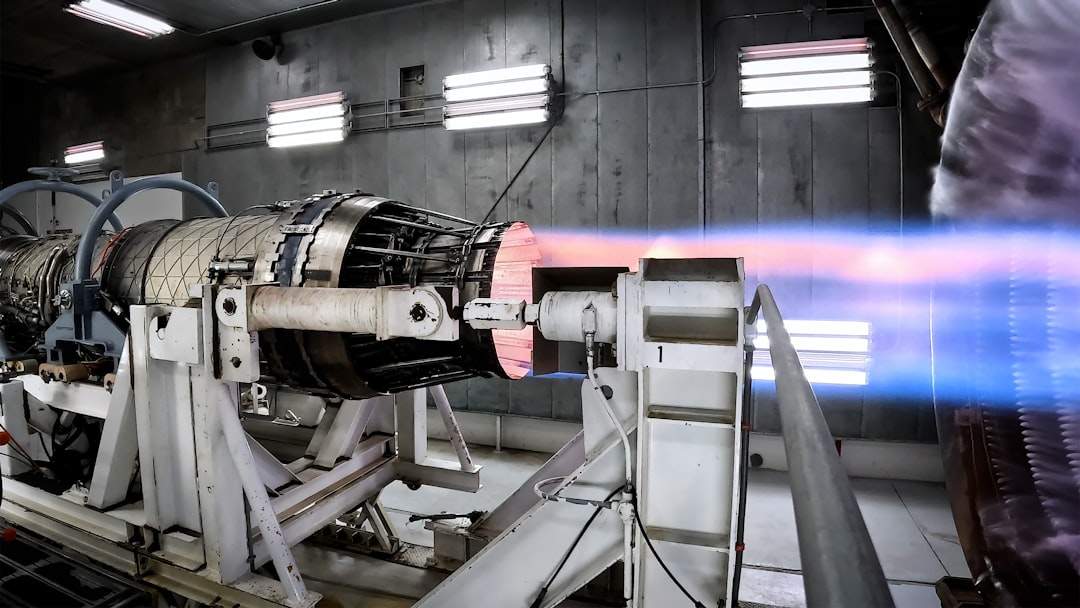
Hanwha Aerospace, originally established in 1977 as Samsung Precision, has evolved into a powerhouse, uniquely positioned as Korea’s sole indigenous manufacturer of gas turbine engines. This core capability forms a significant portion of its revenue, driven by the development, production, and maintenance of engines for both military aircraft and industrial applications. Beyond engines, the company’s portfolio is remarkably diverse, encompassing K9 self-propelled howitzers, Chunmoo multiple rocket launchers, and various other artillery systems, armored vehicles, and even satellite components. A substantial part of its business comes from government contracts, both domestic and international, with a growing emphasis on export markets across Europe, Asia, and Oceania.
The firm doesn’t operate in isolation; its success is often interwoven with other key players in the Korean defense ecosystem. Collaborations with companies like Korea Aerospace Industries (KAI) for aircraft integration, LIG Nex1 for precision guided munitions, and even Hyundai Rotem for armored vehicle platforms underscore a symbiotic relationship that strengthens the overall Korean defense innovation analysis. This network allows Hanwha Aerospace to offer integrated solutions rather than just components, enhancing its appeal to global buyers looking for comprehensive defense packages.
Recent Strategic Moves
Over the past year, Hanwha Aerospace has been particularly active in expanding its global footprint and diversifying its technological base. A notable move included the consolidation of its defense capabilities, integrating what was formerly Hanwha Defense to streamline operations and enhance synergies across its land systems, maritime, and aerospace divisions. This internal restructuring aims to present a more unified front in complex international tenders, allowing for more comprehensive bids that leverage Hanwha’s wide array of products from a single entity.
Furthermore, the company has heavily invested in R&D for future technologies, particularly in areas like advanced air mobility (AAM) and satellite propulsion systems, indicating a strategic bet on the long-term future of aerospace defense tech beyond conventional platforms. Analysts observe that these investments align with a 3-5 year roadmap focused on becoming a full-spectrum defense and aerospace solutions provider, not just a hardware manufacturer. This forward-looking strategy positions Hanwha to capture emerging market opportunities as global defense priorities shift towards space-based assets and urban air mobility.
Competitive Positioning
Hanwha Aerospace operates in a challenging yet lucrative competitive landscape, facing off against established global defense primes like Lockheed Martin, Raytheon, and BAE Systems. While it may not match their sheer scale in every segment, Hanwha’s agility, competitive pricing, and willingness for technology transfer often give it an edge in emerging markets. Domestically, its unique position as Korea’s sole gas turbine engine manufacturer provides a critical strategic advantage, underpinning national aerospace capabilities.
The company’s stock, currently trading at ₩1,417,000, reflects a slight dip of 0.2% today, yet it remains significantly above its 52-week low of ₩760,000, signaling investor confidence in its long-term trajectory despite daily fluctuations. This resilience is partly due to its growing global impact, particularly through major export deals for its K9 howitzers and other land systems. However, intense competition means sustained innovation is crucial; rivals are constantly pushing the boundaries of autonomous systems and hypersonic technologies, requiring Hanwha to maintain aggressive R&D spending to stay ahead.
3. Risks, Headwinds & What Could Go Wrong
Near-Term Pressure Points
In the immediate future, Hanwha Aerospace faces several pressure points that could temper its growth trajectory. Global supply chain disruptions, a persistent challenge since the pandemic, continue to affect the timely procurement of specialized raw materials and electronic components, potentially delaying production schedules and increasing costs. Furthermore, the volatility in the USD/KRW exchange rate, while currently favoring exports, could swing unfavorably, eroding profit margins on international contracts if the Korean Won strengthens significantly against the dollar.
Another near-term risk stems from the cyclical nature of defense spending. While demand is high currently, a sudden shift in global priorities or a downturn in the economies of major purchasing nations could lead to deferred or canceled orders. The US Fed Funds Rate at 3.64 indicates a moderate cost of capital, but any significant hike could make financing large defense procurements more expensive for buyer countries, impacting Hanwha’s order book.
Structural Challenges to Watch
Looking further out, Hanwha Aerospace must navigate several structural challenges inherent to the global defense industry. The intensifying competition from emerging defense manufacturers, particularly from China, which is rapidly advancing its indigenous capabilities, poses a long-term threat to market share, especially in regions traditionally targeted by Korean exports. Maintaining a technological edge requires continuous, massive investment in R&D, a cost that can strain even large companies.
Moreover, the defense sector is heavily regulated, with export controls and international sanctions presenting complex compliance hurdles that can limit market access or complicate strategic partnerships. Adapting to evolving ethical considerations around autonomous weapons systems and AI in defense also presents a non-trivial challenge. Lastly, the industry’s reliance on highly specialized talent means a persistent battle for skilled engineers and scientists, a global issue that could impact Hanwha’s ability to innovate at speed.
4. Catalysts to Watch in the Next 12 Months
Several specific catalysts could significantly influence Hanwha Aerospace’s trajectory over the coming year. The announcement of major new defense contracts, particularly from European or Southeast Asian nations seeking to upgrade their capabilities, would provide substantial boosts to its order book and market sentiment. Investors will be keenly watching for updates on the KF-21 Boramae fighter jet program, for which Hanwha supplies engines and critical components; any successful test flights or production milestones could unlock further domestic and export opportunities for the future of aerospace defense tech.
Furthermore, upcoming defense expos and trade shows in the latter half of 2026, such as Eurosatory or ADEX, will serve as crucial platforms for showcasing new products and forging strategic partnerships, potentially leading to new deals. Developments in its advanced air mobility division, particularly regarding partnerships for urban air vehicle concepts, could also signal diversification beyond traditional defense. Should any significant R&D breakthroughs in next-generation propulsion systems or autonomous technologies be announced, it would solidify Hanwha’s reputation as a leader in Korean defense innovation analysis and draw considerable investor attention.
Frequently Asked Questions
A1. Hanwha Aerospace influences global Korean defense innovation by being the nation’s sole gas turbine engine manufacturer, a critical capability for advanced aircraft and missile systems. Its diverse portfolio, from K9 howitzers to satellite components, and its significant export deals, position South Korea as a leading provider of comprehensive, high-tech defense solutions. The company’s market cap of $72902.9B underscores its financial heft in driving these advancements.
A2. Hanwha Aerospace’s increasing global impact means that international defense procurement now has a more robust, technologically advanced alternative to traditional suppliers. Countries are finding integrated solutions that combine competitive pricing with modern capabilities and a willingness for technology transfer. This trend is fostering greater diversification in global supply chains and encouraging more regional partnerships, fundamentally altering how nations secure their defense needs. Learn more about the evolving landscape of K-Defense.
A3. The outlook for the future of aerospace defense tech, with companies like Hanwha Aerospace leading, points towards increasing integration of AI, autonomous systems, and space-based capabilities. Hanwha’s investments in advanced air mobility and satellite propulsion indicate a shift towards multi-domain operations and networked warfare. Expect continued innovation in drone technology, precision weaponry, and sustainable propulsion methods, pushing the boundaries of what’s possible in air and space defense over the next decade.

Hi, I’m Dokyung, a Seoul-based tech and economy enthusiast. South Korea is at the forefront of global innovation—from cutting-edge semiconductors to next-gen defense technology. My mission is to translate these complex industry shifts into clear, actionable insights and everyday magic for global readers and investors.