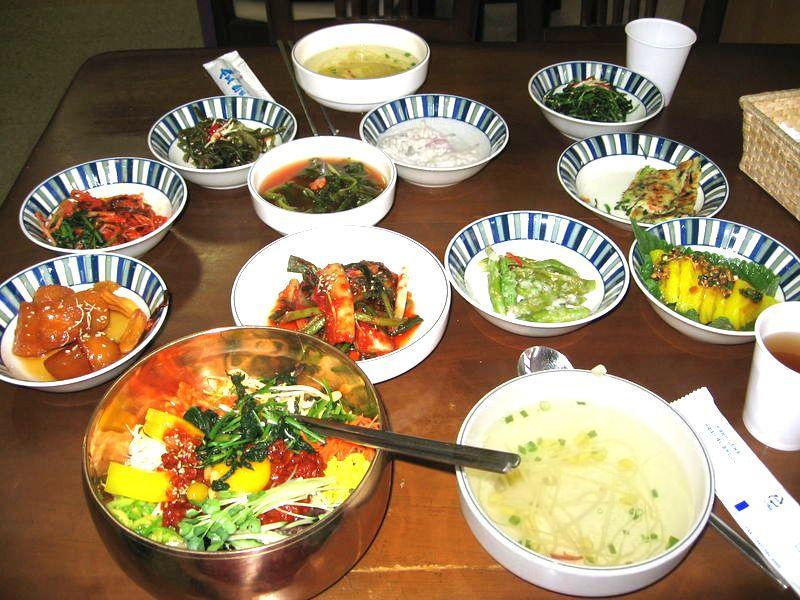
비빔밥 먹는 법
How to eat bibimbap properly
Mix or admire? Spoon or chopsticks? How much gochujang? A step-by-step on eating bibimbap the way Koreans do, including the dolsot crust.
Steps
- Look once, then mix. The arrangement is for the cook’s pride and the five-color idea (obangsaek); nobody eats it unmixed. A photo is fine; a long delay lets the rice steam the vegetables limp.
- Add gochujang gradually. Start with one teaspoon of the sauce served on the side, mix, taste, then add more. The rice absorbs it; a fully red bowl is not the goal.
- Drizzle sesame oil if the bowl came without it. Most restaurants pre-season; if there is a bottle on the table, a half teaspoon is plenty.
- Break the egg yolk and mix with the spoon, not chopsticks. Scoop from the bottom and fold so the rice, namul, and sauce become one texture. Koreans mix thoroughly — this is not a salad you toss lightly.
- In a dolsot (stone bowl), leave a thin layer of rice against the hot wall for two or three minutes before mixing so it crisps into nurungji, then scrape it in.
- Eat with the spoon. Bibimbap is spoon food; chopsticks are for picking up a piece of kimchi or the side of gim between bites.
- Alternate with the side soup. Bibimbap usually comes with a small clear soup (often kongnamul-guk) — a sip between spoonfuls resets the palate.
- Do not add all the banchan into the bowl. Kimchi and namul on the side stay on the side unless the restaurant serves them as toppings; the bowl is already balanced.
Tap a number to tick off a step. Nothing leaves this device.
Why mixing is the point
비빔 means “mixed.” The dish is finished by the eater, which is why the arrangement can look too pretty to touch and why locals mix it within seconds. The five colors are a compositional idea, not a serving suggestion. Jeonju is the reference version — see Jeolla food and the recipe: bibimbap.
Dolsot vs regular bowl
돌솥비빔밥 arrives sizzling. The stone bowl keeps cooking; the rice against the wall crisps into 누룽지 if you wait. A cold-bowl bibimbap (Jeonju style) is eaten immediately and often comes with 육회 (raw beef). Same manners, different pace.
Ordering variants
- 고추장 조금만 주세요 — just a little gochujang.
- 계란 빼 주세요 — no egg.
- 고기 빼 주세요 — no meat (vegetarian bibimbap is common).
- 산채비빔밥 — mountain-vegetable bibimbap, often near temples.
FAQ
Are you supposed to mix bibimbap?
Yes, completely. The name means mixed rice; the arranged bowl is finished by the eater. Mix with the spoon until rice, vegetables, egg, and gochujang are one texture.
Do you eat bibimbap with a spoon or chopsticks?
A spoon. Rice dishes and soups are spoon food in Korea; chopsticks pick up side dishes. Mixing with chopsticks is also considered clumsy because it does not fold the rice.
How much gochujang goes in bibimbap?
Start with a teaspoon, mix, taste, then add more. Most first-timers add too much. The rice should be tinted, not red, and the sesame oil should still come through.
What is the crispy rice in stone-bowl bibimbap?
Nurungji — rice scorched against the hot stone. Leave a layer of rice touching the bowl for two or three minutes before mixing, then scrape it in for texture.
Cook it
Also cook
Updated 2026-09-04