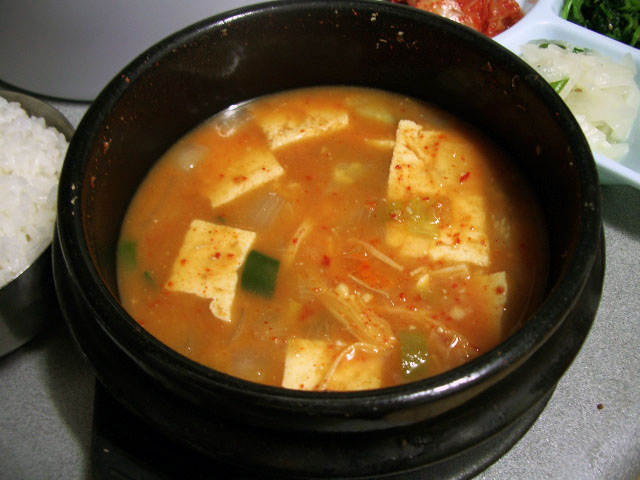
해장 국물
Hangover soup night — haejang logic
What Koreans actually order after soju: kongnamul-guk, seolleongtang, and honest limits.
Haejang is a category, not a cure
해장 means “clearing the hangover,” not a medical claim. The grammar is mild broth, soft protein, and something crunchy on the side — usually kimchi or radish. Cook rails: seolleongtang, kongnamul (sprouts also go into 콩나물국), miyeok-guk if you want iron-dark comfort, and yukgaejang if you want the opposite of mild.
What to cook when you can barely stand
| Mood | Pot | Why |
|---|---|---|
| Soft + milky | Seolleongtang | Salt at the table; kkakdugi on the side |
| Light + crunch | Kongnamul-guk (see kongnamul) | Bean sprouts and clear broth |
| Wake-up red | Yukgaejang | Only if spice helps you, not if it hurts |
Abroad, start from grocery by country for bones and gochugaru. Water and sleep still win.
FAQ
Is haejang scientifically proven?
No — treat these as comforting soups after a long night, not medicine.
Best first pot for beginners?
Seolleongtang if you can simmer bones, or a simple sprout soup with the kongnamul technique.
Also cook
Korean spice levels — a 0 to 4 heat scale with dishes and phrasesKongnamul-guk (콩나물국)Seolleongtang (설렁탕)How to make tteokguk (떡국)
Also read
Updated 2026-09-07