
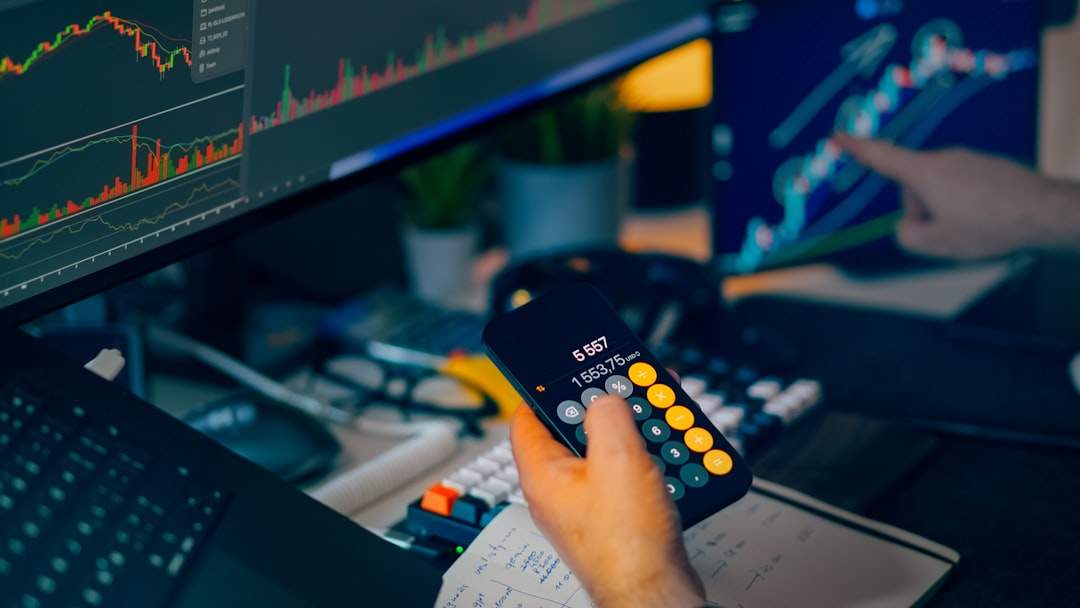
Greetings from Seoul. As global markets digest the latest pronouncements from Washington, the pressure points connecting US monetary policy to the highly export-dependent South Korean economy are becoming intensely visible. Today, the immediate narrative is dominated by the Federal Reserve’s decision to hold interest rates steady, a move heavily influenced by geopolitical instability causing energy prices to spike.
1. Breaking Down the Latest Specific News
The core driver affecting global sentiment this week is not just the expected rate hold by the FOMC, but the underlying cause: escalating conflict in the Middle East, specifically Iranian attacks on Gulf refineries. This has pushed the price of oil well over the $100 per barrel mark. For the Fed, this necessitates a balancing act: high oil prices fuel inflation, but the concurrent slowing labor market suggests lifting rates further could trigger a deeper recession. Consequently, the hold at 3.5–3.75 percent is a pause dictated by external shocks.
1.1. The Technical or Financial Details
The decision to maintain the status quo avoids tightening financial conditions just as energy costs are creating a supply-side inflation shock. In the US, the CPI reading from February, 327.460, was already elevated, but the subsequent oil surge means future inflation expectations are likely rising. This environment typically reinforces the Dollar’s safe-haven appeal, putting immediate downward pressure on emerging market currencies. This dynamic is clearly reflected in the recent USD/KRW rate of 1504.15.

1.2. Why This Matters to the Global Market Right Now
For international investors tracking asset allocation, the key takeaway is risk aversion is climbing. Asian stocks, including those on the KOSPI, are declining as traders flee riskier assets towards the Dollar due to Middle East uncertainty and the resulting commodity cost inflation. This flight to safety directly weakens the Korean Won, making imports—especially energy—more expensive for Korean firms, directly offsetting any benefit from the Fed’s rate pause. You can see more detailed analysis on this hedging dynamic in our Korean Market Insights database.
2. The Direct Ripple Effect on Specific South Korean Competitors
The company most immediately susceptible to both high oil costs and a volatile exchange rate environment is Samsung Electronics. As the world’s largest memory chip maker and a massive consumer of energy for fabrication plants (fabs), rising oil prices hit their operational costs directly, while a weaker Won complicates their global pricing strategies against US and European competitors.
2.1. Immediate Supply Chain and Stock Impact
When the USD strengthens significantly against the KRW (moving from, say, 1450 to over 1500), Samsung’s dollar-denominated revenue translates into fewer Won, which can look positive on paper, but this is quickly eroded by the soaring cost of inputs procured in USD, including the energy needed for chip production. Furthermore, declining Asian sentiment, evidenced by the Nikkei 225 drop, often drags the KOSPI down, irrespective of Samsung’s underlying technology demand. The uncertainty inherent in Powell’s hints about future policy adds to investor jitters regarding tech spending cycles.

2.2. Analyzing the Competitor’s Countermove
To counter margin pressure, Samsung often accelerates its push toward higher-margin, advanced memory products, such as HBM (High Bandwidth Memory), which commands premium pricing. While TSMC faces similar energy cost pressures in Taiwan, Samsung’s ability to pivot its production mix quickly is crucial for maintaining profitability even if the USD/KRW stays elevated past the 1500 mark. We should watch their Q1 guidance closely for commentary on energy cost absorption versus pricing power.

| Specific Metric / Event | Direct Global Impact | Impact on Samsung Electronics |
|---|---|---|
| Oil Price Topping $100 | Increases global inflation expectations, prompting risk-off sentiment. | Higher operational costs for fabs, pressuring gross margins domestically. |
| Fed Rate Hold (3.5-3.75%) | Temporarily eases pressure on global dollar-denominated debt servicing. | Reduces immediate financial stress, but keeps the Dollar strong due to yield differentials. |
3. Tactical Moves for Global Investors
In this environment of geopolitical energy inflation combined with US monetary policy paralysis, the strategy for foreign capital needs to be defensive yet targeted toward quality. We must pivot away from broad index plays and focus on sectors insulated from commodity price swings or those benefiting structurally from current tech demand cycles. You can find more strategic guidance on positioning for inflation volatility here: Korean Market Insights.
3.1. Short-Term Volatility & Currency Signals
The immediate next step for the USD/KRW exchange rate is likely to remain heavy on the Dollar side, potentially testing the 1510 resistance level if oil prices sustain above $100. For US investors holding Korean equities, this means short-term currency translation losses could offset equity gains unless the underlying Korean company demonstrates superior pricing power. Look at firms with high domestic sales exposure, as they are slightly less dependent on USD revenue conversion in the short term. For deeper context on energy-sensitive indicators, review the latest Global Intelligence Report.
3.2. Long-Term Positioning in the K-Market
Long-term positioning should favor defensive growth sectors, particularly those benefiting from US government spending or secular demand trends irrespective of near-term oil volatility. While Samsung is a mandatory holding for tech exposure, look for established Korean defense contractors, which often secure large, fixed-price contracts less sensitive to currency swings, or renewable energy firms preparing for South Korea’s long-term energy transition. Furthermore, any company that has recently secured significant US dollar debt refinancing at favorable terms prior to this latest escalation holds a distinct advantage. Consider adding exposure to the Korean defense industry as geopolitical tension often translates directly into order books, a trend noted by analysts at Aerospace Dynamics Group.
Top 5 Specific FAQs for Global Observers
A1. The Won weakens because the primary driver is now geopolitical risk and oil prices, not the US interest rate differential. High oil prices make the USD more attractive as a store of value (inflation hedge), and they increase South Korea’s import bill significantly, directly pressuring the KRW toward the 1500 level.
A2. Not entirely. Exporters with high global market share in inelastic demand products (like advanced memory or high-end displays) can often pass through higher input costs. Look for companies with high pricing power indices rather than just revenue size.
A3. This baseline rate shows that the Fed had already tightened policy significantly before the current oil shock hit. The current hold prevents the shock from immediately tipping the US into recession, but it means any future hiking cycle would start from a high base, amplifying stress on global borrowers.
A4. Yes, defensive industries such as shipbuilding (due to increased long-term energy transport needs) and defense manufacturing are structurally supported by sustained geopolitical tension. We are also tracking the performance of Korean battery makers like LG Energy Solution, which benefit from the secular shift away from volatile fossil fuels.
A5. While the judge nixing the subpoenas against Powell reduces immediate political noise, the underlying market concern remains focused on economic fundamentals (oil, jobs). The event confirms policy continuity for now, which is marginally positive, but it does not mitigate the inflationary threat posed by the $100+ barrel of oil.

Hi, I’m Dokyung, a Seoul-based tech and economy enthusiast. South Korea is at the forefront of global innovation—from cutting-edge semiconductors to next-gen defense technology. My mission is to translate these complex industry shifts into clear, actionable insights and everyday magic for global readers and investors.