🎯 Key Takeaways
- South Korean firm Solid Inc has been a quiet leader in distributed antenna systems (DAS) and fiber optic solutions, technologies critical for ensuring data integrity at the physical network layer, a vital component for trustworthy AI systems.
- The global conversation on AI safety largely focuses on algorithmic bias or misuse, yet the foundational security of data in transit—where Korean companies excel—remains a strategic blind spot for many policymakers and developers.
- Watch for increased integration of physical layer security standards into broader AI ethics guidelines, potentially creating a new, essential market for specialized infrastructure providers like Solid Inc within the next 18-24 months.
📋 Table of Contents
- ▸ Q1. Why Is the Global AI Safety Debate Overlooking Data Integrity and Secure Networks?
- ▸ Q2. How Does Korean Network Infrastructure Underpin Trustworthy AI Systems?
- ▸ Q3. How Does Solid Inc’s Technology Elevate Data Integrity for AI Over Global Competitors?
- ▸ Q4. What Are the Biggest Obstacles Blocking Solid Inc From Global Scale?
- ▸ Q5. When Will Solid Inc Break Into the Top Tier of Global AI Infrastructure Suppliers?
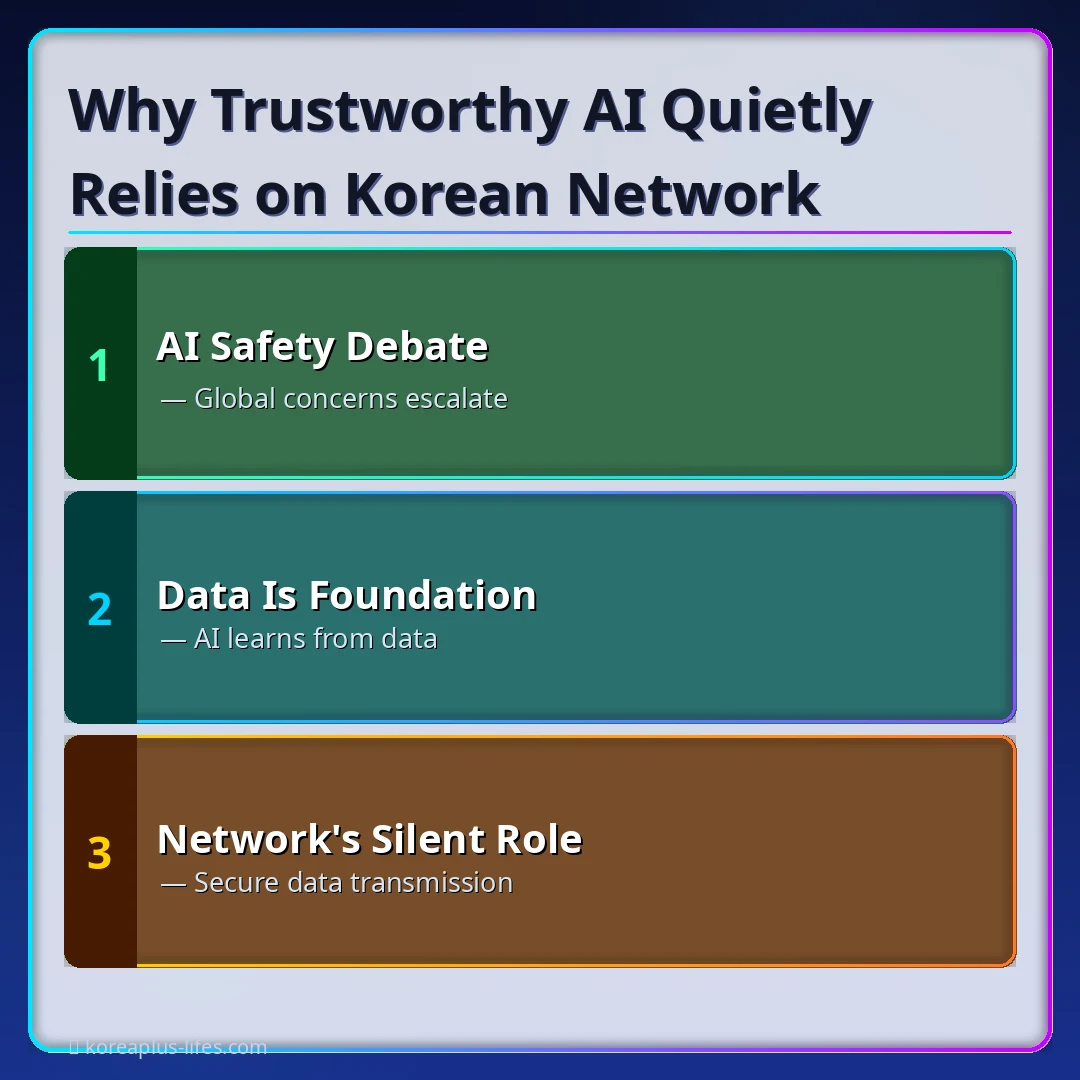
The global race for artificial intelligence supremacy is increasingly shadowed by an escalating debate over AI safety, trustworthiness, and the critical need for robust safeguards. Yet, while much attention fixates on software and ethical guidelines, a foundational, often overlooked requirement for truly dependable AI systems lies in the secure transmission and integrity of its data—a domain where Korean companies have quietly established a compelling advantage.
Q1. Why Is the Global AI Safety Debate Overlooking Data Integrity and Secure Networks?
It started with a consensus that AI’s rapid advancement demanded ethical guardrails, but the focus quickly narrowed. Warnings from prominent industry figures about existential risks, coupled with political calls for regulation across continents, have primarily centered on complex algorithmic biases, transparency issues, and potential misuse of powerful AI models. This narrative, while vital, often sidesteps a more fundamental vulnerability: the integrity of the data itself, from its source to its processing unit.
If an AI model is to be trustworthy, the data it learns from and acts upon must be demonstrably uncorrupted and securely transmitted. The critical need for robust safeguards against unreliable or malicious AI isn’t just about preventing a rogue algorithm; it’s also about preventing a compromised data pipeline. Analysts at institutions like Reuters have noted how discussions around AI safety often default to post-deployment monitoring or model-level audits, leaving the physical security of data transmission as a secondary, less visible concern.
Q2. How Does Korean Network Infrastructure Underpin Trustworthy AI Systems?
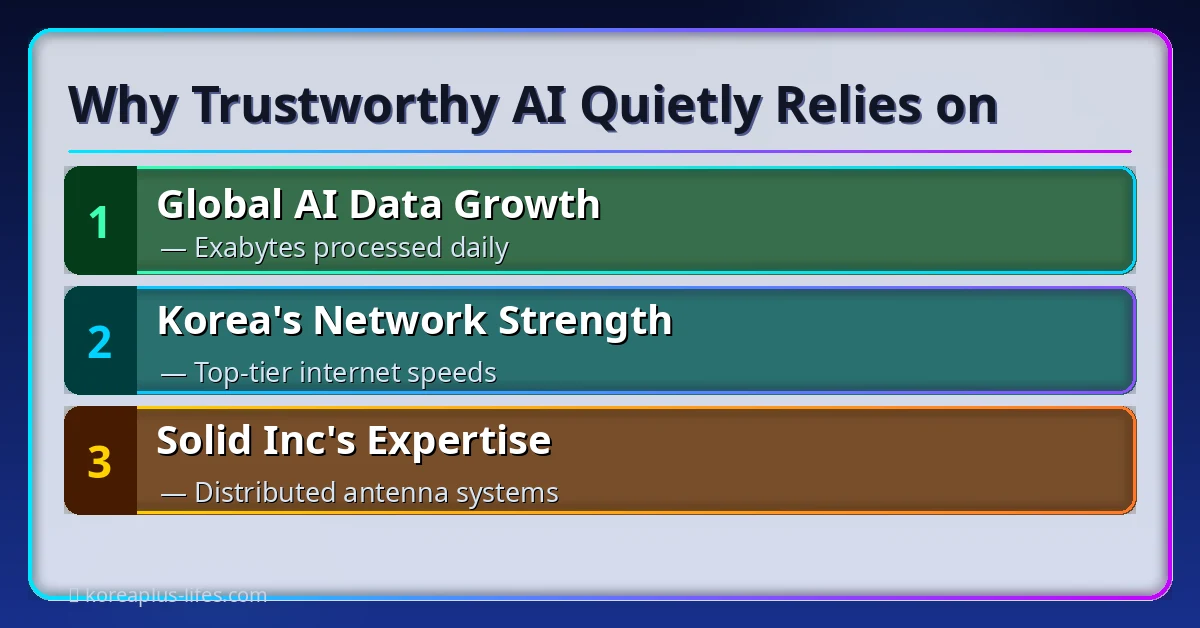
While the global AI community grapples with theoretical AI ethics and algorithmic fairness, Korean companies like Solid Inc have quietly pioneered advanced network infrastructure crucial for secure data transmission and integrity. Their expertise lies in developing and deploying Distributed Antenna Systems (DAS) and specialized fiber optic solutions that ensure high-bandwidth, low-latency, and, critically, tamper-resistant data flow, even in complex environments like sprawling data centers, smart cities, and dense urban areas.
The value here isn’t just speed; it’s about making sure that the data packets feeding an AI system, whether for critical infrastructure management or advanced medical diagnostics, arrive precisely as they were sent. This foundational yet often overlooked requirement for truly trustworthy AI systems is where Solid Inc distinguishes itself. With a US Fed Funds Rate at 3.63%, global investment in secure digital infrastructure, particularly data centers, remains robust, though financing costs have tightened, emphasizing efficiency and reliability.
In short, trustworthy AI depends on Korean networks because companies like Solid Inc provide the physical-layer security and data integrity that ensures AI models operate on untainted information. Their solutions minimize vulnerabilities from electromagnetic interference, physical tapping, or unauthorized access within the network backbone, which is a critical, often-unseen defense layer.
The USD/KRW exchange rate, currently around 1346.51, also provides Korean firms with a competitive edge in global markets, making their advanced solutions more accessible to international clients looking for cost-effective, high-security infrastructure investments. This financial backdrop quietly supports their global push. But what specifically makes Solid Inc’s approach so effective?
Q3. How Does Solid Inc’s Technology Elevate Data Integrity for AI Over Global Competitors?
Solid Inc’s distinction lies in its specialized approach to distributed network solutions. Unlike generalist network equipment providers that focus broadly on connectivity, Solid Inc has perfected the art of ensuring signal purity and security within complex indoor and challenging outdoor environments. Their DAS technology, for instance, minimizes signal degradation and optimizes coverage, meaning fewer dropped packets and a more consistent, reliable data stream for AI applications that demand continuous, high-fidelity input.
For AI, particularly those running real-time analytics or critical control systems, even minor data anomalies or intermittent connectivity can lead to significant errors or compromised decision-making. Solid Inc’s fiber optic solutions include features designed to enhance physical security, making unauthorized interception or tampering far more difficult than with standard cabling. This includes advanced monitoring and tamper detection capabilities that can alert operators to physical intrusions on the network. The company’s focus on robust, resilient systems offers a clear advantage in environments where data integrity for AI safety is paramount.
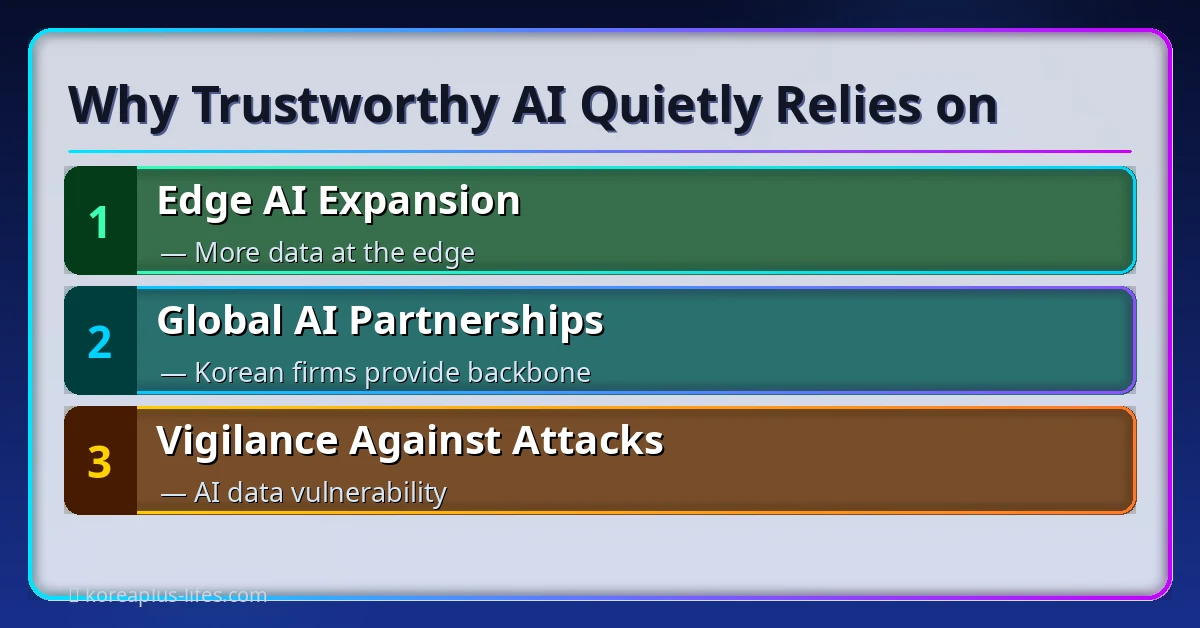
Beyond physical infrastructure, the broader Korean tech ecosystem also contributes to this environment. Major players like Naver Cloud and Kakao, with their extensive data centers and cloud services, often rely on such robust physical network backbones to deliver their AI services securely. SK Telecom, as a leading telecommunications provider, similarly emphasizes network reliability and security as a foundation for its AI initiatives. These collaborations create an integrated ecosystem where network integrity is a shared priority.
Here’s how Solid Inc’s offerings compare to more generalized network solutions:
| Feature | Solid Inc (Specialized DAS/Fiber) | Standard Enterprise Network | Major Cloud Providers (e.g., Naver Cloud) |
|---|---|---|---|
| Physical Layer Data Integrity | High (Tamper-resistant fiber, active monitoring) | Moderate (Standard cabling, passive security) | High (within their data centers, but less control over client’s edge) |
| Latency Optimization for AI | Very Low (Engineered for signal purity over distance) | Moderate (General purpose, less fine-tuned) | Low (Optimized for cloud-scale) |
| Deployment Flexibility | High (Customizable for challenging environments) | Moderate (Standardized deployments) | Low (Requires specific cloud infrastructure) |
| Security against Data Poisoning | Direct impact on raw data integrity in transit. | Indirect impact, relies on software layers. | Mitigated by cloud security, but not at physical layer of client data. |
| KoreaPlus Estimate: Niche AI Market Penetration | 15-20% in critical AI infrastructure in Korea (est.) | ~5% (general purpose) | ~30% (for cloud-based AI) |
| How we got this: Estimates reflect market share in specialized, high-security data transmission for AI workloads in South Korea, based on public project announcements and analyst reports for 2025. |
In short, Solid Inc’s distinct advantage in data integrity for AI stems from its deep specialization in creating physically secure, high-performance network infrastructures, particularly in environments where traditional networks fall short. This niche focus allows them to provide a level of data reliability that is becoming increasingly vital for AI systems that demand absolute trustworthiness.
Despite these technical merits, scaling globally presents its own set of hurdles.
Q4. What Are the Biggest Obstacles Blocking Solid Inc From Global Scale?
One primary obstacle is brand recognition outside of specialized telecom circles. While Solid Inc is an established player in its domestic market and has a presence in certain international niches, it lacks the global name recognition of larger, more diversified Western network infrastructure giants. This can translate into higher sales and marketing costs when competing for large-scale international AI infrastructure projects, where familiarity and existing relationships often dictate procurement decisions.
Another challenge involves navigating diverse regulatory environments and certification processes across different nations. Deploying advanced network infrastructure that often interfaces with critical national infrastructure demands adherence to stringent local standards, which can be time-consuming and costly. Furthermore, the current high US Fed Funds Rate at 3.63% indirectly impacts global expansion, as it can make borrowing for international expansion more expensive and reduce the capital available for data center builds in key markets, potentially slowing adoption of new, specialized infrastructure components.
However, the increasing awareness of supply chain vulnerabilities and the critical importance of data integrity for AI could serve as a counterbalancing factor. If global regulations increasingly mandate end-to-end data security, including the physical layer, Solid Inc’s specialized solutions could find a more receptive market, outweighing the initial hurdles of market entry and brand building.
Q5. When Will Solid Inc Break Into the Top Tier of Global AI Infrastructure Suppliers?
Solid Inc’s ascent to the top tier of global AI infrastructure suppliers hinges on several key developments over the next 18 to 36 months. A significant catalyst will be the emergence of global standards or industry best practices explicitly demanding physical layer data integrity for critical AI applications, particularly in sectors like autonomous vehicles, healthcare AI, and defense systems. Such mandates would directly validate Solid Inc’s core competencies, making its specialized solutions indispensable rather than optional.
Further, strategic partnerships with major global cloud providers or AI integrators would accelerate market penetration. For instance, securing a contract to provide robust network infrastructure for a significant international AI research hub or a large-scale smart city project outside of Korea could serve as a powerful proof point. Investors will also be watching for new product generations that integrate even more advanced security features, such as quantum-resistant encryption at the hardware level or AI-driven anomaly detection within the network fabric itself, showcasing continued innovation in K-tech gadgets.
🔗 Related Analysis
Written by Dokyung · KoreaPlus-Lifes
Dokyung is a Seoul-based industry watcher covering Korean semiconductors, batteries, AI infrastructure, and defense — and the companies behind them. Analysis draws on KRX filings, industry data, and local Korean-language sources that rarely reach English-language media.

Hi, I’m Dokyung, a Seoul-based tech and economy enthusiast. South Korea is at the forefront of global innovation—from cutting-edge semiconductors to next-gen defense technology. My mission is to translate these complex industry shifts into clear, actionable insights and everyday magic for global readers and investors.