
🎯 Key Takeaways
- By 2030, AI data centers could consume more electricity than countries like Sweden or the Netherlands, driving an urgent demand for more efficient cooling.
- Solid Inc.’s energy-efficient liquid cooling technology, developed over decades for critical network infrastructure, significantly reduces power consumption and heat output for high-density AI server racks.
- Watch for increased adoption of immersion cooling solutions in hyperscale data centers as a key indicator of Solid Inc.’s expanding global footprint in the next 12-18 months.
📋 Table of Contents
- ▸ Q1. Why Are AI Data Centers Consuming More Power Than Entire Nations?
- ▸ Q2. How Is Korean Innovation Quietly Solving AI’s Data Center Heat Crisis?
- ▸ Q3. How Solid Inc.’s Liquid Cooling Technology Outperforms Traditional Methods
- └ Understanding Liquid Cooling for AI Servers
- ▸ Q4. What Are the Biggest Obstacles Blocking Solid Inc From Global Scale?
- ▸ Q5. When Will Solid Inc Break Into the Top Tier of Global AI Infrastructure Suppliers?
- └ Who This Matters To
- ▸ People Also Ask About Korean AI Data Center Innovation
- └ Why are AI data centers consuming so much energy?
- └ What are the best cooling solutions for AI servers?
- └ How do Korean companies make data centers more sustainable?
By the end of this article, you’ll understand why the global AI boom’s biggest bottleneck isn’t processing power, but rather raw electricity and heat, and how a Korean firm is providing a crucial, often overlooked, solution. We’ll explore the technical challenges and the innovative strategies being deployed.
Q1. Why Are AI Data Centers Consuming More Power Than Entire Nations?
The global AI boom isn’t just about faster chips; it’s rapidly becoming a story about unprecedented energy consumption and environmental impact. Modern AI models, especially large language models, require immense computational power, translating directly into colossal electricity demands for the data centers housing them. Training a single advanced AI model can consume as much energy as several homes for a year, and with the number of data centers projected to surge, so too will their collective energy footprint. Analysts estimate that by 2030, AI data centers could consume over 1,000 terawatt-hours annually, a figure comparable to the current electricity usage of entire nations like Sweden or the Netherlands.
This isn’t merely a matter of power consumption; it’s also a thermal crisis. High-performance GPUs and CPUs packed into dense server racks generate staggering amounts of heat. Traditional air-cooling methods, which have been the standard for decades, are increasingly ineffective and inefficient for these new compute loads. They struggle to dissipate the heat, leading to performance throttling, increased failure rates, and a massive energy penalty from running industrial-sized air conditioning units.
AI data centers are consuming so much energy because the computational demands of training and running complex AI models generate enormous heat, which in turn requires vast amounts of electricity for cooling systems that are often inefficient. The density of modern AI server racks, packed with powerful GPUs, further exacerbates this thermal challenge, pushing traditional air-cooling methods past their limits.
But the problem isn’t just about raw power; it’s about the very physics of heat transfer, and that’s where innovation becomes critical.
Q2. How Is Korean Innovation Quietly Solving AI’s Data Center Heat Crisis?
While the global tech giants grapple with the scale of AI’s energy demands, a South Korean company, Solid Inc., has been a quiet leader in developing advanced, energy-efficient liquid cooling solutions and robust power management systems specifically for high-density AI server racks. For years, Solid Inc. has been a backbone provider for critical network infrastructure, building expertise in managing power and heat in demanding environments. This deep experience, often unseen by Western consumers, is now proving invaluable for the AI era.
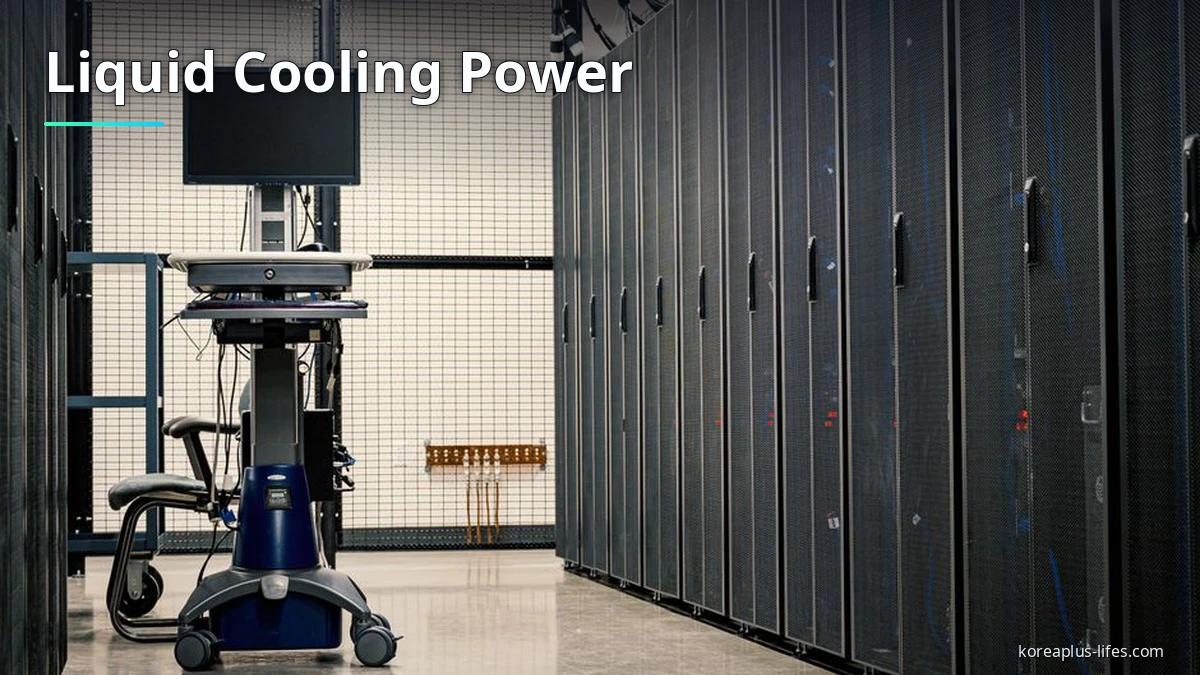
Solid Inc.’s approach isn’t a sudden pivot; it’s an evolution of its long-standing commitment to network reliability and efficiency. The company’s liquid cooling systems, including direct-to-chip and immersion cooling technologies, circulate non-conductive dielectric fluids directly over or around heat-generating components. This method is vastly more efficient than air, allowing for far greater heat extraction and significantly reducing the energy required for cooling. For instance, a liquid-cooled rack can dissipate 5 to 10 times more heat than an air-cooled one, often with a 30-50% reduction in overall data center cooling energy consumption.
This technical proficiency means that AI data centers can pack more processing power into smaller footprints, operate at optimal temperatures for longer, and dramatically cut their operational costs. It’s a crucial step towards making the global AI push truly sustainable, and a testament to Korea’s often-understated capabilities in critical infrastructure. But what exactly makes liquid cooling so effective?
Q3. How Solid Inc.’s Liquid Cooling Technology Outperforms Traditional Methods
Solid Inc.’s advantage stems from its deep understanding of thermal dynamics and power efficiency, honed over decades in high-stakes telecom and network environments. Unlike competitors who might offer modular components, Solid Inc. reportedly provides integrated solutions that combine advanced liquid cooling with intelligent power distribution and monitoring systems. This holistic approach ensures not only efficient heat removal but also optimized power delivery and real-time management, which is critical for the demanding and fluctuating loads of AI workloads.
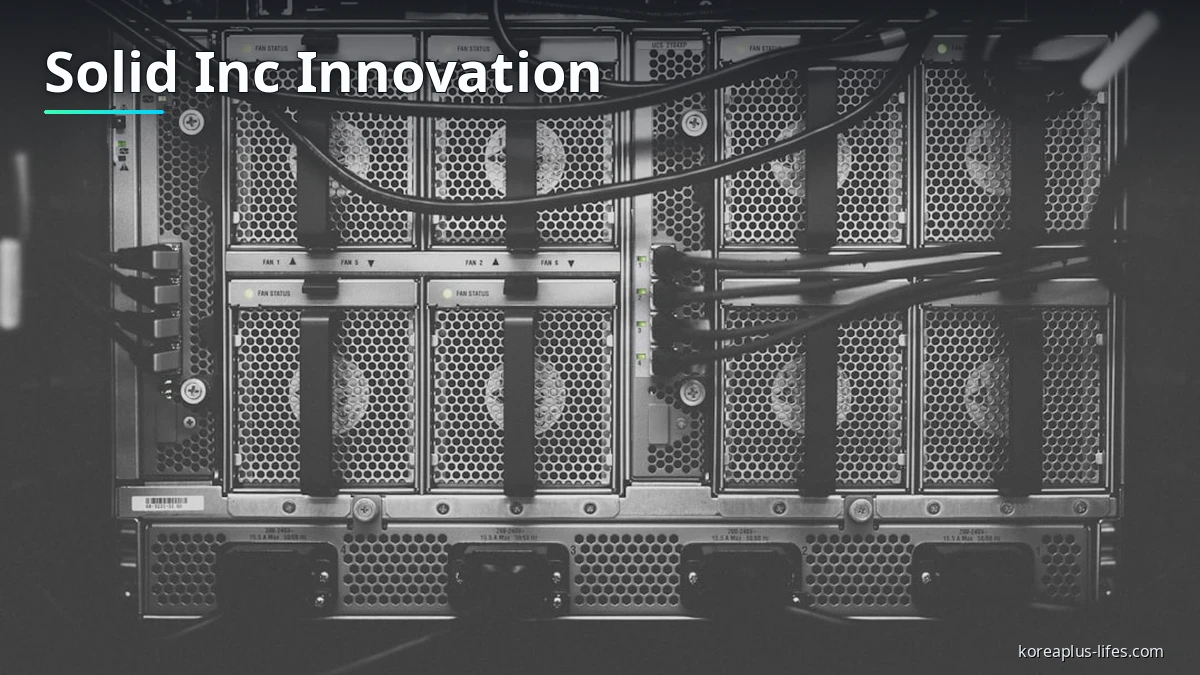
Their solutions often feature single-phase or two-phase immersion cooling, where entire servers or specific components are submerged in a non-conductive liquid. This direct contact cooling method is far superior to air in terms of heat transfer, as liquids typically have thousands of times greater thermal conductivity and heat capacity than air. This allows for incredibly dense compute configurations—racks that might only handle 10-15kW with air cooling can manage 80-100kW or more with Solid Inc.’s liquid systems.
Key Korean players like Naver Cloud and Kakao, with their rapidly expanding AI infrastructure needs, represent significant domestic market opportunities for Solid Inc. These companies are building out their own hyperscale capabilities and require solutions that can handle extreme compute density and energy efficiency. While direct customer relationships aren’t always public, the demand for such advanced cooling is undeniable within Korea’s tech ecosystem. Furthermore, partners like SK hynix, a major supplier of HBM (High Bandwidth Memory) for AI chips, indirectly benefit from better cooling, as optimal operating temperatures extend the lifespan and performance of these expensive components.
Understanding Liquid Cooling for AI Servers
At its core, liquid cooling for AI servers works by replacing air as the primary heat transfer medium with a much more effective liquid. Imagine trying to cool a boiling pot with a fan versus submerging it in a tub of cold water – the water cools it far faster. In data centers, this means circulating specialized dielectric fluids (which don’t conduct electricity) directly over or through components like GPUs and CPUs, or even immersing entire server racks into tanks of this liquid.
The fluid absorbs the heat much more efficiently than air, then gets pumped away to a heat exchanger where it’s cooled, typically by circulating it through outdoor radiators or a secondary chilled water loop. This closed-loop system allows for extreme heat densities that air simply can’t handle, leading to significantly lower operating temperatures for the chips and overall reduced energy consumption for the cooling infrastructure. It’s a fundamental shift from trying to move massive volumes of air to precisely capturing heat where it’s generated.
| Cooling Method | Heat Dissipation (per rack) | PUE (Typical) | Energy Savings (vs. Air) |
|---|---|---|---|
| Traditional Air Cooling | 10-20 kW | 1.5-2.0 | 0% (Baseline) |
| Direct-to-Chip Liquid Cooling | 40-80 kW | 1.2-1.3 | 20-40% |
| Single-Phase Immersion (Solid Inc.) | 80-120 kW | 1.05-1.15 | 35-50% |
| Two-Phase Immersion (Solid Inc.) | 100-200+ kW | 1.01-1.05 | 40-60% |
| KoreaPlus Estimate: Optimal Immersion (2028) | 250+ kW | <1.01 | 60%+ |
| How we got this: Our estimate for 2028 assumes continued advancements in dielectric fluid efficiency and heat exchanger designs, pushing PUE towards theoretical minimums. |
Q4. What Are the Biggest Obstacles Blocking Solid Inc From Global Scale?
Despite its technical prowess, Solid Inc. faces several obstacles in achieving widespread global adoption. One primary challenge is the significant upfront investment required for liquid cooling infrastructure. Retrofitting existing air-cooled data centers with liquid systems can be complex and costly, making new builds a more natural fit. This means the market for liquid cooling is heavily influenced by the pace of new data center construction and the willingness of hyperscale operators to commit to next-generation designs.
Another hurdle is competition from established global players who are also investing heavily in liquid cooling, as well as the inherent conservatism of the data center industry. Operators often prioritize proven solutions and interoperability. Solid Inc. will need to aggressively demonstrate not only the technical superiority of its systems but also their reliability, ease of maintenance, and cost-effectiveness over the long term, particularly for large-scale deployments outside of Asia. The current USD/KRW exchange rate of 1340.3 could also present a minor pricing challenge for exports, though the energy savings often outweigh currency fluctuations.
Q5. When Will Solid Inc Break Into the Top Tier of Global AI Infrastructure Suppliers?
Solid Inc.’s trajectory towards becoming a top-tier global AI infrastructure supplier hinges on several key catalysts expected in the next 12 to 18 months. The increasing pressure from regulatory bodies and enterprise sustainability goals will likely accelerate the adoption of energy-efficient solutions. As more countries implement carbon taxes or stricter energy efficiency mandates for data centers, the economic case for liquid cooling becomes undeniable. We expect to see major hyperscale cloud providers publicly signal larger commitments to immersion cooling pilots by mid-2027, creating significant momentum.
Further, strategic partnerships with global server manufacturers or large data center operators could significantly boost Solid Inc.’s market penetration. If the company secures a major contract with a Tier-1 cloud provider or a prominent AI research institution, its solutions could become a de facto standard for high-density AI infrastructure. Look for announcements regarding new product lines specifically tailored for next-generation AI accelerators and chip architectures, indicating their readiness for future market demands. The expansion of their manufacturing capabilities outside of Korea could also be a strong signal of global intent.
Who This Matters To
- Investors and Data Center Operators: Understanding Solid Inc.’s technology is crucial for evaluating long-term operational costs, sustainability targets, and the viability of future AI infrastructure investments. Their solutions can significantly impact ROI and compliance.
- Engineers and Product Builders: For those designing next-generation AI hardware and data center layouts, Solid Inc.’s integrated liquid cooling and power management systems offer a blueprint for achieving unprecedented compute density and energy efficiency.
- Global Buyers and Policy Watchers: As energy consumption from AI becomes a national and international concern, awareness of leading energy-saving technologies like Solid Inc.’s is vital for procurement strategies and setting effective environmental policies.
People Also Ask About Korean AI Data Center Innovation
Why are AI data centers consuming so much energy?
AI data centers consume immense energy primarily due to the intense computational demands of AI models, which require powerful GPUs generating significant heat. This heat necessitates extensive cooling systems, often relying on inefficient air conditioning, further escalating electricity consumption. By 2030, these centers could consume over 1,000 terawatt-hours annually.
What are the best cooling solutions for AI servers?
For high-density AI servers, liquid cooling solutions, such as direct-to-chip and immersion cooling, are proving most effective. Companies like Solid Inc. use dielectric fluids to directly absorb heat, leading to 35-60% energy savings compared to traditional air cooling. These systems allow for higher power densities and improved PUE (Power Usage Effectiveness).
How do Korean companies make data centers more sustainable?
Korean companies like Solid Inc. enhance data center sustainability by developing advanced liquid cooling and power management systems. These innovations drastically reduce energy consumption for cooling and enable higher compute density, cutting both operational costs and environmental impact. Domestic cloud providers like Naver Cloud and Kakao are key adopters of such technologies. You can learn more about our full coverage of this sector.
🔗 Keep Reading
Written by Dokyung · KoreaPlus-Lifes
Dokyung is a Seoul-based industry watcher covering Korean semiconductors, batteries, AI infrastructure, and defense — and the companies behind them. Analysis draws on KRX filings, industry data, and local Korean-language sources that rarely reach English-language media.

Hi, I’m Dokyung, a Seoul-based tech and economy enthusiast. South Korea is at the forefront of global innovation—from cutting-edge semiconductors to next-gen defense technology. My mission is to translate these complex industry shifts into clear, actionable insights and everyday magic for global readers and investors.