

🎯 Key Takeaways
- Rebellions’ specialized inference chips offer a compelling alternative to general-purpose GPUs for running large language models locally, dramatically reducing operational costs and improving data security.
- The company’s strategic partnerships, including a recent collaboration with SK Telecom and ARM, position it as a foundational enabler for national sovereign AI initiatives and agentic AI infrastructure.
- The shift towards on-premise and local AI processing represents a significant pivot from the dominant centralized public cloud model, driven by concerns over data sovereignty, regulatory compliance, and cost efficiency.
📋 Table of Contents
- ▸ Q1. Why are nations and enterprises demanding sovereign AI, and what’s driving this shift?
- ▸ Q2. What role does Korean innovation play in this global sovereign AI movement?
- ▸ Q3. Who are the key players and what separates the winners from the laggards?
- ▸ Q4. What are the biggest risks and what could derail this?
- ▸ Q5. What should I watch over the next 6-12 months?
By the end of this piece, you’ll understand why the global push for sovereign AI is accelerating, how a relatively unknown Korean startup is quietly providing the crucial hardware foundation, and what this means for the future of AI infrastructure beyond the cloud.
Q1. Why are nations and enterprises demanding sovereign AI, and what’s driving this shift?
The real story isn’t in the sheer computational power of a new model; it’s in who controls that power, and where the data resides. Across continents, governments, and major corporations are increasingly uneasy with the idea of their most sensitive data—from national security intelligence to proprietary customer information—being processed and stored indefinitely within the infrastructure of a handful of global public cloud providers. This isn’t just about privacy; it’s about control, compliance, and strategic autonomy.
The emergence of large language models (LLMs) has amplified this concern, pushing the concept of “sovereign AI” from a niche policy discussion to a mainstream imperative. Deploying these massive models, which often require immense data sets and computational resources, on a centralized, foreign-owned cloud presents a complex web of legal, ethical, and logistical challenges. Countries want to run their own LLMs on their own hardware, within their own borders, governed by their own laws. This quiet rebellion against cloud centralization is fundamentally reshaping the AI infrastructure landscape.

Q2. What role does Korean innovation play in this global sovereign AI movement?
While the broader world grapples with the policy implications of sovereign AI, Korea’s tech sector, particularly its burgeoning AI chip startups, has been quietly building the hardware that makes such a vision practical. This isn’t just about having the data; it’s about efficiently processing it where it lives. A weaker Korean Won, currently trading around 1461.06 against the USD, could also make indigenous hardware solutions comparatively more attractive for domestic deployment and export.
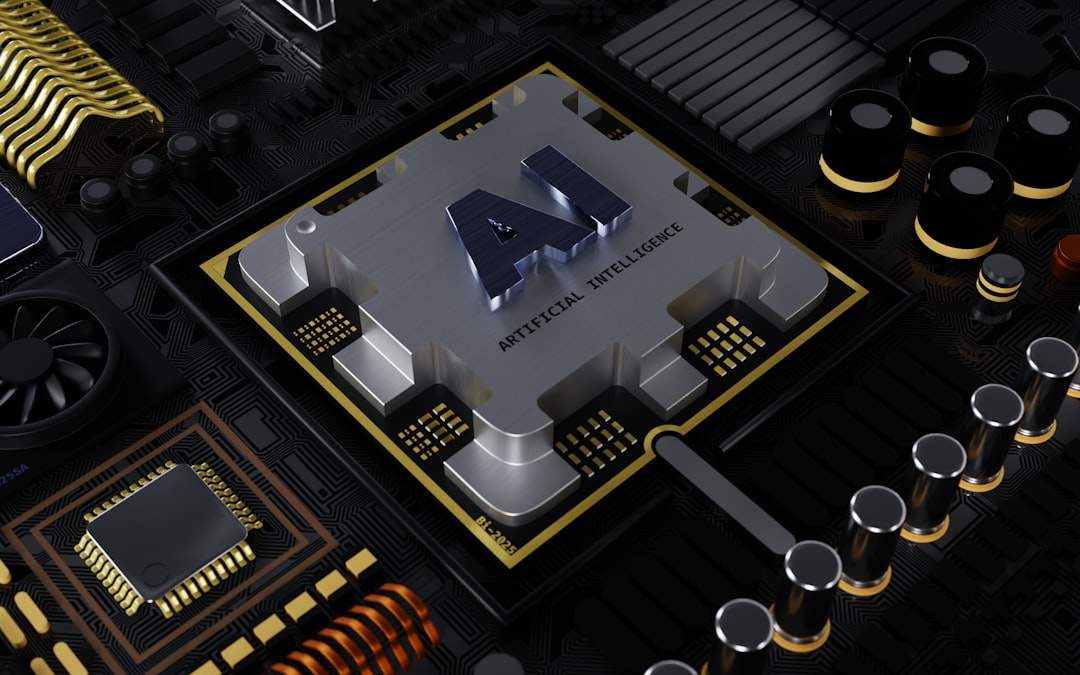
Korean AI chip startup Rebellions has emerged as a critical player in this space, developing specialized AI inference chips designed specifically to run LLMs efficiently on-premise or at the edge. Their focus on inference—the process of using a trained AI model to make predictions or generate content—is key. Training massive LLMs still largely relies on powerful, general-purpose GPUs from established players, but running these models in real-world applications demands highly optimized, energy-efficient hardware. Rebellions’ technology addresses this crucial gap, making independent local LLM chips a tangible reality.
This commitment to localized, efficient AI processing is precisely why companies like SK Telecom are partnering with Rebellions. As Wccftech reported, ARM recently announced a collaboration with SK Telecom and Rebellions to power agentic AI and telecom infrastructure with its new AGI CPU. This partnership is a clear signal that the vision for a sovereign AI infrastructure, particularly for critical sectors like telecommunications, is rapidly moving from concept to concrete implementation, underpinned by specialized Korean AI inference hardware.
Q3. Who are the key players and what separates the winners from the laggards?
The race for sovereign AI hardware is attracting a diverse set of players, but not all are created equal. Rebellions, with its ATOM chip, is positioned as a leader in specialized AI inference, distinguishing itself through designs optimized for the power efficiency and low latency required for real-time LLM execution in a local environment. Their focus isn’t on beating general-purpose GPUs in raw teraFLOPS for training, but rather in offering a superior performance-per-watt and performance-per-dollar for inference workloads, particularly for large-scale, enterprise-grade deployments.
Other notable Korean companies in the AI chip space include FuriosaAI, which also targets AI inference, and Solid Inc, a company known for its network infrastructure and edge AI solutions. While these players contribute to Korea’s robust AI ecosystem, Rebellions’ specific architectural choices for transformer models, which underpin LLMs, give it a distinct edge in the sovereign AI inference niche. Moreover, platforms like Naver Cloud, a significant Korean cloud provider, are also exploring ways to offer sovereign AI solutions, likely integrating specialized hardware like Rebellions’ chips to provide competitive, locally hosted services.

What separates the winners in this emerging field isn’t just raw silicon power, but the ability to build an ecosystem, secure strategic partnerships, and deliver tangible operational savings. For example, a procurement director at a major Korean bank looking to deploy an internal LLM would prioritize a solution that guarantees data residency, offers predictable costs, and integrates smoothly with existing infrastructure. Rebellions’ collaboration with a major telecom like SK Telecom demonstrates its ability to meet these complex demands for critical national infrastructure projects.
Q4. What are the biggest risks and what could derail this?
Despite the promise, the path to widespread sovereign AI adoption, powered by specialized hardware, isn’t without significant hurdles. The most formidable risk remains the entrenched dominance of general-purpose GPU providers, particularly Nvidia. Their existing software ecosystem, CUDA, has become a near-standard for AI development, creating a substantial lock-in effect for developers and researchers. Convincing organizations to adopt new hardware often means investing in new software stacks and retraining talent, a high switching cost that can slow even the most compelling technological transitions.
Another risk lies in the rapid evolution of AI models themselves. If future LLM architectures diverge significantly from current transformer designs, Rebellions’ specialized hardware might require costly re-engineering, potentially negating its efficiency advantages. Furthermore, building a complete sovereign AI ecosystem involves more than just chips; it requires robust local cloud services, secure data storage, and a skilled workforce, all of which need to scale in tandem. Without a cohesive national strategy, individual hardware successes, however impressive, could struggle to achieve broader impact. Naver’s efforts to build a proactive AI ecosystem in Korea offer a glimpse into the holistic approach needed.
Q5. What should I watch over the next 6-12 months?
Over the next year, several key indicators will reveal the trajectory of Rebellions and the broader sovereign AI movement. First, watch for concrete deployment announcements stemming from their partnership with SK Telecom. Specifics on scale, location (perhaps in a major data center in Gyeonggi Province), and performance metrics will be crucial to validate the real-world efficacy of their AI chips in a demanding telecommunications environment.
Second, keep an eye on Rebellions’ funding rounds and potential expansion beyond Korea. Analysts at Daiwa Capital Markets suggest that significant international investment or strategic partnerships with non-Korean enterprises would signal growing confidence in their technology’s global applicability. Finally, monitor the broader regulatory landscape. As governments worldwide solidify policies around data residency and AI governance, the demand for truly sovereign AI solutions, built on hardware like Rebellions’, will only intensify, turning a niche discussion into a fundamental industry shift.
🔗 Related: The Sovereign AI Ecosystem Behind Korea’s Digital Life Nobody Is Talking About
🔗 Related: Why the Global AI Chip Manufacturing Boom Quietly Leads Back to Korean Process Equipment
🔗 Related: Why the Global AI Data Center Race Silently Depends on Korean Optical Interconnects

Hi, I’m Dokyung, a Seoul-based tech and economy enthusiast. South Korea is at the forefront of global innovation—from cutting-edge semiconductors to next-gen defense technology. My mission is to translate these complex industry shifts into clear, actionable insights and everyday magic for global readers and investors.