
🎯 Key Takeaways
- While chip designers grab headlines, the precise process of stacking memory in AI chips relies heavily on specialized equipment, a field where Hanmi Semiconductor has long been a leader.
- The company’s Thermo-Compression Bonder (TC Bonder) technology is critical for advanced packaging methods like hybrid bonding, enabling the performance gains seen in HBM and next-gen AI processors.
- Future HBM generations (HBM4 and beyond) will demand even greater bonding precision, solidifying Hanmi’s strategic importance in the global AI supply chain, despite its low public profile outside Korea.
📋 Table of Contents
- ▸ How We Got Here
- └ The Origin Story
- └ The Turning Point
- ▸ Where Things Stand Now
- └ The Current State of Play
- └ Who’s Benefiting — and Who’s Not
- ▸ The Tensions Beneath the Surface
- └ The Contradiction at the Heart of This Story
- └ Structural Challenges Going Forward
- ▸ What Happens Next
- └ Common Questions
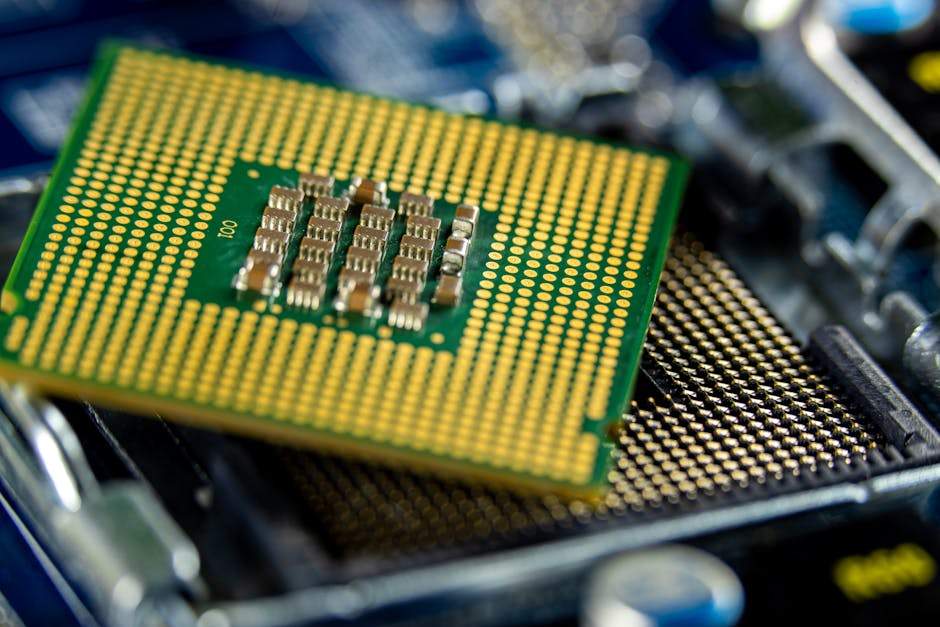
At a semiconductor fabrication plant in Incheon, south of Seoul, engineers clad in cleanroom suits oversee machines that operate with sub-micron precision. These aren’t the familiar lithography tools from ASML, nor are they testing equipment. Instead, they are Thermo-Compression Bonders, meticulously stacking layers of High Bandwidth Memory (HBM) onto logic chips, an invisible but indispensable step for every high-performance AI accelerator.
This silent ballet of machinery underscores a critical reality often overlooked in the race for AI dominance: the physical challenges of connecting billions of transistors and memory cells. While global tech giants unveil powerful AI chips and memory modules, the underlying manufacturing processes are becoming exponentially more complex, pushing specialized equipment makers to the forefront.
How We Got Here
The Origin Story
Hanmi Semiconductor, founded in 1980, didn’t begin with a vision for AI chips, but rather with a focus on general semiconductor equipment. Its early years were dedicated to developing machinery for various stages of chip assembly and packaging, establishing a foundation in precision engineering. The company gradually built expertise in processes like sawing, vision inspection, and ultimately, bonding, which connects the diced individual chips.
For decades, Hanmi focused on refining these tools, often working closely with Korea’s burgeoning memory and foundry sectors. This deep, localized collaboration allowed them to anticipate and respond to the evolving needs of advanced chip production, setting the stage for their later specialization in high-density memory solutions. The demand for advanced packaging has steadily increased, a trend highlighted in recent industry reports by outlets like Reuters, which consistently track the industry’s shift towards more complex chip architectures.
The Turning Point
The true turning point arrived with the industry’s pivot toward High Bandwidth Memory (HBM) and other advanced packaging techniques, driven initially by high-performance computing and later by the explosion of AI. Traditional wire bonding, which uses fine wires to connect chips, became insufficient for the dense, vertical stacking required for HBM. This created a critical need for Thermo-Compression Bonders, machines that bond chips directly using heat and pressure, offering much higher density and shorter connection paths.
Hanmi Semiconductor, leveraging its decades of experience in precision equipment, had already been developing this technology. While many global peers were focused on front-end (wafer fabrication) equipment, Hanmi had steadily invested in back-end (packaging) innovation. This strategic focus meant they were exceptionally well-positioned when HBM became the memory standard for AI accelerators, effectively making their TC Bonders indispensable for companies like SK hynix and Samsung Foundry seeking to produce next-generation memory.
📊 KRX Stock Performance (Live)
₩409,500 +2.2%
Source: KRX · Yahoo Finance · data as of latest session
Where Things Stand Now
The Current State of Play
Today, Hanmi Semiconductor holds a commanding position in the global market for TC Bonders, a specific segment of the broader AI chip packaging equipment sector. Its machines are vital for the production of HBM3 and upcoming HBM3E and HBM4 memory, which are critical components for the AI hardware driving large language models and other compute-intensive applications. On May 14, 2026, Hanmi Semiconductor’s stock traded at ₩409,500, marking a +2.2% gain for the day, reflecting sustained investor confidence in its market leadership. The company’s market capitalization stands at an estimated $38.84 billion, a significant valuation for a specialized equipment maker.
The company’s stock has seen substantial growth, with its 52-week range spanning from ₩78,200 to ₩426,000, illustrating the increased investor interest tied to the AI boom. This valuation speaks to the mission-critical nature of its innovation in HBM manufacturing. This trend aligns with broader shifts in the Korean tech sector, where advanced packaging has emerged as a key differentiator. For a deeper look into Korea’s role in this domain, explore 3 Korean Innovations Driving Advanced Chip Packaging for AI.
Who’s Benefiting — and Who’s Not
The primary beneficiaries of Hanmi Semiconductor’s specialized equipment are the world’s leading memory manufacturers and foundries, particularly SK hynix and Samsung Foundry. These Korean titans rely on Hanmi’s TC Bonders to produce their advanced HBM modules, which are then integrated into AI accelerators by companies like Nvidia. The precision and reliability of Hanmi’s machinery directly contribute to the yield and performance of these high-value components, giving these Korean firms a competitive edge in the global AI supply chain.
Conversely, competitors in the semiconductor equipment space who have not invested as heavily in this specific niche of advanced packaging, or who lack Hanmi’s long-standing customer relationships and operational scale, find themselves playing catch-up. While other Korean equipment makers like Wonik IPS contribute to various stages of chip manufacturing, few possess the same critical dominance in the specific TC Bonder segment for HBM. The ripple effect extends to chip developers too; the efficiency of AI inference, for example, is heavily reliant on the underlying memory architecture, a topic explored in depth in discussions comparing FuriosaAI vs. Nvidia: Who Leads AI Inference Efficiency?
The Tensions Beneath the Surface
The Contradiction at the Heart of This Story
The central contradiction in the AI chip race is the disproportionate attention given to the glamorous end-products—the powerful GPUs and AI accelerators—while the highly specialized machinery that enables their existence often remains in the background. Hanmi Semiconductor, despite its pivotal role in HBM manufacturing and advanced AI chip packaging, doesn’t command the same public recognition as the giants it serves. This creates a gap between perceived and actual influence within the global tech ecosystem.
Another tension lies in the delicate balance between innovation and cost. While Hanmi’s TC Bonders deliver unparalleled precision, the processes they enable are inherently expensive and complex. The constant pressure to reduce AI chip costs while simultaneously increasing performance means equipment makers must continuously innovate without driving up the total cost of ownership for their customers, a challenge that intensifies with each new HBM generation.
Structural Challenges Going Forward
Despite its current market leadership, Hanmi Semiconductor faces structural challenges. The semiconductor equipment industry is highly cyclical, meaning demand for its TC Bonders can fluctuate significantly based on the capital expenditure plans of its key clients. A downturn in global chip demand or a slowdown in AI infrastructure investment could impact sales. Furthermore, the high USD/KRW exchange rate, currently at 1461.06, while potentially benefiting exports, can also increase the cost of imported components or intellectual property, narrowing profit margins.
Another challenge comes from the sheer size and R&D budgets of larger, more diversified semiconductor equipment manufacturers who may seek to enter or expand within the advanced packaging market. Maintaining its technological edge requires continuous, heavy investment in research and development, especially as HBM technology evolves towards even more complex bonding techniques like hybrid bonding, which could potentially shift the competitive landscape.
What Happens Next
Over the next two to three years, as AI continues its aggressive expansion, the demand for HBM is projected to grow substantially. This trajectory suggests that Hanmi Semiconductor’s TC Bonder technology will remain a bottleneck-busting component in the AI supply chain. Expect the company to focus intensely on developing next-generation bonding solutions for HBM4 and HBM5, which will require even finer pitch and higher stacking capabilities, further entrenching its market position.
If the current boom in AI infrastructure investment persists, Hanmi Semiconductor is likely to see sustained order growth, potentially expanding its market share beyond its traditional Korean client base to serve other global memory and foundry players. However, diversification into adjacent advanced packaging areas, or even exploring entirely new semiconductor processing equipment, will be key to mitigating long-term cyclical risks.
Common Questions
A1. A Thermo-Compression Bonder (TC Bonder) is a highly precise machine used in semiconductor manufacturing to stack individual chip dies directly on top of each other, forming a single, interconnected package. For AI chips, TC Bonders are crucial for creating High Bandwidth Memory (HBM), where multiple DRAM layers are vertically stacked and bonded to a base logic die. This method allows for significantly higher data throughput and lower power consumption compared to traditional memory, making it indispensable for AI accelerators and other high-performance computing applications. To learn more about various tech innovations, check out our K-Tech & Gadgets category.
A2. Hanmi Semiconductor’s leadership stems from its long-term dedication to back-end semiconductor equipment, accumulating decades of expertise in precision bonding and packaging technologies. The company made early strategic investments in developing advanced TC Bonders specifically designed for dense vertical stacking, anticipating the needs of next-generation memory. This foresight, combined with close collaboration with major Korean memory manufacturers like SK hynix and Samsung Foundry since the early 2010s, allowed them to refine their technology and establish a dominant market position as HBM became a standard for AI. Its stock reached a 52-week high of ₩426,000, reflecting the market’s recognition of this unique competitive advantage.

Hi, I’m Dokyung, a Seoul-based tech and economy enthusiast. South Korea is at the forefront of global innovation—from cutting-edge semiconductors to next-gen defense technology. My mission is to translate these complex industry shifts into clear, actionable insights and everyday magic for global readers and investors.