
🎯 Key Takeaways
- Ilooda’s Korean aesthetic medical device innovation focuses on micro-precision diagnostics embedded directly into therapeutic systems, a contrast to Western platforms emphasizing broad data collection.
- The firm’s Secret RF Microneedling technology exemplifies this niche, providing targeted treatment based on real-time skin analysis, driving tangible patient outcomes.
- While the aesthetic market is distinct, Ilooda’s underlying scanning and data integration capabilities suggest broader applications for personalized, non-invasive health interventions beyond cosmetic uses.
📋 Table of Contents
- ▸ Ilooda’s Quiet Rise: Precision Scanning’s Aesthetic Origins
- └ The Genesis of Non-Invasive Accuracy
- └ The Turning Point: Secret RF Microneedling
- ▸ The Micro-Precision Advantage: Where Ilooda Stands Today
- └ The Current State of Play in Precision Health
- └ Who’s Benefiting — and Who’s Not
- ▸ The Contradiction: Niche Expertise vs. Global Health Ambitions
- └ The Narrow Lens on Broad Potential
- └ Structural Challenges Going Forward
- ▸ Beyond Aesthetics: The Future Trajectory of Precision Health Tech
- └ Common Questions
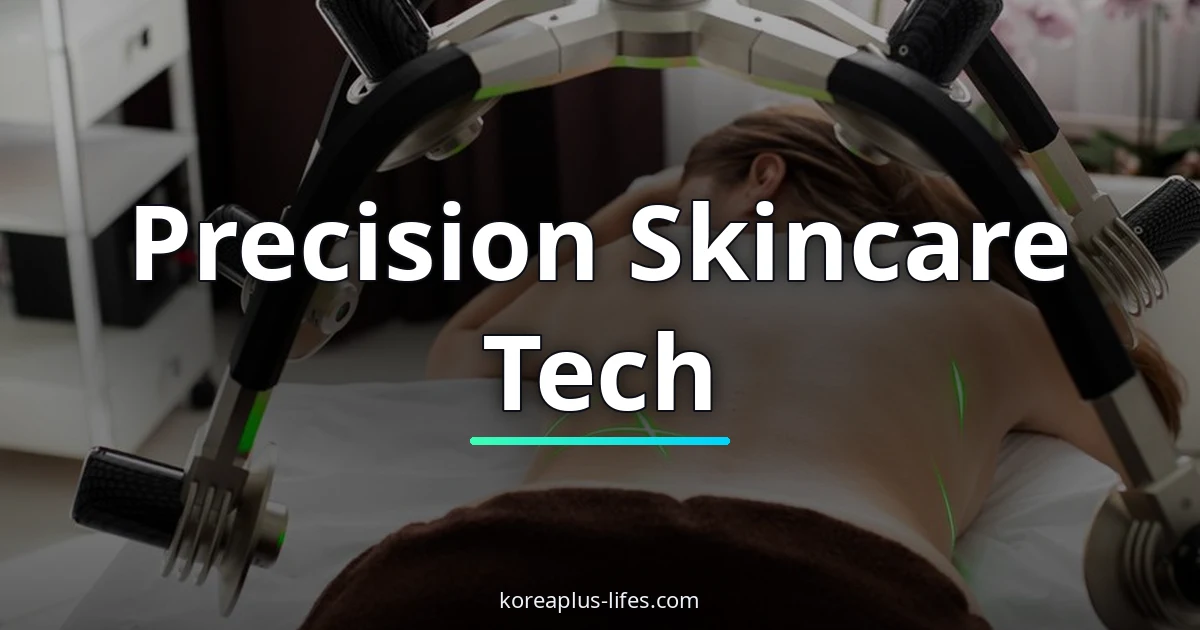
In the bustling clinics of Seoul’s Gangnam district, a patient undergoes a routine skin treatment that involves far more than surface-level aesthetics. Here, machines precisely map sub-dermal structures, analyze tissue density, and deliver targeted therapies with micro-millimeter accuracy. This isn’t science fiction; it’s the quiet reality of advanced Korean medical technology, a reality often overlooked by global observers fixated on the next big “body scanning” headline.
Globally, the conversation around next-generation health is increasingly centered on preventive diagnostics and early intervention, fueled by a surge in venture capital. Just months after its last funding round, French insurtech Alan recently secured an additional €480 million, led by Prosus, at a robust €5.5 billion valuation, according to The Next Web. Alan, like other innovators such as Neko Health, is betting heavily on AI-driven prevention and comprehensive health data. Yet, while these Western ventures capture significant capital and media attention for their ambitious broad-stroke body scanning, South Korea has spent years perfecting the granular detail, developing devices that don’t just scan, but diagnose and treat with surgical precision.
Ilooda’s Quiet Rise: Precision Scanning’s Aesthetic Origins
The Genesis of Non-Invasive Accuracy
Ilooda, a name less familiar to global investors than Neko Health or Alan, began its journey focused on aesthetic medical devices, a sector often dismissed as purely cosmetic. However, its core philosophy was rooted in applying advanced physics and engineering to biological problems. Founded in 2006, Ilooda’s initial thesis was that non-invasive treatments could achieve therapeutic efficacy comparable to more invasive procedures, provided they were backed by unprecedented levels of precision and real-time diagnostic feedback. This required developing proprietary scanning and energy delivery systems capable of interacting with human tissue at microscopic scales.
The company’s early years were spent refining technologies like fractional radiofrequency (RF) and laser systems. The challenge wasn’t just generating energy, but controlling its delivery to specific depths and patterns within the skin, minimizing collateral damage, and maximizing therapeutic effect. This relentless pursuit of control laid the groundwork for its subsequent innovations, establishing a reputation for meticulous engineering in the competitive Korean market.
The Turning Point: Secret RF Microneedling
A significant turning point for Ilooda arrived with the development and commercialization of its Secret RF Microneedling system. This technology combined two established concepts – microneedling and radiofrequency energy – but elevated them through sophisticated diagnostic feedback and adjustable parameters. Unlike simpler devices, Secret RF uses micro-fine needles that precisely penetrate the skin to a user-defined depth, simultaneously delivering fractional RF energy directly into targeted tissue layers. This process stimulates collagen and elastin production, but critically, the depth and intensity are determined by an integrated scanning system that assesses skin type and condition in real-time, allowing for highly personalized treatment protocols.
This fusion of diagnostic assessment with immediate, targeted therapeutic delivery distinguished Ilooda. While many Western “body scanners” focus on compiling vast datasets for future analysis, Ilooda’s approach is about actionable intervention right at the point of diagnosis. It’s a pragmatic application of advanced scanning, moving beyond mere data acquisition to direct, personalized treatment.
Ilooda’s Secret RF Microneedling system represents a key milestone in non-invasive medical technology by marrying precise dermal scanning with controlled energy delivery, enabling practitioners to tailor treatments based on individual skin characteristics for optimal therapeutic outcomes. This integration of diagnostic data with immediate intervention sets it apart from more generalized health screening devices.
The Micro-Precision Advantage: Where Ilooda Stands Today
The Current State of Play in Precision Health
Today, Ilooda continues to refine its suite of non-invasive diagnostic and therapeutic aesthetic medical devices, holding a strong position within the fiercely competitive Korean market and expanding its global footprint. Its core strength lies in its ability to develop sophisticated platforms that offer practitioners fine-tuned control over energy delivery, whether it’s via radiofrequency, high-intensity focused ultrasound (HIFU), or various laser technologies. The company’s focus isn’t on creating a generic “health scanner,” but rather on highly specialized tools that detect specific biological conditions and then directly address them with tailored energy profiles.
The success of Ilooda’s Korean aesthetic medical device innovation is echoed by peers such as Classys and Lutronic, both significant players in the global aesthetic medical device market, demonstrating the depth of this specialized ecosystem in Korea. These companies collectively represent a paradigm where advanced sensor technology and data analytics are integrated not merely for passive monitoring, but for active intervention. While the US Federal Funds Rate sits around 3.63% and the USD/KRW exchange rate hovers at 1501.06, indicating a challenging macroeconomic environment, the demand for high-precision, effective aesthetic and therapeutic solutions continues to grow, reflecting a global shift towards personalized and results-driven healthcare.
Who’s Benefiting — and Who’s Not
The primary beneficiaries of Ilooda’s advancements are the dermatological and aesthetic clinics that can offer more predictable and effective treatments. Patients, in turn, gain from reduced downtime and superior outcomes compared to less precise methods. The technology’s ability to minimize side effects by precisely targeting tissue also creates a positive feedback loop for adoption.
However, the broader medical community outside of aesthetics often overlooks these innovations, classifying them narrowly rather than recognizing their underlying diagnostic and therapeutic potential. This categorization can limit the perceived applicability of Korean aesthetic medical device innovation, potentially slowing the integration of such precision scanning capabilities into other medical fields where broad, general scans still dominate. This gap in recognition means that general health tech investors might miss the sophisticated data-driven approaches that companies like Ilooda have already perfected.
| Feature | Neko Health/Western Broad Scanners (e.g., Alan) | Ilooda/Korean Precision Devices |
|---|---|---|
| Primary Focus | Preventive health, broad physiological markers, AI-driven risk assessment | Targeted diagnosis and direct therapeutic intervention, aesthetic & dermatological |
| Scanning Resolution | Macro-level (organ systems, overall body composition) | Micro-level (dermal layers, cellular response to energy) |
| Output Type | Health reports, risk scores, lifestyle recommendations | Immediate, personalized treatment parameters, direct tissue modification |
| Intervention Pathway | Indirect (via recommendations, referrals) | Direct (device-delivered therapy) |
| Average time to actionable insight (KoreaPlus estimate) | Days to weeks for full analysis and physician consultation | Real-time during treatment session |
| How we got this: Estimates based on typical patient pathways from scan to follow-up for broad diagnostics versus immediate device-guided therapy. |
The Contradiction: Niche Expertise vs. Global Health Ambitions
The Narrow Lens on Broad Potential
The core contradiction in Ilooda’s story, and indeed for much of Korea’s advanced aesthetic medical device sector, is the disparity between its technological sophistication and its perceived market scope. While companies like Neko Health position themselves as universal health gateways, Ilooda operates in a more specialized, albeit highly competitive, niche. The focus on “aesthetics” often overshadows the foundational engineering in non-invasive diagnostics and precision energy delivery that could have wider applications in fields like oncology, rehabilitation, or even general diagnostics, if re-framed.
Korean companies have developed unparalleled expertise in manipulating energy-tissue interactions at a micro-level, coupled with real-time feedback systems. This isn’t just about looking good; it’s about understanding and precisely altering biological structures non-invasively. However, the commercial imperative to serve the lucrative aesthetic market has, paradoxically, kept these advancements somewhat confined, preventing a broader recognition of their potential to revolutionize other medical disciplines.
Structural Challenges Going Forward
Beyond market perception, structural challenges for Ilooda and similar firms include navigating diverse regulatory landscapes across global markets. The path to FDA approval in the US or CE marking in Europe for broader medical applications is often lengthy and costly, particularly for devices that combine diagnostic and therapeutic functions. This often means that while the technology is mature, its widespread adoption outside of established aesthetic markets is hampered by hurdles that have little to do with its efficacy or innovation.
Furthermore, the sheer capital poured into broadly focused health tech startups means that their marketing and lobbying power often dwarfs that of more specialized firms, even if the latter possess superior, field-tested technology. This asymmetry in market visibility can make it harder for the sophisticated Korean aesthetic medical device innovation to achieve the global recognition its underlying precision scanning capabilities warrant.
Beyond Aesthetics: The Future Trajectory of Precision Health Tech
The coming five years could see a gradual convergence of these two distinct approaches to advanced health scanning. If Western general health platforms mature beyond data collection to incorporate more direct, non-invasive therapeutic elements, they will inevitably look towards the proven precision of companies like Ilooda. Conversely, if Ilooda can effectively re-package its core technologies for wider medical applications, focusing on the diagnostic intelligence inherent in its systems rather than just the aesthetic outcome, it could unlock significant new markets.
One plausible scenario is that a major health system or tech giant, seeking to integrate immediate therapeutic capabilities with their broad diagnostic platforms, could acquire or partner with a Korean specialist. If regulatory pathways become more streamlined for cross-application of these technologies, expect to see the “precision scanning” capabilities of Korean firms move from specialized clinics into broader primary care settings by late 2028. This shift, however, hinges on robust clinical trials demonstrating broader medical utility and a willingness from larger players to integrate niche, but highly effective, solutions.
Common Questions
A1. Ilooda Secret RF Microneedling is an advanced aesthetic medical technology that combines traditional microneedling with fractional radiofrequency (RF) energy delivery. It uses fine needles to create micro-punctures in the skin while simultaneously delivering targeted RF energy to specific dermal depths. This process stimulates collagen and elastin production, improving skin texture, tone, and elasticity.
A2. Korean aesthetic technology, exemplified by companies like Ilooda, tends to focus on highly precise, non-invasive diagnostic capabilities integrated directly with therapeutic applications, often at a micro-level. In contrast, many Western health scanners, such as those from Neko Health, prioritize broad physiological data collection and AI-driven risk assessments for general health. The Korean approach offers immediate, actionable interventions based on real-time tissue analysis, while Western systems typically provide data for subsequent analysis and recommendations.
📚 Reporting Sources
Written by Dokyung · KoreaPlus-Lifes
Dokyung is a Seoul-based industry watcher covering Korean semiconductors, batteries, AI infrastructure, and defense — and the companies behind them. Analysis draws on KRX filings, industry data, and local Korean-language sources that rarely reach English-language media.

Hi, I’m Dokyung, a Seoul-based tech and economy enthusiast. South Korea is at the forefront of global innovation—from cutting-edge semiconductors to next-gen defense technology. My mission is to translate these complex industry shifts into clear, actionable insights and everyday magic for global readers and investors.