
🎯 Key Takeaways
- Korean defense firms like Hanwha Aerospace started integrating AI agents into complex systems decades ago, not in response to recent hype, but as a natural evolution of precision engineering.
- The focus on secure, localized AI development within South Korea’s defense sector minimizes critical vulnerabilities, offering a distinct advantage over commercial off-the-shelf AI.
- The global market is increasingly seeking proven, deployed AI defense solutions, positioning Korean innovation for significant export growth in the next 18-24 months.
📋 Table of Contents
- ▸ #1. Hanwha Aerospace’s Deep Roots in AI for Critical Systems
- ▸ #2. LIG Nex1’s Advanced AI Agents in Guided Munitions and Autonomous Platforms
- ▸ #3. The “Practical First” Approach to AI Integration Sets Korea Apart
- ▸ #4. Addressing the Security and Ethical Challenges of Military AI Agents
- ▸ #5. Export Potential and the Future of Korean Defense AI on the Global Stage
- └ Quick Q&A
The global conversation around AI agents in defense is reaching a fever pitch, with new startups emerging and valuations soaring. We’re seeing intense interest in how AI can transform military operations, from autonomous reconnaissance to advanced logistics. Yet, while the world often looks to Silicon Valley for the next big thing, some of the most advanced and practically deployed military AI agent capabilities aren’t making headlines from California.
Korea does this quietly. Then the world notices.
For years, South Korean defense contractors have been steadily embedding sophisticated, secure AI agents into their military platforms. They’ve been refining systems that improve decision-making and operational efficiency, often without the fanfare accompanying Western theoretical discussions. This isn’t about futuristic concepts; it’s about fielded systems that work.
#1. Hanwha Aerospace’s Deep Roots in AI for Critical Systems
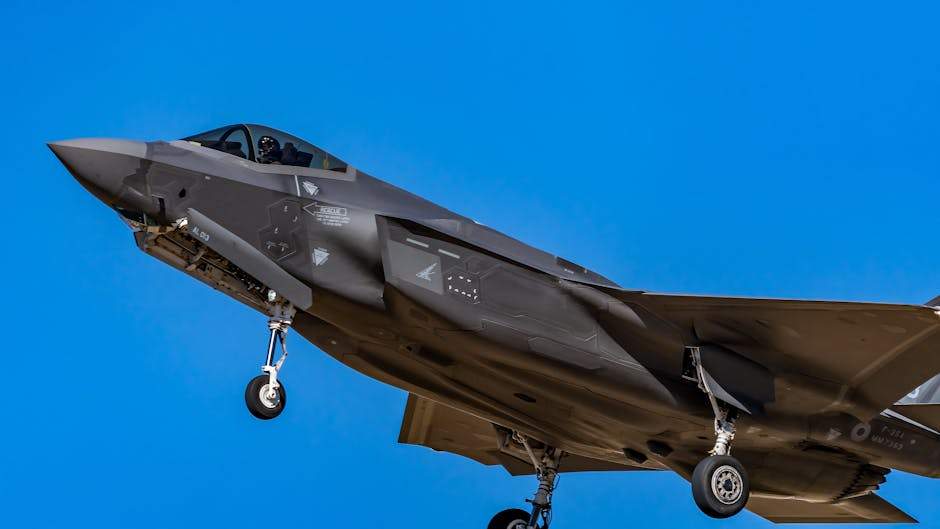
At the forefront of this quiet revolution is Hanwha Aerospace, a company with roots stretching back to 1977 as Samsung Precision. Known primarily as Korea’s sole gas turbine engine manufacturer, Hanwha Aerospace has quietly become a powerhouse in integrating AI agents where precision and reliability are paramount. Their decades of experience in complex mechanical and avionic systems naturally led to the early adoption of AI for predictive maintenance, operational analytics, and even semi-autonomous flight control.
This isn’t just about data crunching; it’s about AI agents that monitor engine performance in real-time, predict potential failures before they occur, and suggest optimal flight paths to pilots. These agents are embedded directly into aircraft and propulsion systems, continuously learning and adapting. With a current market capitalization of approximately $55513.2 billion, despite a -5.2% dip today to ₩1,079,000, the company’s long-term investment in this foundational AI work continues to pay dividends in system reliability and efficiency.

📊 KRX Stock Performance (Live)
₩1,079,000 -5.2%
₩729,000 -6.1%
Source: KRX · Yahoo Finance · data as of latest session
Featured Snippet: Hanwha Aerospace integrates AI agents into critical aerospace systems to enhance predictive maintenance and operational analytics. By embedding these agents directly into aircraft and gas turbine engines, the company ensures real-time performance monitoring and early fault detection, significantly improving reliability and efficiency in complex military platforms.
#2. LIG Nex1’s Advanced AI Agents in Guided Munitions and Autonomous Platforms
Complementing Hanwha’s aerospace focus, LIG Nex1 has been instrumental in deploying AI agents within guided munitions, radar systems, and autonomous ground vehicles. For a defense giant with a market cap of around $15925.2 billion, currently trading at ₩729,000 following a -6.1% daily decrease, their AI strategy centers on enhancing target acquisition, threat assessment, and swarm intelligence for unmanned systems. These aren’t abstract algorithms; they are systems that allow missiles to adapt trajectories mid-flight based on real-time data or enable autonomous ground robots to navigate complex terrains and identify targets with minimal human intervention.
LIG Nex1’s AI agents are designed to operate in highly dynamic and contested environments, emphasizing robust, secure, and resilient processing at the edge. Their work demonstrates how South Korea’s military AI agent capabilities extend beyond mere automation to truly intelligent, adaptive systems. For instance, in guided munition applications, AI agents analyze sensor data, calculate optimal impact points, and even differentiate between friend and foe with impressive speed and accuracy. Such applied AI is what gives the Korean defense sector AI integration and future outlook a tangible, rather than theoretical, edge.
Featured Snippet: LIG Nex1 utilizes AI agents to significantly improve guided munitions, radar systems, and autonomous ground vehicles. These agents enhance target acquisition, threat assessment, and enable swarm intelligence for unmanned platforms, allowing them to operate effectively in dynamic environments with adaptive, secure, and resilient processing at the edge.
#3. The “Practical First” Approach to AI Integration Sets Korea Apart
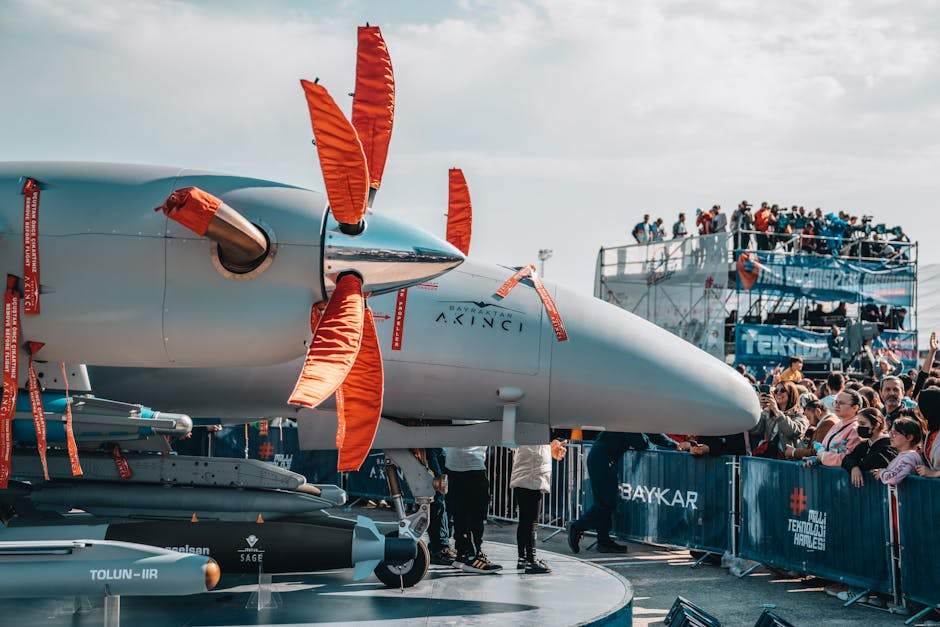
One of the most striking differences in South Korea’s approach to defense AI is its long-standing “practical first” mentality. Unlike some Western counterparts, where AI in defense often starts with ambitious, broad-scope projects that may struggle with real-world deployment, Korean companies have incrementally integrated AI agents into specific, well-defined military applications. This pragmatic strategy has allowed for robust testing, rapid iteration, and secure deployment, building trust in autonomous capabilities piece by piece.
This isn’t just limited to Hanwha and LIG Nex1; companies like Hyundai Rotem are integrating AI into ground robotics, enhancing situational awareness and autonomous navigation for their K-series tanks and wheeled armored vehicles. Similarly, Korea Aerospace Industries (KAI) is exploring AI agent applications for advanced pilot assistance and collaborative combat aircraft. The focus across the board is on secure, embedded AI that operates effectively even in environments with limited connectivity, a critical consideration for defense operations. This hands-on, iterative development cycle has quietly positioned Korea as a leader in applied defense AI, diverging from the more theoretical, data-center-centric AI development often seen elsewhere. It’s an approach that values deployment over demonstration, leading to systems that are already making a difference.
This deep integration isn’t just about hardware; it extends to the underlying AI infrastructure. Just as “The AI Infrastructure Behind Fast LLM Inference Nobody Talks About” reveals hidden strengths in other tech sectors, Korea’s defense AI benefits from a national ecosystem geared towards practical, performant, and resilient technology. Their solutions are often designed with security from the ground up, minimizing vulnerabilities that could be exploited by adversaries.
Featured Snippet: South Korea’s “practical first” approach to defense AI integration differentiates it by focusing on incremental, well-defined applications for military platforms. This strategy, seen in companies like Hyundai Rotem and Korea Aerospace Industries, prioritizes robust testing and secure deployment, ensuring AI agents are effective and reliable in real-world, contested environments.
#4. Addressing the Security and Ethical Challenges of Military AI Agents
While Korea’s defense AI integration is advanced, it’s not without its challenges, particularly concerning security and ethical considerations. The very power of AI agents—their autonomy and learning capabilities—introduces complex questions about control, accountability, and vulnerability to cyberattacks. A critical weakness arises from the potential for sophisticated cyber threats to compromise or manipulate these systems, a concern amplified by recent reports, such as the ‘Infostealer dropped via FortiClient EMS flaw,’ as detailed by Help Net Security. Such exploits highlight that even robust, secure systems can face threats from evolving attack vectors.
Developing AI agents for defense requires rigorous cybersecurity protocols embedded from conception, not as an afterthought. This includes secure data handling, encrypted communication channels for agent-to-agent interaction, and resilient architectures designed to withstand adversarial machine learning attacks. Furthermore, the ethical implications of autonomous decision-making in combat scenarios remain a significant area of discussion and development. Ensuring human oversight, establishing clear rules of engagement, and designing explainable AI models are ongoing efforts to build trust and ensure responsible deployment. This constant need for vigilance and adaptation means that while South Korea’s military AI agent capabilities are impressive, the industry must continuously evolve its defenses against sophisticated cyber threats and address the complex ethical landscape.
Featured Snippet: Addressing the security and ethical challenges of military AI agents involves rigorous cybersecurity protocols, including secure data handling and resilient architectures against cyberattacks, and careful ethical considerations such as human oversight and explainable AI models. This ensures responsible deployment and mitigates risks like those from infostealers, as highlighted by recent security reports.
#5. Export Potential and the Future of Korean Defense AI on the Global Stage
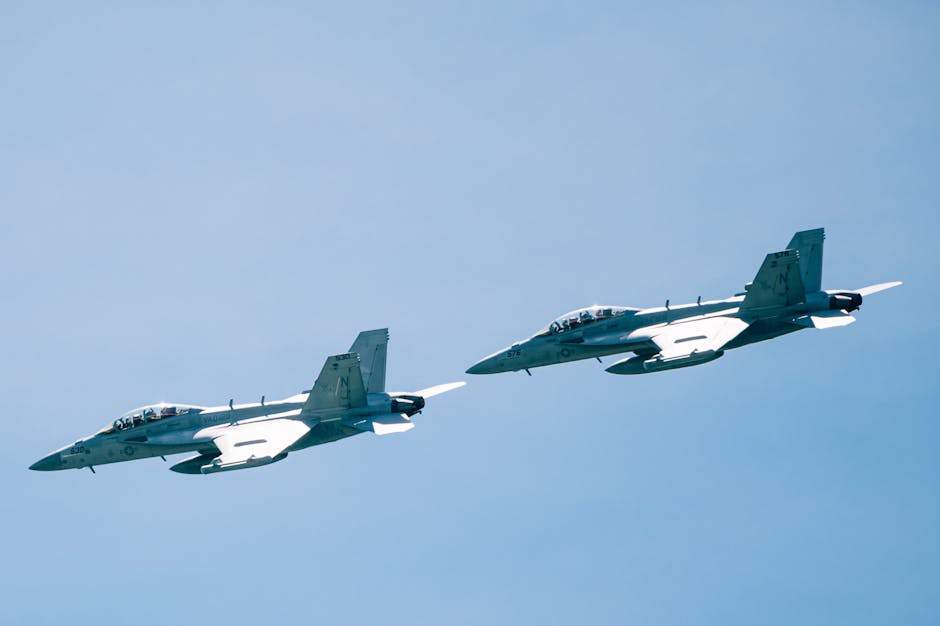
The quiet success of Korean defense AI integration positions the sector for significant export potential. As global defense spending rises and nations seek proven, secure AI solutions rather than experimental prototypes, South Korean companies are uniquely poised to capitalize. Their track record of practical deployment and emphasis on cyber-resilience makes their offerings highly attractive to allies looking to modernize their forces without inheriting the cybersecurity headaches associated with less mature AI systems. The question of how does Korean defense AI compare to US military AI is increasingly relevant here, as deployed practicality often outweighs theoretical peak performance in real-world scenarios.
Expect to see a push for increased international partnerships and technology transfers in the next 18 months. Nations are wary of proprietary, black-box AI systems from a single source, and Korea’s collaborative approach to defense manufacturing, combined with its robust AI framework, offers a compelling alternative. This isn’t just about selling hardware; it’s about exporting a mature, integrated defense ecosystem that includes sophisticated AI agents for everything from command and control to battlefield logistics. The Korean defense sector AI integration and future outlook points to a growing influence, shifting the global perception of where true innovation in military AI is happening. This global demand for reliable and secure AI solutions is also driving innovation in other critical areas, for instance, in creating efficient and sustainable AI data centers that can support these advanced military applications.
Featured Snippet: Korea’s defense AI integration holds significant export potential due to its track record of practical deployment and emphasis on cyber-resilience, making its mature, integrated defense ecosystem highly attractive to allies. This positions Korean companies to lead in providing secure AI solutions, shifting the global perception of military AI innovation.
Quick Q&A
A4. South Korean military technology utilizes AI extensively for enhancing decision-making, improving operational efficiency, and enabling autonomous capabilities. This includes AI agents for predictive maintenance in aircraft engines by Hanwha Aerospace, advanced target acquisition in guided munitions by LIG Nex1, and autonomous navigation for ground vehicles from companies like Hyundai Rotem. The focus is on practical, secure, and integrated solutions across air, land, and sea platforms, often drawing on a broader k-defense innovation ecosystem.
A5. AI agents in modern defense systems act as intelligent assistants, performing tasks from real-time data analysis to making semi-autonomous operational decisions. They monitor complex systems for anomalies, optimize resource allocation, enhance situational awareness for human operators, and enable advanced functionalities in unmanned platforms. Their role is to process vast amounts of data quickly, identify patterns, and offer or execute precise actions, thereby reducing human cognitive load and speeding up response times in critical scenarios.

Hi, I’m Dokyung, a Seoul-based tech and economy enthusiast. South Korea is at the forefront of global innovation—from cutting-edge semiconductors to next-gen defense technology. My mission is to translate these complex industry shifts into clear, actionable insights and everyday magic for global readers and investors.