
🎯 Key Takeaways
- South Korea isn’t just a component supplier; it’s building comprehensive, end-to-end space launch and satellite systems.
- Hanwha Aerospace’s integrated strategy ensures national space independence, a stark contrast to reliance on international partners.
- Upcoming commercial launches and satellite deployments by Hanwha Aerospace will confirm Korea’s emergence as a full-fledged space power.
📋 Table of Contents
- ▸ 1. The Global Space Race: Niche Solutions vs. Full-Stack Ambition
- └ Global Market Size & Growth Drivers
- └ Korea’s Strategic Position
- ▸ 2. Company Deep-Dive: Hanwha Aerospace’s Integrated Space Powerhouse
- └ Business Model & Revenue Drivers
- └ Recent Strategic Moves
- └ Competitive Positioning
- ▸ 3. Overcoming Hurdles in Korea’s Space Ambition
- └ Near-Term Pressure Points
- └ Structural Challenges to Watch
- ▸ 4. The Road Ahead for Korean Space Capabilities
- └ Frequently Asked Questions
1. The Global Space Race: Niche Solutions vs. Full-Stack Ambition
Global Market Size & Growth Drivers
Small numbers in quarterly filings sometimes signal the biggest shifts, and the rapidly expanding global commercial space industry is a prime example. Valued in the hundreds of billions, the sector is currently experiencing a boom, driven by a surge of startups focusing on hyper-specialized solutions, from advanced satellite thrusters to niche data analytics platforms. This fragmented approach, often backed by venture capital, fuels innovation across the supply chain.
The macro shift toward ubiquitous satellite internet, Earth observation, and in-orbit services is accelerating this sector. Regulatory frameworks are also evolving to support commercial activities, making space more accessible and economically viable for a broader range of players. It’s an exciting time.
Korea’s Strategic Position
While much of the global media attention focuses on these agile, niche-focused space ventures popping up in Silicon Valley or Europe, South Korea has been charting a distinct, far more comprehensive course. Rather than specializing in just one piece of the puzzle, the nation is building out full, end-to-end capabilities, ensuring self-reliance in space. This strategy is centered around one key player: Hanwha Aerospace.
This integrated approach represents a strategic pivot for a nation that once relied heavily on international collaboration for its space ambitions. The goal isn’t just to participate but to operate independently, from engine manufacturing in Changwon to rocket assembly in Daejeon, and eventually, launch from the Naro Space Center in Goheung. This shift ensures Korea won’t be held hostage by geopolitical shifts or technology transfer restrictions when it comes to accessing orbit.
📊 KRX Stock Performance (Live)
₩1,085,000 -7.0%
Source: KRX · Yahoo Finance · data as of latest session
2. Company Deep-Dive: Hanwha Aerospace’s Integrated Space Powerhouse
Business Model & Revenue Drivers
Hanwha Aerospace Co., Ltd., a subsidiary of the larger Hanwha Group, has quietly evolved into South Korea’s cornerstone for independent space access. Established in 1977 as Samsung Precision, the company built its foundational expertise as Korea’s sole gas turbine engine manufacturer, specializing in the development, production, and maintenance of aircraft engines. This deep industrial heritage in propulsion systems is now being applied directly to rocket engines, forming the backbone of Korea’s space launch vehicle development.
Today, Hanwha Aerospace’s revenue stems from a diversified portfolio that includes defense systems, aircraft engines, and an increasingly significant space division. Its market capitalization stands at an impressive $55821.9 billion, despite its stock trading at ₩1,085,000 as of August 22, 2026, marking a -7.0% dip today, reflecting broader market movements. The company’s long history and robust industrial base provide a unique advantage in a field often dominated by newer, less integrated players. The synergy with other Korean defense and aerospace firms, such as Korea Aerospace Industries (KAI) for aircraft structures and LIG Nex1 for precision guidance systems, further strengthens the national ecosystem, as explored in our full coverage of this sector.
Recent Strategic Moves
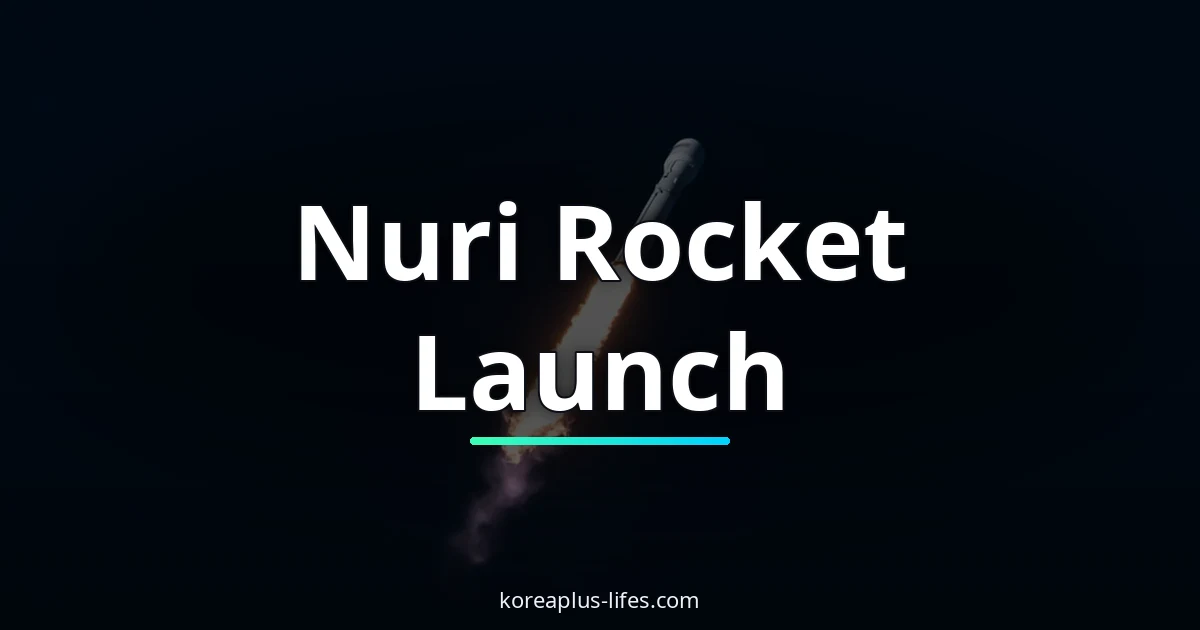
In a decisive push towards full space autonomy, Hanwha Aerospace took over the lead development of the Nuri (KSLV-II) launch vehicle from the Korea Aerospace Research Institute (KARI) in 2023, following Nuri’s successful orbital insertion test flight. This transition marked a crucial shift from government-led R&D to commercial-industrial production and operation. The company is now not only responsible for future Nuri launches but also for its upgrades and commercialization, aiming to offer competitive launch services.
Furthermore, Hanwha Aerospace has strategically consolidated its satellite capabilities, integrating Hanwha Systems’ satellite business and expanding its focus beyond propulsion to include satellite manufacturing and operation. This integration allows for a unified approach to space missions, from designing the payload to launching it into orbit and managing its operations. It’s a bold bet on vertical integration.
Competitive Positioning
Hanwha Aerospace’s approach to space launch vehicle development and satellite systems stands in contrast to the more common specialized models seen globally. While many new space startups focus intensely on a single component, like a novel thruster or a specific type of small satellite, Hanwha is building the entire stack. This positions them less as a niche provider and more as a national champion mirroring established players like SpaceX or ULA, albeit on a different scale and with a distinct strategic focus on national self-reliance. Its integrated capabilities give it a significant edge in comprehensive, reliable mission execution, especially for government and strategic payloads.
However, this integrated model also presents challenges. While providing autonomy, it can be slower and more capital-intensive than a purely specialized, venture-backed startup. The task is to compete effectively in a global market alongside well-funded private players and state-backed enterprises. Firms like Hyundai Rotem, though not directly in space launch, represent other facets of Korea’s advanced manufacturing base that could potentially feed into the future space supply chain.
| Company Focus | Hanwha Aerospace (Korea) | Typical Niche Space Startup | KoreaPlus Estimate (2030 Market Share) |
|---|---|---|---|
| Core Business | Full-stack launch vehicles, satellite manufacturing, propulsion systems (aircraft & rocket engines) | Specific component (e.g., small satellite thrusters), data analytics, micro-launchers | N/A (Full-stack national player) |
| Market Approach | Government contracts, commercial launch services (domestic & international), defense | Venture-backed, specialized commercial services, B2B component sales | N/A |
| Key Differentiator | Self-reliant, integrated national capability; mature industrial base | Agility, innovation in a specific domain, lower R&D overhead | N/A |
| KoreaPlus Estimate: Share of Global Commercial Launch Market (by value) | Est. 2-3% (by 2030) | Fragmented, individual company share typically <0.5% | Based on current Nuri success rate and planned commercialization of next-gen vehicles, assuming consistent government funding and competitive pricing. |
3. Overcoming Hurdles in Korea’s Space Ambition
Near-Term Pressure Points
The path to becoming a fully independent space power is not without its challenges. One significant near-term pressure point is the sheer cost of R&D and manufacturing for advanced launch vehicles. Maintaining competitive pricing against more established global providers, some of whom benefit from decades of government investment or dual-use technologies, requires continuous innovation and efficiency gains. The current global macro environment, with the US Fed Funds Rate at 3.63% and a USD/KRW exchange rate around 1414.29, also impacts financing costs and the competitiveness of exports.
Moreover, the global launch market is becoming increasingly crowded, with new entrants from both established spacefaring nations and emerging players. Hanwha Aerospace must not only prove its technical capabilities but also build a compelling commercial offering to attract international customers amidst this fierce competition. This isn’t just about building rockets; it’s about building a sustainable business model in a high-stakes environment.
Structural Challenges to Watch
Longer-term, structural challenges include the inherent complexity and extended development cycles of space technology. It takes years, often decades, to mature a launch vehicle or satellite system, demanding patient capital and sustained political will. Technology disruption, particularly in propulsion or reusability, could also shift the competitive landscape rapidly, requiring Hanwha Aerospace to remain agile in its innovation strategy.
Another critical factor is talent. Attracting and retaining top-tier aerospace engineers and scientists in a globally competitive market is paramount. As Korea further expands its space ambitions, securing a steady pipeline of skilled personnel will be vital to sustaining its growth and maintaining its technological edge. The nation’s ability to navigate these complex variables will define its trajectory in the global space arena.
4. The Road Ahead for Korean Space Capabilities
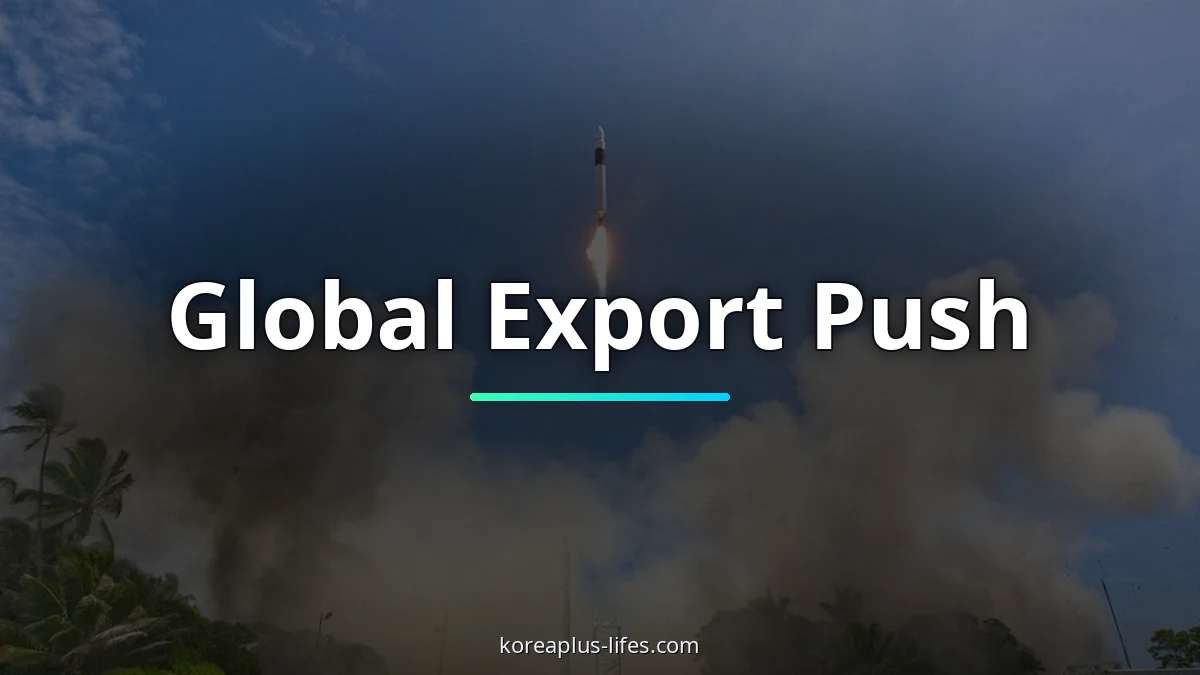
South Korea’s commitment to space independence, spearheaded by Hanwha Aerospace, is set to accelerate significantly over the next few years. We should expect several key catalysts. The next planned Nuri launch, potentially in late 2026 or early 2027, will be crucial for demonstrating continued reliability and paving the way for commercial services. This mission will likely carry a mix of government and potentially early commercial payloads, marking a tangible step toward revenue generation.
Beyond Nuri, the development of a next-generation launch vehicle capable of heavier payloads and potentially reusability is already underway. This will be critical for deploying larger satellite constellations and participating in more ambitious deep-space missions. Should Hanwha Aerospace successfully secure international commercial launch contracts in the coming 18-24 months, it would signal a major breakthrough for their global competitiveness and solidify Korea’s position as a reliable space power. Keep an eye on the company’s investor calls for any hints of global outreach.
Frequently Asked Questions
A1. South Korea is rapidly transitioning from a collaborative partner to an independent, full-stack space power. Through Hanwha Aerospace, it’s developing and manufacturing its own launch vehicles like Nuri and integrated satellite systems, aiming for complete self-reliance in accessing space. This strategy differentiates it from nations focusing solely on specialized components or services.
A2. Hanwha Aerospace is the primary industrial contractor for South Korea’s indigenously developed Nuri (KSLV-II) launch vehicle, building its rocket engines and overseeing its production and future commercialization. The company also manufactures satellites and other aerospace components, effectively providing the full range of hardware necessary for independent space missions, as part of Korea’s broader defense and technology ambitions, detailed in our K-Defense category.
A3. South Korean space launch capabilities, primarily centered on Hanwha Aerospace’s Nuri rocket, are competitive for specific segments, particularly for domestic strategic payloads and emerging commercial small-to-medium satellite markets. While not yet rivaling the payload capacity or launch frequency of global giants, Korea’s focus on reliability, self-reliance, and planned upgrades positions it as a significant, independent player.
📚 Sources & Further Reading
🔗 Keep Reading
Written by Dokyung · KoreaPlus-Lifes
Dokyung is a Seoul-based industry watcher covering Korean semiconductors, batteries, AI infrastructure, and defense — and the companies behind them. Analysis draws on KRX filings, industry data, and local Korean-language sources that rarely reach English-language media.

Hi, I’m Dokyung, a Seoul-based tech and economy enthusiast. South Korea is at the forefront of global innovation—from cutting-edge semiconductors to next-gen defense technology. My mission is to translate these complex industry shifts into clear, actionable insights and everyday magic for global readers and investors.