발효 시간표
Korean fermentation timelines
How long kimchi, doenjang, ganjang, gochujang, makgeolli, and jeotgal actually take — days, months, and temperatures — with the stages you can taste.
Time is an ingredient with a schedule
Korean pantry flavor is mostly waiting at the right temperature. The table below is the realistic range for a home batch. Warm kitchens move everything left; a cold pantry moves it right. Salt slows all of it. If a recipe says “ferment until sour,” this is what that means.
Kimchi family
| Ferment | Salt stage | Room temp (20–22 °C) | Fridge (2–4 °C) | Taste stages |
|---|---|---|---|---|
| Baechu kimchi 배추김치 | 1–2 h in brine | 1–2 days (bubbles start) | 2–3 weeks to prime sour; 1–3 months for stew | Fresh 겉절이 → ripe 잘 익은 → sour 신김치 → jjigae |
| Kkakdugi 깍두기 | 30–60 min | 1–2 days | 1–2 weeks | Crunch fades after a month; use in soup |
| Dongchimi 동치미 | Whole radish salted 1 day | — | 2–4 weeks at 0–5 °C | Brine turns clear-sour; ready for naengmyeon |
| Baek-kimchi 백김치 | 1–2 h | 1 day | 1–2 weeks | Milder; spoils faster without chili |
Kimjang batches made in late November are timed so the jar hits prime sour in January and stew-sour by March. That is the whole point of the kimjang calendar.
Jang — the long clock
| Stage | When (traditional) | How long | What happens |
|---|---|---|---|
| Meju blocks 메주 | 11th–12th lunar month (Dec–Jan) | 1–2 months drying and molding | Boiled soybeans shaped, hung with rice straw; Aspergillus and Bacillus colonize |
| Brining 장 담그기 | 1st lunar month (Feb, “정월 장”) | 40–60 days in salt water | Blocks sit in 18–20 % brine with charcoal and dried chili in an onggi jar |
| Splitting 장 가르기 | Around April | 1 day | Liquid → boiled into 간장; solids mashed → 된장 |
| Doenjang aging | Sunny jar, lid off by day | 6 months usable; 1–3 years better | Darkens, salt softens, umami climbs |
| Ganjang aging | Separate jar | 1 year usable; 3–5 years “진장” | Thickens, sweetens; old soy is a gift |
| Gochujang 고추장 | 3rd lunar month (spring) | 3–6 months minimum | Meju powder + glutinous rice + malt + chili; sun-facing jar |
| Cheonggukjang 청국장 | Any time | 2–3 days at 40 °C | The fast one — pungent, sticky, no aging |
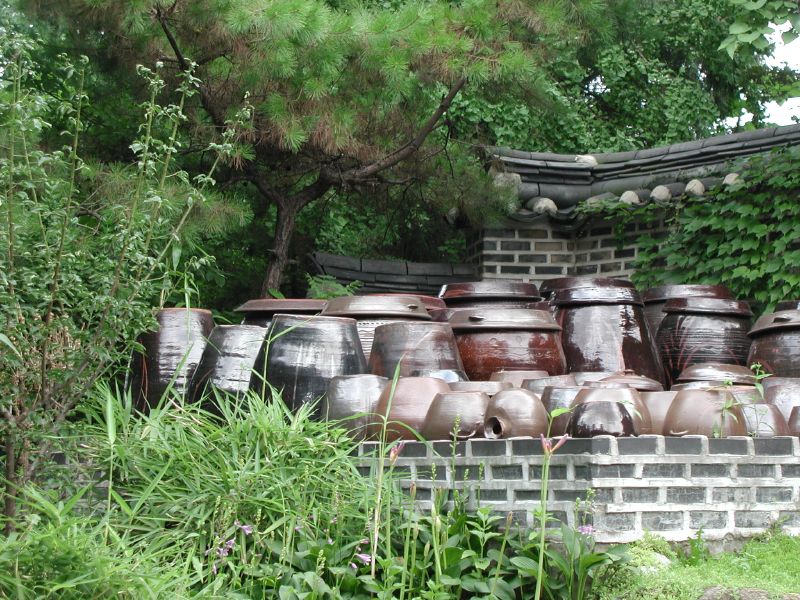
Why the calendar matters: brining in the cold first month keeps wild yeasts slow; splitting in spring catches the sun for aging. Details of the jar: aging jang and salt, jang — the paste trinity.
Drinks and seafood
| Ferment | Temperature | Time | Note |
|---|---|---|---|
| Makgeolli 막걸리 | 20–25 °C | 5–10 days | Nuruk + steamed rice + water; stir daily; strain when bubbling slows |
| Rice vinegar 쌀초 | 25–30 °C, open air | 1–3 months | Leftover makgeolli goes sour into vinegar |
| Sikhye 식혜 | 50–60 °C | 4–6 hours | Enzyme conversion, not microbial — hold warm, do not boil |
| Saeujeot 새우젓 | Cool, 10–15 °C | 2–3 months (6+ for “육젓”) | Shrimp at 20–30 % salt; June shrimp is the prized batch |
| Myeolchi-jeot 멸치젓 | Cool | 6–12 months | Anchovy dissolves into the fish sauce used in kimjang |
More: jeotgal, fermentation as backbone, salt and the peninsula.
Reading the signs
- Bubbles in kimchi brine after a day at room temperature — normal; move it to the fridge.
- White film on doenjang — usually harmless yeast; scrape and re-salt the surface.
- Rotten-sweet smell, pink or black fuzz — the batch is gone; fermentation has a line.
- Kimchi too sour too fast — your kitchen is warm or the salt was light; next batch, more salt and straight to the fridge after one day.
FAQ
How long does kimchi take to ferment?
One to two days at room temperature to start, then two to three weeks in the fridge for a balanced sour. After one to three months it is stew kimchi. It never “finishes” — it keeps souring slowly in the cold.
How long does doenjang take to make?
About a year end to end: one to two months for meju blocks in winter, 40–60 days in brine, then at least six months of aging after the soy sauce is drawn off. Good home doenjang is often two or three years old.
How long does makgeolli ferment?
Five to ten days at 20–25 °C. It is one of the fastest Korean ferments, which is why it was the farmers’ everyday drink.
Can kimchi ferment too long?
It can become very sour and soft, but that stage is prized for kimchi jjigae and kimchi fried rice. Discard only if it smells rotten rather than sour, or shows colored mold.
Cook it
Also cook
Updated 2026-09-04