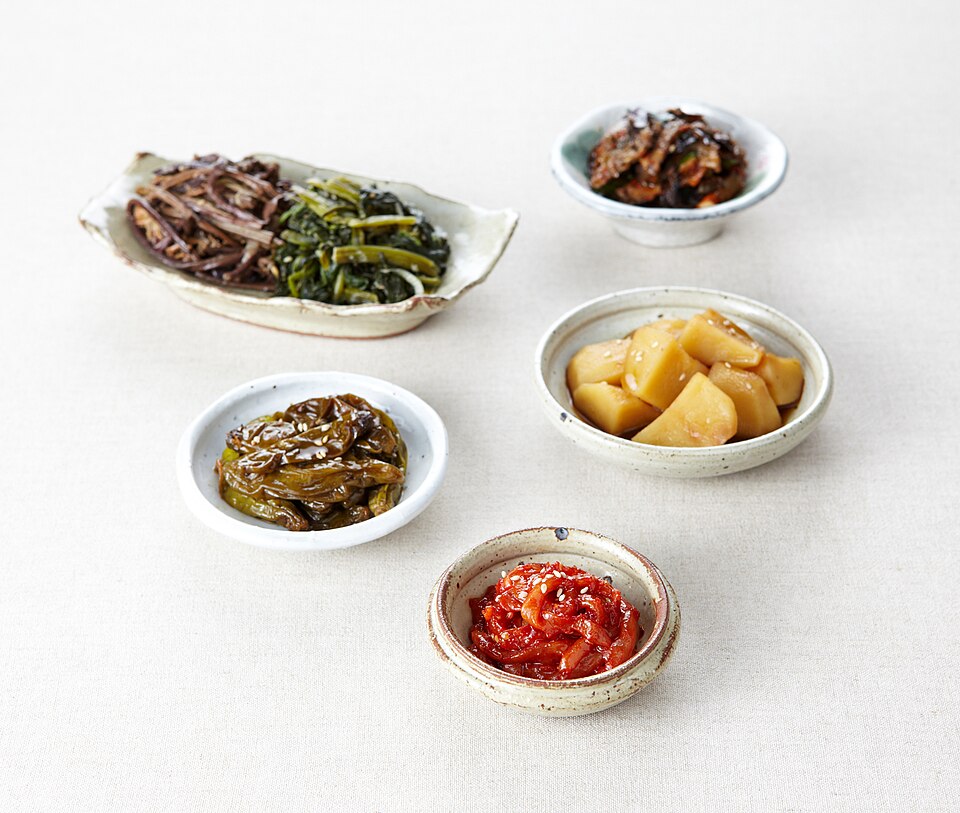
반찬 종류
Korean side dishes list — 30 banchan explained
The banchan you meet on a Korean table, by family: namul, muchim, kimchi, jorim, bokkeum, jeon, jjim, jangajji, jeotgal — with Hangul and links to recipes.
How to read a banchan table
반찬 are the shared small dishes around rice, soup, and a main. They are grouped by method, not by ingredient — the same spinach becomes namul (blanched, seasoned) or jeon (fried in batter). Restaurants rotate three to eight of them and refill for free; homes keep a few in the fridge all week. Learn the nine families below and every Korean table becomes readable.
1 · Namul 나물 — blanched and seasoned
- Sigeumchi-namul 시금치나물 — spinach, sesame oil, garlic
- Kongnamul-muchim 콩나물무침 — soybean sprouts
- Gosari-namul 고사리나물 — fernbrake, the brown one in bibimbap
- Mu-namul 무나물 — soft-stewed radish threads
- Hobak-namul 호박나물 — sautéed zucchini
2 · Muchim / saengchae 무침·생채 — raw and dressed
- Oi-muchim 오이무침 — smashed cucumber, gochugaru, vinegar
- Mu-saengchae 무생채 — shredded radish in red dressing
- Pa-muchim 파무침 — scallion threads for BBQ
- Miyeok-muchim 미역무침 — sea mustard with vinegar
3 · Kimchi 김치류
- Baechu-kimchi 배추김치 — napa, the default
- Kkakdugi 깍두기 — cubed radish; the partner of seolleongtang
- Oi-sobagi 오이소박이 — stuffed cucumber kimchi
- Dongchimi 동치미 — clear water kimchi
- Baek-kimchi 백김치 — white, no chili; see kimchi is a family
4 · Jorim 조림 — soy-braised
- Gamja-jorim 감자조림 — glossy soy potatoes
- Dubu-jorim 두부조림 — pan-fried tofu in soy-chili
- Jangjorim 장조림 — shredded beef in soy with quail eggs
- Yeongeun-jorim 연근조림 — lotus root
5 · Bokkeum 볶음 — stir-fried
- Myeolchi-bokkeum 멸치볶음 — sweet-salty tiny anchovies
- Eomuk-bokkeum 어묵볶음 — fish cake strips
- Jinmichae-bokkeum 진미채볶음 — shredded dried squid in gochujang
6 · Jeon 전 — pan-fried in batter
- Hobak-jeon 호박전 — zucchini coins
- Kimchi-jeon 김치전 — as a side, cut small
- Dubu-jeon 두부전 — tofu slabs; rules in jeon basics
7 · Jjim & egg 찜·계란
- Gyeran-jjim 계란찜 — steamed egg
- Gyeran-mari 계란말이 — rolled omelette
8 · Jangajji 장아찌 — pickled in soy or jang
- Maneul-jangajji 마늘장아찌 — whole garlic in soy-vinegar
- Kkaennip-jangajji 깻잎장아찌 — perilla leaves, stacked and marinated
- Yangpa-jangajji 양파장아찌 — onion; the BBQ pickle
9 · Jeotgal 젓갈 and gim 김
- Saeujeot 새우젓 — salted shrimp, for bossam; see jeotgal
- Myeongnan-jeot 명란젓 — salted cod roe
- Gim 김 — roasted seaweed sheets, always vegan
Build a table from this list
Weeknight: one namul + kimchi + one egg dish. Guests: add a jorim and a jeon. That is the whole trick — contrast, not count. Logic in banchan logic; manners in banchan etiquette.
FAQ
How many banchan are served at a Korean meal?
At home, two to four. In a restaurant, three to eight depending on the dish and region; Jeolla restaurants are famous for a dozen. The historical 3·5·7·9-cheop table settings counted banchan but excluded rice, soup, kimchi, and jang.
Are banchan free in Korean restaurants?
Yes — they come with the meal and refills are free in almost every Korean restaurant. Ask 반찬 더 주세요. Taking a plate home is not part of the custom.
Which banchan are vegetarian?
Most namul, muchim, jorim (potato, tofu, lotus root), jangajji, and gim are vegetarian by ingredient. Kimchi usually contains salted seafood; myeolchi-bokkeum and jeotgal are fish by definition.
What is the difference between namul and muchim?
Namul are blanched or cooked vegetables seasoned with sesame oil, garlic, and soy or salt. Muchim (or saengchae) are raw or lightly salted vegetables dressed with gochugaru and vinegar. Same idea, cooked versus raw.
Story behind it
Also read
Updated 2026-09-04