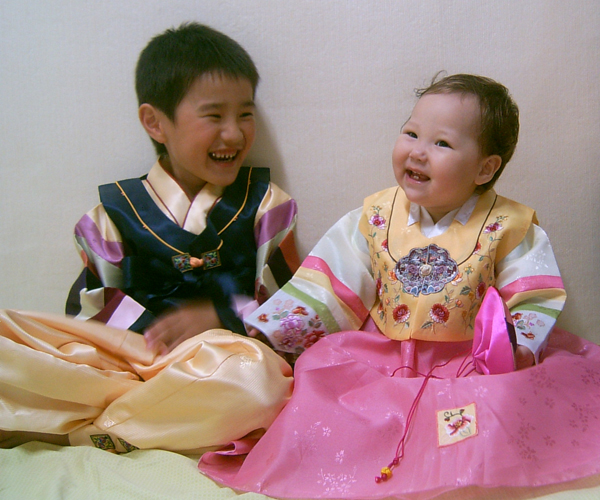
Photos from Wikimedia Commons. License and author under each image.
환영합니다
How to say welcome in Korean A1
환영합니다 vs 어서 오세요 vs 잘 왔어 — welcome at the door, on a sign, and to a friend.
Searched in your language? Open the match below.
Every form, from formal to casual
Shops say 어서 오세요 (“come right in”). Events and signs use 환영합니다. Friends use 잘 왔어.
| Korean | Romanization | Level | Use |
|---|---|---|---|
| 환영합니다 | hwanyeonghamnida | Formal | Signs, speeches, airports |
| 어서 오세요 | eoseo oseyo | Polite shop | Entering a store or restaurant |
| 잘 왔어 | jal wasseo | Casual | Friend arriving at your place |
| 환영해요 | hwanyeonghaeyo | Polite soft | Informal host |
Which one do I actually use?
Walk into a café: staff say 어서 오세요, not 환영합니다. A conference banner: 환영합니다. Your roommate arrives: 잘 왔어. Reply to 어서 오세요 with a nod or 안녕하세요.
Pronunciation notes
- 어서 오세요
Four beats: eo-seo o-se-yo. 오세요 is honorific “come.”
Vocabulary set
Cards are saved in this browser and scheduled with spaced repetition.
Quick drill
Common mistakes
- ✗ 환영합니다 to every customer✓ 어서 오세요환영합니다 is ceremonial; shops use 어서 오세요.
Example sentences
한국에 오신 것을 환영합니다.
hanguge osin geoseul hwanyeonghamnida.
Welcome to Korea.
어서 오세요! 몇 분이세요?
eoseo oseyo! myeot buniseyo?
Welcome! How many people?
FAQ
How do you say welcome in Korean in a shop?
어서 오세요 — “please come in.” 환영합니다 is for formal welcomes and signs.
What does 잘 왔어 mean?
Casual “glad you came / welcome” to someone arriving at your place.
Related