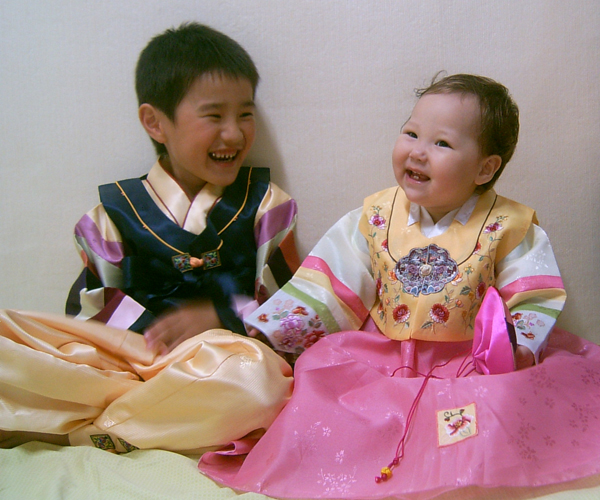
Photos from Wikimedia Commons. License and author under each image.
아니요, 괜찮아요
How to say no thank you in Korean A1
아니요, 괜찮아요 / 괜찮습니다 — decline soft-sell and free samples without sounding rude.
Searched in your language? Open the match below.
Every form, from formal to casual
Soft decline: 아니요, 괜찮아요. Firmer polite: 괜찮습니다.
| Korean | Romanization | Level | Use |
|---|---|---|---|
| 아니요, 괜찮아요 | aniyo, gwaenchanayo | Polite | No thank you / I’m fine |
| 괜찮습니다 | gwaenchansseumnida | Formal | I’m fine / no need |
| 됐어요 | dwaesseoyo | Polite soft | It’s okay / never mind |
| 다음에 살게요 | daeume salgeyo | Polite | I’ll buy next time |
Which one do I actually use?
Street free sample: 아니요, 괜찮아요. Soften with a smile + slight bow.
Pronunciation notes
- 괜찮아요
gwaen-cha-na-yo; 찮 is one syllable block.
Vocabulary set
Cards are saved in this browser and scheduled with spaced repetition.
Quick drill
Common mistakes
- ✗ 노 땡큐✓ 아니요, 괜찮아요Konglish lands rude; 괜찮아요 is the native soft no.
Example sentences
아니요, 괜찮아요. 감사합니다.
aniyo, gwaenchanayo. gamsahamnida.
No thank you — thanks.
됐어요.
dwaesseoyo.
It’s fine / never mind.
FAQ
How do you say no thank you in Korean?
아니요, 괜찮아요.
Is 됐어요 rude?
Tone matters; soft 됐어요 is fine among peers — add 아니요 for clear decline.
Related