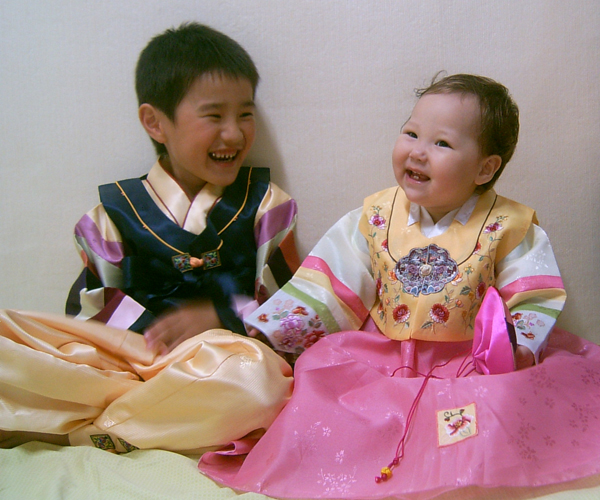
Photos from Wikimedia Commons. License and author under each image.
만나서 반가워요
How to say nice to meet you in Korean A1
만나서 반가워요 vs 처음 뵙겠습니다 — first meetings at work, class, and parties.
Searched in your language? Open the match below.
Every form, from formal to casual
만나서 반가워요 is the warm polite default. 처음 뵙겠습니다 is more formal — interviews, elders, first client meetings.
| Korean | Romanization | Level | Use |
|---|---|---|---|
| 만나서 반가워요 | mannaseo bangawoyo | Polite | Classmates, coworkers, parties |
| 만나서 반갑습니다 | mannaseo bangapseumnida | Formal | Speeches, first formal hello |
| 처음 뵙겠습니다 | cheoeum boepgetseumnida | Humble formal | Interviews, elders |
| 반가워 | bangawo | Casual | Same-age friends |
Which one do I actually use?
Handshake after an intro: 만나서 반가워요. Job interview: bow + 처음 뵙겠습니다. Friend’s friend: 반가워.
Pronunciation notes
- 처음 뵙겠습니다
뵙 is honorific “see”; 겠습니다 softens the future — “I will (humbly) see you for the first time.”
Vocabulary set
Cards are saved in this browser and scheduled with spaced repetition.
Quick drill
Common mistakes
- ✗ 반가워 to your boss✓ 만나서 반갑습니다 / 처음 뵙겠습니다Casual 반가워 is for peers only.
Example sentences
안녕하세요, 만나서 반가워요.
annyeonghaseyo, mannaseo bangawoyo.
Hello — nice to meet you.
처음 뵙겠습니다. 김민수입니다.
cheoeum boepgetseumnida. gim minsuimnida.
Pleased to meet you. I’m Minsu Kim.
FAQ
How do you say nice to meet you in Korean?
만나서 반가워요 (polite) or 처음 뵙겠습니다 (formal first meeting).
Is 처음 뵙겠습니다 only once?
Yes — it literally means “I meet you for the first time.” Later use 다시 만나서 반가워요.
Related