Busan shopping runs two extremes: the world's largest department store in Centum City, and market alleys where the price is whatever you agree on. Both are worth a morning. Here's how a local splits the day, what's genuinely worth buying, and how to get the tax back.

Centum City: skip the gawking, do these three things
Shinsegae Centum City (신세계 센텀시티) really is the world's largest department store — Guinness-certified at roughly 293,905 m², around 700 brands over sixteen floors. Locals do not walk all of it. They come for three things: Spa Land, the free rooftop park, and the basement food floor. Line 2's Centum City Station opens straight into the building, so you never cross a road.
Spa Land is the half-day option — dozens of baths and themed saunas on natural hot-spring water, adult entry typically around ₩25,000, with a time limit on the basic ticket and hourly charges beyond it. Zooraji, the ninth-floor rooftop park with the giant dinosaur sculptures, is free. Confirm current hours and prices on the official page before you commit.
- Line 2, Centum City Station — direct indoor connection to the store
- Spa Land: weekday mornings have the shortest queue and the calmest bathing halls
- Zooraji rooftop park, 9F — free, and the best photograph in the building
- Basement food floor for banchan, pastry counters and ready-boxed snack gifts
- The old duty-free floor is gone since 2025 — don't build a plan around it
Nampo: department-store theatre, then street-level bargains
Lotte Department Store Gwangbok (롯데백화점 광복점) sits on the water at Nampo-dong (남포동), connected straight to the subway. Its Aquamall atrium runs a record-setting indoor musical fountain — on the hour, about ten minutes, free. Then ride to floors 11 to 13 for a public rooftop garden and observation deck with North Port, Yeongdo and the old downtown spread out below.
After that, shop properly. Gwangbok-ro (광복로) is the pedestrian spine: cosmetics chains still handing out sample bundles, shoe shops, streetwear, bakeries. Beneath it, the Nampo and Gwangbok underground arcades run for hundreds of metres between Jagalchi and Nampo stations — cheap clothing, bags, accessories, and shelter when July rain comes in sideways.
- Fountain shows start late morning; check the store's site for the day's exact times
- 11F has a postbox with free postcards; the 13F deck is the quieter viewpoint
- Arcade shops typically run 10:00–22:00 with one closing day a month
- Small underground units prefer cash; larger ones take foreign cards
Seomyeon: where Busan actually shops
Seomyeon (서면) is the city's real commercial centre, and its underground shopping centre is a low-ceilinged maze of clothing, shoes, accessories and cosmetics running under the main road, linking Line 1 and Line 2. Prices sit well below the department stores. Above ground, the fashion blocks behind the main crossing are where Busan students dress themselves.
Most units open around 10:00 and shut near 22:00, with one closing day a month. Come on a weekday afternoon — weekend evenings turn the tunnels into a slow river of people. Sizing runs small by Western standards and some tiny shops don't allow try-ons on knitwear, so ask first: ibeobwado dwaeyo? (입어봐도 돼요?).
The markets: Gukje for everything, Bupyeong for edible gifts
Gukje Market (국제시장) is the postwar everything-market — fabric, tools, camping gear, vintage, hardware, socks by the bundle — with the Arirang food alley cutting through it. Most stalls run roughly 09:00 to 20:00, and much of the market closes on the first and third Sundays of the month. Bupyeong Kkangtong Market (부평깡통시장) is two minutes' walk on.
Bupyeong is the food-souvenir market and Korea's first permanent night market, with night stalls from about 19:30 to midnight. Jagalchi Market (자갈치시장) is where you buy dried rather than live: anchovies, squid, kelp, gim, sold by weight and vacuum-sealed on the spot. Haggle politely in all three, buy more than one item, and accept the first counter-offer.
What's actually worth bringing home
Skip the fridge magnets — Busan's good gifts are edible. Gim (김, seasoned laver) in gift boxes, dried anchovies and kelp from Gijang waters, vacuum-packed Busan eomuk (부산 어묵), hangwa and yakgwa sweets, and K-beauty at Nampo prices. For a bottle, Geumjeongsanseong makgeolli (금정산성막걸리) is Korea's only officially designated traditional folk liquor, brewed on Busan's own mountain.
Two practical warnings. Anything over 100 ml — makgeolli, sauces, tubs of gochujang — goes in checked baggage, never your carry-on. And many countries restrict meat, dairy and fresh produce at the border; commercially packaged dried seafood and gim are usually fine but must still be declared. Check your own border agency's rules before buying a large gift box.
- Gim gift boxes — light, flat, and the most reliably appreciated souvenir
- Vacuum-packed eomuk — buy on your departure day and keep it cool
- Dried anchovies, kelp and squid from Jagalchi's dried-goods aisles
- Hangwa, yakgwa and gangjeong from department-store food halls, already gift-wrapped
- Geumjeongsanseong makgeolli — checked bag only; it's a live ferment, so drink it soon
- K-beauty from Nampo's chain shops, where samples are still handed out generously
Tax refunds and payment, without the airport panic
If you're a foreign visitor staying under six months, most tax-free shops can refund the VAT instantly at the register on qualifying purchases — passport out, refund taken off the price. There are minimum spends, per-receipt caps and a total-stay ceiling. Those figures change, so confirm current thresholds on the official Korean tax-free or Visit Korea pages rather than trusting a number in a blog.
Above the instant-refund limits you keep the receipts and claim at Gimhae International Airport: customs declaration first if asked, then the self-service refund kiosks in the departure area. Go early — staffed desks keep shorter hours than the kiosks, and international check-in queues at Gimhae are genuinely long at peak. Keep the goods accessible in case customs asks to see them.
📍 The exact spots
Shinsegae Centum City
The Guinness-certified world's largest department store: sixteen floors, around 700 brands, a spa, an ice rink, a cinema and a free dinosaur-themed rooftop park. An hour of gawking, half a day of actual use.
💡 Spa Land on a weekday morning, then the 9F Zooraji rooftop, then the basement food floor. The middle retail floors can be ignored.
Lotte Department Store Gwangbok

Busan's seaside department store, connected directly to Nampo Station. The Aquamall atrium runs a record-holding indoor musical fountain, and floors 11 to 13 are a free public rooftop garden and observation deck.
💡 Arrive just before the hour for the fountain, then head straight up to the roof while everyone else queues for coffee.
Gwangbok-ro and the Nampo Underground Arcade

The pedestrianised shopping spine below Yongdusan Park, plus the long underground arcade linking Nampo and Jagalchi stations: cosmetics, shoes, bags and cheap clothing at street prices, indoors.
💡 Cosmetics chains here still give real sample bundles. Buy at the last shop you visit and ask politely rather than at the first.
Gukje Market
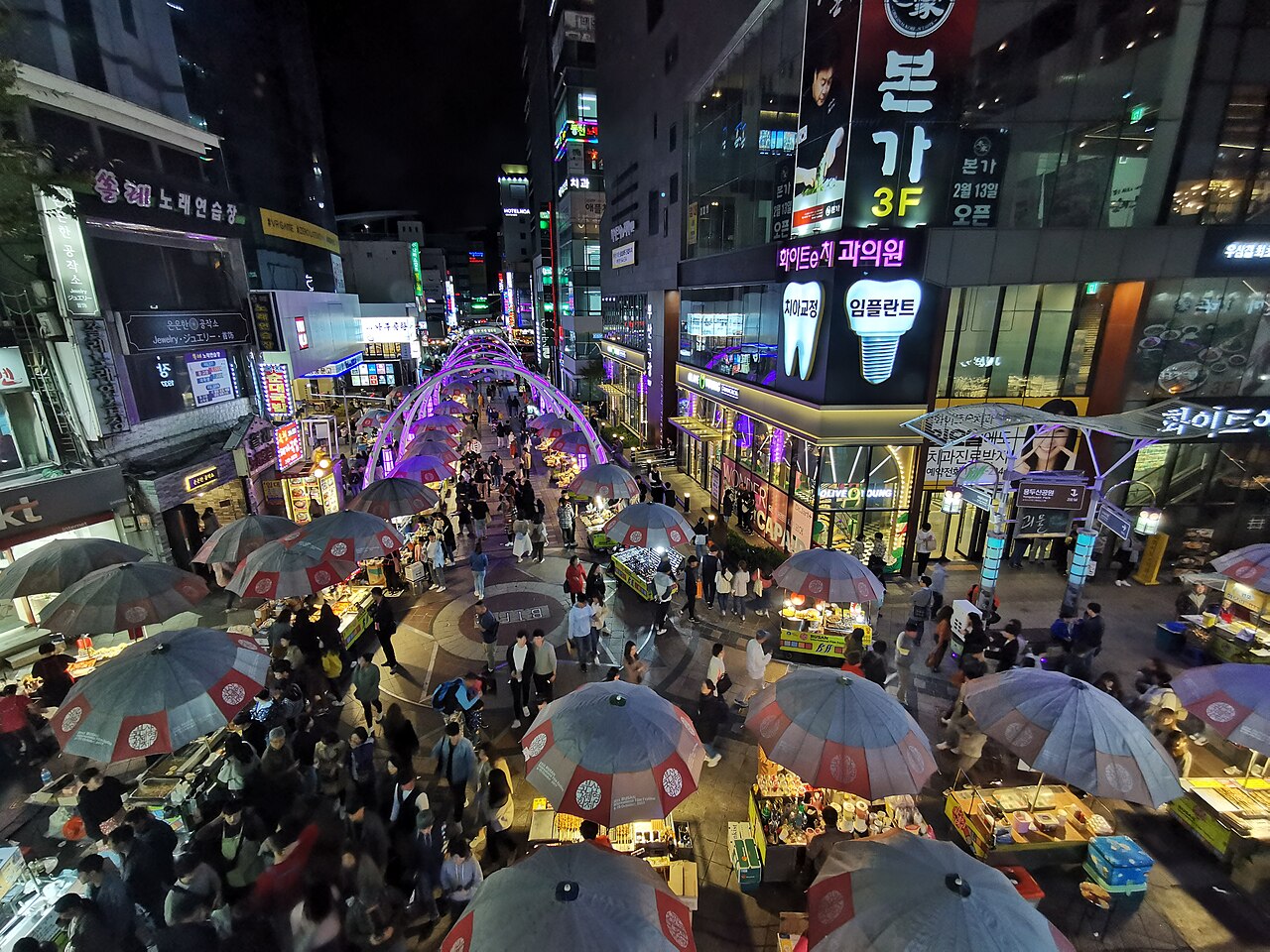
The postwar everything-market — fabric, tools, camping gear, vintage clothing, hardware, socks by the bundle — with the Arirang food alley running through the middle. Most stalls open roughly 09:00 to 20:00.
💡 Much of it closes on the first and third Sundays each month. Bring small notes; bargaining goes far better with cash.
Bupyeong Kkangtong Market

Korea's first permanent night market and the best place for edible souvenirs: packaged gim, dried goods, imported snacks, ssiat hotteok, and a night-stall run starting around 19:30.
💡 Shop the daytime aisles for gift boxes, then return after 20:00 to eat. Many night stalls pack up before midnight on weekdays.
Jagalchi Market dried-goods section

Skip the live tanks and head for the dried aisles: anchovies, squid, kelp, shrimp and gim sold by weight, with vendors happy to vacuum-seal everything for the flight home.
💡 Say jingong pojang haejuseyo (진공포장 해주세요) for vacuum packing. Buy the small anchovies for snacking; the big ones are broth stock.
Seomyeon Underground Shopping Center
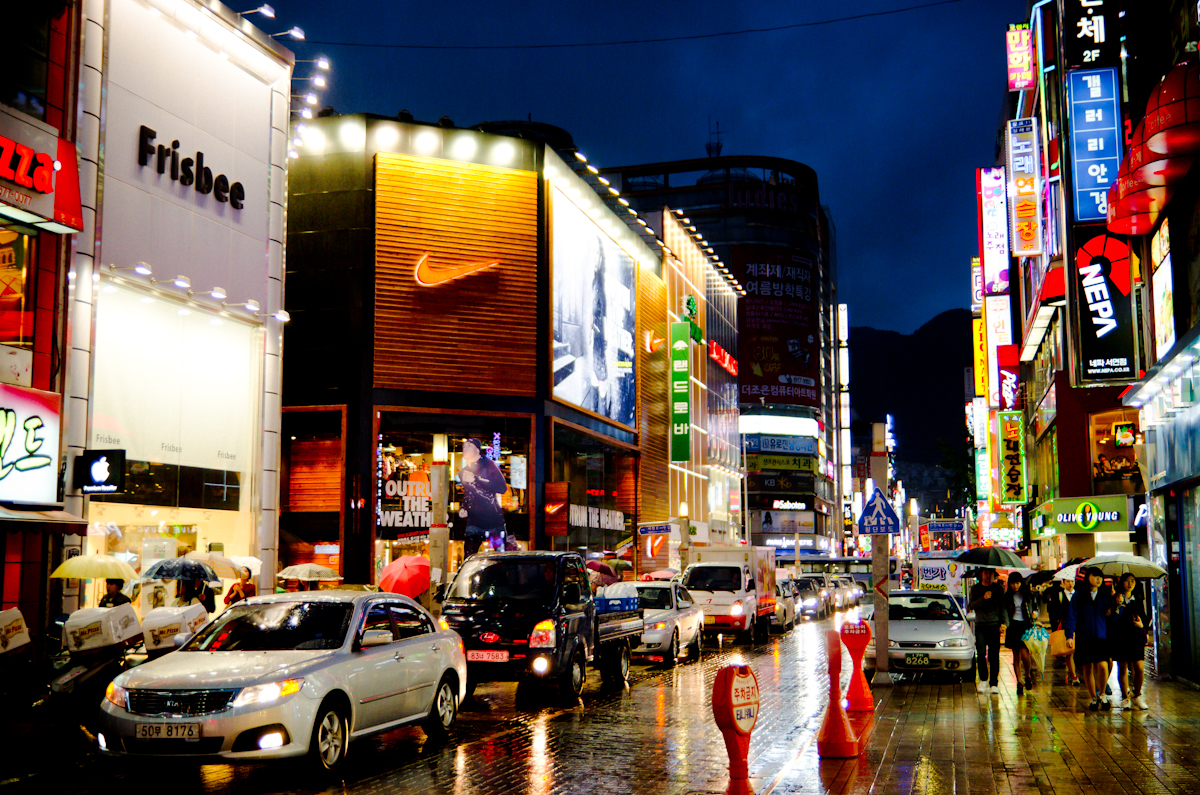
Over a kilometre of budget fashion, shoes, accessories and cosmetics under Seomyeon's main crossing, linking Line 1 and Line 2. This is where Busan students actually buy their clothes.
💡 Typically 10:00–22:00 with one monthly closing day. Go on a weekday; weekend evenings bring the tunnels to a standstill.
Samjin Eomuk flagship, Yeongdo
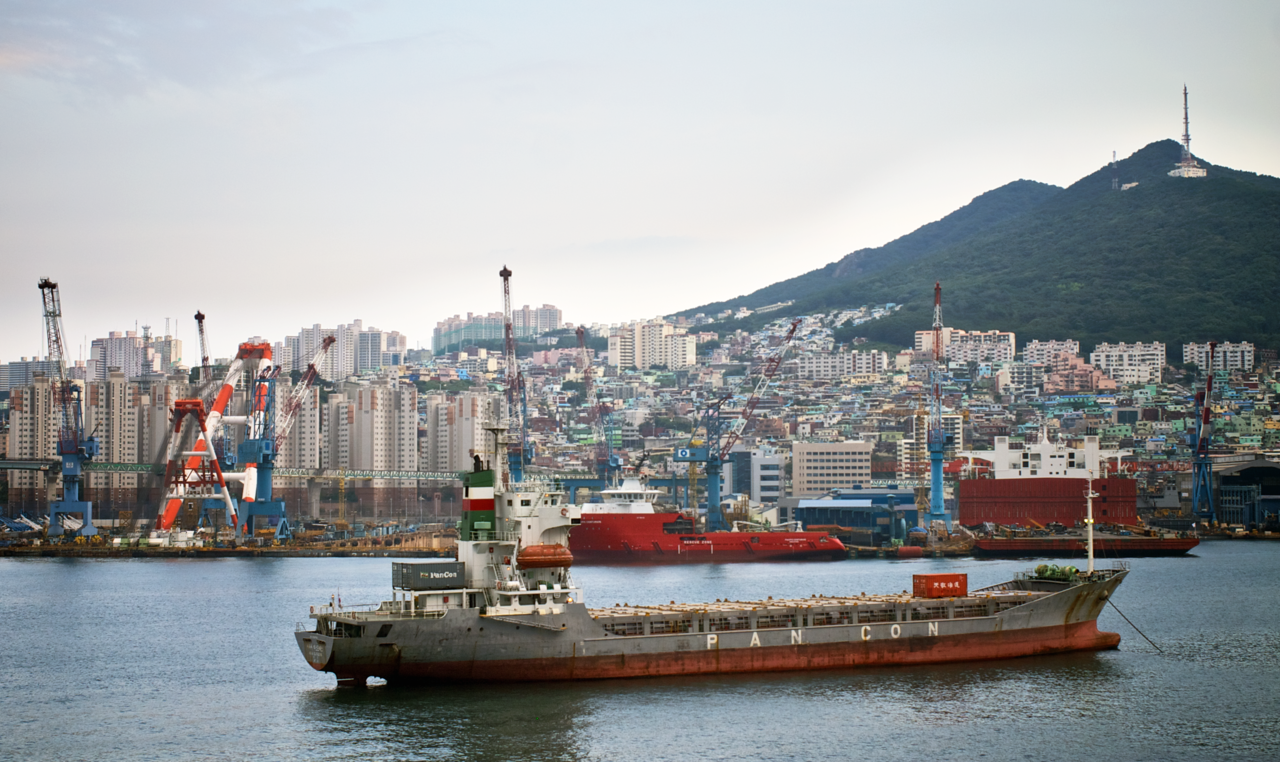
Busan's oldest fish-cake maker, founded 1953, with a bakery-style flagship and a small history museum in Yeongdo. Gift boxes and vacuum-packed sets are built for taking home.
💡 Buy on your departure day and keep it cool. Smaller branches at Busan Station and the airport cover you if you run out of time.
💡 Quick honey tips (꿀팁)
- Weekday mornings for Centum City and Seomyeon's tunnels; weekends are shoulder-to-shoulder with brutal fitting-room queues.
- Carry your passport when shopping — no passport, no instant tax refund at the till.
- Gukje winds down around 20:00, well before Bupyeong's night stalls hit their stride. Plan the order accordingly.
- Much of Gukje Market closes on the first and third Sundays. Confirm before building a day around it.
- Buy heavy or liquid souvenirs last, and keep anything over 100 ml out of your carry-on bag.
- The Nampo and Gwangbok arcades are the dry route between Jagalchi and Nampo stations in rainy season.
- Prices for identical market goods vary stall to stall — walk the whole aisle once before you buy.
- Leave luggage in a subway station locker rather than dragging it through the market alleys.
FAQ
Is Shinsegae Centum City really the world's largest department store?
Yes. Guinness World Records certified it in 2009 at about 293,905 square metres, and it still holds the title. Whether it's the best shopping is another matter — most locals come for Spa Land, the free ninth-floor rooftop park and the basement food hall rather than the retail floors.
Can I haggle in Busan?
In Gukje, Bupyeong and Jagalchi, yes — politely, in cash, and usually by buying more than one item from the same stall. In department stores, underground arcade chains and franchise cosmetics shops, no. Asking there is simply awkward for everyone involved.
How does the tax refund work for foreign visitors?
Visitors staying under six months can often get VAT refunded instantly at the register in tax-free shops, subject to a minimum spend and per-receipt and total-stay caps. Anything above that is claimed at Gimhae Airport's refund kiosks. Thresholds change, so confirm current figures on the official Korean tax-free pages.
Can I take makgeolli, gochujang or sauces home?
In checked baggage, yes. Anything over 100 ml can't pass security in your carry-on, so buy bottles and tubs before the airport and pack them in the hold, well wrapped. Makgeolli is a live ferment and can leak. Check your destination's alcohol allowance too.
Is dried seafood allowed through customs at home?
Usually, but rules differ by country and you must declare it. Commercially packaged dried seafood and gim are commonly accepted; meat, dairy and fresh produce often are not. Check your own border agency's rules before you buy a large gift set.
Nampo or Seomyeon — which is better for shopping?
Nampo for department-store spectacle, cosmetics and market crawling in one walkable loop. Seomyeon for clothing volume, lower prices and better late-night food. With only one afternoon, take Nampo: the markets are the part you can't get anywhere else.
Do market stalls take cards?
Many do now, but not all, and small stalls clearly prefer cash. Carry ₩50,000–100,000 in small notes on market days — it also makes bargaining easier. Department stores and underground arcade chains take foreign cards without trouble.