A Busan night has a structure. Locals move in rounds — grilled pork and soju, then beer, then a singing room — and the city rearranges itself accordingly. Here's how that works, which district suits which mood, and how to get home when the last train has already gone.
The rounds: 1차, 2차, 3차
Koreans count their nights. 1차 (il-cha) is the sit-down meal with alcohol — samgyeopsal over a grill, or hoe (회, raw fish) if you're near the water. 2차 moves to a hof or a pocha for beer and lighter anju. 3차 is usually noraebang. Nobody plans this in advance; someone just stands up and says '2차 가자'.
For a visitor that structure is a gift: it tells you where to walk next. Budget roughly two hours per round and expect each to move a few streets, not a taxi ride. It also means the good stuff isn't at 8pm. Busan's alleys peak between 10pm and 1am, especially Friday and Saturday.
Seomyeon: where Busan actually goes out
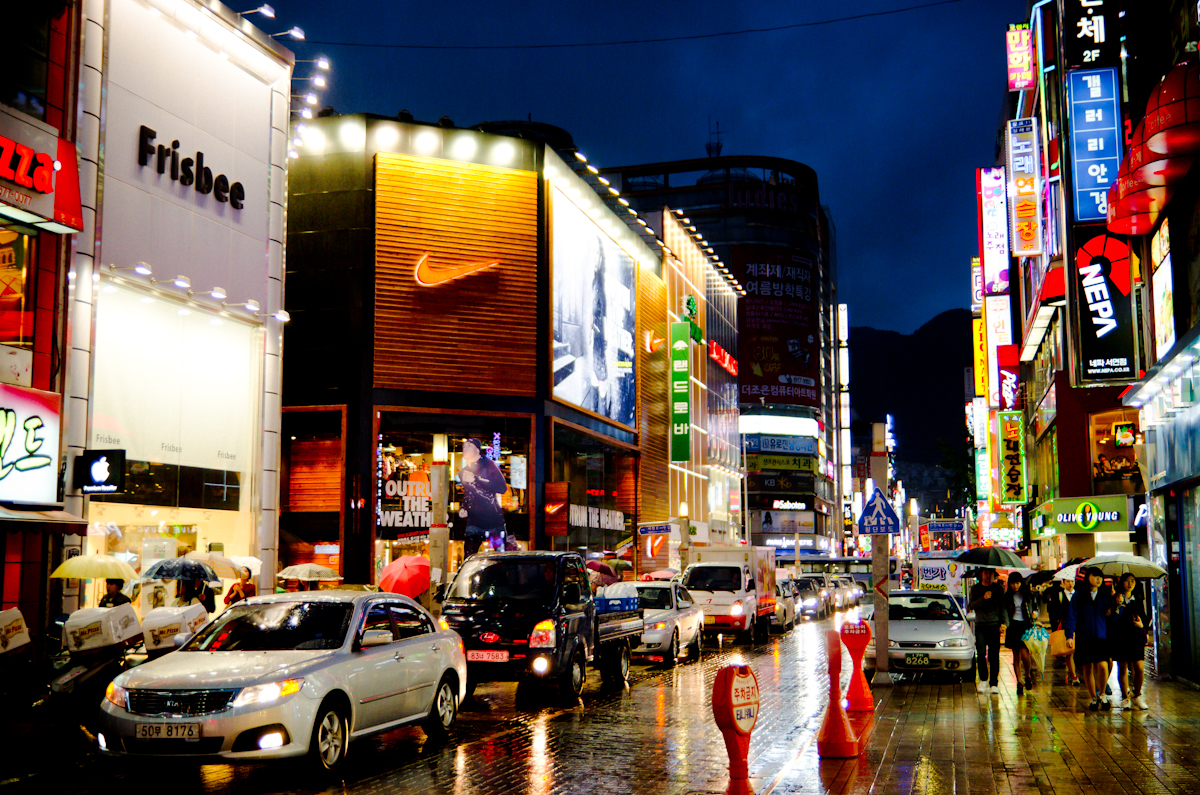
Seomyeon (서면) is the honest answer to 'where do locals drink?'. It sits on the Line 1 and Line 2 interchange, so half the city can reach it, and the crowd skews young — students, first-jobbers, soldiers on leave. Seomyeon 1-beonga (서면1번가) is the neon spine; the real value is in the meokja-golmok side alleys around it.
Expect grill houses with extractor hoods, hof bars advertising fried chicken, and pocha tents that appear after dark. Prices are the lowest of the districts on this page. One warning: most bars expect you to order anju (food) with drinks, and some run a per-person minimum, so don't sit down planning to nurse a single beer.
Gwangalli, Haeundae, Nampo-dong — pick your mood
Gwangalli (광안리) is the beach-facing option: craft-beer taprooms, cocktail bars and rooftops looking straight at the lit Gwangan Bridge. What you cannot do is buy convenience-store cans and drink them at Millak Waterside Park (민락수변공원) — it has been a designated no-drinking zone since 1 July 2023, with a ₩50,000 fine. Sit inside instead.
Haeundae (해운대) is the polished version — hotel lounges and upper-floor bars over Marine City, table service, cocktails well above Seomyeon prices, and a view. Nampo-dong (남포동) is the opposite: old Busan, a pojangmacha strip going back to the late 1970s, jokbal and odeng, an older crowd. Clubs in either district stay empty until well after midnight.
Noraebang, explained for a first-timer
A noraebang (노래방) is a private room you rent by the hour, not a bar with a stage. You pay for the room, not per person — typically ₩15,000–30,000 an hour depending on room size, night and neighbourhood, more at weekends. Tambourines are on the wall. English songs are on every machine; search by artist in Roman letters.
- Coin noraebang (코인노래방) charge per song, roughly ₩500–1,000 for one — ideal for two people and no commitment.
- Ordinary noraebang are dry or sell beer and snacks; venues signed 노래주점 or 가라오케 are a different, far pricier business.
- 'Service' (서비스) is free extra time staff add when it's quiet — you'll see the clock jump.
- Song numbers come from the thick book or a touch screen; type the number into the remote, not the singer's name.
- Rooms are priced by size, so six people squeezed into a two-person room is a bad deal, not a bargain.
Soju, beer, somaek — and the two-hand rule
Soju is around 16–17% and comes in green bottles. Busan drinks its own: Daesun (대선) and C1, from the city's oldest distillery, sit on most tables alongside the national brands. Somaek (소맥) is soju and beer mixed in a beer glass, roughly one part to four. It goes down easily, which is the whole problem.
The etiquette is simple and worth doing. Never pour your own glass — fill your neighbour's and someone will fill yours. Pour and receive with two hands, or one hand supporting the other forearm. If someone clearly older pours for you, turn your head away from them as you drink. Nobody will scold a visitor, but everyone notices the effort.
Getting home, and staying sensible
The metro is the trap. Busan has no all-night service and last trains leave far earlier than visitors assume — somewhere between about 23:00 and just past midnight depending on line, station and direction. Photograph the last-train board at your station on the way out. After that it's Kakao T, a limited set of late-night bus routes, or a long wait on a Saturday.
- Kakao T runs in English; k.ride, from the same company, accepts an overseas phone number and card.
- Taxi demand spikes between 23:30 and 01:00 near Seomyeon and Gwangalli — walk two blocks off the main road to get picked up faster.
- Late-night buses cover limited routes until roughly 02:00–02:30; check the Busan bus app rather than assuming.
- Drink-spiking is rare in Korea, but ordinary rules apply: watch your glass, leave with the people you came with.
- Save your accommodation's address in Korean on your phone — drivers rarely read Roman-letter addresses.
📍 The exact spots
Seomyeon 1-beonga
The neon spine of Busan's biggest night district — roughly 330 metres of hof bars, grill houses, cheap eats and cinemas, with side alleys of pocha tents branching off. The youngest, loudest, cheapest crowd in the city.
💡 Come out of Seomyeon Station Exit 1 or 2 around 10pm. Skip the ground-floor chains — the good hof are on upper floors.
Gwangalli Beachfront Bars

The road behind the sand is a solid belt of craft-beer taprooms, cocktail bars and rooftop terraces, all angled at the illuminated Gwangan Bridge. Busan's craft-beer scene took root here in the mid-2010s.
💡 Second-floor windows beat rooftops in winter wind. On drone-show nights reserve, or arrive an hour early — seaward tables go first.
Millak Waterside Park
Once Busan's great open-air drinking lawn: mats, convenience-store cans, the bridge in front of you. Suyeong-gu designated it a no-drinking zone from 1 July 2023, with a ₩50,000 fine. Still a fine sunset walk.
💡 Come for the view, eat here if you like, then drink indoors nearby. Signs are posted, and officers do patrol at night.
Marine City & Haeundae Hotel Bars

The dressed-up end of the Busan night: upper-floor hotel lounges and skyscraper bars over the bay, table service, cocktails, and a bill several times a Seomyeon round. Most are open to non-guests.
💡 Go at sunset, not midnight — the window costs the same either way. Check hours and any dress code on the hotel's own page.
Nampo-dong & Gwangbok-ro

Old Busan after dark: a pojangmacha strip trading since the late 1970s, tiny hof with plastic stools, and lit shopping streets. The crowd is older, the conversation louder, the bill smaller.
💡 Sit at a tent, order odeng and one soju, and watch. Last metro from Nampo is early — check the board first.
Kyungsung–Pukyong University Street
Daeyeon-dong's student quarter, shared by two universities: the cheapest drinks in Busan, dense blocks of hof, small live venues and late food, plus coin noraebang on every corner. Almost no tourists.
💡 Line 2 to Kyungsung University–Pukyong National University; bars start right outside. Quiet in university holidays — come during term.
Haeridan-gil
A lane of converted old houses behind the disused Haeundae station, now small bars, wine rooms and izakaya-style places. Quieter and more design-minded than the beachfront, and a short walk from it.
💡 Best as a 2차 after dinner by the beach. Rooms are tiny — two or three people fit, a group of eight won't.
💡 Quick honey tips (꿀팁)
- Never pour your own drink — fill someone else's glass and yours will be filled. Two hands for giving and receiving.
- Turn your head away from anyone clearly older as you take the first sip. Small gesture, disproportionate goodwill.
- Order anju with your drinks — most hof expect food, and some enforce a per-person minimum.
- Ask for Daesun (대선) or C1, soju from Busan's oldest distillery. Bar staff notice, and it's a good icebreaker.
- Photograph the last-train board at your station before the first round; Busan's metro shuts earlier than you think.
- Install Kakao T before you fly; k.ride takes an overseas number and card if Kakao T won't.
- Coin noraebang beat full rooms for two people — a few thousand won and no hour to fill.
- Finish at a dwaeji-gukbap counter; Busan's round-the-clock pork soup is the local hangover cure.
FAQ
What are 1차, 2차 and 3차?
The rounds of a Korean night. 1차 is a sit-down meal with alcohol — grilled pork, chicken or raw fish. 2차 is beer at a hof or a pocha tent. 3차 is usually noraebang. Each lasts about two hours and moves a few streets, so a full night runs from roughly 7pm to 1am.
Where do locals actually go out in Busan?
Seomyeon, first and last — it sits on the Line 1 and Line 2 interchange, the alleys are dense, and it's cheap. Gwangalli is the beach-and-bridge option, Haeundae the polished hotel-bar one, Nampo-dong the old-Busan one, and the Kyungsung University quarter the student one. Tourists cluster in Haeundae; locals don't.
How much does a noraebang cost?
You rent the room, not a seat. A standard noraebang typically runs about ₩15,000–30,000 per hour depending on room size, night and area, with weekends dearer. Coin noraebang charge per song, roughly ₩500–1,000. Staff often add free 'service' time when it's quiet. These are typical ranges, not fixed prices.
Can I drink on the beach in Busan?
Not at Millak Waterside Park: it has been a designated no-drinking zone since 1 July 2023, with a ₩50,000 fine. Busan has also used seasonal night-time eating and drinking restrictions at its main beaches, and those rules change year to year, so read the posted signs before you open anything.
What time does the last Busan metro leave?
Earlier than most visitors expect. There is no all-night service, and last departures fall roughly between 23:00 and just after midnight depending on the line, the station and your direction of travel. Check the board at your own station that evening rather than trusting a general figure, and plan a taxi if unsure.
Is it safe to drink out in Busan?
Generally yes — the night districts are busy and well lit, and drink-spiking is rare. Normal care still applies: keep your glass in sight, leave with the people you arrived with, and don't accept a lift from a stranger. Use Kakao T rather than an unmarked car offering a ride.
Do I have to order food with my drinks?
Usually, yes. Most Korean bars work on anju — food ordered alongside the alcohol — and many hof apply a per-person minimum order. Budget for one shared dish per two people. Places selling drinks alone, such as craft-beer taprooms and cocktail bars, are the exception rather than the rule.