Busan looks sprawling on a map, but it's really a string of neighborhoods threaded by a handful of rail lines, cheap taxis, and fast coastal buses. Learn the Sasang airport transfer, load a T-money card, and respect the hills — that's most of the battle. Here's how locals actually move around.

KTX from Seoul: Faster Than Flying, Every Time
The KTX covers Seoul–Busan in about 2 hours 40 minutes, landing you at Busan Station — already downtown, no airport transfer needed. Book through the Korail app or letskorail.com; both work in English. The catch: Friday evening trains down and Sunday afternoon trains back sell out days ahead, especially in cherry-blossom and summer seasons. Book those legs the moment your dates firm up.
Sold out? Check SRT, which runs the same corridor from Suseo Station in southern Seoul on a separate booking system, or take a standing ticket — 2 hours 40 minutes goes by fast.
Gimhae Airport to Your Hotel: Three Ways, One Winner
From Gimhae Airport, ride the Busan–Gimhae Light Rail three stops to Sasang, then transfer to Metro Line 2, which runs straight through Seomyeon and on to Haeundae. It costs a few thousand won with a transit card and dodges traffic entirely. The light rail is driverless — grab the front window seat for the crossing over the Nakdong River.
- Light rail + Line 2: cheapest, traffic-proof, roughly 60–80 minutes to most hotel areas
- Limousine bus: direct to the Haeundae hotel strip, but rush hour can double the ride
- Taxi: roughly ₩15,000–20,000 to Seomyeon, ₩35,000–45,000 to Haeundae with tolls — the only real option after midnight
One Card Rules Everything: T-money, Cashbee, Day Passes
Any T-money or Cashbee card from Seoul works on Busan's subway, buses, light rail, Donghae Line, and most taxis — no need to buy a new one. Cards also get you discounted transfers between subway and bus within 30 minutes, which single-ride tickets don't. Buy or top up with cash at any convenience store or station machine.
The Metro one-day pass, sold at station machines, covers unlimited rides on Lines 1–4 and pays off after about four trips — great for a Gamcheon–Jagalchi–Seomyeon day. Note it does not cover buses, the Donghae Line, or the airport light rail.
The Donghae Line: Beach Trains at Subway Prices
Korail's Donghae Line runs full-size commuter trains at near-subway fares from Bujeon Station up the east coast — BEXCO, Songjeong Beach, OSIRIA (Lotte World Adventure Busan and the Skyline Luge), and Gijang, the crab-and-seafood town. Transfer from Metro Line 1 at Kyodae or Line 2 at Centum City/BEXCO. It's the cheapest way to reach the surf at Songjeong.
Trains come every 15–30 minutes, not every few minutes like the metro, so check the next departure on Kakao Map before leaving the beach — especially for the last trains of the night.
Taxis and the Coastal Express Buses
Busan taxis are one of the city's quiet luxuries: base fare around ₩4,800, short distances, lighter traffic than Seoul. Two people splitting a cross-neighborhood hop often pay barely more than the subway. Hail with the Kakao T app — English interface, no phone calls, and drivers come straight to your pin. Ordinary cabs are fine; you rarely need the pricier black deluxe taxis.
For the coast, look for the red rapid buses: 1003 links the Busan Station area with Haeundae and Gijang, and 1001 covers a similar coastal run toward the city center. They cost slightly more than regular buses but make far fewer stops — and the window views beat the tunnel-heavy subway.
Hills, Stairs, and Where to Dump Your Luggage
Busan is a port city stacked on mountainsides. Gamcheon Culture Village, Huinnyeoul, Bosu-dong — they're all stairs, and even subway exits can be several flights deep. Pack sneakers with grip, not slippery sandals, and leave the rolling suitcase at your hotel; dragging one up Gamcheon is a rite of passage nobody enjoys.
Between check-out and a late train, use the coin lockers inside Busan Station — multiple sizes, card payment — so you can spend your last hours at Jagalchi instead of babysitting bags.
📍 The exact spots
Busan Station
The KTX terminus and the city's transport anchor: Metro Line 1 below, coin lockers on the concourse, Chinatown and Choryang across the street. Nearly every intercity journey starts or ends here.
💡 On holiday weekends, buy your return KTX seat before leaving the station — evening trains to Seoul vanish first.
Gimhae International Airport
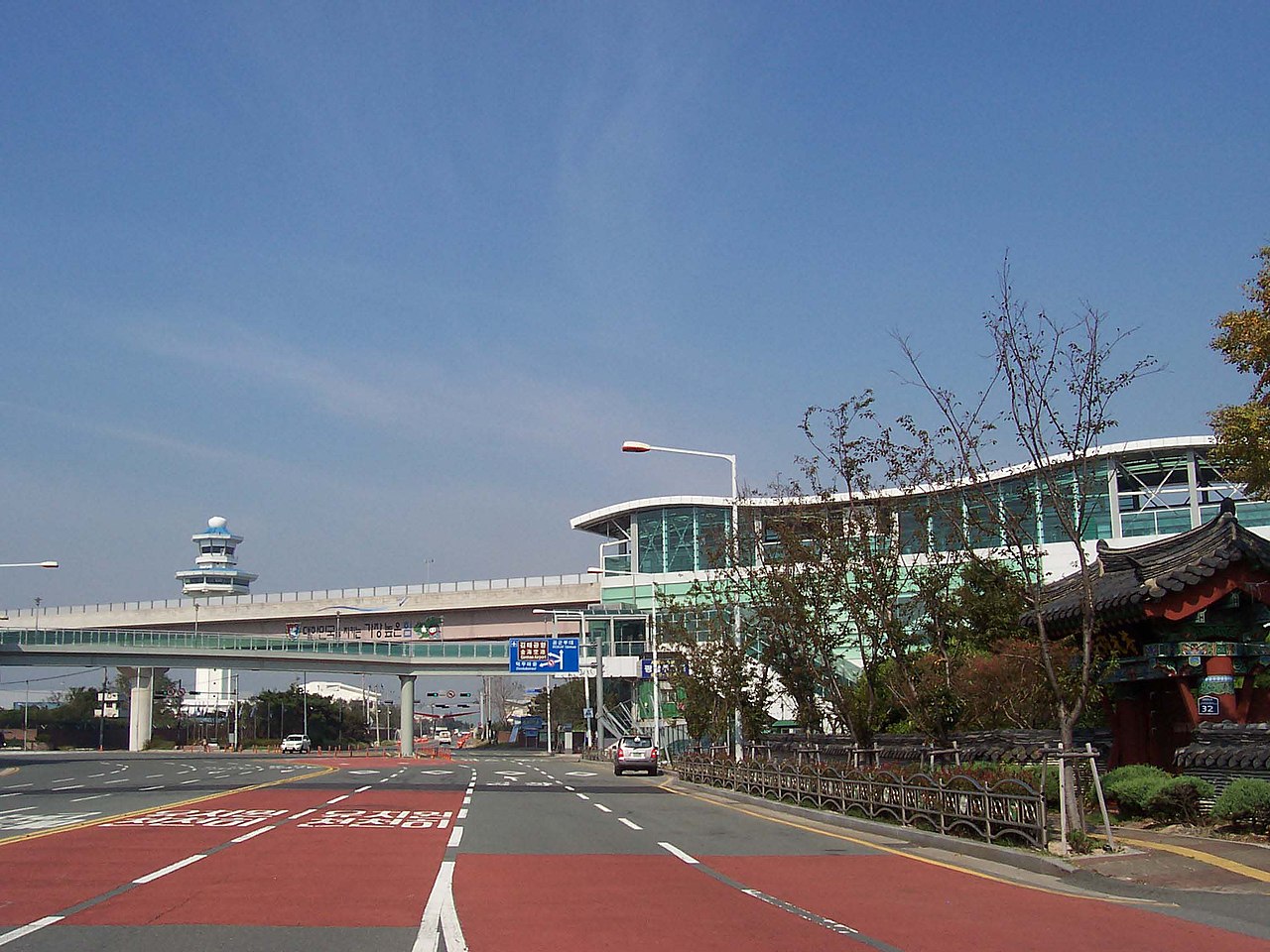
Busan's airport sits west of the city across the Nakdong River, handling domestic hops and short-haul international routes. It's compact — landing to light-rail platform can take fifteen minutes.
💡 Domestic and international terminals are a short walk apart, and the light rail station serves both — follow the signs and skip the taxi queue.
Sasang Station

The airport transfer point where the Busan–Gimhae Light Rail meets Metro Line 2, next to the Seobu intercity bus terminal for buses to Namhae, Tongyeong, and Jinju.
💡 The transfer walk is longer than it looks — allow ten minutes between the light rail and Line 2 platforms.
Seomyeon Station

The dead center of the network, where Lines 1 and 2 cross beneath Busan's busiest downtown. If you're lost anywhere in the city, getting to Seomyeon fixes most problems.
💡 Use the underground shopping arcade as a rain-proof shortcut between exits; the famous pork-gukbap alley is just outside, near Seomyeon Market.
Bujeon Station

Terminus of the Donghae Line's commuter trains and gateway to Bujeon Market, Busan's biggest traditional market — about ten minutes on foot from Seomyeon's metro hub.
💡 Board here for Songjeong or Gijang and you're guaranteed a seat — trains fill up by Centum and BEXCO.
OSIRIA Station
The Donghae Line stop built for the OSIRIA tourism complex: Lotte World Adventure Busan, the Skyline Luge, a huge outlet mall, and the Ananti Cove seafront.
💡 Weekend queues at Lotte World balloon after 11am — catch an early train from Bujeon and be at the gates for opening.
Songjeong Station
The Donghae Line stop for Songjeong Beach, Busan's surf town — mellower than Haeundae, with board-rental shops lining the beachfront road. Roughly a fifteen-minute walk from platform to sand.
💡 Before you leave the beach at night, check return train times on Kakao Map — gaps stretch toward 30 minutes.
💡 Quick honey tips (꿀팁)
- Korail releases KTX seats about a month ahead — set a reminder for Friday-evening and Sunday-afternoon trains; those sell out first.
- Use Naver Map or Kakao Map for directions — Google Maps can't route Korean transit properly.
- The metro runs roughly 5:30am to midnight; after that, Kakao T taxis are plentiful and cheap by Seoul standards.
- Sit at the very front of the driverless airport light rail for the Nakdong River crossing.
- Bus–subway transfers are discounted within 30 minutes — tap out of the bus with the same card you tap in with.
- Red rapid buses like 1001 and 1003 take the same T-money tap — no separate ticket needed.
- Pack light, grippy shoes — Gamcheon, Huinnyeoul, and half of Busan's viewpoints are staircases in disguise.
- Heading to OSIRIA or Songjeong? Screenshot the Donghae Line timetable — trains run every 15–30 minutes, not metro-frequency.
FAQ
How do I get from Gimhae Airport to Haeundae?
Cheapest: Busan–Gimhae Light Rail to Sasang (three stops), then Metro Line 2 straight to Haeundae — about 70–80 minutes total for a few thousand won. The limousine bus is direct but sits in traffic. A taxi runs roughly ₩35,000–45,000 with tolls, and it's your only real option after midnight.
Is the KTX or a flight better from Seoul to Busan?
KTX, almost always. It's about 2 hours 40 minutes station to station, city center to city center, with no security lines. Flying is only an hour in the air, but airport transfers on both ends make door-to-door times similar — and trains are rarely delayed.
Do Seoul transit cards work in Busan?
Yes. T-money and Cashbee both work on Busan's metro, buses, Donghae Line, airport light rail, and most taxis. Top up with cash at convenience stores or station machines. If buying new, either brand is fine — Cashbee is the hometown card, but for travelers there's no practical difference.
Is the Busan subway day pass worth it?
Only on heavy sightseeing days. It covers unlimited rides on Metro Lines 1–4 and breaks even around the fourth trip — but it excludes buses, the Donghae Line, and the airport light rail. Most days, a transit card with its transfer discounts costs about the same and keeps buses in play.
Where can I store luggage in Busan?
Busan Station has banks of coin lockers in several sizes on the main concourse, payable by card. Major subway stations such as Seomyeon and Haeundae also have lockers. For oversized bags, staffed storage services operate around Busan Station — but for most travelers the lockers are enough.