Busan food is refugee food, port food, workers' food — hot broth at dawn, cold noodles in August, fish straight off the boat. Skip the hotel breakfast. This is where we actually eat: the gukbap alleys, the market floors, the tents on the sand. Bring cash, an appetite, and no schedule.

Dwaeji-gukbap: the bowl that means Busan
Dwaeji-gukbap is pork bones simmered until the broth turns milky, poured over rice, served near-boiling. It was refugee food during the Korean War and never left. Locals eat it at 7am, at 3am, after soju, before soju. It arrives deliberately plain — seasoning is your job: salted shrimp (saeujeot) for depth, garlic chives (buchu) for bite, dadaegi chili paste if you want heat.
Seomyeon Gukbap Alley is the pilgrimage site — a short strip of specialists, several run by the same families for decades, some open around the clock. Each shop has partisans who refuse to eat at the one next door. Sit at the counter, watch the broth cauldrons, and don't ask for a menu translation: everyone is having the same thing.
Milmyeon: war noodles turned summer religion
Milmyeon is Busan's answer to naengmyeon, invented by wartime refugees who couldn't get buckwheat and used wheat flour from aid rations instead. The result is chewier, cheaper, and sweeter-brothed than its Northern parent — and fiercely local; good milmyeon is hard to find outside Busan. Two forms: mul (icy broth with slush on top) and bibim (chili sauce, no broth).
Come summer, the famous houses run queues out the door by noon, but locals eat it in January too. Order mandu alongside — steamed dumplings against icy noodles is the whole point.
Jagalchi: buy downstairs, eat upstairs
Jagalchi Market runs on a two-floor system every local knows. Ground floor: pick your fish live from the tanks — flatfish, rockfish, abalone, sea squirt — and agree the price before anything happens to it. The vendor cuts it into hoe on the spot, then you carry it (or it gets carried for you) up to a second-floor restaurant.
Upstairs charges a small per-person table fee — typically a few thousand won — which buys your table, banchan, lettuce, ssamjang, and wasabi-soy. For a little more they'll turn the bones and head into maeuntang, a spicy stew arguably better than the fish itself. The total still lands well below any raw-fish restaurant with a view.
Ssiat-hotteok and the eomuk rules
At BIFF Square in Nampo-dong, hotteok gets the Busan treatment: fried in a slick of oil until shatter-crisp, snipped open with scissors, and packed with sunflower seeds, pumpkin seeds, and peanuts over molten brown sugar. That's ssiat-hotteok — seed hotteok — and the stalls that made it famous still work the same square.
Eomuk — fish cake — is Busan's other identity. The city has been Korea's fish cake capital for generations; Samjin Eomuk, founded in 1953 on Yeongdo, is the oldest producer still going. On the street it's skewers in paper cups of hot broth; in the shops it's croquettes and baguettes made of fish. Both count.
Night moves: pojangmacha and the Millak trick
After dark, pojangmacha-style seafood joints fire up around Gwangalli and Millak-dong: plastic stools, steaming grills, shellfish, golbaengi, soju. (Haeundae’s 60-year-old beachfront tent village, Badamaeul, was demolished in June 2024 — that strip is a car park now, so head to Gwangalli instead.) At Gwangalli you drink with the Gwangan Bridge lit up across the water — and on Saturday nights the M Drone Light Show plays right over the beach (check the official schedule for times).
The Millak trick is the local cheat code: at Millak-dong Raw Fish Town, the wholesale building at Gwangalli's east end, buy hoe to-go by weight downstairs, grab chopsticks and dipping sauce, and eat at Millak Waterside Park with the bridge in front of you. One rule since July 2023: the park is an alcohol-free zone — staff check bags at the entrances and drinking there carries a ₩50,000 fine, so bring soft drinks and save the soju for a pocha afterwards. Waterfront raw fish at market prices.
A local's one-day eating route
You can hit every essential in one loop if you pace yourself. This is the order a Busan friend would march you through it — light portions, no dessert detours, seafood saved for the evening.
- 07:30 — Dawn dwaeji-gukbap in Seomyeon Gukbap Alley; season it yourself.
- 12:00 — Mul milmyeon and mandu before the lunch queue peaks.
- 15:00 — Nampo-dong: ssiat-hotteok at BIFF Square, then eomuk and broth at Bupyeong Kkangtong Market.
- 17:30 — Jagalchi or Millak-dong: pick a fish, eat it upstairs — or take it to the beach.
- 21:00 — Pojangmacha nightcap at Gwangalli; on Saturdays, time it to the drone show.
📍 The exact spots
Seomyeon Gukbap Alley
A tight row of decades-old dwaeji-gukbap specialists behind Seomyeon's main drag, many open late or around the clock. Milky pork broth, rice, endless buchu refills — office workers at noon, taxi drivers at 3am.
💡 Counter seats turn over fastest. Season in order: saeujeot first, then buchu, then dadaegi — taste between each.
BIFF Square Hotteok Stalls

The Nampo-dong stalls that made ssiat-hotteok famous: dough fried crisp in oil, snipped open, packed with brown sugar, seeds, and nuts. Expect a weekend queue and a molten filling.
💡 Go on a weekday before 4pm to skip the line. Tilt the paper cup — the sugar runs. Typically ₩2,000–3,000.
Jagalchi Market

Korea's largest seafood market. The ground floor is tanks and ajumma vendors calling you over; the second floor is no-frills restaurants that prep whatever you bought below, banchan included.
💡 Agree the total before the fish is cut. The upstairs table fee is small — add maeuntang made from the bones.
Millak-dong Raw Fish Town
A stack of wholesale raw-fish centers at Gwangalli's east end. Same buy-downstairs, eat-upstairs system as Jagalchi, but locals often skip the upstairs entirely and take the hoe away.
💡 Order to-go, walk to Millak Waterside Park, and eat facing Gwangan Bridge — Busan's cheapest waterfront hoe dinner.
Gwangalli Pojangmacha Row

Pocha-style seafood spots along Gwangan Beach-ro and the Millak-dong side, pouring soju beside grills of shellfish with the Gwangan Bridge glittering across the water. Loud, steamy, and exactly right after midnight.
💡 On Saturdays, claim a seat before the M Drone Light Show starts — check the official schedule for times.
Gukje & Bupyeong Kkangtong Markets
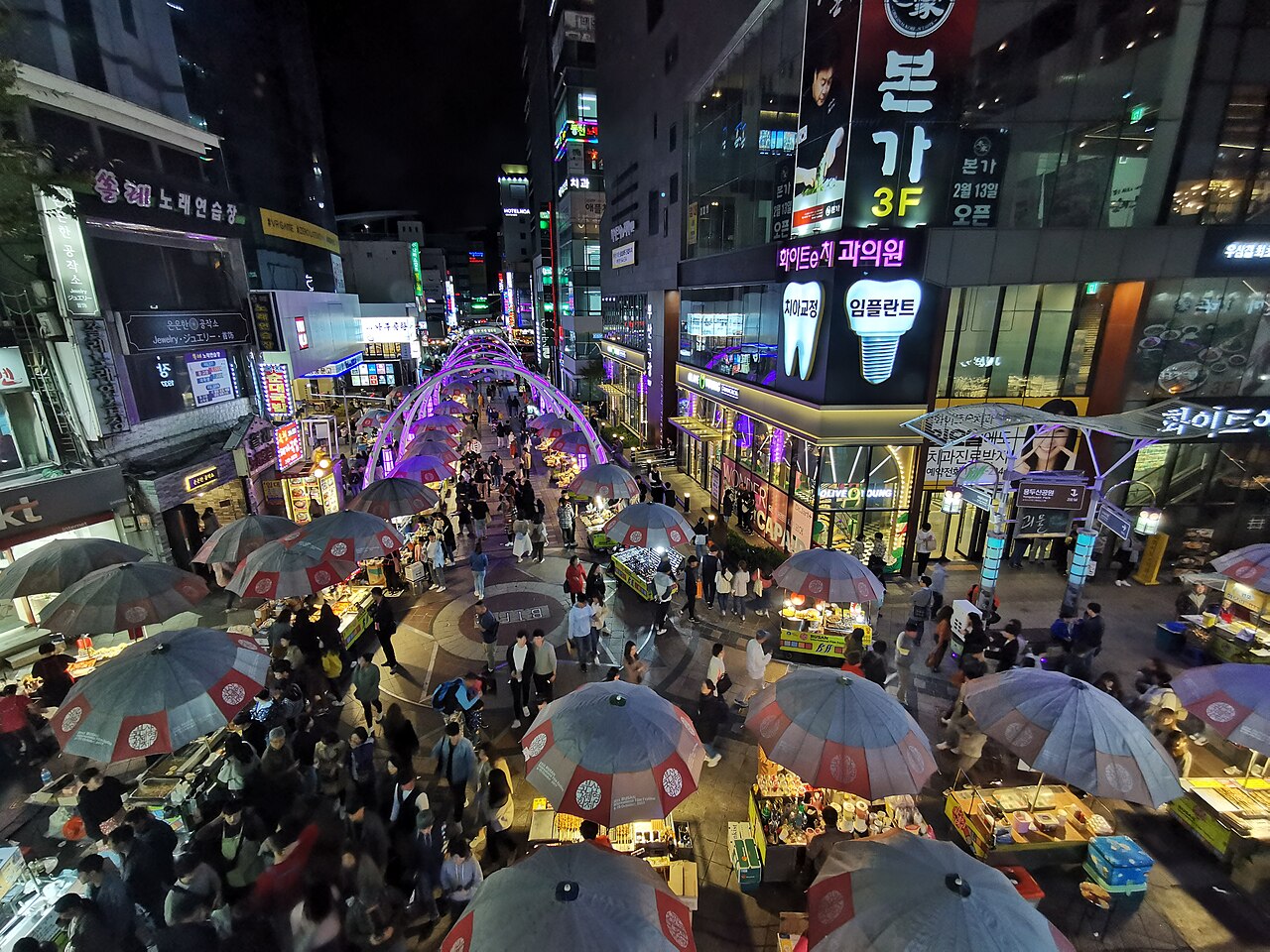
Nampo's twin market maze: Gukje for daytime wandering, next-door Bupyeong Kkangtong — Korea's first regular night market — for eomuk skewers dunked in paper cups of hot broth.
💡 Broth refills at eomuk carts are free and expected — cup after cup. Several stalls prefer cash.
Gaya Milmyeon
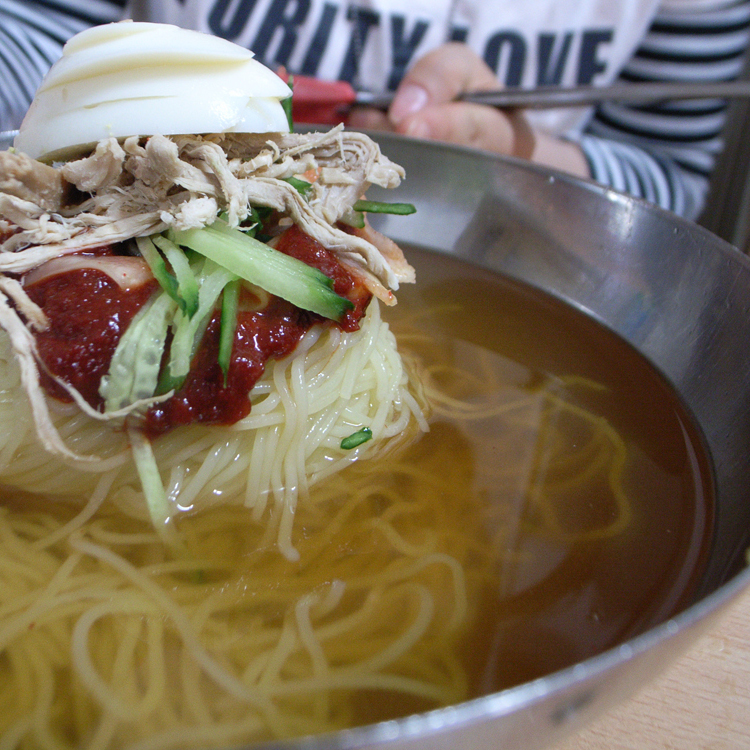
One of the old-guard milmyeon houses Busan people argue about — chewy wheat noodles in an icy, herb-sweet broth, or slicked in chili sauce as bibim. Queues are part of the ritual.
💡 Arrive by 11:30 in summer. First-timer order: mul milmyeon plus a plate of mandu.
💡 Quick honey tips (꿀팁)
- Gukbap arrives under-seasoned on purpose. Add saeujeot for salt, buchu for crunch, dadaegi for heat — in that order.
- Milmyeon houses all sell mandu; a plate split two ways turns noodles into a full meal.
- At Jagalchi, agree the price before the knife comes out, then ask for maeuntang from the bones.
- Millak-dong sells hoe to-go — eat it at Millak Waterside Park facing Gwangan Bridge.
- Eomuk broth refills at street carts are free; nobody counts your cups.
- The Gwangalli M Drone Light Show runs Saturday nights — check the official schedule, then eat in a tent after.
- Street stalls and market floors often prefer cash; keep ₩10,000 notes handy.
- Gukbap alleys serve at dawn — an early bowl in Seomyeon beats coffee for jet lag.
FAQ
What is dwaeji-gukbap and how do I eat it?
A milky pork-bone soup with rice, served deliberately under-seasoned. Season it yourself: saeujeot (salted shrimp) for salt, buchu (garlic chives) stirred in for texture, dadaegi chili paste for heat. Eat it with the kkakdugi radish kimchi. Any hour is acceptable — locals treat it as breakfast, hangover cure, and midnight meal.
How is milmyeon different from naengmyeon?
Milmyeon uses wheat-flour noodles instead of buckwheat, so it's chewier and slightly sweet, with a broth built on pork and medicinal herbs. It was created in Busan by Korean War refugees adapting Northern naengmyeon to available ingredients — and it's genuinely hard to find done well outside Busan.
How much is the table fee at Jagalchi's second floor?
Expect a few thousand won per person — it covers your table, banchan, lettuce, and sauces. Confirm the fish price downstairs before it's cut, and budget a little extra if you want maeuntang stew made from the bones. The total still undercuts a standalone raw-fish restaurant.
When does the Gwangalli drone show run?
The Gwangalli M Drone Light Show runs on Saturday nights over the beach, with extra dates on some holidays. Times shift by season, so check the official schedule before planning dinner around it. Beachfront pojangmacha seats fill up well before showtime.
Do I need Korean to eat at these places?
No. Gukbap alleys have one-item menus, milmyeon houses have picture menus, and market vendors are experts at calculator-based negotiation. Learn two phrases: 'igeo' (this) while pointing, and 'eolmayeyo?' (how much?). Carry some cash — a few stalls and market floors still prefer it.