Koreans drink coffee the way other countries drink tap water, and in Busan the café is where the day actually happens. Here's where locals sit — the industrial alleys of Jeonpo, the window seats above the sea, the harbour roasteries — plus what to order and what it should cost.
Why the café is Busan's living room
Korea runs on coffee shops, and in Busan the café does the job a pub does elsewhere. It's where friends talk for three hours, where students revise, where a first date happens and where families park a grandmother out of the heat. Nobody hurries you out. Understand that rhythm — sit long, order little, talk a lot — and the rest makes sense.
Jeonpo: a tool street that turned into a coffee street
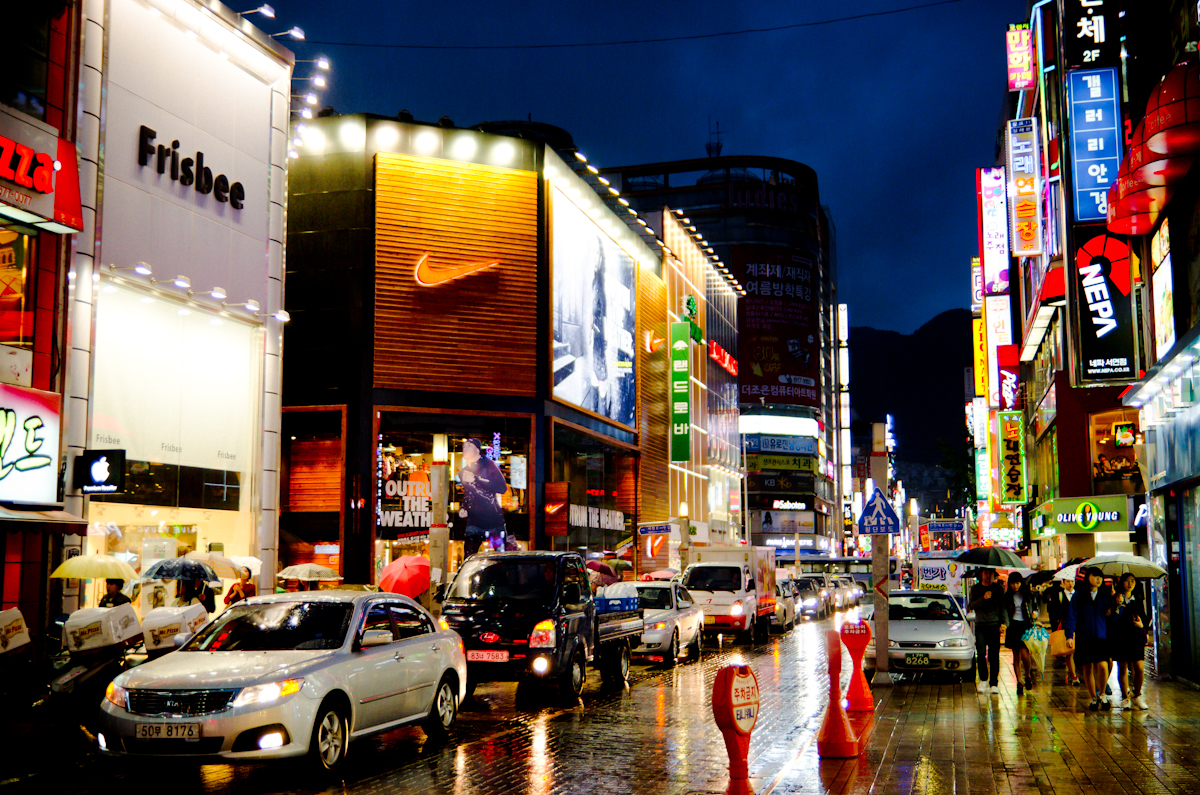
Jeonpo (전포동) used to sell drill bits and steel fittings — around 500 hardware shops in the 1960s and 70s, until the trade moved out to the Sasang industrial estate and rents collapsed. From about 2010 baristas took over the empty workshops. When the New York Times named Busan in its '52 Places to Go in 2017', it singled out this district.
Come out of Jeonpo Station (Line 2) and just wander; the interesting places sit one alley back from the main road, in units that still have workshop doors. Many open late morning and run to around 10pm, and plenty of one-person cafés take a weekday off — worth checking Naver Map before you make a special trip. A surviving hardware lane still runs alongside.
Paying for the window: the ocean-view belt
East of Haeundae, at Cheongsapo (청사포) and Songjeong (송정) and along the ridge of Dalmaji Hill (달맞이고개), the café is really a viewing platform. Glass boxes two and three storeys high face the water, drinks cost more than inland, and everyone in the room knows they are paying for the seat rather than the beans. That is the honest deal.
Timing is everything here. On weekday mornings you can have a front-row table to yourself; from early afternoon at weekends the window rows are gone and the counter has a queue. If it's the illuminated skyline you want instead, that belongs to Gwangalli — see our Busan night views and drone show guide.
Yeongdo: cliff cafés and warehouse roasters
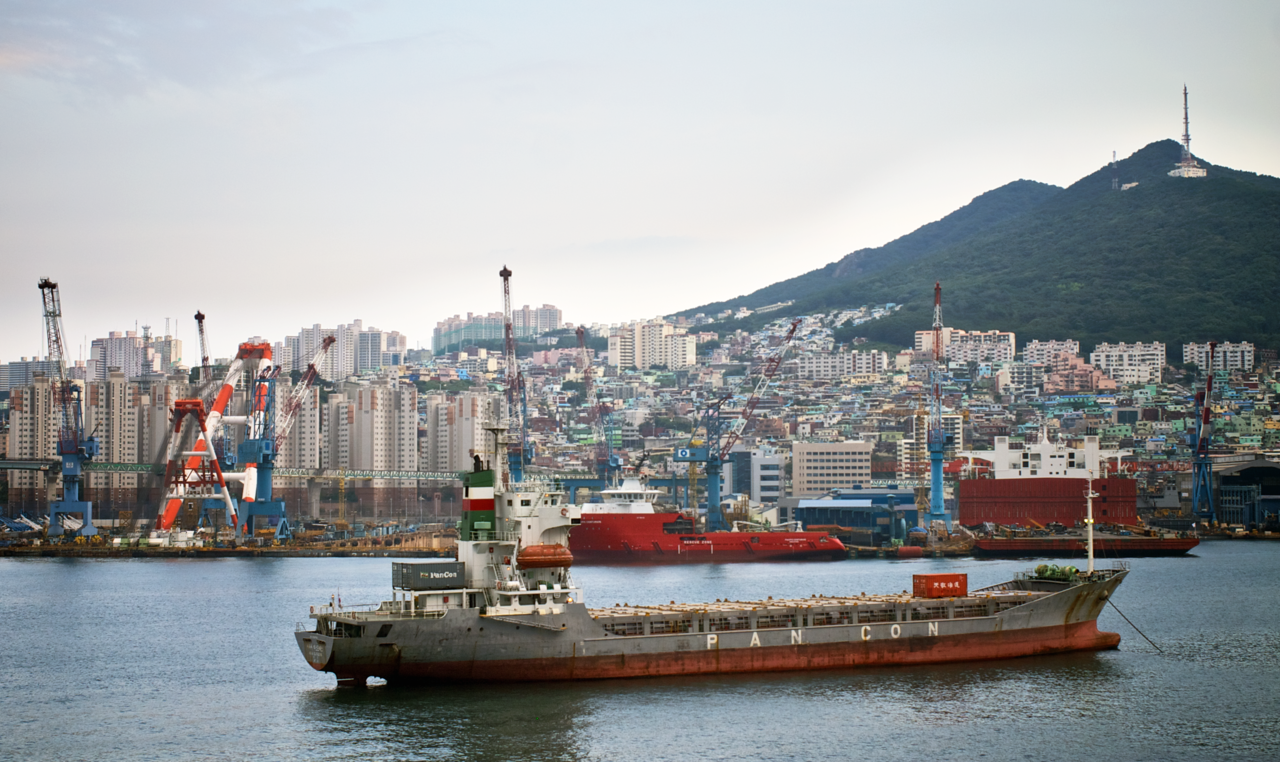
Yeongdo (영도구) is where Busan's coffee got serious. The city designated roughly 600 metres of the Bongnae-dong (봉래동) quayside a coffee specialty street, and old ship-parts warehouses now hold high-ceilinged roasteries where you can watch green beans being weighed from your table. One Busan roastery is run by a World Barista Champion — the country's first.
Round the island's western cliff, Huinnyeoul (흰여울문화마을) stacks tiny cafés in houses above the water, most keeping short daytime hours. One caution: the Jeoryeong coastal walkway and tunnel below the village have been closed for slope repairs and the reopening has slipped more than once — check Yeongdo-gu notices before planning a shoreline walk.
What locals actually order
The default is an iced americano — 아아 (a-a) — in February as readily as in August; the slang 얼죽아 translates as 'iced americano even if I freeze to death'. Latte is the second default. In summer a bingsu (빙수) arrives for the table: a mountain of shaved milk ice with red bean, fruit or injeolmi, and four spoons.
- Iced americano: about ₩1,800–2,500 at a franchise, ₩5,000–7,000 at a specialty café — typical ranges only.
- Latte: usually ₩500–1,000 above the americano at the same counter.
- Hand-drip or single-origin filter: the specialty café's real menu, generally ₩7,000 and up.
- Bingsu: roughly ₩10,000–15,000 at dessert chains, built for two to four people.
- Franchise tier (Mega MGC, Compose, Ediya): cheap, quick, functional, and never more than a block away.
Etiquette, laptops and the study-café escape
Long stays are normal and one drink per person is the unwritten rule. What has changed is that busy independents now post limits — two hours at peak, another order after three, sometimes no laptops at all — so read the sign at the door. Order at the counter first, then sit; parking a bag on a table while a queue forms is bad manners.
For real work, use a study café (스터디카페). These are unstaffed, kiosk-entry rooms with desks, sockets and enforced silence, sold by the hour, the day or the month at modest rates — commonly a few thousand won an hour, cheaper bought in blocks. Perfect for a rainy afternoon when you'd otherwise be guarding a café seat.
📍 The exact spots
Jeonpo Café Street
One of Korea's densest specialty-coffee grids, spread through the alleys of a former hardware district beside Seomyeon. Roasteries, dessert bars, vintage shops and photo studios fill old workshop units, all walkable in an afternoon.
💡 Weekday afternoons are calm. Walk one block off the main road — the back alleys hold the roasters, the main strip holds the queues.
Cheongsapo café belt

A former fishing hamlet east of Haeundae, now lined with glass-fronted cafés facing the water, red and white lighthouses on the breakwaters and the beach train sliding past the windows.
💡 Second-floor window seats go first. Come before 11am at weekends, or take a Monday-to-Thursday afternoon and stay as long as you like.
Dalmaji Hill (Moontan Road)
The wooded ridge road between Haeundae and Songjeong, lined with small galleries and quiet cafés looking out over a long sea horizon. Fewer coach parties than the beachfront, better light in the morning.
💡 Bus or taxi up, then walk down Moontan Road's pine path towards Haeundae — the view works better facing downhill.
Huinnyeoul cliff cafés
A cliffside village on Yeongdo where tiny cafés, workshops and bookshops occupy houses stacked above the harbour. Most keep short daytime hours and some close one weekday, so plans need flexibility.
💡 People live here — keep your voice down and don't photograph doorways. The coastal walkway below has been shut for repairs; check access first.
Bongnae-dong coffee specialty street

A working quayside of converted warehouses that the city designated a coffee specialty street: large roasteries, visible green-bean stores and brew bars a few minutes from Yeongdo Bridge.
💡 Come mid-morning while the roasters are running, and order from the filter menu rather than the americano — that's what the room is for.
F1963
A 1963 wire factory in Suyeong reborn as a culture complex — bamboo garden, galleries, a second-hand bookshop and a big roastery café in the old machine hall.
💡 Save it for rain. It's indoors, open into the evening, and far calmer than the beach cafés on a wet weekend.
Bosu-dong Book Street cafés

Korea's last dense cluster of second-hand bookshops, minutes uphill from Nampo-dong, now mixed with small book cafés where reading for an hour is entirely the point.
💡 Browse the shelves first, then take your find to one of the lane's book cafés — quietest before noon on a weekday.
💡 Quick honey tips (꿀팁)
- Order at the counter first, then sit. Leaving a bag to hold a table is poor form when there's a queue.
- Many independents open near 11am and close one weekday. Check Naver Map or Instagram before making a special trip.
- Say 'ttatteutan' (따뜻한) if you want it hot — the counter's default assumption is iced, all year round.
- Sea-view cafés peak from early afternoon to sunset at weekends; weekday mornings are nearly empty.
- Bingsu is ordered for the table, not per person. One large bowl comfortably feeds two to four.
- Study cafés run by kiosk, often around the clock — the best rainy-afternoon desk in Busan.
- Franchise coffee near stations is genuinely fine. Save the budget for one good filter cup at a roastery.
FAQ
How much does coffee cost in Busan?
Franchise counters such as Mega MGC and Compose sell an iced americano for roughly ₩1,800–2,500; Starbucks Korea's tall americano was ₩4,700 in 2025. Independent specialty cafés typically ask ₩5,000–7,000, more for hand-drip or a sea view. Treat all of these as typical ranges, since chains adjust prices most years.
Is it rude to sit for hours with one drink?
No — long stays are the norm in Korea. But busy independent cafés increasingly post rules: a two-hour limit at peak times, an extra order after three hours, occasionally no laptops. The notice at the door is the real policy, so read it before you settle in.
Where do locals go for a sea-view café?
Cheongsapo and Songjeong east of Haeundae, and the Dalmaji Hill ridge between them. Gwangalli has the bridge view but is busiest after dark. Expect to pay a premium for a window seat — that is understood here, not a tourist trap.
What is a study café and should I use one?
A 스터디카페 is an unstaffed, kiosk-entry study room with desks, power sockets and enforced silence, sold by the hour, day or month at low rates. If you have real work to do or a wet afternoon to fill, it beats defending a café table.
Do I have to order iced coffee?
No, but you will be in the minority ordering hot. Iced americano dominates Korean cafés year-round — 얼죽아 means 'iced americano even if I freeze to death'. Hot drinks are on every menu, and Dalmaji Hill also has traditional Korean tea houses.
Is Jeonpo Café Street worth the trip?
Yes, if you like density: dozens of cafés and a couple of hundred small shops packed into a grid of former workshop alleys, minutes from Seomyeon. It is a browsing destination rather than a single landmark, and best on a weekday afternoon.
Can I pay by card, and is there Wi-Fi?
Cards work almost everywhere and many order kiosks are card-only, so you rarely need cash. Free Wi-Fi is standard and sockets are common, though some cafés deliberately block them at busy hours. Foreign cards are generally accepted; keep a little cash for very small shops.