Busan is the easiest Korean city to travel with children: the sea is right there, the distances are short, and nobody minds a loud toddler. Here's the route I give visiting friends — where the water is shallow, which hill has a train up it, and what to do when it rains.

Why Busan beats Seoul with small children
Seoul is magnificent and exhausting: long metro rides, deep transfers, hour-long queues. Busan is a strip city — sea on one side, mountains on the other — so most family days sit 20–30 minutes apart by metro or taxi. Taxis are cheap enough that a stroller-and-nap emergency costs about the price of two coffees. Queues at the aquarium, cable car and theme park are a fraction of Seoul's.
The other thing: Busan runs on beach time. Restaurants open late, families eat out at 8pm, and a child running between tables in a gukbap house draws smiles, not stares. Our getting-around-insider guide covers fares and cards; this one is about the shape of the day.
The beach day, done right
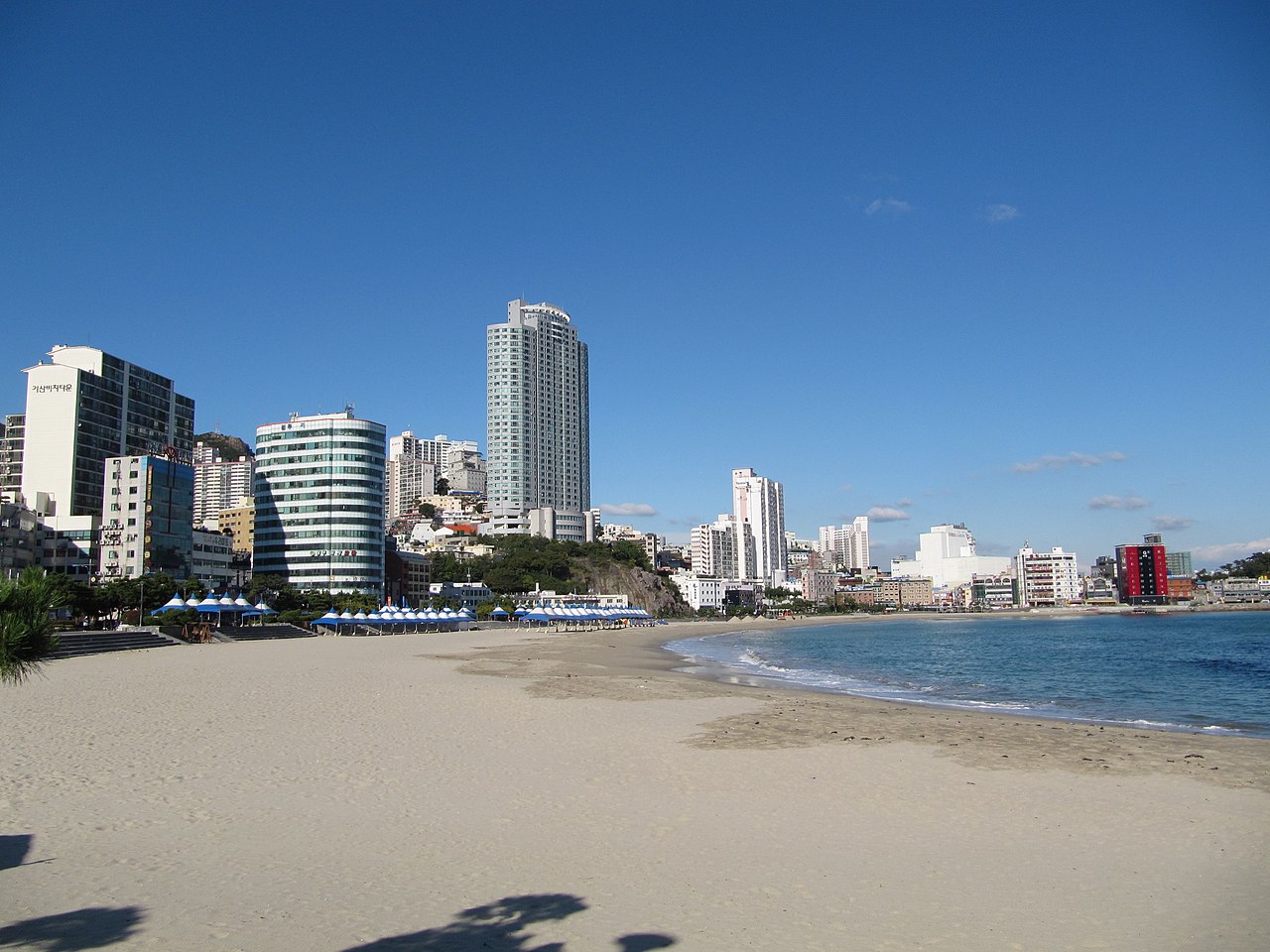
Haeundae (해운대) is wide, sandy and shallow a long way out, but the crowd bunches in the middle — walk toward the Mipo end for room. Songjeong (송정), further east, is the gentler pick: calmer water, a smaller crowd, and surf lanes kept apart from the swimming zone. In 2026 both opened 26 June, 09:00–18:00, lifeguards on duty; Songjeong closed 31 August.
Late summer is the caution window. Jellyfish stings climb through late July and August — Haeundae strings barrier nets, Songjeong sends boats out to scoop them — and rip currents build on windy days. Swim between the flags, inside the netted zone, and if a lifeguard whistles, get out. Don't touch a jellyfish washed up on the sand; children always want to.
- Parasol with mat: ₩10,000 a day under Haeundae's published 2026 standard prices
- Rubber tube or beach bed ₩10,000; child life jacket ₩5,000
- Sixty-second hot shower ₩1,000; lockers ₩1,000–4,000
- A family baby lounge at the Haeundae tourist information centre
- Barrier-free deck paths onto the sand at both beaches — a stroller will actually roll
Big views, no hiking
Three attractions do the same job: altitude and a thrill without making a six-year-old climb. Taejongdae's (태종대) Danubi road-train loops the clifftop park, so nobody walks the roughly 4km circuit. The Songdo Marine Cable Car glides out over open sea — the glass-floor Crystal cabin costs more and terrifies exactly one member of every family. The Songdo Yonggung suspension bridge is short, wobbly and about ₩1,000.
Timing matters more than tickets. Do Taejongdae in the morning, before the train queue forms and while the sea fog is still interesting; do Songdo mid-afternoon and eat at the beach afterwards. Both close on some Mondays — the Danubi train weekly, the bridge on the first and third Monday — so confirm before you build a whole day around them.
Rain, heat and the free stuff
Busan's summer is humid and its rain arrives in sheets, so keep two indoor options in your pocket. SEA LIFE Busan sits under the sand at Haeundae — under-36-months free with a paying adult, and booking a day ahead is meaningfully cheaper than the gate. Busan Museum is free, air-conditioned and quiet. The National Science Museum out in Gijang has a dedicated children's hall.
For heat rather than rain, Busan Citizens Park (부산시민공원) is the local answer: a floor fountain that fires in short bursts from roughly 10:30 to 19:30, May to September, free, with a sand playground beside it. Shade is thin, so bring your own. Closed Mondays for cleaning. Swimsuit, towel and a dry change of clothes in the bag.
Strollers, hills and the honest logistics
Busan is steep. Half the charm — Gamcheon, Choryang, the old harbour lanes — is stairs, and a stroller becomes luggage you carry. Under about two years a carrier wins outright; over that, bring a light stroller you can fold one-handed and accept that you'll sometimes lift it. Beach promenades, Citizens Park and the department-store districts are flat and fine.
Base yourself where the day starts flat: Haeundae for beach mornings, Seomyeon for rain plans and department-store nursing rooms. Our where-to-stay guide breaks that down. And if you want a full family day out, the Gijang side — theme park, science museum, coastal train — is covered in the day-trips guide.
- Most metro stations have lifts, but not all — older Line 1 stations are the gap, and the lift often serves one exit only. Check the station map first.
- Priority seats at the carriage ends are for pregnant women, elderly passengers and adults carrying infants. Use them; that is what they are for.
- Nursing rooms (수유실, suyusil) are standard in department stores and common in big stations — ask at the station office if the door is locked.
- Convenience stores sell travel packs of three to five nappies plus wipes; Emart, Homeplus and Lotte Mart carry full packs, formula and baby food.
- Korean taxis almost never carry child seats. It is legal here, but plan around it for longer transfers.
Feeding children without drama
Korean restaurants are children's territory. Korean BBQ places are loud, bright and welcoming — the noise covers a meltdown, staff bring scissors, a small bowl and often a child spoon without being asked, and everyone shares from the middle. Gukbap (국밥) houses are the other safe bet: rice, clear broth, ready in minutes, and you can request it 안 맵게 (an maepge, not spicy).
For a picky child, order gyeran-jjim (steamed egg), plain rice, seaweed laver, mandu dumplings and anything soy-braised. Ask for a child's bowl — 아이 그릇 (ai geureut). Our eat-like-a-local guide goes deeper, and markets-street-food covers the hotteok-and-fishcake circuit, which children generally solve on their own.
📍 The exact spots
Haeundae Beach — the quiet Mipo end
The famous crescent, wide and shallow, with a swimming zone netted against jellyfish in season. The middle is a wall of parasols; the Mipo end gives children room to dig without being trodden on.
💡 Arrive by 9am. The tourist information centre has a family baby lounge, and the barrier-free deck runs a stroller onto the sand.
Songjeong Beach
Busan's gentlest big beach: a 1.2km curve of soft sand, shallow calm water and a smaller crowd than Haeundae. Surf schools work one end, swimmers the other, and the promenade is all cafés.
💡 Ride the Donghae Line to Songjeong Station instead of the coast bus — faster, cooler, and no winding hill road to make anyone carsick.
Taejongdae Danubi road-train

An open-sided road-train that loops the clifftop park, stopping at the lighthouse and the observatory. It turns a roughly 4km walk of sea cliffs and pine woods into a ride children ask to repeat.
💡 Buy tickets at the entrance kiosk before you look at anything else; the queue doubles by 11am. Closed Mondays — confirm before crossing to Yeongdo.
Songdo Marine Cable Car (Busan Air Cruise)
A 1.6km ride straight out over open water between Songdo Beach and Amnam Park, ending at a small hilltop park with a skywalk. Standard cabins have solid floors; Crystal cabins have glass ones.
💡 Book the standard cabin for nervous children and save the difference. Ride up before sunset, walk the hilltop park, ride down in the dark.
Songdo Yonggung Suspension Bridge
A 127m footbridge from the Amnam Park cliffs out to a rocky islet, swaying just enough to feel like an achievement. Around ₩1,000, free for under-sevens, and done in ten minutes.
💡 Pair it with the cable car — the top station is a short walk away. Closed the first and third Monday, and in strong wind.
Busan Citizens Park water plaza

A free floor fountain in the middle of the city that fires in timed bursts from May to September, with a sand playground alongside. Where Busan parents go when the heat turns silly.
💡 Shade is scarce — bring a pop-up or claim a tree early. Bursts run roughly hourly from 10:30; closed Mondays.
SEA LIFE Busan Aquarium
Built underneath Haeundae's sand, so it is a two-minute retreat when rain arrives mid-beach-day. Tunnel tank, touch pool and penguins, and small enough to finish before a toddler's patience does.
💡 Book online at least a day ahead — noticeably cheaper than the door. Under-36-months go free with a paying adult.
Busan Museum
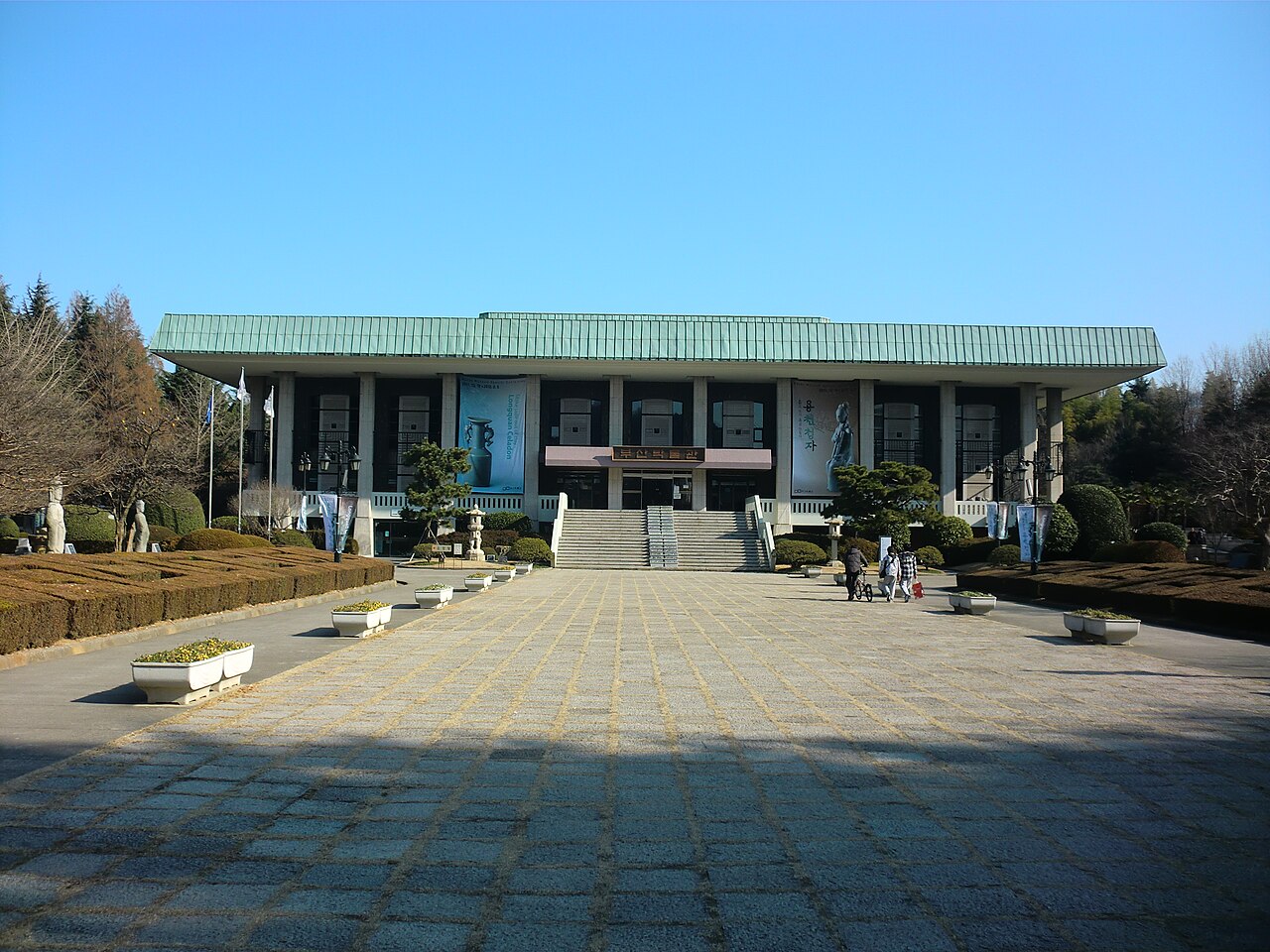
Free, air-conditioned and rarely busy — big open galleries a restless child can walk laps in, plus lawns outside. The most underrated wet-afternoon option in the city, a short walk from Daeyeon station.
💡 Closed Mondays. Family workshops run during Korean school holidays; the schedule goes up on the museum site and spaces book out fast.
💡 Quick honey tips (꿀팁)
- Build each day around one big thing plus one flat thing. Two attractions a day is the ceiling with under-sixes.
- Mondays close a lot: the Danubi train, Busan Museum, the science museum, the Citizens Park fountain. Make Monday a beach or market day.
- Taxis are cheap and everywhere. Use one for the last steep kilometre rather than dragging a tired child uphill.
- Buy a transit card at any convenience store. Child fares need the card registered — ask staff, it takes a minute.
- Pack a swim nappy, a spare outfit and a plastic bag every single day. Water appears when you least expect it.
- Korean sunscreen is excellent and everywhere; Olive Young stocks child-friendly ones. Don't lug a bottle from home.
- Beach showers run about ₩1,000 for sixty seconds. Have coins ready and decide in advance who goes first.
- For festival dates, ticket prices and opening hours, check the official page — Busan revises these every single year.
FAQ
Is Busan really easier than Seoul with young children?
For most families, yes. Distances are shorter, the metro has fewer deep transfers, queues at the big attractions are smaller, and the beach gives you a whole day that needs no planning. Seoul has more choice; Busan has less friction. Plenty of families do three or four nights here and keep Seoul short.
Stroller or baby carrier in Busan?
Carrier, if your child still tolerates one. Busan is built on hills and the best neighbourhoods are stairs. If you need wheels, bring a light fold-flat stroller rather than a big travel system, and stick to the beachfronts, Citizens Park and the department-store districts, which are genuinely flat.
When is it safe to swim at Busan's beaches?
Swim during the official season, when lifeguards are on duty. Recent years have run from late June to the end of August, with Haeundae extending to mid-September, usually 09:00–18:00. Outside those dates there is no supervision at all. Check the district beach page for the current year's exact dates.
Are jellyfish a real problem in late summer?
In late July and August, yes. Sting numbers rise each summer and advisories for large Nomura's jellyfish are common. Haeundae installs barrier nets and Songjeong sends boats out to remove them. Swim inside the netted zone, never touch one on the sand, and tell a lifeguard at once if a child is stung.
Where do I feed and change a baby?
Every department store has a nursing room (수유실, suyusil) with a sink, microwave and changing table, and most large stations have one — ask at the station office if it is locked. Convenience stores sell travel packs of three to five nappies and wipes; supermarkets carry full packs and formula.
Will restaurants mind our children?
No. Korean BBQ places are loud and family-normal, gukbap houses are quick and mild, and staff routinely bring a small bowl and spoon unasked. Say 안 맵게 (an maepge) for not spicy. Late dinners are standard here, so an 8pm table with children is completely unremarkable.
Do Busan's metro stations have lifts?
Most do, but not all — older Line 1 stations are the weak spot, and the lift often serves one specific exit rather than all of them. Check the station map before committing with a stroller, and remember the priority seats at carriage ends are intended for adults carrying infants.